
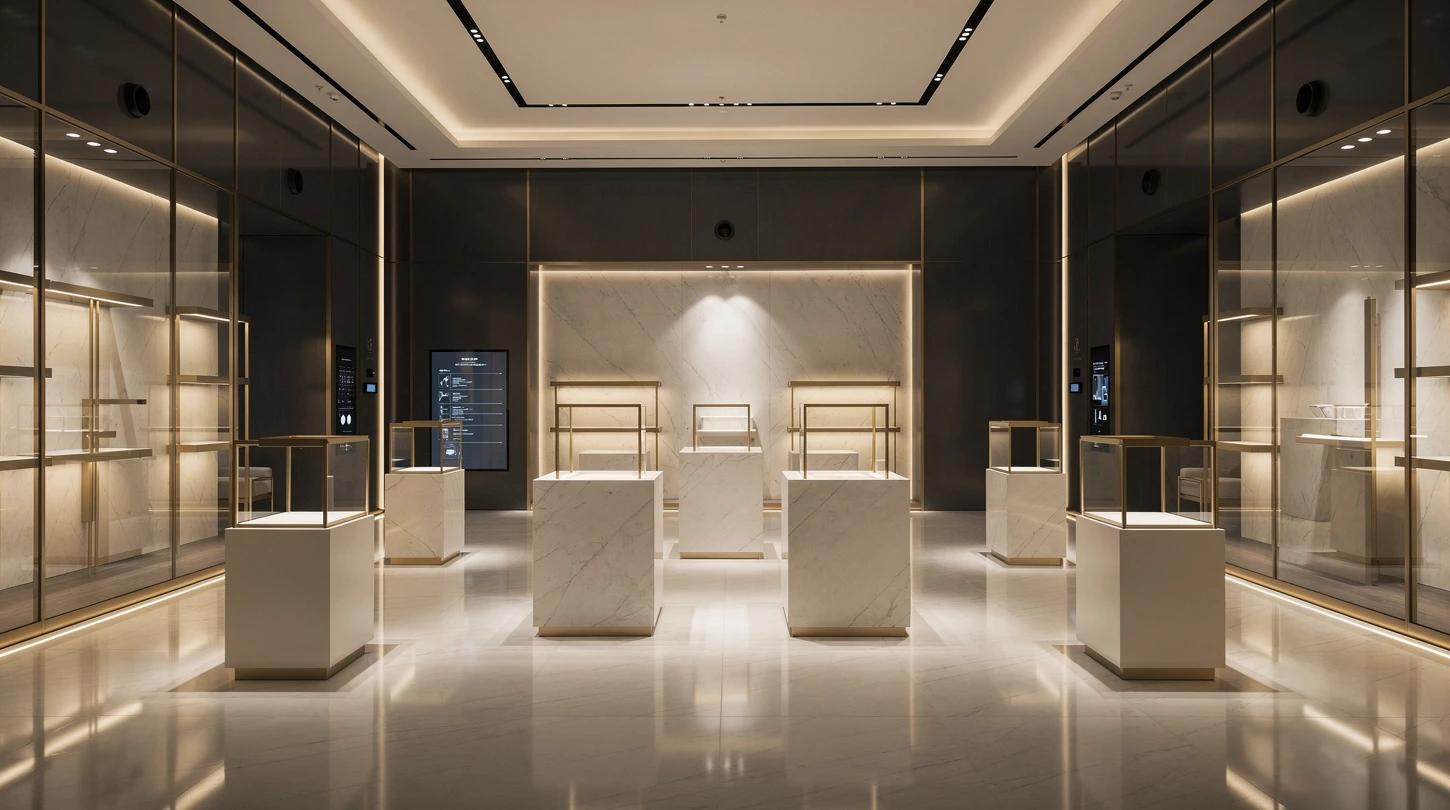
Luxury retail is entering its most consequential repositioning in a generation. After a decade defined by price-led growth, ballooning store counts and a steady creep toward mass accessibility, the industry is recalibrating around scarcity, cultural relevance and a younger customer who buys differently than the client base that built the modern luxury house. The shift is not cosmetic. It touches pricing architecture, store formats, the digital experience, the resale market and the very definition of what makes a product worth a premium in 2026 and the decade ahead.
In short
- Luxury retail repositioning describes the deliberate move by premium brands away from volume-led, accessible growth toward scarcity, cultural authority and elevated client experience as the basis for pricing power.
- The pressure comes from a cooling aspirational middle, a more discerning core client, and a generational handover to buyers under 40 who weigh provenance, sustainability and resale value as heavily as the logo.
- Three levers dominate the reset: tighter assortment and controlled distribution, a digital experience built for clienteling rather than mass conversion, and a formal stance on resale and circularity.
- The biggest mistakes are over-discounting into the gray market, chasing reach over relevance, and treating the website as a clearance channel rather than a brand surface.
- For retail and e-commerce teams adjacent to luxury, the practical takeaway is that premium positioning is now an operating discipline across pricing, data and inventory, not a marketing veneer applied at the end.
Why does luxury repositioning matter in 2026?
The decade from 2014 to 2024 was unusually kind to luxury. A long bull market in personal luxury goods, a surge of new entrants from Asia, and a wave of pandemic-era spending pushed the sector to record revenue and tempted many houses to grow by widening the funnel. Brands raised prices aggressively, opened more doors, and leaned on entry-price products such as small leather goods, sneakers and beauty to recruit aspirational buyers who could not yet afford the flagship handbag.
That model has run into a wall. The aspirational middle has thinned as inflation and higher interest rates compressed discretionary budgets, and the buyers who stretched for an entry-price logo product have proven the least loyal when conditions tighten. At the same time the genuine high-net-worth client has grown more selective, rewarding brands that protect exclusivity and punishing those that feel ubiquitous. The result is a clear divergence between houses that held their cultural authority and those that diluted it.
This sits inside a broader change in how people shop premium categories, a theme we cover in depth in our pillar on the state of consumer behavior in retail and e-commerce. Luxury is the leading edge of that change because its customers are the most willing to pay for meaning, story and scarcity. When those buyers shift their criteria, the rest of premium retail tends to follow within a few seasons.
The stakes are high because pricing power is the entire game in luxury. A house that loses the perception of exclusivity cannot simply discount its way back, since discounting accelerates the decline. Repositioning is therefore less a campaign and more a multi-year reconstruction of how a brand earns the right to charge a premium.
What does repositioning actually mean in luxury?
Repositioning in this context means changing the basis on which a brand competes, not just refreshing its imagery. For most of the last decade luxury competed partly on accessibility, making the dream reachable through a wider price ladder. The current reset moves the basis of competition back toward scarcity, craftsmanship, provenance and a curated client relationship that cannot be replicated by a fast-follower.
Key terms worth defining
Scarcity engineering is the deliberate management of supply so that demand consistently exceeds availability for hero products. Clienteling is the practice of building a one-to-one relationship with high-value clients through data, personal advisors and tailored offers. Brand elevation describes pricing and assortment moves designed to lift the perceived tier of a house, often by trimming entry products and emphasizing high-ticket craft.
Controlled distribution means limiting where and how products appear so the brand controls the context of every sale. Circularity covers resale, repair and rental programs that extend a product’s life and bring the brand into the secondary market it once ignored. These terms are not jargon for its own sake, since each maps to a concrete operating decision a brand has to make and defend.
How premium and luxury differ in practice
It helps to separate true luxury from premium, because the repositioning playbook differs by tier. True luxury sells identity and scarcity at the top of the market, where price is a signal rather than a barrier. Premium sells elevated quality and design at a justified markup, where customers still run a value calculation. A brand that misreads which tier it occupies will copy the wrong playbook, for example by chasing scarcity it has not earned or by discounting an identity it should protect.
How are luxury brands repositioning in practice?
The practical work of repositioning concentrates in three areas: assortment and distribution, the digital and store experience, and the brand’s relationship with the resale market. Each area requires investment and a willingness to trade short-term volume for long-term pricing power. The houses moving fastest treat these as a connected system rather than separate initiatives.
Tighter assortment and controlled distribution
The first lever is editing the catalog and the channel map. Brands are trimming the long tail of entry products that recruited aspirational buyers but diluted the perception of exclusivity. They are also pulling back from wholesale and off-price channels where products surfaced at a discount and undercut the full-price story. The aim is to ensure that wherever a customer encounters the brand, the context reinforces the premium rather than eroding it.
Controlled distribution increasingly means owning more of the path to the customer through directly operated stores and the brand’s own site. Direct channels give the house control over presentation, price and data, the three ingredients of pricing power. The trade-off is that direct operations carry higher fixed costs and demand a level of retail discipline that wholesale-dependent brands have to build from scratch.
A digital experience built for clienteling
The second lever is rebuilding the digital experience around relationships rather than mass conversion. For years many luxury sites behaved like efficient checkouts, optimized for the same funnel metrics as mainstream e-commerce. The repositioning move is to treat the site and app as a brand surface and a clienteling tool, where the best clients are recognized, advised and offered access to scarce products before they reach the open catalog.
That shift changes how teams think about even basic mechanics like discovery and product detail. A luxury product page is a storytelling and provenance surface, not just a conversion unit, which is why the discipline behind strong product page SEO that drives organic conversions still matters even when the goal is brand equity rather than volume. The technology underneath matters too, and many houses are moving to flexible architectures so the experience can evolve without a full replatform, a pattern we explore in our guide to composable commerce stacks that retailers actually assemble.
A formal stance on resale and circularity
The third lever is engaging with the secondary market that luxury long treated as a threat. Resale has become a major force in premium categories, driven by younger buyers who view pre-owned as both sustainable and a smart entry point to brands they aspire to. Rather than cede that market to third-party platforms, more houses now run authenticated resale, trade-in, repair and rental programs that keep them in the loop and protect the integrity of their products.
Circularity also feeds the scarcity story when handled well, since a robust resale value reinforces the sense that a product is an asset rather than a disposable purchase. Loyalty and retention play into this, and the better houses connect resale and repair to their broader client programs, an approach informed by the same fundamentals as strong loyalty program design built on points, tiers or paid membership. The brands doing this well turn a defensive necessity into a retention and recruitment engine.
| Lever | Old model (2014 to 2024) | Repositioned model (2025 onward) | Primary benefit |
|---|---|---|---|
| Assortment | Broad price ladder, many entry products | Edited catalog, fewer hero pieces | Restored exclusivity |
| Distribution | Heavy wholesale and off-price | Direct stores and owned site | Price and data control |
| Digital | Mass conversion funnel | Clienteling and brand surface | Higher client lifetime value |
| Resale | Ignored or fought | Authenticated, brand-run programs | Recruitment and retention |
| Pricing | Frequent increases for growth | Disciplined, value-justified | Sustainable margin |
What are the common repositioning mistakes and how to avoid them?
Repositioning is easy to describe and hard to execute, and the failure modes are consistent across houses. Most mistakes share a root cause: reaching for short-term volume in a way that undermines the long-term premium. Recognizing these patterns early is the cheapest insurance a brand can buy.
Over-discounting into the gray market
The most damaging mistake is leaning on discounts to hit quarterly numbers. Each markdown teaches customers to wait for the next one and signals that the full price was never real. Worse, surplus product sold into outlets and off-price channels reappears in the gray market, where it anchors the brand to a lower price in the customer’s mind. The fix is supply discipline upstream, since a brand that produces closer to genuine demand rarely faces the pressure to discount in the first place.
Chasing reach over relevance
A second common error is treating audience size as the goal, which pushes brands toward broad campaigns and partnerships that add reach but subtract distinctiveness. Luxury is built on being meaningful to the right people rather than visible to everyone. The corrective is to measure cultural relevance and client quality, not just impressions, and to accept that a smaller, deeply engaged audience is more valuable than a large indifferent one.
Treating the website as a clearance channel
The third mistake is using the brand’s own site as a place to liquidate slow inventory. When the homepage leads with sale banners, the digital flagship becomes an outlet and the premium story collapses online. The better approach keeps the owned site as a full-price brand surface and handles any necessary clearance through separate, less visible channels with controlled access. This protects the experience for the clients who matter most while still moving residual stock.
Ignoring the data discipline behind clienteling
A subtler failure is announcing a clienteling strategy without the data foundation to support it. Personal advisors cannot deliver tailored service if customer history is fragmented across stores, regions and the website. Brands that succeed invest first in a unified view of the client, then layer the human relationship on top, rather than expecting advisors to compensate for broken systems.
What examples from US luxury and premium retail show the shift?
The United States is a useful laboratory because it combines a large affluent population with a retail culture that historically embraced promotion and accessibility. That history makes the repositioning tension especially visible, since American premium retail has more discounting habits to unwind than some European peers. Several patterns stand out across the US market.
Department stores that built their luxury credibility on breadth and frequent events have struggled most, as the promotional cadence that drove traffic eroded the premium they were trying to project. The stronger performers narrowed their luxury assortment, invested in personal styling and dedicated client services, and reduced their reliance on sitewide sales. The lesson is that elevation in the US often starts with breaking a discounting habit that customers have been trained to expect.
Direct-to-consumer premium brands that scaled through performance marketing have faced a parallel reckoning. Many grew quickly by treating customer acquisition as a media-buying problem, then discovered that buyers recruited on discounts and ad spend rarely became loyal at full price. The ones repositioning successfully have shifted budget from pure acquisition toward retention, community and product depth, accepting slower growth in exchange for healthier margins and a more durable customer base.
Resale is where the US shows the clearest leading signal. American consumers, especially those under 40, have normalized buying and selling pre-owned luxury at scale, and the brands that engaged this market with authentication and trade-in programs captured both recruitment and retention value. Those that ignored it watched third-party platforms own the relationship with their own customers. The broader category context for these shifts is covered in our analysis of the state of consumer behavior in retail and e-commerce, which tracks how these preferences are spreading beyond luxury into mainstream premium.
The role of the flagship store
The US repositioning story is not only digital, since the physical flagship has taken on a renewed strategic role. As volume migrates online and through resale, the flagship shifts from a transaction engine to a brand theater where the house demonstrates craft, hosts clients and stages the experiences that justify the premium. The most effective US flagships now measure success in client relationships formed and reactivations driven, not only in sales per square foot.
That reframing also changes the economics of retail real estate for luxury. A smaller number of exceptional doors in the right cultural locations can do more for a brand than a wider fleet of average stores. Several US repositioning efforts have therefore involved closing underperforming locations and concentrating investment in fewer, more ambitious spaces that reinforce the elevated tier the brand is trying to project.
| Customer segment | Primary motivation | What earns loyalty | Repositioning implication |
|---|---|---|---|
| Core high-net-worth client | Identity, scarcity, service | Access and recognition | Invest in clienteling and exclusivity |
| Younger aspirational buyer (under 40) | Provenance, sustainability, resale value | Story and circularity | Build resale and transparency |
| Occasional gift buyer | Reliability, recognizability | Frictionless experience | Protect entry without diluting tier |
| Lapsed aspirational buyer | Price sensitivity | Hard to retain at full price | Do not chase with discounts |
Which tools, partners and capabilities support the shift?
Repositioning is an operating change, so it depends on capabilities as much as creative direction. The relevant toolset clusters around customer data, inventory precision, authenticated resale and a flexible technology base. None of these is exotic, but assembling them into a coherent system is where most of the difficulty lives.
Customer data and clienteling platforms
The foundation is a unified customer profile that spans stores, the website and the contact center. With that in place, clienteling tools give advisors the history, preferences and product availability they need to serve a client personally. The payoff is measured in client lifetime value and reactivation rate rather than in single-session conversion, which is why luxury teams increasingly report on relationship metrics alongside sales.
Inventory and demand precision
Scarcity engineering only works if a brand can forecast and allocate with precision. That requires demand planning that distinguishes genuine pull from promotion-driven noise, plus allocation logic that places hero products where they sell at full price. Brands that get this right rarely face the surplus that forces discounting, which is the operational heart of protecting the premium.
Authenticated resale and circular services
Running resale, repair and rental in-house or through trusted partners requires authentication, logistics and a clear policy on how secondary value reflects on the brand. The partners worth knowing are those that can authenticate at scale, handle reverse logistics, and integrate cleanly with the brand’s customer data so a resale interaction strengthens rather than fragments the relationship. According to general market context, resale has grown several times faster than the primary luxury market, which is why this capability has moved from optional to strategic. The wider picture on category size and growth is well summarized by resources such as the overview of luxury goods on Wikipedia and the market data aggregated on Statista.
A flexible technology base
Finally, the digital experience needs a technology base that can evolve as the strategy does. Houses locked into rigid platforms struggle to add clienteling, resale and personalized journeys without costly rebuilds. A more modular approach lets teams change the experience incrementally, which matters when repositioning is a multi-year effort rather than a single launch. This is the practical case for the architecture choices many retailers now make when they assemble their stacks.
What is the outlook for luxury retail to 2030?
The most likely path through 2030 is continued divergence between houses that protected their cultural authority and those that diluted it. The strong are likely to consolidate their advantage, since pricing power compounds when a brand consistently delivers scarcity and relevance. The weaker face a harder road, because rebuilding perceived exclusivity after years of accessibility is slow and expensive.
Three forces will shape the decade. The generational handover to buyers under 40 will reward provenance, sustainability and resale value, pushing circularity from a side program to a core capability. The center of gravity in demand will keep shifting across regions, requiring brands to localize experience and clienteling rather than export a single template. And the digital experience will keep moving from transactional to relational, with the best houses using data to make every client feel individually known.
Technology will quietly underpin all three. The houses that win will be those that can read demand signals early, allocate scarce product with precision, and personalize the client relationship at scale without making it feel automated. Artificial intelligence will help with forecasting, allocation and service, but the strategic judgment about what to make scarce and how to price it will remain a human decision rooted in brand identity. The tools accelerate the strategy, they do not replace it.
For premium retailers adjacent to true luxury, the read-through is that the discipline is contagious. The pricing integrity, controlled distribution and experience investment that luxury is rediscovering will increasingly define what it takes to hold a premium anywhere in retail. The brands that internalize this as an operating model, not a marketing message, are the ones likely to own the next decade. Teams that want the broader context for these shifts will find it in our pillar on the state of consumer behavior in retail and e-commerce.
The cleanest summary is that luxury is trading volume for value on purpose. That trade is uncomfortable in the short term and powerful in the long term, and it is the defining strategic choice for the sector through 2030.
Frequently asked questions
What does luxury retail repositioning actually mean?
It means changing the basis on which a brand competes, moving away from accessible, volume-led growth toward scarcity, craftsmanship, provenance and a curated client relationship. In practice it shows up as a tighter assortment, more controlled distribution, a digital experience built for clienteling rather than mass conversion, and a formal stance on resale. The goal is to protect and rebuild pricing power, which is the core asset in luxury. It is a multi-year operating change rather than a marketing campaign.
Why is luxury repositioning happening now rather than earlier?
The decade to 2024 rewarded accessible growth, so many brands widened their price ladder and distribution to recruit aspirational buyers. Inflation and higher interest rates then thinned that aspirational middle, exposing how disloyal discount-recruited buyers can be. At the same time the core high-value client grew more selective, rewarding exclusivity and punishing ubiquity. The combination forced brands to choose between volume and pricing power, and the strongest chose pricing power.
How is true luxury different from premium for repositioning purposes?
True luxury sells identity and scarcity at the top of the market, where price is a signal rather than a barrier, so its repositioning leans on exclusivity and clienteling. Premium sells elevated quality and design at a justified markup, where customers still run a value calculation, so its repositioning leans on demonstrating worth and consistency. A brand that misreads its tier copies the wrong playbook, either chasing scarcity it has not earned or discounting an identity it should protect. Knowing which tier you occupy is the first strategic decision.
What is the biggest mistake brands make when repositioning?
Over-discounting to hit short-term targets is the most damaging error. Each markdown trains customers to wait for the next one and signals that the full price was never real, and surplus that leaks into off-price and gray markets anchors the brand to a lower price. The fix is supply discipline upstream, since producing closer to genuine demand removes the pressure to discount. Discounting accelerates a decline that is very hard to reverse.
Why does resale matter so much to luxury now?
Resale has become a major force in premium categories, driven by younger buyers who see pre-owned as sustainable and as a smart entry point to aspirational brands. A strong resale value also reinforces the sense that a product is an asset rather than a disposable purchase, which supports the primary market. Brands that run authenticated resale, trade-in and repair stay in the relationship instead of ceding it to third-party platforms. Handled well, circularity becomes a recruitment and retention engine rather than a threat.
How does repositioning change the role of a luxury brand’s website?
The website shifts from an efficient checkout optimized for mass conversion to a brand surface and clienteling tool. The best clients are recognized, advised and offered access to scarce products before they reach the open catalog, and product pages function as storytelling and provenance surfaces. Crucially, the owned site stops being a clearance channel, since leading with sale banners turns the digital flagship into an outlet. Any necessary clearance moves to separate, less visible channels with controlled access.
What capabilities do brands need to execute a repositioning?
Four capabilities matter most: a unified customer profile that spans stores, site and contact center; demand and inventory precision that supports scarcity without forcing discounts; authenticated resale and circular services with proper logistics; and a flexible technology base that can evolve as the strategy does. None of these is exotic, but assembling them into one coherent system is the hard part. Brands that invest in the data foundation first tend to make the human clienteling layer far more effective.
What does luxury repositioning mean for non-luxury premium retailers?
The discipline is contagious, so the pricing integrity, controlled distribution and experience investment that luxury is rediscovering increasingly define what it takes to hold a premium anywhere in retail. Premium retailers can borrow the principles without the price point: protect full-price perception, avoid training customers to wait for discounts, and invest in the relationship rather than pure acquisition. The brands that treat premium positioning as an operating model rather than a marketing veneer are best placed for the next decade. The underlying customer shifts are the same ones reshaping mainstream retail.