
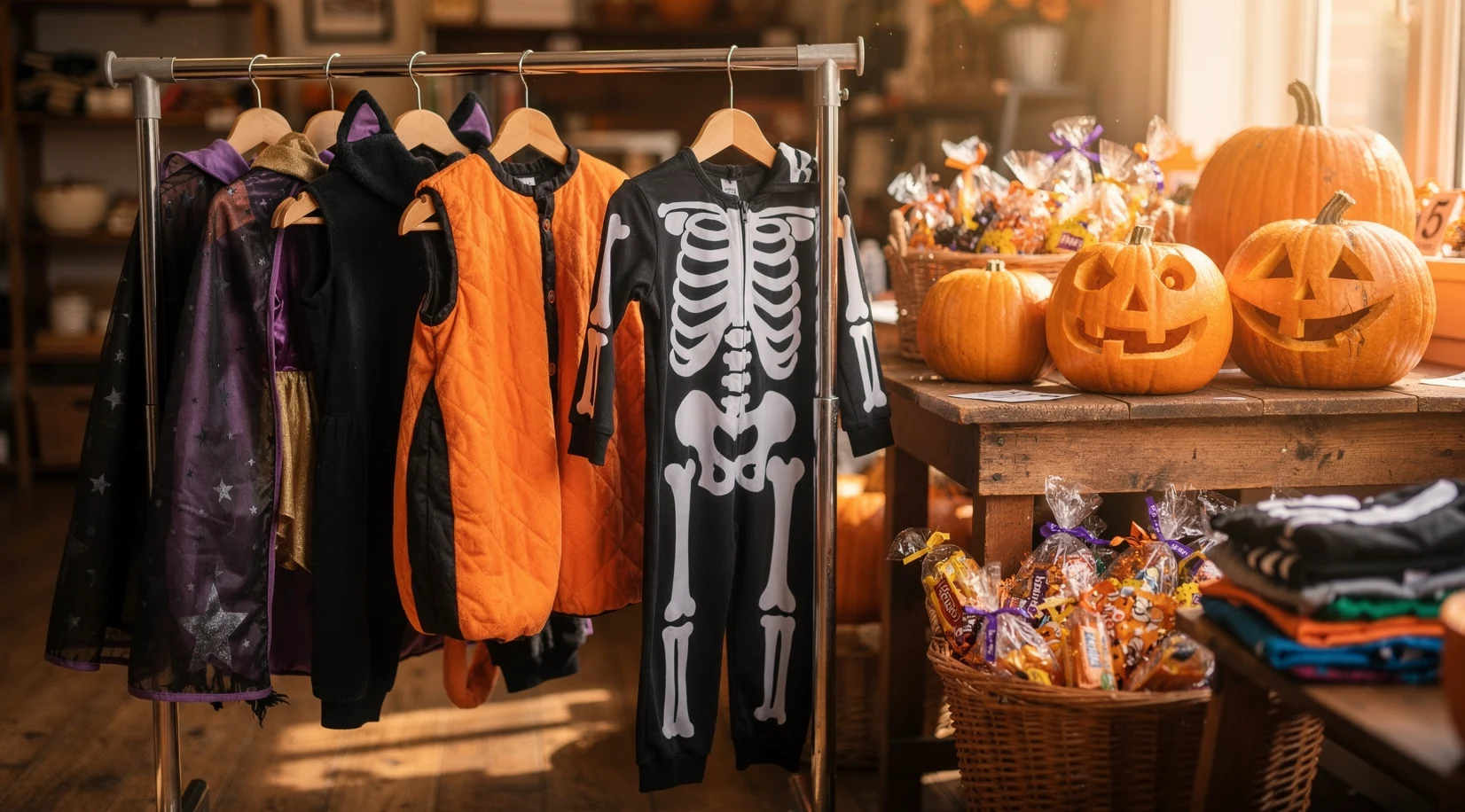
Halloween falls on a Saturday this year, and British retailers are expecting that to make a real difference to what shoppers spend. The shopper marketing agency Savvy forecasts that UK Halloween spending will reach £705m in 2026, up 6% on last year, with alcohol, costumes, make-up and home decorations all expected to grow. The clocks went back this morning, so the evenings are darker, and the celebration itself is six days away.
The same data shows households watching every pound. Savvy found that 71% of Halloween shoppers want to mark the occasion without spending a lot, and a Nationwide survey found people were twice as likely to say they are cutting back this year as to say they will spend more. The BBC reported this morning that a growing number of parents are turning to costume swaps, charity shops, eBay and Vinted rather than buying new outfits every year. This article sets out what the forecasts say, where the money goes, what a costume really costs on each route, and what to check before you buy online.
In short
- £705m forecast: Savvy expects UK Halloween spending to rise 6% in 2026, helped by 31 October falling on a Saturday.
- More people taking part: IGD research found 36% of shoppers planned to celebrate this year, up from 27% in 2025, with growth led by 18 to 24 year olds.
- Value comes first: 71% of Halloween shoppers want to keep costs down, and 85% of those buying food and drink expect to buy on promotion, according to Savvy and IGD respectively.
- Cheaper chocolate: Worldpanel figures reported by the Scotsman show like-for-like chocolate confectionery prices about 3% lower than a year ago, after double-digit rises in 2025.
- Second-hand costumes: charity shops are selling outfits from £1.50, and parents told the BBC they pay about a quarter of the original price on resale apps.
How much will the UK spend on Halloween in 2026?
Savvy’s forecast of £705m is the headline number this season. The agency, which works with retailers and brands on shopper marketing, based its research on an online panel survey of 1,002 UK shoppers, according to Retail Times and Talking Retail, which both reported the findings on 15 October. The forecast represents growth of 6% on 2025.
The main reason for the rise is the calendar. When Halloween falls on a weekday, celebrations are squeezed into a school night or spread across the weekend either side. A Saturday Halloween means parties, gatherings and late trick-or-treating on the night itself, and that changes the shopping list. Savvy expects alcoholic drinks to be the fastest-growing category, with sales up 13%, which it attributes directly to the Saturday timing.
Where the money is expected to go
Savvy forecast increases in spending on sweets, on costumes and make-up, and on home decorations. Among Halloween shoppers in its survey, 63% planned to give treats to trick-or-treaters, which remains the most popular single activity. Some 45% planned to decorate their home or garden, and 42% expected to wear a costume or fancy dress.
Parties are a growing part of the picture. Around a third of Savvy’s Halloween shoppers planned to attend a party or gathering, and 22% expected to host one themselves. That has knock-on effects for party food, drinks, disposable tableware and decorations, which tend to be bought in the final days before the event.
For supermarkets, discounters and seasonal specialists, Halloween is now a significant trading moment between the back-to-school period and the start of Christmas. Harvir Dhillon, lead economist at the British Retail Consortium, told the BBC earlier this month that retailers “will be competing hard” at this time of year as they see “greater demand for sweets and chocolate, as well as decorations and costumes”.
The wider trading backdrop is soft, which makes a strong seasonal event more valuable. Official figures published on 23 October showed that UK retail sales fell 0.4% in September, with warm weather hitting demand for autumn and winter clothing. A cold, dark Saturday Halloween is the kind of occasion that can move volumes in categories that had a weak start to the season.
Who is celebrating, and how has that changed?
Two separate pieces of research point in the same direction: more people are taking part. The grocery research body IGD said in an article published on 24 October, drawing on a survey it carried out in March, that 36% of shoppers planned to celebrate Halloween this year, up from 27% in 2025. Savvy’s own survey put the figure higher, at 46% of shoppers planning to celebrate in some way, rising to 78% among families.
The two numbers are not directly comparable, because the surveys asked different people at different times with different wording. What they share is a picture of an occasion that is widening beyond young families. Nationwide’s survey, reported by the Scotsman on 24 October, found that 26% of adults do not celebrate Halloween at all, which implies a large majority mark it in some way, even if only by buying sweets for callers.
IGD found that in 2025, Halloween was most popular among 35 to 44 year olds, the age group most likely to have children of trick-or-treating age. In 2026, participation peaks among 18 to 24 year olds. IGD also found that the share of celebrators planning to attend a party or event rose from 25% to 32%.
Nationwide’s figures tell a similar story. It found that a fifth (20%) of 25 to 34 year olds plan to “go big” this Halloween and spend more than last year. That is a notable contrast with the overall picture, in which cautious shoppers outnumber those planning to spend more.
How the main surveys compare
| Measure | Savvy (Oct 2026) | IGD (March 2026 survey) | Nationwide (Oct 2026) |
|---|---|---|---|
| Share planning to celebrate | 46% of shoppers; 78% of families | 36%, up from 27% in 2025 | 26% do not celebrate at all |
| Decorating the home | 45% of Halloween shoppers | 46% of celebrators | 15% will spend on decorations |
| Costumes | 42% expect to wear one | Not reported | Average expected spend £38 on costumes and accessories |
| Parties and events | About a third attending; 22% hosting | 32% attending, up from 25% | Average £42 on a Halloween day out |
| Treats for callers | 63% planning to give treats | 43% buying food and drink | 28% stocking up for trick-or-treaters |
| Budget mood | 71% want to spend little | 85% of food buyers expect promotions | 18% cutting back vs 9% spending more |
The differences in the table reflect different samples and questions, so they should be read as a range rather than a single answer. The consistent message is that participation is rising while individual budgets are being watched closely.
Are families spending more or cutting back?
Both are true, and the data shows the split clearly. Nationwide found that across all age groups surveyed, people were twice as likely to say they are cutting back on Halloween this year because of cost pressures as to say they will spend more: 18% plan to cut back, against 9% who expect to spend more. More than one in 10 (11%) expect to buy Halloween gifts, a small but growing habit borrowed from other occasions.
Fred Powell, head of current accounts at Nationwide, said: “Even with household budgets under pressure, our research shows that many people are still looking for affordable ways to enjoy occasions that matter to them.” He added that Halloween “can be a chance to get together with family and friends without breaking the bank, whether that’s carving a pumpkin, dressing up, enjoying a themed day out or treating trick-or-treaters.”
Savvy’s survey captures the same tension in two numbers. Some 71% of Halloween shoppers said they wanted to mark the occasion without spending a lot, yet 79% said it was important to make the most of events like Halloween despite cost-of-living pressures. In practice, that tends to mean fewer impulse purchases, more planning, and more attention to multi-buys and own-label ranges.
IGD’s research supports that reading. It found that 85% of those buying food and drink for Halloween said they were likely to buy items on promotion, while 67% planned their shopping in advance. IGD described the likely result as Halloween spending becoming “more deliberate”, with shoppers favouring promotions, value ranges and convenience.
The Budget is hanging over the week
The timing adds another layer. The Chancellor delivers the Budget on Wednesday 28 October, three days before Halloween. Fraser McKevitt, head of retail and consumer insight at Worldpanel, said: “With the autumn Budget fast approaching, the cost of living continues to weigh heavily on the minds of shoppers. Until the Chancellor sets out his plans, we expect that caution to carry on showing up at the till, with shoppers leaning more heavily on promotions to keep their grocery spend under control.”
For online shoppers, the Budget also carries a retail-specific measure to watch. Reports this month suggest the Chancellor may make Amazon and eBay collect VAT on behalf of business sellers, which could affect prices on marketplace listings from smaller traders over time, although any change would not apply in time for this Halloween.
What will sweets, chocolate and pumpkins cost this year?
The good news for anyone filling a bowl for trick-or-treaters is that chocolate is getting cheaper. According to Worldpanel figures reported by the Scotsman, like-for-like chocolate confectionery prices are 3% lower than a year ago. Reuters reported on 13 October that Worldpanel’s latest data showed chocolate, butter and cheese among the categories where prices were falling fastest.
That follows a difficult period. McKevitt said: “Halloween and Christmas are two of the most important moments of the year for chocolate confectionery, so falling prices will be welcome news for shoppers and retailers alike. After the double digit increases of 2025, a 3% drop won’t fully reverse what consumers have paid in recent months, but it should help ease some of the pressure on household budgets as the festive season approaches.”
Cheaper chocolate sits against a backdrop of rising prices elsewhere in the basket. Worldpanel said British grocery price inflation accelerated to 2.5% over the four weeks to 4 October, from 2.3% in its previous report, according to Reuters. Prices rose fastest in products such as water, cordials and skincare. Grocery sales rose 1.0% year on year over the four weeks, which implies lower volumes once inflation is taken into account.
Looking further ahead, Reuters reported that industry groups predict UK food inflation could reach nearly 7% in 2027. Earlier this autumn, the Food and Drink Federation cut its Christmas food inflation forecast to 3.9% and said the peak had moved into next year, which suggests the relief on sweets may be temporary.
Pumpkin sales point to strong engagement. Worldpanel data reported by the Scotsman shows 1.2 million households bought a pumpkin over the latest four weeks, an increase of 10% on the same period last year. More than 250,000 households bought a pumpkin spice coffee. Nationwide’s survey found 13% of people will buy a pumpkin and 12% will buy several.
Pick-your-own pumpkin patches have become a day out in their own right. The BBC reported that farm entry fees vary widely, from around £2 to £15 per person, and that the biggest pumpkins sell for upwards of £15 each. For a family of four, a patch visit can cost more than a supermarket pumpkin and a bag of sweets combined, so it is worth checking prices and booking rules before setting off.
How much does a Halloween costume really cost?
Costumes are where the gap between routes is largest. Nationwide found that people expecting to buy Halloween costumes and accessories typically expect to spend £38. David Gaze, owner of Chaplins fancy dress shop in Bristol, told the BBC that last October was the shop’s busiest to date, with customers spending an average of £40 each on costumes and accessories.
Second-hand prices are a fraction of that. Ellya Hayden, manager of the RSPCA charity shop in Coundon, Coventry, told the BBC that some costumes sell for as little as £1.50, and that recycled costumes are priced between £1.50 and £12. Items still in their original packaging are often priced at about a quarter of their retail value.
Comparing the main routes
| Route | Typical cost reported | Main advantage | Main drawback |
|---|---|---|---|
| New from a fancy dress shop | About £40 average spend (Chaplins, 2025) | Choice, fitting, advice, quality | Highest cost; queues in Halloween week |
| New, expected spend nationally | £38 average on costumes and accessories (Nationwide) | Easy to buy online or in supermarkets | Often worn only a handful of times |
| Resale apps such as eBay or Vinted | About a quarter of the original price (parent quoted by the BBC) | Specific characters easy to find | Delivery time; check condition and labels |
| Charity shop | £1.50 to £12 (RSPCA shop, Coventry) | Cheapest; buy and take home same day | Limited sizes and characters |
| Swap groups | Free or very low cost | No waste; good for school events | Depends on what others offer |
| Homemade from old clothes | Materials already at home | Creative, unique, nearly free | Time; safety of materials near flames |
Part of the pressure comes from the number of occasions. Birmingham mother Mandy Thomas told the BBC that when her daughters were younger, “there would be a school event, trick-or-treating and a friend’s party, and they didn’t want to dress up as the same thing every time.” The BBC reporter writing the piece said she had already bought three costumes for different Halloween occasions this year.
That multiplies the cost of buying new. At £38 to £40 an outfit, three costumes for one child can cost well over £100, before make-up, accessories and treats. Swapping, borrowing and buying second-hand bring that down sharply.
Why second-hand costumes are going mainstream
The BBC reported this morning that parents are increasingly turning to costume swaps, second-hand outfits and homemade creations rather than buying new every year. Mandy Thomas said a friend pointed her to Facebook groups “where people swap or sell costumes really cheaply”, and added: “When one of them wants to be a specific character, I search eBay or Vinted and I usually spend a quarter of the original price.”
The economics are simple. Many costumes are worn only a handful of times before being packed away, so a large stock of barely used outfits sits in lofts and wardrobes. Resale turns that stock into cash for the seller and a bargain for the buyer. It is the same logic behind the wider growth of recommerce as a real retail channel, applied to a product with an unusually short useful life.
Charity shops have noticed the demand. Hayden said her team prepares for Halloween throughout the year by putting aside suitable donations. “We know that at Halloween and Christmas there’s going to be lots of buying going on, and people prefer to cut costs by shopping in charity shops,” she said. “We save any sellable costumes that come in and get them ready for display.”
She added that the shop repairs items where it can “so they can have multiple lives”, and that “there’s always someone who needs a last-minute costume.” For shoppers, that makes the local charity shop a useful fallback in the final days before Saturday, when online delivery becomes a gamble.
In Coventry, Adele Harrison, founder of the not-for-profit organisation Cov Cloth, runs workshops teaching children and parents to turn unwanted textiles and household items into Halloween costumes, decorations and accessories. Families pay to attend, but Harrison told the BBC the same principles can be applied using old tights, cereal boxes and unwanted clothing.
“Our message is: before heading to the shops, use what you already have,” she said. “Get creative, save some money and let your children see how brilliant they are.” Her point is that the savings come from habits rather than one-off bargains: reusing materials, repairing and passing outfits on.
Are costumes bought online safe for children?
Price is not the only thing to check, especially when buying from online marketplaces. Children’s costumes are classed as toys, so they must meet toy safety rules, including flammability requirements. Those rules reduce risk but do not make fabric fireproof, and costumes can still burn quickly if they touch a naked flame.
The clearest official evidence comes from testing by the Office for Product Safety and Standards (OPSS), the government’s product safety regulator. In October 2024, OPSS said it had tested 128 Halloween costumes for children under seven bought from online marketplaces, and that more than 80% failed essential safety checks. The costumes were assessed against the Toys (Safety) Regulations 2011, and OPSS said all the unsafe items it found were removed from the platforms.
What the regulator’s tests found
| Test | Costumes tested | Failed | Approximate failure rate |
|---|---|---|---|
| Flammability | 128 | 28 | 22% |
| Cords and drawstrings | 73 | 59 | 81% |
| Labelling | 128 | 98 | 77% |
The cords problem relates to head and neck cords, which create a strangulation risk for young children. The labelling failures involved missing information such as manufacturer details, batch or model numbers and importer details, which matter if a product needs to be traced or recalled. Graham Russell, chief executive of OPSS, said at the time that the tests showed “many costumes for sale, particularly those online, pose serious risks to young children”, and urged parents: “Please take extra care before you buy.”
What to check before you buy
OPSS advises buying costumes only from trusted sellers, especially online, checking for head or neck cords, and keeping children away from open flames and other sources of fire while they are in costume. In England, Scotland and Wales, look for a UKCA or CE mark and clear labelling with a manufacturer or importer name and address. Fire services commonly recommend battery-powered candles in pumpkins instead of real flames.
Second-hand costumes need the same checks. A pre-loved outfit from a known high street or supermarket brand that still carries its care and safety label is a safer bet than an unlabelled item of unknown origin. Homemade costumes made from loose, floaty fabric deserve particular care around candles and fire pits. The Product Regulation and Metrology Act 2025 gives ministers powers to place product safety duties on online marketplaces through regulations, but for now the practical protection is the buyer’s own checking.
What does a Saturday Halloween mean for shops, brands and attractions?
For some businesses, Halloween has become more important than Christmas. The BBC reported on 12 October that Avon Valley Adventure Park near Bath now generates around a third of its annual income from Halloween activities. Founder Doug Douglas said: “We turn over £2m from our activities in October,” and added: “Halloween is really important for us, it has surpassed Christmas.”
The costs are high too. Douglas said the park’s FEAR scream park costs about £750,000 to put on, employs about 200 staff including around 120 actors, and expects around 30,000 visitors this month. Its pumpkin event attracts around 120,000 people each year. He said the scare event is not “massively profitable” because of those costs.
For independent fancy dress shops, the concentration is even sharper. Chaplins’ David Gaze told the BBC: “We make half of our turnover in October, and one third comes from the week of Halloween alone.” He said the week of Halloween is the shop’s busiest every year, with queues outside the door, and that what sells usually follows what people are watching on television.
That dependence on a single week is a familiar pattern for seasonal independents, and a Saturday Halloween helps by putting the peak on a trading day when families are free to shop. It also means the final few days carry more risk: a shop that runs out of popular sizes on Thursday has little time to restock.
Heather Parry, managing agent at the National Farm Attractions Network, said its roughly 200 members “almost all” embrace the season with maize mazes, after-dark trails, scare attractions and pumpkin festivals. “Ten years ago, a pumpkin patch was a field and a wheelbarrow. Now it’s a wonderful experience for the whole family,” she told the BBC, adding that Halloween gives farms “a short, high-footfall season” at a time of rising input costs and changes to inheritance tax relief.
Nationwide’s survey found that people planning a Halloween-themed day out expect to spend £42 on average. With half-term falling around Halloween for many schools, attractions are competing for family budgets across the whole week rather than one night.
Social media is shaping the basket
Social media now shapes a large share of Halloween shopping decisions. Savvy found that 73% of Halloween shoppers said they were likely to buy something for the occasion inspired by their social media feed. IGD found that 34% of celebrators plan to use social media for ideas on food and drink choices, and 51% plan to try new products or recipes for the occasion.
Brands have responded with limited editions and themed packaging. Savvy found that 82% of Halloween shoppers like seeing their favourite brands create Halloween special editions, and 87% enjoy browsing Halloween products. IGD said trade-up opportunities lie in premium sweet treats, speciality confectionery and elevated party food that feel like “an affordable indulgence”.
Tastes are broadening beyond sweets. Savvy found that while 72% of Halloween shoppers would consider buying Halloween sweets or chocolate, the same proportion said they would like to see healthier Halloween food and drink options. More than half would consider Halloween-themed savoury snacks, 48% would consider ready-to-eat Halloween party food, and almost a quarter would consider Halloween-themed low or no-alcohol drinks.
Alastair Lockhart, insight director at Savvy, said: “With Halloween landing on a weekend, more shoppers are making the most of the event, decorating their homes and gardens, attending parties and getting dressed up in fancy dress.” He added: “We’re also seeing the health trend shaping shopper demand. While Halloween is traditionally associated with sweets and other treats, our research found that 72% of Halloween shoppers would like to see healthier Halloween food and drink options.”
How can you keep Halloween costs down this week?
The research and the people quoted in this week’s coverage point to a handful of practical steps. None requires giving up the occasion; they mostly involve planning earlier and buying less new.
- Set a budget per child, not per item. With several events in one week, decide whether one costume can cover school, trick-or-treating and a party, and add accessories to change the look.
- Check the swap and resale options first. Local Facebook swap groups, charity shops and resale apps can cut the cost of a character costume to a quarter of the new price or less.
- Order online early or buy locally. With Halloween on Saturday, items ordered late in the week may not arrive in time; a charity shop or supermarket is the safer last-minute option.
- Use promotions on sweets. Chocolate prices are about 3% lower than last year, according to Worldpanel, and multi-buys on sharing bags are common in the final week.
- Check safety labels on every costume. Look for a UKCA or CE mark, a manufacturer or importer address, and no cords around the head or neck.
- Use battery candles. They are cheap, reusable and remove the main fire risk for children in costume.
- Keep what you buy. A costume that is washed, repaired and stored can be swapped, sold or worn by a younger sibling next year.
Halloween is also the start of the run into Christmas, and many households will be setting aside money for both. Retail Week has written this week about shoppers spreading the cost of Christmas, and the delivery calendar is already set: Royal Mail has published its Christmas 2026 last posting dates, with second class letters and cards due by Friday 18 December. Buying second-hand and reselling unused costumes this week can free up a little money for the larger season that follows.
What happens next
The next few days will settle whether the £705m forecast holds. The Budget on Wednesday is the main risk to sentiment: Worldpanel’s McKevitt expects caution “to carry on showing up at the till” until the Chancellor sets out his plans. If the Budget is seen as squeezing household incomes, the last three days of Halloween shopping could tilt further towards value.
Retailers will report on the season in their trading updates over the coming weeks, and IGD has said it will publish a review of the standout Halloween activations after the event. For shoppers, the practical window is short: costumes ordered online need to arrive by Friday, and charity shops and supermarkets remain the fallback for anything left to the weekend.
Frequently asked questions
How much will the UK spend on Halloween in 2026?
The shopper marketing agency Savvy forecasts UK Halloween spending of £705m in 2026, up 6% on 2025. It based the forecast on an online panel survey of 1,002 UK shoppers and expects alcohol to be the fastest-growing category, with sales up 13%, because Halloween falls on a Saturday.
What day is Halloween in 2026?
Halloween is on Saturday 31 October 2026. The weekend timing is expected to boost parties, gatherings and late trick-or-treating, and the clocks went back on Sunday 25 October, so evenings are already darker.
How much does the average person spend on a Halloween costume?
A Nationwide survey found that people buying Halloween costumes and accessories typically expect to spend £38. A Bristol fancy dress shop told the BBC its customers spent an average of £40 each last October. Second-hand costumes in charity shops can cost from £1.50.
Is chocolate cheaper this Halloween?
Yes, slightly. Worldpanel figures reported by the Scotsman show like-for-like chocolate confectionery prices are about 3% lower than a year ago. Worldpanel said that follows double-digit increases in 2025, so the fall does not fully reverse earlier price rises.
Where can I buy a cheap Halloween costume?
Charity shops, local Facebook swap groups and resale apps such as eBay and Vinted are the cheapest routes. One parent told the BBC she usually pays about a quarter of the original price on resale apps, and an RSPCA charity shop in Coventry prices costumes between £1.50 and £12.
Are Halloween costumes sold online safe?
Not always. In 2024 the Office for Product Safety and Standards tested 128 children’s costumes bought from online marketplaces and found more than 80% failed essential safety checks, mainly on cords and labelling, with 28 failing flammability tests. Buy from trusted sellers and check for a UKCA or CE mark.
How can I make Halloween safer for children in costume?
Keep children away from naked flames, use battery-powered candles in pumpkins, avoid costumes with cords around the head or neck, and check that labels show a manufacturer or importer name and address. Loose, floaty homemade costumes need extra care near candles and fire pits.
Are more people celebrating Halloween in the UK?
Yes. IGD research found 36% of shoppers planned to celebrate Halloween in 2026, up from 27% in 2025, with participation peaking among 18 to 24 year olds. The share of celebrators planning to attend a party or event rose from 25% to 32%.