
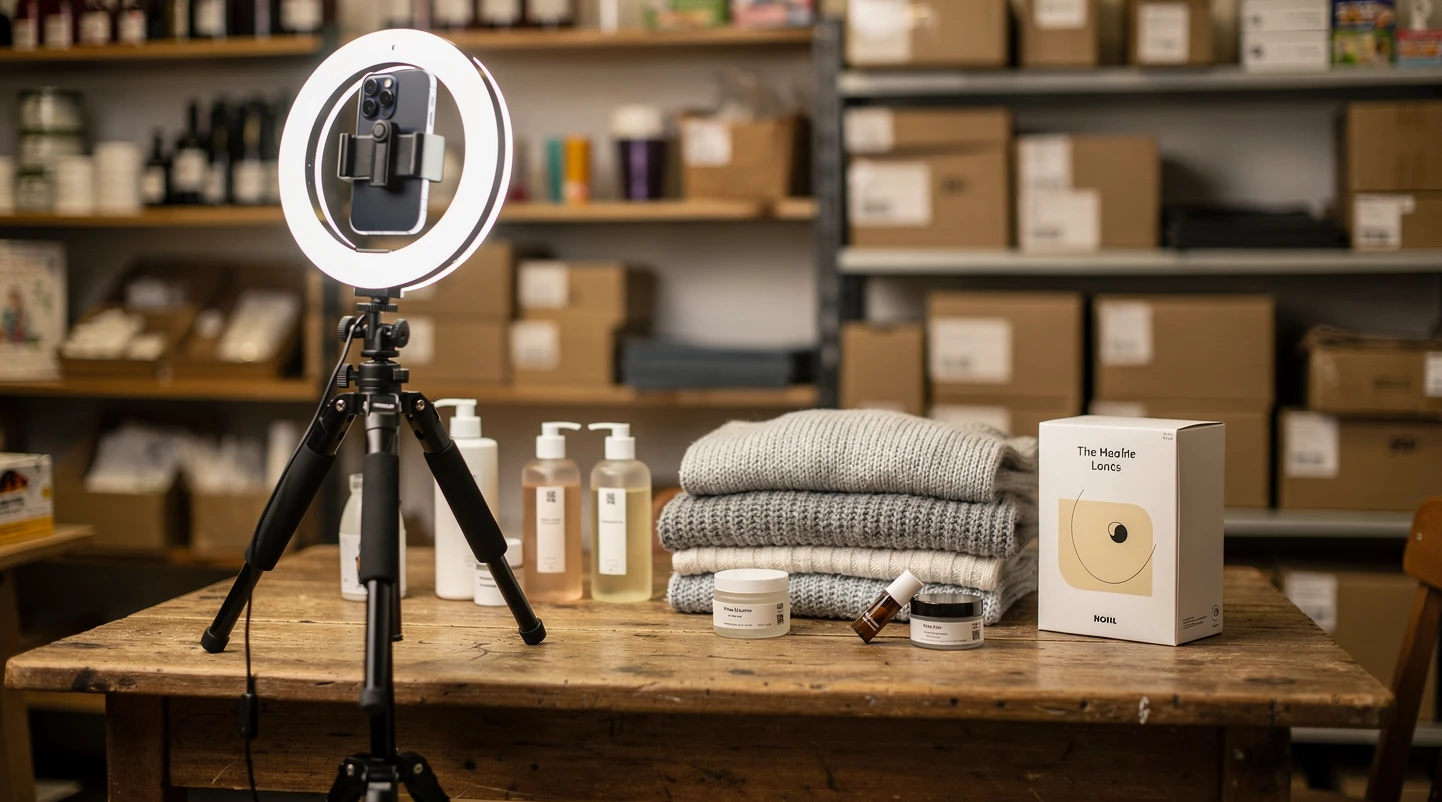
TikTok Shop has published its first UK LIVE Shopping Report, and its headline claim is a bold one: 61% of the small and medium-sized businesses that sell through live broadcasts on the platform say a single session brings in more revenue than their other sales channels manage in a typical week. Almost a quarter (24%) say one session beats a full month. The report landed on Thursday 12 November 2026, the day before TikTok Shop UK opens its Black Friday programme of live sales, which runs from 13 to 30 November.
The findings were reported on the morning of publication by ChannelX, TheIndustry.fashion, 365 Retail, Retail Week and Cosmetics Business. This article sets out what the report says, which numbers come from TikTok’s own sales data and which from commissioned surveys, how the figures compare with what the platform disclosed earlier in the year, and what the growth of live selling means for UK shoppers, independent sellers and high street shops heading into the busiest fortnight of the retail calendar.
In short
- 61% of UK SMB sellers using live shopping say one session out-earns a typical week on their other channels; 24% say it beats a month.
- TikTok Shop UK now hosts more than 6,000 live sessions a day, with live sales up 55% and live views up 80% year on year (August 2025 to August 2026).
- 90% of pre-loved luxury sales on the platform happen during live broadcasts, and fashion bought live is returned at less than half the rate of fashion bought from static listings.
- 32% of live viewers surveyed say they later bought a product they saw in a stream in a physical shop; 43% of those bought beauty.
- The survey data was commissioned by TikTok Shop through Ready10 and OnePoll; shoppers buying live from a business seller keep the same 14-day cancellation rights as any other online purchase.
What did TikTok Shop’s UK live shopping report find?
The report is TikTok Shop UK’s first dedicated study of live, presenter-led selling, which the platform styles as LIVE Shopping. According to ChannelX, which covers marketplace sellers, it examines the commercial role of live broadcasts across every category on the platform, from reaching new customers to helping shoppers understand products before they decide to buy.
The seller findings are the most striking. Of the UK SMBs surveyed that already use live shopping, 61% say one live session generates more revenue than their other channels do in a typical week, and 24% say it exceeds a full month’s revenue from those channels. Over nine in ten (92%) say the format has helped them reach customers they would not otherwise have reached, and 75% say customers who buy during a live session are more likely to buy from them again.
Among sellers whose sales have increased, the report lists three knock-on effects: larger stock orders (49%), international expansion (29%) and listings with larger retailers (25%). As a result, 77% of the surveyed SMBs say they intend to increase their use of the format over the next 12 months.
On the consumer side, the report says 51% of UK adults are considering buying through live shopping in the next 12 months, rising to 79% among Gen Z. TheIndustry.fashion reports that 57% of UK shoppers in the consumer survey identified TikTok Shop as the leading platform for live shopping.
The platform figures
Alongside the surveys, TikTok Shop published internal platform data covering August 2025 to August 2026. It says more than 6,000 live shopping sessions now take place in the UK every day, that live is its fastest-growing shoppable format for businesses, and that live sales rose 55% over the year. TheIndustry.fashion adds that UK live views rose 80% year on year over the same period.
Views growing faster than sales (80% against 55%) is worth noting. It suggests that the audience for live streams is expanding more quickly than the share of viewers who go on to buy, although the report does not publish a conversion rate, average order value or total UK gross merchandise value, so the gap cannot be measured precisely.
What TikTok Shop UK’s head said
Jan Wilk, head of TikTok Shop UK, said in the statement carried by ChannelX and 365 Retail that the platform had “pioneered a new way to bring valuable expert advice online through LIVE Shopping, bringing the in-store experience straight to peoples’ pockets”. He added that small businesses were “now able to expand nationally, internationally, and even gain space on high-street shelves with large retailers”, and that more businesses were hosting more sessions each week or building their own dedicated live studios.
Which product categories are selling live in the UK?
The report breaks its findings down by category, and the numbers vary widely in what they measure. Some are shares of sales, some are growth rates and some are survey responses. The table below groups them so the different bases are clear.
| Category | Headline figure | What it measures | Basis |
|---|---|---|---|
| Pre-loved luxury | 90% of sales made live; live sales up 60% | Live share of category GMV; year-on-year growth | Platform data |
| Fashion | Returns under half the rate of static listings | Return rate, live versus listing purchases | Platform data |
| Grocery and FMCG | Live views up 46%, live sales up 53% | Year-on-year growth in food, drink and everyday products | Platform data |
| Fresh meat | Live sales up 122%; 54% of meat sales made live | Growth and live share of category sales | Platform data |
| Beauty | Live bundle sales up 108% | Growth in multi-item bundles sold live | Platform data |
| Electronics | Live views up 286%; creators drive 70% of sales | View growth; creator share of category sales | Platform data |
| Collectables | Repeat buyers are 64% of sales | Share of sales from returning customers | Platform data |
| Home and living | 1 in 5 adults would consider buying live | Purchase intent over 12 months | Consumer survey |
| Books | One UK publisher’s live revenue up 225% | Single named-case growth | Case study |
Two patterns stand out. First, live selling dominates where buyers need to inspect something they cannot touch: second-hand luxury goods, where every item is unique, and fresh meat, where cut and quality matter. Second, the highest growth rates are in categories that started from a small base, such as electronics views (up 286%), which tells us more about how new the format is in those categories than about their absolute size.
Why shoppers say they buy during a stream
According to TheIndustry.fashion, among all survey respondents who had bought something during or immediately after a live session, the most common reasons were seeing the product work in real time (50%), seeing size, fit or condition up close (43%), having questions answered in real time (42%) and the host’s expertise and product knowledge (42%). Those are, in effect, the reasons people have always given for shopping in person, which is the case TikTok Shop is making: live streams recreate some of the shop-floor experience on a phone.
How do pre-loved and fashion sellers use live streams?
Pre-loved luxury is the category where live selling has gone furthest. TheIndustry.fashion reports that live shopping accounted for 90% of UK pre-loved luxury GMV on TikTok Shop between August 2025 and August 2026, measured against every sales format including shoppable videos, and that live GMV in the category grew 60% year on year. Returns of pre-loved items bought live account for fewer than one in 100 transactions, according to the platform.
The report attributes the low return rate to shoppers being able to see an item’s condition and ask questions before buying. That is a familiar problem in second-hand electronics too: eBay’s answer, covered in our report on how eBay UK’s £5 Condition Guarantee inspection works, is a paid third-party check rather than a live demonstration. Both approaches are trying to solve the same trust gap in used goods bought at a distance.
The Fashionphile example
The report highlights Fashionphile, a US-based luxury reseller that entered the UK in October 2025 by acquiring Luxe Collective, a London reseller that had built a large following on TikTok. According to TheIndustry.fashion, Fashionphile now broadcasts on TikTok Shop for around 35 hours a week and plans to increase that to 55–60 hours a week next year. Weekends, once among its slowest trading days, have become its busiest, helped by platform initiatives such as Pre-Loved Sundays. Fashionphile opened an appointment-only pop-up in Vauxhall, London, in August.
Among pre-loved luxury sellers in the SMB survey, 46% agreed that live shopping helps build trust with customers and 86% use TikTok Shop for their broadcasts. On the consumer side, 60% of Gen Z respondents had bought, or were considering buying, pre-loved luxury through live shopping, and 31% of that group said learning about an item’s history was the main attraction.
Lower fashion returns
For mainstream fashion, the report says items bought in a live session are returned at less than half the rate of items bought from static product listings on the platform. It does not give the underlying return rates. Returns are one of the largest costs for UK online fashion retailers, so if that gap holds at scale it matters commercially, although part of the difference may reflect who buys live (engaged, repeat customers of a seller they already follow) rather than the format alone.
Crocs is the report’s big-brand example. According to 365 Retail, it ran more than 93 hours of live broadcasts during its “Croctober” campaign, including a 30-hour marathon, lifting live sales by 247% against a standard day.
Is live shopping really sending people to the high street?
Retail Week led its coverage on the report’s claim that live shopping is having a positive effect on UK high streets. The figure behind it: 32% of live viewers surveyed say they went on to buy a product in a physical shop after seeing it in a live shopping session. Of those, 43% bought a beauty product.
The report’s examples lean on beauty. According to 365 Retail, MAC has turned its in-store make-up artists into TikTok Shop affiliates, and Wonderskin now runs at least 80 hours of live shopping a month. Cosmetics Business and TheIndustry.beauty both reported the beauty findings separately, describing live streams as converting digital discovery into in-store sales.
Reading the 32% carefully
Three cautions apply. The figure comes from a consumer survey commissioned on TikTok Shop’s behalf, not from tracked sales. It measures what respondents remember doing, over an unstated period, rather than a purchase linked to a specific stream. And the report does not say what share of those in-store purchases were of the same product, at the same retailer, or would have happened anyway.
That does not make the claim wrong. Beauty shoppers have long researched online and bought in store, and a live demonstration is a natural place to see a shade or texture before visiting Boots or Superdrug. But “32% have bought in store after watching” is a measure of overlap between channels, not proof that live streams caused a third of viewers to visit a shop.
Small shops selling both ways
The clearest high street case in the report is a single independent butcher. According to 365 Retail, Malik Butchers, a family-run halal butcher in Wolverhampton, took £8,000 in one three-hour live session in May, a sum that would usually take three to four days in its high street shop, and now generates around £25,000 a month through TikTok Shop. That is a high street business using the platform as an extra till, rather than live shopping sending customers through its door, which is a different kind of benefit.
What do the numbers add to what TikTok already disclosed?
Several of the headline platform figures are not new. In July 2026, according to Retail Times, TikTok Shop said more than 300,000 small UK businesses were selling on the platform, that live sales had grown 55% over the previous year, and that more than 6,000 live sessions were taking place every day in the UK. The Malik Butchers £8,000 example was also quoted in that July release.
| Metric | December 2025 (Black Friday readout) | July 2026 release | November 2026 report |
|---|---|---|---|
| Live sales growth | 68% (Black Friday week, year on year) | 55% over the past year | 55% (August 2025 to August 2026) |
| Live sessions per day (UK) | Not stated | More than 6,000 | More than 6,000 |
| Live views growth | Not stated | Not stated | 80% year on year |
| UK small business sellers | New small sellers up 200% (October to Black Friday) | More than 300,000 | Not restated |
| Seller survey | None | None | 735 SMBs using live; 61% say one session beats a week |
| Category data | Top live sellers named (Shark UK, Ninja Kitchen, Lookfantastic, M&S, Crocs, Wonderskin) | Case studies only | Nine categories with growth and share figures |
The overlap is explained by the data window. The November report’s platform data runs to August 2026, so the 55% and 6,000 figures describe the same period as the July release rather than fresh growth since the summer. What is genuinely new is the category breakdown, the 80% views figure, the return-rate comparisons and the two surveys.
How the surveys were run
According to 365 Retail, the consumer findings come from an online survey of 2,000 UK adults conducted by OnePoll between 1 and 5 October 2026. The seller findings come from a survey of 735 UK decision-makers at SMBs already using live shopping, conducted between 6 October and 6 November 2026. Both were commissioned by the agency Ready10 on behalf of TikTok Shop.
The seller sample is therefore made up entirely of businesses already using the format, which will tend to include the ones for whom it is working. Sellers who tried live streaming and gave up are not represented. That is normal for a platform’s own report, but it means the 61% figure describes current live sellers, not the likely outcome for a business starting out.
What is TikTok Shop planning for Black Friday 2026?
TikTok Shop says the Black Friday period will be its biggest live shopping moment to date and that it is aiming for a record number of sales within live sessions. Black Friday live sessions and discounts from brands and small businesses run on TikTok Shop UK from 13 to 30 November. According to the report, 53% of Gen Z plan to shop on the platform over the sales weekend.
The report also points to a change in what people intend to buy. Among those planning to shop on TikTok Shop over Black Friday, almost a quarter plan to buy food and groceries, and the same share (24%) plan to buy collectables. 365 Retail notes that this puts everyday essentials alongside the big-ticket tech and beauty purchases traditionally associated with the weekend.
Last year’s benchmark
TikTok Shop UK’s Black Friday 2025 readout, reported by TheIndustry.fashion in December 2025, gives the baseline it is trying to beat. Sales across the Black Friday to Cyber Monday period were 50% above 2024, Black Friday itself became the highest-grossing day in the platform’s UK history with shoppers buying 27 items a second, shopper numbers rose 28% and live shopping sales rose 68%. QVC UK hosted a 10-hour “Black Friday Eve” broadcast and TikTok Shop said 80% of QVC’s customers on the platform were over 35.
| Measure | Black Friday 2025 (reported) | Black Friday 2026 (announced) |
|---|---|---|
| Campaign window | Black Friday to Cyber Monday period | 13 to 30 November |
| Sales growth | 50% above 2024 | Target: record live sales (no figure given) |
| Live shopping | Live sales up 68% | Billed as biggest live moment to date |
| Peak day | Black Friday, 27 items a second | Black Friday is 27 November |
| Shopper intent | 45% of Gen Z expected to use platform (Barclays) | 53% of Gen Z plan to shop (OnePoll for TikTok) |
| Product mix | Top live sellers included Shark UK, Ninja Kitchen and Lookfantastic | 24% of planned buyers want groceries; 24% collectables |
The platform’s role in the Black Friday debate has also become political. TikTok was one of the companies named when MPs widened their inquiry, covered in our report on how Amazon, TikTok and John Lewis snubbed MPs over the Black Friday rip-off probe. A live sales event on that scale will be watched closely for pricing claims.
What are your rights when you buy during a live stream?
Buying during a live broadcast feels different from adding something to a basket on a website, but in law it is usually the same thing: a distance contract made online. Who you are buying from matters more than the format. A brand, retailer or small business selling as a trader owes you the full set of consumer rights. A private individual selling their own possessions owes you much less.
| Protection | Buying live from a business seller | Buying live from a private individual |
|---|---|---|
| Cancel without a reason | Yes, 14 days from delivery (Consumer Contracts Regulations 2013), with some exceptions such as perishable food and unsealed hygiene items | No statutory right; platform policy only |
| Faulty goods | Satisfactory quality and fit for purpose; 30-day short-term right to reject (Consumer Rights Act 2015) | Goods must match the description; no satisfactory quality duty |
| Misleading claims in the stream | Unfair commercial practices rules under the DMCC Act 2024, enforced by the CMA and Trading Standards | Generally outside consumer law; misrepresentation claims possible |
| Card protection | Section 75 for credit card purchases of £100.01 to £30,000; chargeback on debit cards | Same card protections may apply depending on payment route |
| Platform buyer protection | TikTok Shop’s own refund and return policy | TikTok Shop’s own refund and return policy |
Perishable food and Black Friday groceries
The report’s push into groceries and fresh meat runs into one of the main exceptions in UK cancellation law. The 14-day right to cancel does not apply to goods that are liable to deteriorate or expire rapidly. If you buy fresh meat in a live stream and change your mind, you cannot rely on the cooling-off period; your rights are limited to goods that arrive faulty, spoiled or not as described. Check the seller’s delivery method and temperature controls before buying chilled food online.
Countdown timers and “only three left”
Live selling relies on urgency: limited stock, flash prices and timers that run during the stream. Since 6 April 2025 the Digital Markets, Competition and Consumers Act 2024 has let the CMA decide for itself that consumer law has been broken and fine businesses up to 10% of global turnover. False scarcity or false time-limited offers can amount to misleading practices. Our explainer on UK rules on fake countdown deals as Black Friday sales start early sets out what is and is not allowed. Creators who are paid or given free products to promote items must also label the content as advertising under the advertising codes enforced by the ASA.
What does the report mean for UK marketplace sellers?
For an independent seller, the most useful parts of the report are not the headline percentages but the examples of what successful live sellers actually do. The pattern is consistent: long and regular broadcast schedules, demonstrations of products that are hard to judge from a photo, and bundles that lift the value of each order.
- Fashionphile broadcasts around 35 hours a week and plans 55–60.
- Wonderskin runs at least 80 hours of live shopping a month.
- QVC UK broadcasts on TikTok Shop six hours a day, seven days a week, from its in-house studio, according to 365 Retail.
- Crocs ran a 30-hour marathon within a 93-hour campaign.
- SharkNinja, which demonstrates products live, saw live sales rise 202% quarter on quarter in the third quarter.
The cost of being on air
Those schedules are a reminder that live selling is labour. A three-hour stream is three hours of presenting, plus preparation, stock picking and fulfilment afterwards. For a sole trader, the claim that one session out-earns a week elsewhere has to be weighed against the hours it consumes and the stock it ties up, particularly when 49% of sellers whose sales grew say they had to place larger stock orders.
Many sellers also lean on creators and affiliates rather than presenting everything themselves; the report says creators drive 70% of electronics sales on the platform. The economics of that route depend heavily on commissions and free product, which we have looked at in our guide to budgeting creator sampling on TikTok Shop.
Food brands testing the format
Food is the newest frontier. According to 365 Retail, a recent shoppable live cooking series from Schwartz delivered 16 times more sales than expected, and grocery live sessions are drawing 46% more views than a year ago. For small food producers, the combination of demonstration and direct sales is attractive, but selling chilled or fresh products by post brings food safety registration, labelling and cold-chain delivery obligations that apply whatever the sales channel.
How TikTok Shop compares with other ways to buy live
Live selling is not new in Britain. Shopping television, led by QVC UK, has sold through presenter-led demonstrations for decades, and QVC’s decision to broadcast daily on TikTok Shop shows the two models converging. The report’s 57% figure, the share of UK shoppers in its survey who named TikTok Shop as the leading live shopping platform, is a survey of perception rather than market share, and the report gives no comparison with rivals’ sales.
Other platforms are pursuing the format. Whatnot, the US-founded live marketplace focused on collectables, has built its model entirely around live auctions, as we reported when Whatnot hit a $20 billion valuation as live shopping reshaped marketplaces. TikTok Shop’s collectables figure, with repeat buyers making up 64% of sales, suggests the same community dynamic is at work on its platform.
Safety and scrutiny
Growth brings scrutiny. MPs have pressed TikTok and Amazon over the safety of products sold through their marketplaces, and the Product Regulation and Metrology Act 2025 gave ministers powers to set product safety duties for online marketplaces. Live streams add a specific challenge for regulators: a claim made verbally in a stream that ends is harder to record and evidence than a written product listing. Shoppers who rely on something said in a broadcast should screenshot the listing and keep the order confirmation.
What should UK shoppers watch for during the Black Friday live sales?
The live sales run from Friday 13 November to Monday 30 November. The practical advice is the same as for any Black Friday purchase, with a few points specific to buying during a stream.
- Check who the seller is. The listing should show whether you are buying from a business. That decides whether your full consumer rights apply.
- Check the price history. A “today only” live price is only a deal if it is lower than the price the item has genuinely been sold at.
- Read the listing, not just the stream. Size, condition and what is included should be in writing. For pre-loved items, ask for close-up photos of any wear before you buy.
- Know the food exception. Fresh and perishable groceries bought live cannot be returned just because you changed your mind.
- Pay by credit card for items over £100. Section 75 gives you a claim against the card issuer if something goes wrong.
- Look for the ad label. A creator who is paid or receives free products should make that clear.
What happens next
The test of the report will come quickly. TikTok Shop has said it expects Black Friday 2026 to be its biggest live shopping moment, and in 2025 it published a readout of its Black Friday results in early December. A comparable readout this year would show whether live sales are still growing faster than the 55% recorded to August, and whether the move into groceries and collectables that its survey predicts actually shows up in what people buy.
For sellers, the November report gives the clearest picture yet of which categories are moving live on the platform in the UK. For shoppers, the format changes how goods are presented but not the rules that protect them: a business selling to you through a phone screen owes you the same duties as one selling through a website or a shop counter.
Frequently asked questions
What is TikTok Shop’s LIVE Shopping Report?
It is TikTok Shop UK’s first report on live, presenter-led selling, published on 12 November 2026. It combines platform sales data from August 2025 to August 2026 with two surveys commissioned on TikTok Shop’s behalf: 2,000 UK adults and 735 UK small and medium-sized businesses that use live shopping.
Does one live session really earn more than a week of sales?
According to the report, 61% of surveyed SMBs that already sell live say one session generates more revenue than their other channels do in a typical week, and 24% say it beats a month. The sample only includes businesses already using the format, so it does not show the typical result for a seller starting out.
When is the TikTok Shop UK Black Friday sale in 2026?
TikTok Shop UK says Black Friday live shopping sessions and discounts from brands and small businesses run from 13 to 30 November 2026. Black Friday itself falls on Friday 27 November and Cyber Monday on 30 November.
Can I return something I bought during a TikTok live stream?
If you bought from a business seller, you normally have 14 days from delivery to cancel under the Consumer Contracts Regulations 2013, plus Consumer Rights Act protections if the item is faulty. Exceptions include perishable food and unsealed hygiene products. Purchases from private individuals do not carry the same statutory rights, although TikTok Shop’s own refund policy may still apply.
How many live shopping sessions happen on TikTok Shop UK?
TikTok Shop says more than 6,000 live shopping sessions take place in the UK every day. It first gave that figure in July 2026, and the November report repeats it for the period to August 2026.
Why are returns lower for items bought live?
The report says fashion bought live is returned at less than half the rate of fashion bought from static listings, and fewer than one in 100 pre-loved items bought live are returned. TikTok Shop attributes this to shoppers seeing condition, size and fit in real time and asking questions before buying. The report does not publish the underlying return rates.
Is live shopping helping UK high street shops?
The report says 32% of live viewers surveyed later bought a product they saw in a stream in a physical shop, and 43% of those bought beauty. That is a self-reported survey answer rather than tracked sales, so it shows that shoppers use both channels, not that streams caused the shop visits.
Who carried out the research?
The consumer survey of 2,000 UK adults was run by OnePoll between 1 and 5 October 2026. The SMB survey of 735 decision-makers ran from 6 October to 6 November 2026. Both were commissioned by the agency Ready10 on behalf of TikTok Shop.