
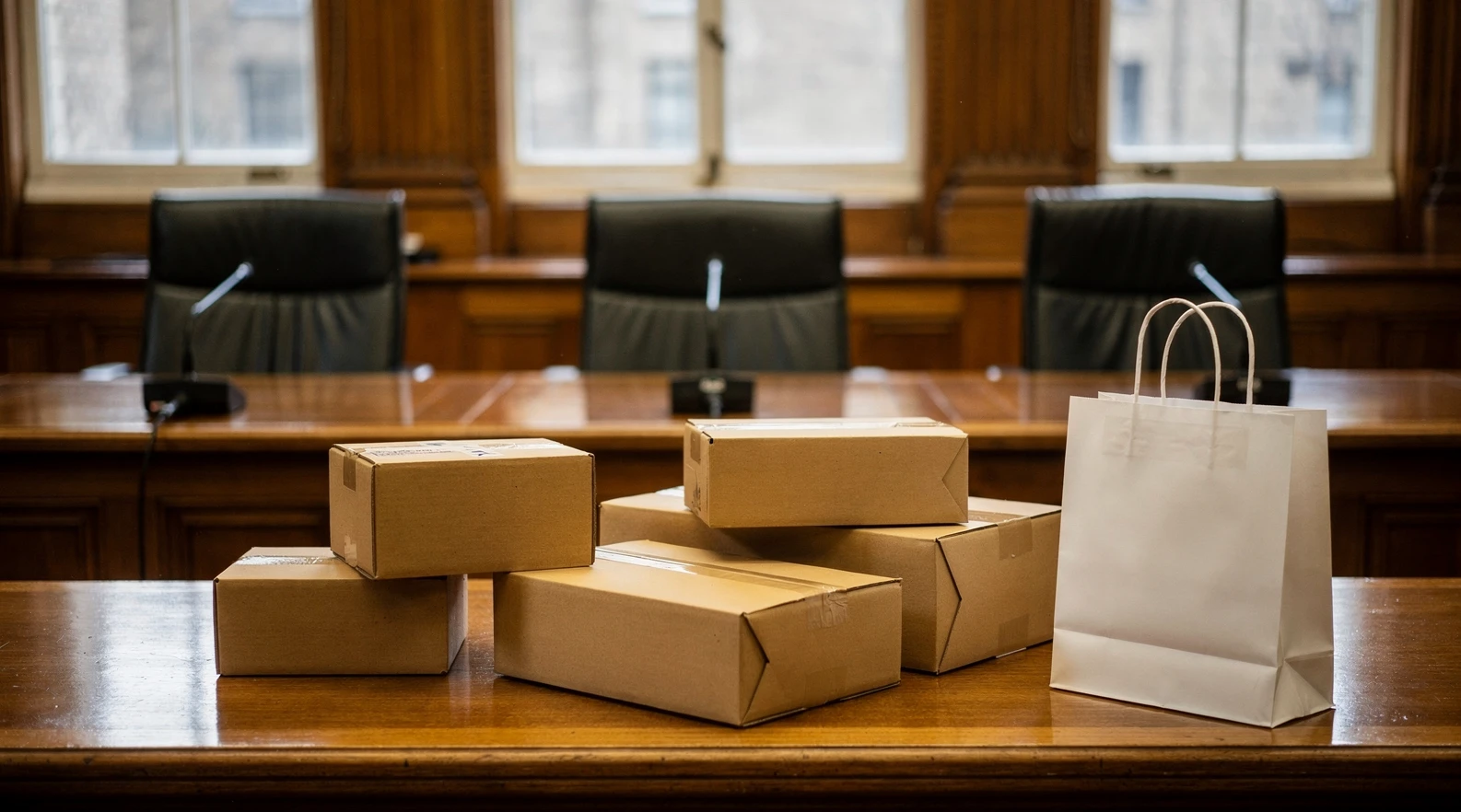
Three of the biggest names in British shopping have turned down an invitation to explain themselves to Parliament just over three weeks before Black Friday. The House of Commons Business, Innovation, Science and Trade Committee said on Tuesday 3 November 2026 that TikTok, Amazon and John Lewis had declined to appear at a hearing on the mis-selling of consumer goods in the run-up to the discount season, which this year peaks on Friday 27 November.
The committee’s chair, Liam Byrne, called the decision “deeply disappointing” and said the refusals leave MPs “with little option but to now deepen our investigations into whether Black Friday is becoming yet another rip off”. The committee’s timetable for the afternoon listed Which?, the Chartered Trading Standards Institute, the Competition and Markets Authority and a business minister as witnesses instead.
In short
- Who refused: TikTok, Amazon and John Lewis declined to give oral evidence to the Commons Business, Innovation, Science and Trade Committee on 3 November.
- What MPs wanted to ask: whether online prices are inflated before Black Friday, how shoppers can tell real discounts from fake ones, and how marketplaces keep unsafe or counterfeit goods off sale.
- What the firms said: Amazon and TikTok both offered written evidence instead; TikTok said its relevant policy lead had just left the company. John Lewis’s reasons were not published.
- What happens next: the committee says it will deepen its investigation into Black Friday pricing, and MPs are due to visit two Amazon sites on 17 November.
- What shoppers can do now: check price histories, ignore countdown clocks and inflated “RRP” claims, and pay by credit card for purchases between £100 and £30,000 to get Section 75 protection.
What happened at the committee on 3 November?
The Business, Innovation, Science and Trade Committee (the cross-party group of MPs that scrutinises the Department for Business and Trade) has been running a rolling piece of work on consumer protection since January 2026. Its afternoon session in the Grimond Room at Portcullis House on 3 November was meant to put the companies that sell the most goods online in front of MPs ahead of the busiest shopping weeks of the year.
Instead, the committee published a statement confirming that TikTok, Amazon and John Lewis had all declined to attend. According to the committee, the hearing was designed to look at “mis-selling of consumer items ahead of Black Friday”, and MPs wanted to examine “whether the Government and the Competition and Markets Authority have the powers and capacity to protect consumers, and whether those powers are being used effectively”.
The refusals did not come out of the blue. Last week Mr Byrne wrote to Amazon and TikTok objecting to their reluctance to send witnesses, as shopappy reported when MPs pressed Amazon and TikTok to face the safety hearing. City AM reported at the time that his letters warned that “disregard of parliamentary oversight reflects badly on your company’s willingness to engage with policymakers”. Both companies have now confirmed in writing that they would not attend.
Who did give evidence
The committee’s published timetable shows three panels that afternoon. The first, at 2.30pm, dealt with fireworks ahead of Bonfire Night, with the RSPCA, the British Fireworks Association and the veterans’ charity Combat Stress. The second, at 3.10pm, was the Black Friday panel: Which?’s head of consumer rights and food policy and the Chartered Trading Standards Institute’s lead officer for e-commerce.
The final panel, at 3.50pm, was the government and regulator session. It brought in the Minister for the Future of Work at the Department for Business and Trade, the CMA’s executive director for consumer protection, the chief executive of the Office for Product Safety and Standards, and two deputy directors covering product regulation and consumer policy. In other words, the people who write and enforce the rules were on the witness list; the people who run three of the UK’s largest shopping platforms were not.
Why did Amazon, TikTok and John Lewis say no?
The committee has published letters from two of the three companies. Neither letter disputes the importance of the subject. Both say the firm cannot or will not send a witness on this date, and both offer written answers instead.
Amazon’s letter
Amazon’s reply, signed by Monica Ariño, director of public policy at Amazon UK and dated 30 October, says the company “takes parliamentary scrutiny very seriously”. It points out that sixteen Amazon business leaders have given oral evidence to thirteen select committee inquiries in recent years, including on the Digital Markets, Competition and Consumers Bill and on the future of UK high streets, and that an Amazon witness appeared at this committee’s product safety session on 23 June.
On the 3 November hearing, the letter is short: “we are not in a position to appear but have offered to provide substantive written answers.” Amazon adds that the offer stands and that it would be happy to agree a timetable with the committee clerk. It also notes that it will host MPs at two of its UK sites on 17 November, where members can “speak directly with colleagues, and put questions to the teams responsible for implementing our policies”.
TikTok’s letter
TikTok’s letter, dated 28 October and signed by Ali Law, its director of public policy and government affairs for Northern Europe, gives a more specific reason. It says TikTok is “unable to attend on the proposed hearing date” because of “a combination of capacity constraints, the most immediate of which is that the relevant policy lead for these matters has just left the organisation and is yet to be replaced”.
The company says it has given evidence to four separate select committees this year and offers a written submission on “TikTok’s approach to consumer protection, product safety and marketplace governance”. TikTok Shop, the in-app marketplace that lets UK users buy products directly from videos and livestreams, is the part of the business most relevant to the committee’s questions.
John Lewis’s position
At the time of writing, the committee had not published any correspondence from John Lewis, and its statement did not give the retailer’s reasons. John Lewis is the only one of the three that is a traditional British retailer rather than a technology platform, which makes its absence notable: its “Never Knowingly Undersold” heritage and its own Black Friday pricing have both been subjects of public debate.
| Company | Business model in the UK | Reason given | Alternative offered |
|---|---|---|---|
| Amazon UK | Retailer and third-party marketplace | “Not in a position to appear” on 3 November | Substantive written answers; MPs’ visit to two sites on 17 November |
| TikTok (TikTok Shop) | Social media platform with in-app marketplace | Capacity constraints; relevant policy lead had just left and not been replaced | Written submission on consumer protection, product safety and marketplace governance |
| John Lewis | Department store and online retailer | Not published by the committee | None published |
What were MPs trying to find out about Black Friday?
The committee’s statement sets out the problem in plain terms. “The pre-Christmas shopping rush can leave consumers exposed to shoddy or dangerous goods, misleading pricing and sales practices that range from dodgy to outright fraudulent,” it says. “Online, shoppers can find it harder to authenticate products and easier to be misled by manipulated prices.”
Mr Byrne framed it around trust. “People hunting for a bargain this Black Friday should be able to trust the price they see and the goods they buy,” he said. “Too often, they are left trying to work out whether the discount is real or the product is genuine.”
There are three distinct questions bundled into that statement, and each matters to a different group of shoppers.
The first question is about reference pricing: the struck-through “was £499, now £349” figure that anchors almost every Black Friday deal. MPs wanted Which? and Trading Standards to tell them whether online prices are being pushed up in the weeks before the sales so that the discount looks bigger than it is. This is the issue that most directly affects the average shopper buying a television, a robot vacuum or an air fryer at the end of November.
The second question is about what is actually being sold. Marketplaces such as Amazon and TikTok Shop host millions of listings from third-party sellers, many based outside the UK. The committee has spent much of 2026 looking at whether those platforms do enough to stop counterfeit, unsafe or non-compliant products reaching British homes, and at whether the law should make them more directly responsible.
The third question covers the techniques used to close a sale: countdown clocks, “only 2 left” warnings, pre-ticked add-ons and fees that appear only at checkout. These are now specifically regulated under the Digital Markets, Competition and Consumers Act 2024 (the DMCC Act), and the CMA has started to fine companies for them.
Are Black Friday discounts real? What Which? has found
Which?, the consumer group that gave evidence on 3 November, has tracked Black Friday prices for several years. Its most recent published study, released on 25 November 2025, followed 175 home, tech and health appliances at eight retailers from May 2024 to May 2025. That covered the six months before and after the 2024 Black Friday sales period, which Which? defined as 15 November to 12 December 2024.
The findings were blunt. According to Which?, 83% of the products on offer during the Black Friday period were the same price or cheaper on at least one occasion outside it, and none of the deals it tracked was at its cheapest price of the year on Black Friday itself. “Our research exposes the harsh truth: for the majority of shoppers, Black Friday is a false economy,” said Reena Sewraz, Which?’s retail editor, at the time.
Which? broke its results down by retailer. Two of the three companies that declined to appear before MPs, John Lewis and Amazon, were among those with the highest share of products that could be bought for the same price or less at other times of year.
| Retailer | Black Friday deals same price or cheaper at other times | Of which cheaper at other times |
|---|---|---|
| John Lewis | 94% | 56% |
| Very | 93% | Not stated |
| Amazon | 88% | 63% |
| AO | 85% | Not stated |
| Currys | 84% | Not stated |
| Argos | 79% | Not stated |
| Richer Sounds | 55% | Not stated |
Source: Which? price tracking of 175 products, May 2024 to May 2025, published 25 November 2025. Boots was included in the study but no overall percentage was given.
Which? also gave individual examples. A Samsung Jet Bot robot vacuum was £350 at John Lewis on Black Friday, but had been £299 for 29 days in May and June 2024. A Samsung QE55QN90D television was £1,039 at AO on Black Friday and then cheaper than that on 134 days in the following six months, falling as low as £759. An Oral-B Vitality Pro toothbrush at Boots was promoted as “save £25, RRP £50”, yet the £50 price had applied for only 13 days in the previous six months, Which? said.
Retailers pushed back. Amazon said at the time that “while Which? analysed just 24 products, Amazon’s Black Friday event offered hundreds of thousands of deals to customers in the UK”. Currys and Richer Sounds both defended their pricing, with Richer Sounds saying Black Friday “remains the best time for consumers to pick up a bargain”. Shoppers looking for the practical rules this year can read shopappy’s guide to the UK rules on fake countdown deals and early Black Friday sales.
Why this matters more in 2026
Black Friday in the UK is no longer a single day. Several large retailers now run promotions from late October to early December, which gives them more room to move prices up and down around the sale. A longer event also makes it harder for shoppers to remember what something cost a few weeks ago, which is exactly the gap that reference pricing exploits. The committee’s decision to “deepen” its investigation suggests MPs want to look at the structure of the event itself, not just individual deals.
What powers does the CMA have, and is it using them?
Since April 2025, the Competition and Markets Authority has been able to decide for itself that a business has broken consumer law and impose fines directly, rather than having to take each case to court. Under the DMCC Act, those fines can reach up to 10% of a company’s global turnover. MPs on the committee want to know whether the regulator has the people and money to use those powers at the scale of a national sales event.
The CMA has already used its new powers on exactly the tactics that cluster around Black Friday. On 14 October 2026 it announced fines totalling more than £6 million against three businesses, according to a legal briefing from Baker McKenzie.
| Business | Fine | Refunds | What the CMA found |
|---|---|---|---|
| Wayfair | £4.8 million | Not stated | “Daily Deals”, 24-hour “Flash Deals” and countdown timers, with products still available at the same or a lower price after the deadline |
| Appliances Direct | £1.2 million | About £432,000 | Time-limited promotions that did not expire as stated; customers automatically opted into paid removal, recycling or installation |
| Gold’s Gym | £45,000 | About £9,000 | Mandatory joining fees not shown clearly and promptly in the total price |
All three businesses admitted the breaches and settled early, which earned them a 40% reduction in their fines. The Wayfair case is the most directly relevant to Black Friday shoppers: a countdown clock that resets, or a “flash” deal that is still there tomorrow, is now something the CMA has shown it will penalise.
The regulator has also moved on hidden charges. On 2 November the CMA published an open letter reminding online sellers that mandatory delivery fees must be included in the total price shown at every stage, not added at checkout, as shopappy reported when the CMA warned online shops that the first price must be the total. The letter covers marketplaces, comparison sites and search engines as well as retailers’ own websites, and it was timed for the run-up to Black Friday.
The “was/now” question is still open
The most important unresolved question for Black Friday is reference pricing. Law firms Browne Jacobson and Winston Taylor report that the CMA’s reference pricing case against the mattress seller Emma Sleep was heard in the High Court in June 2026, with judgment still awaited. Separately, the government has said it plans to consult on updating the rules for price reduction claims, including “was” and “now” pricing. Until that judgment and consultation land, there is no single, simple UK rule telling retailers how long a “was” price must have applied before it can be used.
How safe is the way you pay? What the FCA told MPs
Alongside the company letters, the committee published a letter dated 29 October from the Financial Conduct Authority and the Payment Systems Regulator on consumer protection in payments. It is one of the clearest official summaries of how much protection a UK shopper actually has, depending on how they pay.
The regulators make a point that many shoppers miss: “protections still differ depending on how consumers pay”. Every purchase is covered by the Consumer Rights Act 2015, which makes the seller responsible for a refund, repair or replacement when something goes wrong. But card payments add extra layers on top, while newer methods such as open banking do not.
| Payment method | Extra protection if the seller will not refund | Key limits and notes |
|---|---|---|
| Credit card | Section 75 of the Consumer Credit Act (card provider jointly liable) plus chargeback | Section 75 applies to single items costing £100 to £30,000 |
| Debit card | Chargeback scheme run by the card networks | Voluntary scheme with time limits; no Section 75 |
| Open banking (pay by bank) | No chargeback and no Section 75, the FCA says | Covered by APP fraud reimbursement rules and protection against unauthorised or incorrect payments |
| Faster Payments bank transfer | APP scam reimbursement since October 2024 | Applies to eligible scam victims, subject to limited exceptions |
| Stolen card or card details | Payment Services Regulations 2017 | Consumer liability before reporting capped at £35 |
The letter, signed by Matthew Long, the FCA’s director of payments and digital assets, says that in the first 18 months of the authorised push payment reimbursement rules, £316 million was returned to scam victims. Firms resolved 82% of claims within five business days and 98% within 35 business days. An independent evaluation by Frontier Economics estimated that the rules have cut Faster Payments scam losses by £73 million a year and reduced the number of such scams by nearly 35,000.
For Black Friday shoppers the practical lesson is simple: for anything expensive, paying by credit card gives the strongest fallback. Buy now, pay later is a separate case, and the rules on affordability checks have changed this year; shopappy has covered how new BNPL checks can block purchases before Christmas.
The regulators also say that “everyone must play their part in tackling fraud, including tech firms and telcos”, and that the PSR will publish new data at the end of the year showing which platforms fraudsters are using to target victims. That data could put social commerce platforms under fresh scrutiny in early 2027, whether or not their executives appear before MPs.
What it means for marketplace sellers and UK retailers
For the companies involved, declining a select committee invitation is legal and not unusual; committees can formally summon witnesses, but that power is used sparingly. The reputational cost is another matter. A committee that says it will “deepen” its investigation can call for documents, invite other witnesses, and publish a report with recommendations the government must respond to.
For independent sellers who trade on Amazon Marketplace or TikTok Shop, the direction of travel is towards tighter platform rules rather than looser ones. City AM reported last week that the government has proposed holding online platforms to the same product safety standards as traditional retailers, and that the Law Commission has proposed extending product liability to online marketplaces where defective goods are sold by businesses with no identifiable UK presence. Which? has campaigned for the same thing, arguing that unsafe products remain on Amazon and eBay without a new UK law.
If platforms face more liability, they will pass more of the compliance burden to sellers: tougher checks on product safety documents, faster takedowns of listings, and stricter rules on how discounts are displayed. Sellers running Black Friday promotions in 2026 should assume that any countdown timer, “was” price or limited-stock claim may be checked against the CMA’s guidance, and keep records of their own pricing history to back up the discounts they advertise.
For British high street retailers that also sell online, the message is similar. The CMA’s fines this year have hit a global online furniture retailer and a UK electricals retailer, not just marketplaces. Any retailer using urgency tactics or fees revealed late in checkout is within scope.
What happens next?
The committee has not yet set out the shape of its expanded investigation. Mr Byrne said the companies’ “refusal to appear and clear up allegations” leaves the committee with “little option but to now deepen our investigations into whether Black Friday is becoming yet another rip off”.
- Written evidence: Amazon and TikTok have both offered written answers. Once submitted, these are normally published on the committee’s website.
- Site visits on 17 November: Amazon says MPs will visit two of its UK sites, ten days before Black Friday.
- Black Friday on 27 November: the sales period itself will provide fresh evidence for Which?, Trading Standards and the CMA.
- Reference pricing ruling: the High Court judgment in the CMA’s case against Emma Sleep is still pending and could change how “was” prices are judged.
- Government consultation: the planned consultation on “was/now” pricing rules has not yet been published.
- PSR platform data: due at the end of the year, showing which platforms fraudsters use most.
Readers who want the primary source can read the committee’s own statement on the UK Parliament committee website.
How can you check a Black Friday deal before you buy?
None of the regulatory changes will be in place in time for this year’s sales, so the onus remains on shoppers. Which? and consumer advisers have consistently recommended a few simple checks.
- Look up the price history. Price comparison sites such as PriceRunner show how a product’s price has moved over months; camelcamelcamel does the same for Amazon listings.
- Compare at least two other retailers. A “was” price only tells you what one shop charged at some point. The same model may be cheaper elsewhere without any “deal” label.
- Ignore countdown clocks and “RRP”. The CMA’s Wayfair decision shows a deadline can be meaningless. A recommended retail price may have applied only briefly, as Which?’s Boots toothbrush example showed.
- Check the total price, delivery included. Mandatory delivery fees should appear in the first price you see. If they appear only at checkout, that is something the CMA has warned about.
- Check who you are buying from. On a marketplace, the seller may not be the platform. Look at the seller’s name, location and returns policy before you pay.
- Pay by credit card for bigger items. For a single item between £100 and £30,000, Section 75 makes the card provider jointly liable if things go wrong.
- Know your return rights. For most online purchases you can cancel within 14 days of delivery under the Consumer Contracts Regulations, and you have 30 days to reject faulty goods for a full refund under the Consumer Rights Act.
Start with the seller, in writing. If you paid by card and the seller will not help, contact your card provider about Section 75 or a chargeback. If you think you have been misled on price or sold an unsafe product, report it to Trading Standards through the Citizens Advice consumer helpline, which passes complaints to local Trading Standards teams.
Frequently asked questions
Which companies refused to appear before MPs over Black Friday?
TikTok, Amazon and John Lewis declined to give oral evidence to the House of Commons Business, Innovation, Science and Trade Committee at its consumer protection hearing on 3 November 2026. The hearing looked at mis-selling of consumer goods ahead of Black Friday.
Why did Amazon and TikTok not attend?
Amazon UK said it was “not in a position to appear” and offered substantive written answers instead, plus a visit by MPs to two Amazon sites on 17 November. TikTok said it faced capacity constraints because the policy lead responsible for these matters had just left the company and had not yet been replaced. It offered a written submission.
Did John Lewis explain why it declined?
The committee had not published any letter from John Lewis at the time of writing, and its statement did not give the retailer’s reasons.
Can MPs force companies to give evidence?
Select committees have formal powers to summon witnesses, but they use them rarely. More often a committee publishes the refusal, asks for written evidence and continues its inquiry, which is what the Business, Innovation, Science and Trade Committee has said it will do.
When is Black Friday 2026 in the UK?
Black Friday falls on Friday 27 November 2026, and Cyber Monday on 30 November. Many UK retailers start promotions weeks earlier.
Are Black Friday deals cheaper than at other times of year?
Not usually, according to Which?. Its tracking of 175 products between May 2024 and May 2025 found that 83% were the same price or cheaper at least once outside the Black Friday period, and none was at its lowest price of the year on Black Friday itself.
Is it illegal to use a fake countdown timer in the UK?
Falsely claiming that a product or price is available only for a very limited time is a banned practice under the Digital Markets, Competition and Consumers Act 2024. The CMA fined Wayfair £4.8 million in October 2026 partly over countdown timers on deals that remained available after the deadline.
What is the safest way to pay for Black Friday purchases?
For items costing between £100 and £30,000, a credit card gives Section 75 protection, making the card provider jointly liable with the seller. Debit cards offer chargeback. The FCA has told MPs that open banking payments do not carry chargeback or Section 75 protection.
What happens to the committee’s inquiry now?
The committee says it will deepen its investigation into whether Black Friday is “becoming yet another rip off”. Written evidence from Amazon and TikTok is expected, and MPs are due to visit two Amazon sites on 17 November.