Barclays has warned UK shoppers that fake websites and bogus deals are getting harder to spot ahead of Black Friday on 27 November. Its research, published on 13 November, shows that a third of UK adults have been targeted by a shopping scam, lost money to one, or know someone who has. The bank also found that only a minority check whether a website is genuine before they pay, and many shop with half their attention on the television.
The warning lands two weeks before the busiest online shopping weekend of the year, and while many retailers are already running early discounts. Below we set out what the survey found, how it compares with last year, how big the purchase scam problem really is in the UK, and which payment methods give you the strongest route to a refund if a deal turns out to be fake.
In short
- 34% of UK adults have been targeted by, lost money to, or know someone caught out by a shopping scam, according to Barclays research carried out by Opinium.
- Only 36% check a website is genuine before buying, 21% shop while distracted (31% of Millennials) and 15% make no checks at all.
- 76% believe AI has made scams more convincing, with fake reviews (44%) and fake shop websites (43%) seen as the hardest to spot.
- UK Finance data shows purchase scams made up 71% of push payment fraud cases in 2025, with losses up 20% to £118.1 million.
- Paying by credit or debit card rather than bank transfer gives you the strongest refund routes; Barclays says never pay a stranger by bank transfer.
What did Barclays find about Black Friday shopping scams?
The research was carried out by Opinium, which polled 2,000 people across the UK during October 2026, according to the Independent’s report of the findings. The headline figure is that 34% of UK adults have been targeted by a shopping scam, lost money to one, or know someone who was caught out. That is a broad measure, so it does not mean a third of adults have personally lost money, but it shows how close shopping fraud now sits to everyday life.
The more worrying numbers are about behaviour. Fewer than four in ten people (36%) said they would check whether a website is genuine before committing to a purchase, the Daily Express reports. One in seven (15%) said they make no checks at all. Only one in ten (10%) said they felt confident they could avoid being misled by a scam over Black Friday and Cyber Monday.
Shoppers also sense that the problem is growing. Two in three UK adults (67%) believe there are more shopping scams online now than a year ago, and roughly half (49%) feel more worried about falling victim than they did 12 months ago. Black Friday falls on Friday 27 November this year, with Cyber Monday on 30 November, but many retailers began discounting weeks earlier.
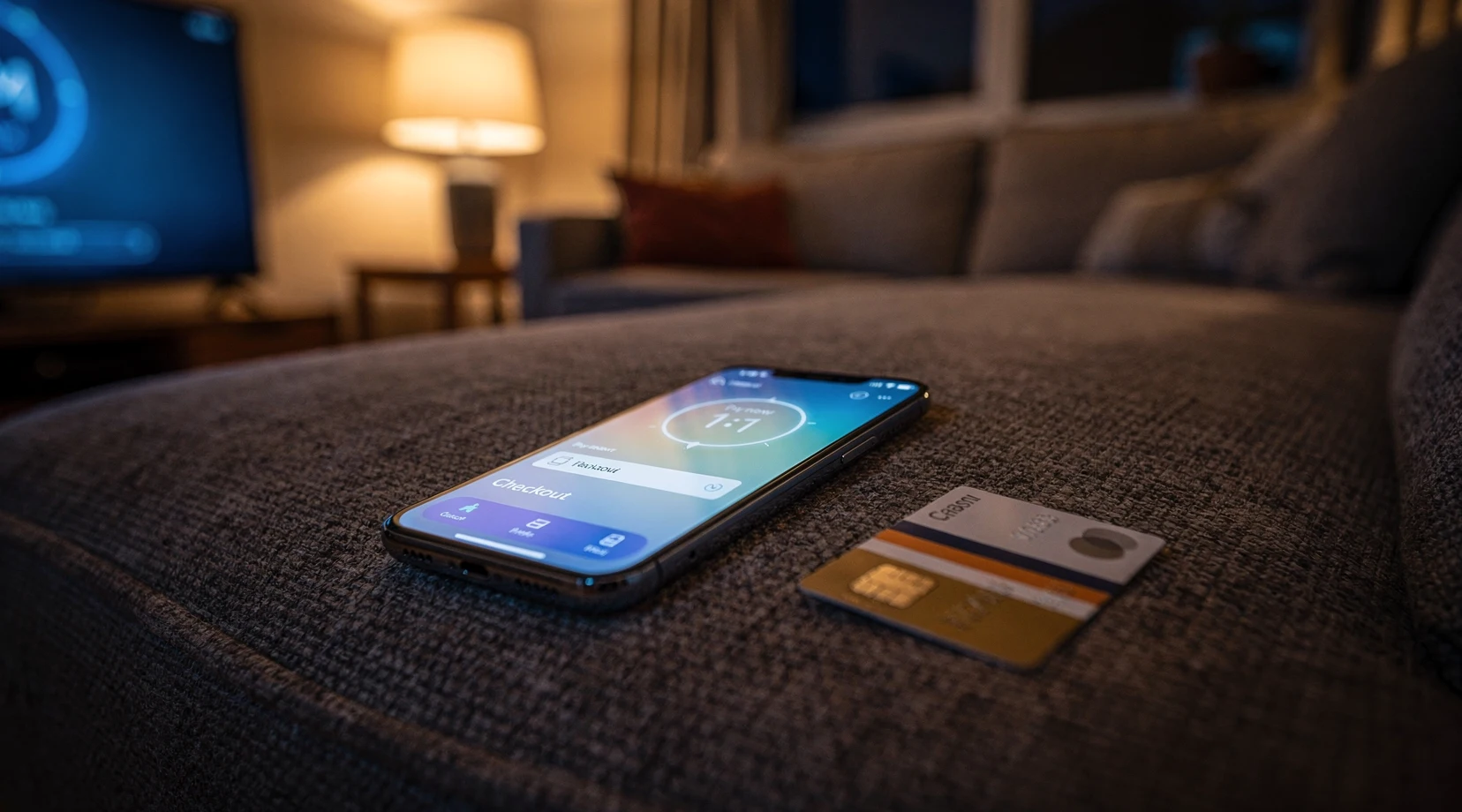
Kirsty Adams, fraud and scams expert at Barclays, said Black Friday is a good time to grab a bargain but that the moment of purchase is where people slip. “When you’re scrolling on the sofa, and a countdown timer starts ticking, or a deal pops up in your feed from an account that looks just like a brand you trust, it’s easy to get swept up and pay before you’ve had a chance to check. No deal is worth rushing for,” she said.
Her advice is to go to the retailer’s own website or app and never pay by bank transfer to someone you do not know. Barclays added in its statement that its technology works to spot fraud in under a second, and that customers who feel something is wrong should call the bank.
Why does distracted shopping make scams easier?
The new angle in this year’s research is attention. One in five people (21%) said they shop online while doing something else, such as watching television, and that rises to three in ten Millennials (31%). Barclays says that when shoppers are distracted they are more likely to miss warning signs such as a misspelt web address or a deal that looks too good to be true.
This matters because the classic checks are visual and quick. A fake shop often uses a web address that differs from the real brand by a single letter, an extra word or a different ending. On a phone screen, in the evening, with a programme on in the background, those small differences are easy to read past.
Scammers borrow the same urgency tools that genuine retailers use in sales. Barclays warns that countdown timers and “last chance” offers are designed to rush you, and that if a deal pushes you to act immediately you should step back and check it first. Genuine retailers also use timers, which is exactly why fake ones work: the pressure feels normal during Black Friday.
UK law already restricts misleading urgency by real retailers. Under the Digital Markets, Competition and Consumers Act regime, false countdown clocks and fake “only two left” claims can be treated as unfair commercial practices, and we have covered the UK rules on fake countdown deals in detail. But a criminal running a fake shop does not care about consumer law, so the only protection at the point of sale is your own pause.
How is AI changing fake shops and fake reviews?
Three in four respondents (76%) believe recent advances in artificial intelligence have made online scams markedly more convincing, according to the research as reported by the Independent and NationalWorld. Shoppers said AI makes fake online reviews (44%) and counterfeit merchant websites (43%) far harder to spot. Only 34% feel confident they could detect an AI-generated fraudulent offer while shopping online.
Dr Rasha Kassem, who leads the Fraud Research Group at Aston University, said consumers must remember that even familiar brands can be impersonated. “Advances in artificial intelligence have made it easier for criminals to create highly convincing copies of legitimate retail websites, complete with professional designs, logos and fabricated customer reviews,” she said, as reported by the Independent.
The old warning signs no longer work
For years, consumer advice relied on spotting clumsy fakes: spelling mistakes, poor grammar, blurry logos, odd layouts. Dr Kassem told NationalWorld that traditional warning signs such as spelling mistakes or poorly designed websites are no longer reliable indicators of fraud. She also warned that the padlock symbol next to a web address does not guarantee that a retailer is genuine, because it only shows the connection is encrypted.
Phil Cotter, chief executive of identity verification firm SmartSearch, made the same point. “Poor spelling and dodgy-looking websites are no longer the giveaway they once were, particularly with AI helping criminals create more polished and believable content,” he said. He described the typical pattern: goods advertised at irresistible prices, then “once you’ve handed over your money, the website disappears, the goods never arrive, and your card details may have been harvested along the way.”
Mr Cotter also warned about messages claiming an order has hit a snag, which contain links designed to harvest personal and financial details, and about messages that create urgency by claiming an account has been suspended or a payment needs verifying. These scams peak in late November and December because so many people genuinely are waiting for parcels. The same pattern drove the wave of Amazon impersonation scam calls reported to police in October, where criminals relied on victims expecting contact from a retailer they actually use.
He also warned against suspicious listings on social media and online marketplaces. His advice is to check the retailer’s official website rather than buying through an unfamiliar advert, and to never agree to pay outside a platform’s recognised payment system.
How do this year’s figures compare with 2025?
Barclays ran a similar survey before Black Friday last year, published on 24 November 2025. Comparing the two releases shows that worry about AI has stayed very high, while confidence in spotting AI-made fakes has edged down. The questions are not all worded identically, so small movements of one or two points should be read with caution.
| Measure | Barclays, November 2025 | Barclays, November 2026 |
|---|---|---|
| Believe AI has made scams more convincing | 75% | 76% |
| Confident they could spot an AI-generated scam | 36% | 34% |
| Say AI makes fake reviews harder to spot | 47% | 44% |
| Say AI makes fake websites harder to spot | 45% | 43% |
| More worried about scams than 12 months earlier | 50% | 49% |
| Check or research before buying | 73% do some research | 36% check the site is genuine |
| Know of or lost money to a shopping scam | 35% of Gen Z | 34% of all adults |
The research rows are not like for like. In 2025, 73% said they typically do some form of research before buying, most often by reading customer and product reviews (48%). In 2026, the question was narrower: whether people check the website itself is genuine, and only 36% do. Reading reviews is not the same as verifying the seller, especially when the reviews themselves may be generated.
What Barclays’ own claims data showed last year
The 2025 release included proprietary Barclays data that the 2026 release, as reported so far, does not update. It showed that the typical (median) value of a shopping scam rose 43% between 2023 and 2025, even though the average monthly number of cases fell 14%. In other words, fewer people were caught, but each victim lost more.
It also showed scammers moving to direct channels. Social media remained the biggest source of purchase scams, but monthly reports starting via text message more than doubled, taking text’s share of purchase scam claims to 8% in 2025, up from 3% in 2023. That fits the pattern of fake delivery and “order problem” texts that cluster around peak season.
Last year Barclays found that one in three Gen Z adults (34%) avoided online shopping because of scam concerns, 12 points higher than older age groups (22%). Gen Z were also the most likely to have lost money to a shopping scam or know someone who had (35%), more than twice the rate among Baby Boomers (15%). And 54% of Gen Z said they felt pressure to buy sale items quickly to avoid missing out, which is exactly the instinct that countdown timers exploit.
How big is the purchase scam problem in the UK?
The best national measure comes from UK Finance, the banking trade body, whose Annual Fraud Report 2026 covers the 2025 calendar year. It found that criminals stole almost £1.3 billion through payment fraud in 2025. Authorised push payment (APP) fraud, where a victim is tricked into sending money themselves, rose 19% to £576.4 million across 248,070 cases.
Purchase scams are the single most common type. They accounted for 71% of APP cases, and losses rose 20% to £118.1 million, according to UK Finance. On our calculation, 71% of 248,070 cases is roughly 176,000 purchase scam cases in a year, which works out at an average loss of around £670 per case. Investment fraud causes bigger losses in total (£221.5 million), but purchase scams hit far more people.
| Fraud type (UK, 2025) | Losses | Change on 2024 | What it means for shoppers |
|---|---|---|---|
| All APP fraud | £576.4m | +19% | You were tricked into sending money yourself |
| Purchase scams (71% of APP cases) | £118.1m | +20% | Goods paid for by transfer never arrive |
| Investment fraud | £221.5m | +40% | Often starts with fake adverts on social media |
| Romance fraud | £39.2m | +23% | Not usually linked to sales events |
| Remote purchase card fraud | £423.5m | +3% | Stolen card details used to shop online |
| Unauthorised fraud (all types) | £703.4m | -5% | Banks refund almost all these cases |
UK Finance says 66% of APP fraud cases originated online in 2025, accounting for 32% of losses, while 17% came through telecoms channels. Purchase fraud in particular “often starts on marketplace sites”, the trade body said. Remote purchase card fraud, where criminals use stolen card details to buy goods online, also rose, by 3% to £423.5 million across 3.2 million cases, which is the other half of the fake shop problem: the site that never delivers may also keep your card number.
The timing of Black Friday makes these numbers relevant now. Adobe has forecast record £28.5bn UK Christmas online spend this season, with the Cyber Week period expected to be among the biggest spending days. More money moving online in a short window means more cover for fake shops and fake delivery messages.
Which payment methods protect you if a Black Friday deal is a scam?
How you pay decides how easily you can get your money back. Barclays’ central advice is to use a debit or credit card or a trusted payment service, and never to pay by bank transfer to a seller you do not know. The table below summarises the main UK routes. It is a general guide, not legal advice, and individual cases depend on the facts.
| Payment method | Main protection | Limits and conditions | Best for |
|---|---|---|---|
| Credit card (item over £100) | Section 75 of the Consumer Credit Act: the card provider is jointly liable with the seller | Applies to single items priced over £100 and up to £30,000 | Bigger Black Friday purchases such as TVs, laptops, appliances |
| Credit or debit card (any amount) | Chargeback through Visa or Mastercard scheme rules | Not a legal right; time limits usually around 120 days; bank decides | Smaller purchases and debit card buys |
| PayPal and similar wallets | Buyer protection under the provider’s own terms | Must pay through the platform, not “friends and family” transfers | Marketplace and smaller independent sellers |
| Buy now, pay later | Provider dispute processes; regulated protections now being phased in | Terms vary by provider; check how disputes work before you buy | Spreading costs, with care |
| Bank transfer (Faster Payments) | Mandatory APP scam reimbursement rules | Cap of £85,000, excess of up to £100, claim within 13 months; can be refused for gross negligence | Paying people and businesses you already know and trust |
Section 75 and chargeback in practice
Section 75 is the strongest consumer protection for card purchases. If you buy a single item costing more than £100 and up to £30,000 on a credit card, even if you pay only part of the price on the card, the card provider shares legal responsibility with the seller. If a fake shop takes your money and sends nothing, you can claim from the card issuer.
Chargeback is a card scheme process rather than a law. It covers debit cards and credit card purchases under £100, and lets your bank try to reverse the payment if goods do not arrive or are not as described. Banks generally set time limits of around 120 days, so report problems quickly. Buy now, pay later works differently again, and we have explained the new BNPL affordability checks and what they mean for Christmas spending.
Why bank transfers are the riskiest choice
A bank transfer is instant and hard to reverse, which is why criminals ask for it. Some fake sellers offer an extra discount for paying by transfer, or claim their card system is “down”. Since 7 October 2024, banks and payment firms have had to reimburse most victims of APP scams under rules set by the Payment Systems Regulator, up to £85,000 per claim. Firms may deduct an excess of up to £100, although not for vulnerable customers, and the claim must be made within 13 months of the last payment.
The rules are a safety net, not a guarantee. A claim can be refused if the bank shows the customer was grossly negligent, for example by ignoring clear, specific warnings. The Payment Systems Regulator reported that 89% of in-scope APP fraud was reimbursed in the first 15 months, according to UK Finance, but across all APP fraud, including payments outside the scheme, banks repaid 61% of losses in 2025. The regulator’s functions are due to move to the Financial Conduct Authority under legislation introduced in 2026, though the reimbursement protections are expected to continue.
How can you check a Black Friday deal before you pay?
Barclays sets out four steps: slow down, pay safely, open official sites or apps yourself, and talk to someone if something feels wrong. Combining that with the advice from Dr Kassem and Mr Cotter gives a simple checklist that takes a couple of minutes per purchase.
- Open the retailer yourself. Do not click links in texts, emails, adverts or social posts. Type the retailer’s web address or use its official app, then find the deal there.
- Read the web address slowly. Look for extra words, swapped letters, hyphens and unusual endings. Do this before you start filling your basket, not at the till.
- Check the price against the market. A big-brand item at 70% or 80% off when every other retailer charges full price is a warning sign.
- Look beyond the reviews on the page. Reviews on a fake site can be invented. Search for the shop’s name with words like “scam” or “reviews” on independent sites.
- Find the business behind the shop. A UK trader should show a geographic address and contact details. A shop with only a web form and no address is a risk.
- Pay by card or a trusted payment service. Never by bank transfer to a seller you do not know, and never outside a marketplace’s own checkout.
- Pause if you feel rushed. A countdown timer is not a reason to pay. If you are watching television at the same time, come back to it later.
Dr Kassem suggested using a virtual payment card linked to a separate spending pot, which several UK banks and apps offer. That can limit losses if card details are stolen, although NationalWorld notes it will not stop a payment to a fraudulent retailer. Setting card spending notifications on your banking app also helps you spot unexpected transactions quickly.
Be equally careful after you buy. Delivery firms and retailers do send genuine texts in late November, so check a delivery problem by opening the courier’s app or the retailer’s order page yourself rather than tapping a link. And if a seller on a marketplace asks you to move the conversation or the payment off the platform, treat it as a red flag. Pressure on real retailers over pricing tactics is also rising, with MPs’ Black Friday rip-off inquiry widening this month.
What should you do if you have been scammed?
Speed matters most. Barclays says that if you think you have been scammed, you should call your bank straight away. Many UK banks can be reached through 159, the Stop Scams UK number, which connects you to your bank’s fraud team. Calling the number on the back of your card also works.
In England, Wales and Northern Ireland, fraud is now reported to Report Fraud, the City of London Police service that replaced Action Fraud over the winter of 2025–2026. The phone line remains 0300 123 2040 and the website is reportfraud.police.uk. In Scotland, reports go to Police Scotland on 101.
You can forward scam texts free to 7726, and suspicious emails to report@phishing.gov.uk, run by the National Cyber Security Centre. Fake adverts can be reported to the platform that showed them and to the Advertising Standards Authority. Keep screenshots of the website, the advert, the order confirmation and any messages before the site disappears.
Claiming your money back
If you paid by credit card for an item over £100, ask your card provider for a Section 75 claim. If you paid by debit card or for a smaller amount, ask for a chargeback. If you paid by bank transfer, ask your bank to treat it as an APP scam claim under the reimbursement rules, and note the date of your last payment, because the 13-month window runs from that point.
If the bank or card firm refuses or does not respond within its complaint deadline, usually eight weeks, you can take the complaint to the Financial Ombudsman Service free of charge. Be wary of “recovery” firms that contact you after a scam offering to get your money back for a fee; they are a common second scam.
What are retailers, marketplaces and platforms being asked to do?
The Barclays research puts the burden on shoppers to slow down, but the banking industry argues that responsibility should be shared. UK Finance said in its 2026 fraud report press release that the financial sector “cannot be the only line of defence” and called for stronger, enforceable duties on technology and telecoms companies.
For purchase fraud specifically, UK Finance wants online marketplaces to verify their sellers and use secure payment mechanisms, rather than allowing separate bank transfers to take place off the platform. It also wants Ofcom to place stronger, proactive fraud prevention obligations on high-risk platforms to tackle fraudulent advertising. Last year’s Barclays survey found 79% of people agreed that tech companies need to do more to prevent scams on their platforms.
For UK retailers, fake copies of their own websites are a brand and customer service problem, not just a shopper’s risk. Practical steps include publishing the official web address and app links clearly in emails and social profiles, telling customers which channels the brand will never use to ask for payment details, monitoring for look-alike domains and adverts, and acting quickly through platform takedown routes when a copycat appears.
Retailers also carry their own exposure. Remote purchase card fraud, where stolen card details are used to buy goods online, ran to £423.5 million in 2025 according to UK Finance, and much of that peaks in high-volume sales periods. Clear security messaging at the checkout, alongside strong customer authentication, helps both sides.
What happens next
Black Friday falls on 27 November and Cyber Monday on 30 November, with most major UK retailers already running early offers. Banks typically publish their own claims data on Black Friday scams after the event, and Barclays has done so in previous years, so a clearer picture of losses from this season is likely in the new year. UK Finance’s next half-year fraud figures and the Financial Conduct Authority’s handling of the APP reimbursement rules after the regulator transfer are the other dates to watch.
For shoppers, the message from the research is simple: the fakes are getting better, so the checks need to happen every time, not just when something looks wrong. Opening the shop yourself, paying by card and refusing to be rushed will block most of the scams that Barclays and UK Finance describe.
Frequently asked questions
What did Barclays warn about Black Friday 2026?
Barclays warned on 13 November 2026 that fraudulent websites are becoming harder to spot. Its research with Opinium found 34% of UK adults have been targeted by, lost money to, or know someone caught out by a shopping scam, and only 36% check a website is genuine before buying.
When is Black Friday 2026 in the UK?
Black Friday 2026 is on Friday 27 November, and Cyber Monday is on 30 November. Many UK retailers started discounting weeks earlier, which extends the period when fake deals circulate.
How can I tell if a Black Friday website is fake?
Open the retailer yourself instead of clicking links, read the web address carefully, compare the price with other retailers, look for a real business address, and search for independent reviews. The padlock symbol only shows the connection is encrypted and does not prove a shop is genuine.
Is it safer to pay by credit card or debit card on Black Friday?
A credit card usually gives the strongest protection. Section 75 makes the card provider jointly liable for single items over £100 and up to £30,000. Debit cards rely on chargeback, which is a card scheme process rather than a legal right, but still offers a route to a refund.
Will my bank refund me if I paid a scam shop by bank transfer?
Under the APP scam reimbursement rules in force since October 2024, most victims of push payment scams must be reimbursed up to £85,000. Banks can deduct up to £100 and can refuse claims for gross negligence. You must claim within 13 months of the last payment.
How much do UK shoppers lose to purchase scams?
UK Finance says purchase scam losses rose 20% to £118.1 million in 2025, and purchase scams made up 71% of authorised push payment fraud cases. That is roughly 176,000 cases, or an average loss of around £670 each on our calculation.
Where do I report an online shopping scam in the UK?
Call your bank first, using 159 or the number on your card. Then report it to Report Fraud on 0300 123 2040 or at reportfraud.police.uk in England, Wales and Northern Ireland, or to Police Scotland on 101. Forward scam texts to 7726 and scam emails to report@phishing.gov.uk.
Is AI really making shopping scams harder to spot?
Three in four people (76%) in the Barclays survey think so, and fraud researchers agree. Dr Rasha Kassem of Aston University says AI makes it easier to copy legitimate retail sites with professional designs, logos and fabricated reviews, so spelling mistakes are no longer a reliable warning sign.