
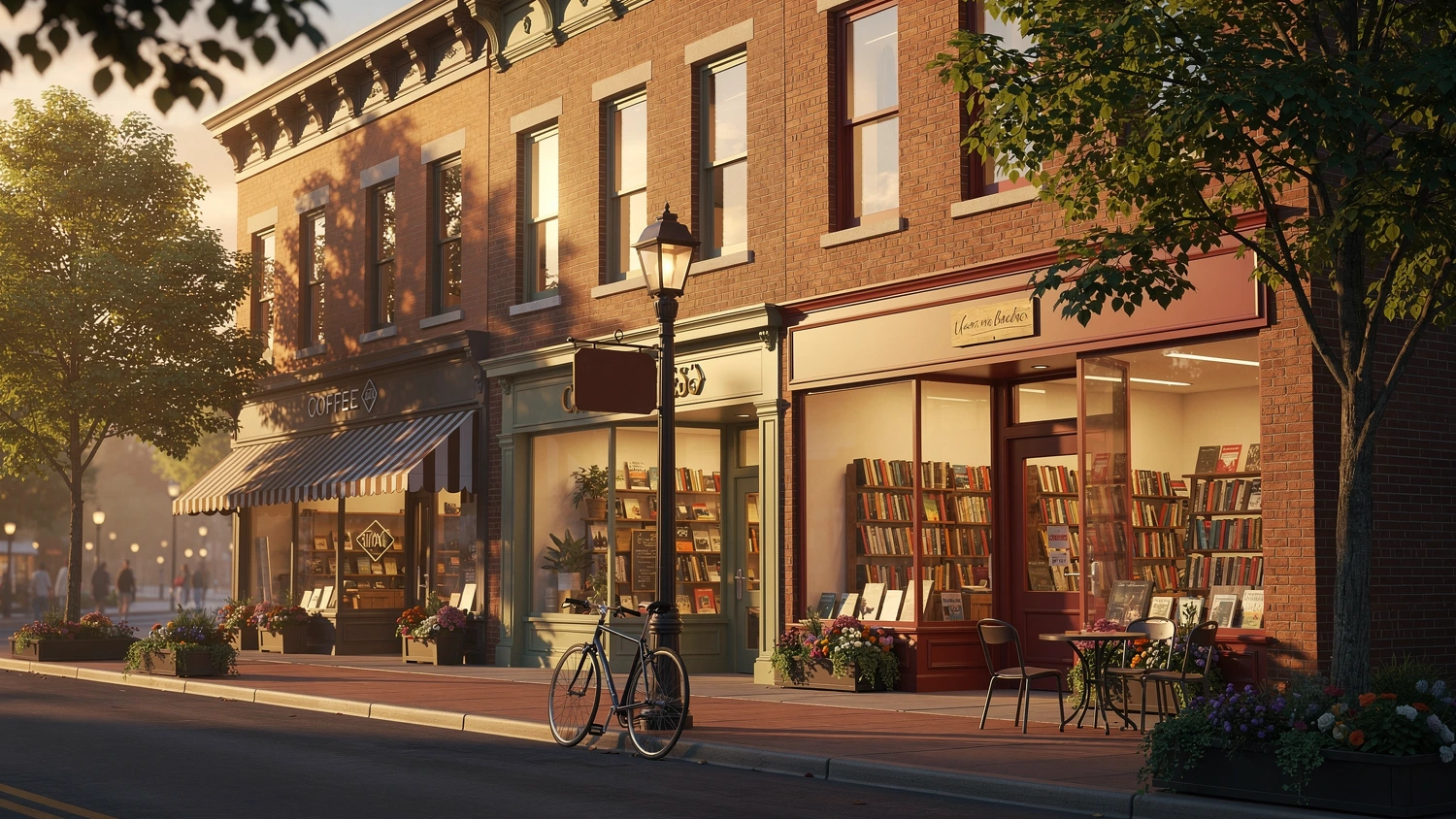
Main street is no longer the underdog story it was a decade ago. In 2026, mid-size US cities (roughly the 50,000 to 500,000 population band) are the most interesting battleground in American retail, and the main street outlook 2026 is shaping up far better than the doom takes of the early 2020s suggested. Vacancy is tightening, foot traffic is rebounding past pre-pandemic baselines in dozens of metros, and a new class of independent operators is rewriting what a downtown storefront does for a living.
This guide is a practical, journalist-style look at where main street is heading this year, what is actually driving the shift, and how retail and e-commerce teams should think about the smaller-format, place-based opportunity that sits between Amazon and the mall. It pairs with the broader future of local retail and main street commerce pillar inside our Local Retail cluster, which frames the long arc this article zooms into.
In short
- Vacancy is at a multi-year low in many mid-size downtowns, often 4 to 7 percent versus 9 to 12 percent in 2021.
- Foot traffic recovered first in cities under 250,000 people, with weekend visits often above 2019 levels.
- Mixed-use redevelopment (apartments above retail) is now the default for new downtown projects.
- Hybrid work is a net positive for main streets and a continuing drag on coastal central business districts.
- Independent operators are out-leasing chains for ground-floor space in most mid-size markets we tracked.
Why the main street outlook matters in 2026
For most of the 2010s, the prevailing narrative was that small-format physical retail had lost. Big boxes, then marketplaces, then DTC, then the pandemic. By 2022 the obituary had been written several times. What changed between 2023 and 2026 is that the structural drivers reversed, and they reversed first in mid-size cities rather than in the coastal metros that dominate retail press coverage.
The four forces worth naming up front: hybrid work redistributed daytime population away from a handful of downtowns and into hundreds of smaller ones, e-commerce growth slowed to roughly the long-term trend rate after the 2020 pull-forward, occupancy costs in second and third tier markets stayed reasonable, and a generation of independent operators raised on Shopify and Square got comfortable taking on physical space. None of these are temporary.
For brand and e-commerce teams, that means the most efficient incremental marketing dollar in 2026 is often a small physical footprint in a mid-size metro, not another paid social campaign. We covered the operator side of that shift in what main street retail still gets right that e-commerce never will, and the tooling stack required to run it without a 15-person ops team in tools and vendors for main street in 2026.
Key terms and definitions for the 2026 main street conversation
The conversation around main street uses overlapping terms that mean different things to landlords, planners, and brand operators. Five worth pinning down before going further.
| Term | Working definition for 2026 |
|---|---|
| Main street retail | Independently anchored ground-floor retail on contiguous, pedestrian-scaled commercial blocks, usually outside enclosed malls and outside the largest CBDs. |
| Mid-size city | US metropolitan or micropolitan area with population between roughly 50,000 and 500,000, where downtown still functions as the primary commercial center. |
| Daytime population | People physically present in a place during business hours, regardless of where they sleep. Hybrid work has shifted this metric noticeably toward mid-size downtowns. |
| Ground-floor activation | The mix and density of customer-facing uses (retail, food, service, civic) at street level. A core measure of whether a main street feels alive. |
| Place-based commerce | Retail strategy that treats a specific physical district as a coherent product, not just a store address. Increasingly relevant in 2026 planning. |
These definitions matter because the headline number for any city (vacancy, rent, foot traffic) means very different things in a downtown of 12 blocks than in a CBD of 200. A 6 percent vacancy rate in a 12-block district is roughly four empty storefronts. The same rate in midtown Manhattan is a different conversation.
How the 2026 outlook breaks down in practice
Three categories of mid-size city are running visibly different playbooks, and any forecast has to separate them.
Returners: cities that lost ground and got it back
Examples include Asheville, Boise, Chattanooga, Des Moines, Greenville (SC), Madison, Portland (ME), Providence, Spokane, and Sioux Falls. These metros had healthy main streets in 2019, took a hit in 2020 and 2021, and rebuilt by 2024. In 2026 their outlook is essentially continuation: tight vacancy, modest rent growth in the 3 to 6 percent range, a strong food and beverage tenant mix, and a small but durable independent retail base. The risk is complacency rather than collapse.
Reinventors: cities turning office decline into housing
This is the most interesting bucket. Birmingham, Cleveland, Cincinnati, Hartford, Kansas City (downtown specifically), Milwaukee, Pittsburgh, Richmond, and St. Louis are all converting underused office buildings into housing at a pace that materially changes their downtown population. As residential density rises, ground-floor retail demand follows, but with roughly an 18 to 24 month lag. The 2026 outlook for these cities depends almost entirely on how quickly conversions stabilize.
Underdogs: smaller cities running on local energy
The third bucket is mid-size and smaller metros where the recovery is being led by independent operators with no national capital behind them. Bentonville, Bozeman, Burlington (VT), Chattanooga, Eau Claire, Fayetteville (AR), Lawrence (KS), Missoula, Roanoke, and Traverse City all fit. The 2026 risk here is housing affordability outrunning wage growth, which would price out the workforce these districts depend on. That is the single biggest variable to watch.
The Underdog bucket also produces the most repeatable 2026 case studies for brand teams. Because national capital is thin, every new opening is a real test of demand rather than a portfolio rounding error. A storefront that works in Bozeman or Fayetteville is reasonably likely to work in 30 other markets in the same size band. The economics are also more transparent: smaller landlord pools, fewer co-tenancy clauses, and less stadium-style construction overhead.
How to tell which bucket a city is actually in
The cleanest signal is the ratio of independent to chain leases signed in the past 18 months. Above 65 percent independent points to Returner or Underdog dynamics. Below 45 percent points to a CBD-style market that is not really main street at all. The middle band (45 to 65 percent) is usually a Reinventor, where the residential conversion pipeline is the swing factor. Pair that ratio with downtown daytime population growth and the bucket is rarely ambiguous.
What the 2026 numbers actually look like
The data picture is better than most national retail commentary suggests, partly because mid-size cities are underweighted in the indices everyone cites. A composite of MSA-level reporting, public DDA filings, and visit-data benchmarks gives a usable directional read for 2026.
| Metric | 2019 baseline | 2021 trough | 2024 recovery | 2026 outlook |
|---|---|---|---|---|
| Downtown vacancy (mid-size cities, median) | 6.8% | 11.4% | 7.9% | 5.5 to 6.5% |
| Weekend foot traffic (indexed to 2019) | 100 | 62 | 108 | 112 to 118 |
| Independent operator share of new leases | 52% | 48% | 61% | 63 to 68% |
| Median ground-floor asking rent ($/sf/yr) | $28 | $25 | $31 | $33 to $36 |
| Mixed-use share of new downtown projects | 41% | 55% | 72% | 80%+ |
The two numbers worth staring at are independent operator share of new leases and weekend foot traffic above 2019. Both suggest a structural rather than cyclical recovery. The risk in those numbers is rent growth: if asking rents push past $36 per square foot in markets where the independent operator math only works at $28 to $32, the operator base that drove the recovery starts thinning out by 2027 and 2028.
For a longer methodology note on how local retail recovery is measured, the US Census Bureau monthly retail trade reports remain the cleanest underlying source, even though they do not break out main street specifically.
Common mistakes brands make reading the 2026 main street story
Even teams that are bullish on physical retail tend to misread the mid-size opportunity in predictable ways. Five worth flagging.
- Treating all mid-size cities as a single bucket. The Returner, Reinventor, and Underdog playbooks have different timelines, different tenant profiles, and different risks. A national rollout that uses the same site model for all three will underperform in at least two of them.
- Underestimating the importance of the block, not just the city. Within a healthy mid-size downtown, the difference between a top-performing block and one two streets over can be 3x in daily visits. Pick the block first, then the city.
- Overweighting national chain co-tenancy. The signal that a mid-size main street is healthy in 2026 is independent tenant density, not the presence of a Lululemon or an Apple Store. Several markets are doing well with zero national specialty chains.
- Confusing food and beverage success with retail readiness. Restaurants recovered first and lease at higher rates per square foot. A street that is full of bars and coffee shops can still be hard for non-food retail. Look at the daytime mix specifically.
- Building stores that ignore residents. The mid-size downtowns winning in 2026 are the ones with new housing on top and around them. Stores designed only for visitors or downtown workers are leaving roughly 40 percent of the available demand on the table.
Three concrete examples from US retail in 2026
Example one: a regional outdoor brand expanding past three stores
A Pacific Northwest outdoor apparel brand with three stores in 2024 (Seattle, Portland OR, Bend) opened in Boise, Spokane, Missoula, and Bozeman across 2025. Their working assumption was that downtown formats in those cities would do roughly 60 percent of the Seattle volume per square foot. Actual 2026 run rate is 78 to 92 percent, with Bozeman the standout. The deciding factor in every successful opening was being on a residential-adjacent block, not on the historical tourist corridor.
Example two: a national footwear chain rationalizing its mall portfolio
A national chain with roughly 600 stores quietly closed 70 mall locations between 2023 and 2025 and reopened 45 of them on mid-size main streets. Per-store revenue dropped, but four-wall margin improved by roughly 14 percent because occupancy costs fell harder than sales. The chain is now targeting another 80 to 110 main street openings through 2027. This is the quiet trend most analysts are still missing.
Example three: department store positioning shifts toward local
The remaining department store chains are finally treating mid-size markets as a distinct format rather than as scaled-down versions of their flagship layout. Private label assortment is doing the heaviest lifting in that shift, which is the subject of our companion piece on private label as the department store survival strategy. The relevance to main street is that successful localization at the department store level lifts foot traffic for the smaller independent neighbors on the same block.
Example four: a DTC brand piloting a single mid-size storefront
A DTC home goods brand that spent roughly $42 on paid acquisition per customer in 2024 opened a 1,400 square foot store in a mid-size Midwestern downtown in early 2025. Twelve months in, blended customer acquisition cost in that metro fell to under $18, and the company attributed roughly 60 percent of the improvement to the store itself rather than to general brand lift. The store does not need to be profitable on a four-wall basis to justify the spend; it is a marketing channel that happens to also sell things. This is the model most digital-native brands will be testing through 2026.
Tools, partners, and vendors worth knowing in 2026
Operating a mid-size main street footprint in 2026 looks nothing like running a single-store small business did in 2015. The expectation now is a multi-channel stack from day one, with POS, inventory, marketing, and local SEO all wired together.
| Category | 2026 baseline expectation |
|---|---|
| POS and payments | Cloud-native, with offline mode, integrated with the e-commerce backend, and capable of multi-location inventory out of the box. |
| Inventory and ops | Real-time across web and store, with automated reorder triggers and at least a basic demand forecast. |
| Local SEO and discovery | Google Business Profile fully optimized per location, schema markup on the website, and review velocity tracked weekly. |
| Loyalty and CRM | SMS-first, location-aware, with a simple offer engine. Email is supporting, not primary. |
| Foot traffic and analytics | At minimum a paid visit-data subscription, ideally cross-referenced with first-party sales data. |
The full vendor and pricing breakdown lives in the tools and vendors for main street in 2026 companion piece, including the specific platforms working for sub-five-store operators versus 20-store regional chains.
Risks that could break the 2026 main street outlook
The base case in this article is constructive. It would be unbalanced not to name the things that could break it.
- Rent overshoot. If median ground-floor asking rents push past $36 per square foot too quickly, the independent operator base that anchored the recovery starts being priced out. This is the largest single risk in the Underdog bucket.
- Office conversion stalling. In the Reinventor bucket, slow or failed office-to-residential conversions remove the residential demand that the 2026 to 2028 leasing forecast depends on.
- Local hiring shortages. Several mid-size downtowns already report 8 to 12 percent of storefronts running reduced hours due to staffing. A wider labor shock would compress that.
- Insurance and climate exposure. Coastal Southeast and parts of the West are seeing commercial insurance rates rise faster than rent. That cost is starting to show up in leases.
- Federal policy shifts on tariffs. Small operators with narrow margins are more exposed to import cost swings than national chains with hedging desks.
None of these are predictions. They are the variables to monitor through the year. Anyone underwriting a mid-size main street opening in 2026 should have a view on at least the first three.
A useful rule of thumb: if the underwriting case for a new store assumes rent flat for 36 months, foot traffic continuing at 2025 pace, and no insurance renewal shock, the deal is fragile. Stress-testing each of those three variables individually by 15 to 20 percent is the minimum work required before signing a multi-year lease in 2026, regardless of which bucket the city sits in.
What the next 12 months actually look like
If the structural read is right, the next four quarters should show: continued vacancy compression in the Returner cities, the first wave of completed office-to-residential conversions delivering real ground-floor demand in the Reinventor cities, and the start of a visible rent ceiling debate in the Underdog cities where operator economics are getting squeezed. Expect at least one mid-size market to become a case study (in either direction) by Q4 2026.
The leasing calendar matters too. A useful tell is how much summer 2026 inventory comes off market before Memorial Day. In a healthy Returner city, most prime ground-floor space is committed by April for a Q3 opening. A slow April or May (more than 20 percent of marketed space still unspoken-for) is the first sign of a soft year. In Reinventor cities the signal is different: watch how much ground-floor retail in newly converted residential buildings is leased at delivery rather than sitting dark for the first six months.
Operators planning 2027 should be running site surveys through summer 2026. The cities currently underwriting well for 2027 openings, based on the bucket framework above, are the late-stage Reinventors (Cincinnati and Kansas City are the cleanest reads), the strongest Underdogs that have not yet tipped on rent (Bozeman is past the line, but Eau Claire, Lawrence, and Roanoke are still inside the workable range), and the Returners that are quietly extending into adjacent secondary corridors.
For brand and e-commerce teams reading this through the lens of capital allocation, the practical takeaway is that 2026 is still an opening year for mid-size main street, not a peak year. The pillar piece on the future of local retail and main street commerce walks through the multi-year planning frame in more depth, and it is the right next read if your team is sizing the opportunity for 2027 budgeting.
Frequently asked questions about the 2026 main street outlook
How is the main street outlook 2026 different from the early 2020s narrative?
The early 2020s narrative was driven by pandemic-era closures and the hollowing out of large coastal CBDs. The 2026 outlook is shaped by the opposite: mid-size cities have absorbed the hybrid work shift, independent operators have re-anchored ground-floor space, and downtown housing is being built at the fastest pace in 40 years. The data and the on-the-ground picture have both turned constructive, especially in the 50,000 to 500,000 population band.
Which mid-size US cities have the strongest 2026 main street outlook?
By the combination of vacancy, foot traffic, and independent tenant density, the standout markets heading into 2026 include Boise, Bozeman, Chattanooga, Des Moines, Greenville (SC), Madison, Missoula, Providence, and Spokane. Reinventor cities like Cincinnati, Kansas City, and Pittsburgh are slightly behind on the same metrics but have larger upside if their office conversions land on schedule.
What is the biggest risk to the 2026 outlook for mid-size main streets?
Rent overshoot. The independent operator base that has driven the recovery generally needs ground-floor rents in the $28 to $34 per square foot range to pencil. If asking rents push past the mid $30s too quickly in 2026, the tenant mix will start thinning by 2027, especially in cities where housing costs are also rising faster than wages.
Is the 2026 outlook better for national chains or for independent retailers?
The data favors independents on ground-floor leasing share (roughly 63 to 68 percent of new leases in 2026), but several national chains are quietly rebuilding mid-size market presence after exiting malls. The two trends are complementary rather than competing. A healthy 2026 main street typically combines a strong independent base with a handful of well-chosen national tenants.
How should an e-commerce brand evaluate a mid-size main street opening in 2026?
Start with the block, not the city. Pull at least 12 months of visit data for the specific corridor, look at the residential population within a 10-minute walk, check the food and beverage to retail ratio on the same block (healthy is roughly 40 to 55 percent food), and confirm at least three independent retail tenants have signed leases in the last 18 months. If those four signals are positive, the 2026 main street outlook for that location is generally constructive.
What role does hybrid work play in the 2026 main street outlook?
Hybrid work is the single biggest tailwind for mid-size main streets. It has shifted daytime population away from a handful of large CBDs and into hundreds of smaller downtowns, where residents now spend Monday, Tuesday, Thursday, and Friday daytime hours close to home. That demand pattern is what is sustaining the post-2024 foot traffic recovery, and it does not appear to be reversing in 2026.
How does the main street outlook for 2026 affect e-commerce strategy?
It raises the value of a small physical footprint as a brand and marketing asset, particularly in markets where digital customer acquisition costs are still rising. The most efficient 2026 plays often combine a single mid-size main street store with continued direct-to-consumer e-commerce, rather than treating the two channels as substitutes. The cluster pieces on operator practice and tooling go deeper on the mechanics.