
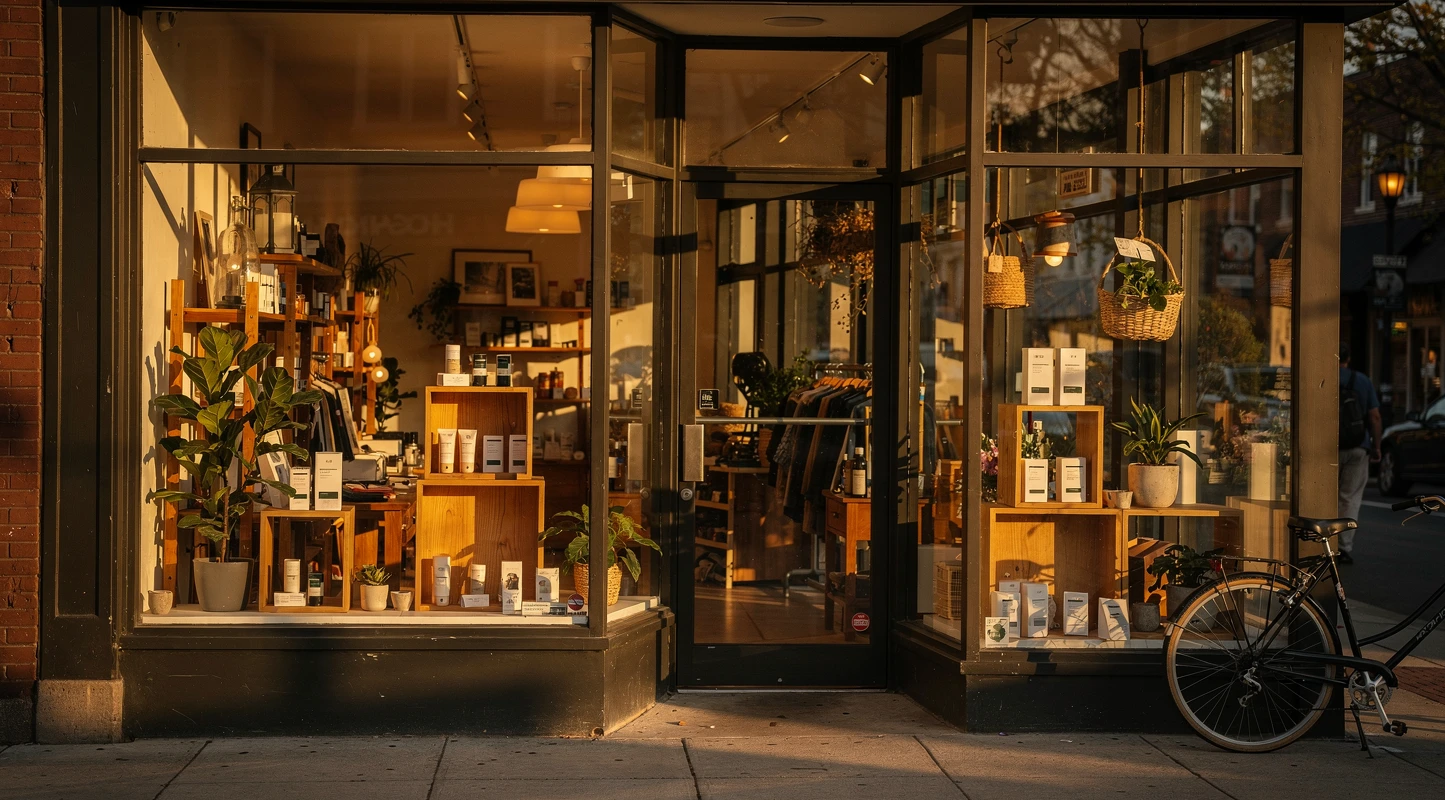
A retail window is the cheapest advertising you already pay rent on, and most stores waste it. The average pedestrian gives your glass between three and five seconds of attention while walking at roughly 3 miles per hour, which means a display has to do its full job in the distance of about four storefront widths. On a busy main street high street block, that single moment decides whether a shopper crosses your threshold or keeps moving toward the next door.
This guide treats the window as a conversion surface, not decoration. We will cover sightlines, the physics of a glance, lighting that survives daylight glare, the products that actually pull people in, and a refresh cadence you can sustain without a dedicated visual merchandiser. The same discipline that governs rent, parking and zoning on main street retail applies here: every square foot of frontage carries a cost, so it should carry a measurable return.
In short
- Design for the glance, not the gallery. One dominant focal point, readable in five seconds from across the sidewalk, beats a crowded scene every time.
- Lighting is the lever most retailers underuse. Aim for 3 to 5 times the ambient daytime light on the focal product, and kill reflections with angled spots rather than flat front lighting.
- Refresh on a fixed cadence (every 2 to 3 weeks) so regulars notice change, and tie each window to one stocked, in-store hero product.
- Measure entries, not compliments. A door counter and a simple conversion log turn the window from an opinion into a tested channel.
What makes a window stop a walker
A display stops people when it resolves a single visual question fast. The brain processes a storefront the way it scans a headline: it looks for one anchor, decides if it is relevant, and moves on. So the first rule is one focal point placed at eye level, roughly 5 to 5.5 feet from the ground, positioned slightly off center toward the direction of heaviest foot traffic.
The second factor is contrast. A walker’s peripheral vision detects movement, brightness, and color difference long before it reads detail. A bright product against a dark backdrop, or a saturated color against neutrals, registers from 20 to 30 feet away. The third factor is a clear value cue: a price, a single benefit line, or an obvious use case. Shoppers do not stop to admire; they stop because they suddenly want the thing or want to know what it costs.
You can test this yourself. Stand across the street, glance at your own window for five seconds, look away, and write down what you remember. If you cannot name the hero product and one reason to care, neither can the people walking past. The retailers who track this rigorously usually pair it with hard numbers on the pavement outside, which is why understanding what foot traffic data main street retailers should actually track matters as much as the creative itself.
There is also a directional rule most owners miss. On a two-way sidewalk, the majority of your traffic usually approaches from one side, set by the nearest transit stop, parking lot, or anchor tenant. Watch your block for a few mornings and note which way the crowd flows, then angle your hero and your signage to greet that approach. A display optimized for the dominant direction can read clearly a full second or two earlier, and that extra second is often the entire decision window. The same logic applies to corner stores, where the high-value frontage is the angled sightline a walker sees while still 40 feet away.
The five-second decoding test
Run the test in three conditions, because a window that works at noon can disappear at 9 a.m. or in the rain. Check it in bright direct sun (worst glare), in overcast flat light, and after dusk with your lighting on. A display that passes all three is rare and worth keeping in rotation for repeat use.
Sightlines, zoning, and the geometry of the glass
Most windows fail on geometry before they fail on creativity. The viewing zone for a walking pedestrian is a cone, not a flat plane, so anything below knee height or above 7 feet is effectively invisible to someone in motion. Concentrate your selling message in the band between 3 and 6 feet, and treat the floor and ceiling of the window as supporting context only.
Depth is the second consideration. A shallow window (under 18 inches) forces a poster-like, two-dimensional composition, while a deep window (3 feet or more) lets you build layers: a hero up front, a midground prop, and a backdrop. Layering reads as quality and gives the eye somewhere to travel after the initial stop, which extends dwell time and raises the odds of entry.
| Window depth | Best composition | Typical use | Refresh effort |
|---|---|---|---|
| Under 18 in (shallow) | Flat, poster-style, single hero | Boutiques, narrow frontage | Low (1 to 2 hours) |
| 18 to 36 in (medium) | Two-plane, hero plus prop | Apparel, gifts, specialty food | Medium (2 to 4 hours) |
| Over 36 in (deep) | Three-layer scene with backdrop | Furniture, lifestyle, flagship stores | High (half day or more) |
Local rules can constrain you more than you expect. Some historic districts and business improvement areas cap signage area, restrict illuminated displays after certain hours, or prohibit obscuring the interior view (a safety and crime-prevention requirement). Confirm what your lease and your municipality allow before you build anything permanent, the same way you would check the practical constraints covered in our breakdown of the boring truths of main street retail.
Lighting: the cheapest upgrade with the biggest return
Lighting separates an amateur window from one that sells, and it is where small budgets get the most leverage. The single biggest mistake is relying on the store’s ceiling lights, which sit behind the products and turn the glass into a mirror that reflects the street. The fix is dedicated front-of-window lighting aimed at the merchandise from above and slightly to the side.
Target a focal-to-ambient ratio of roughly 3:1 to 5:1, meaning the hero product is three to five times brighter than its surroundings. Use a warm-to-neutral color temperature (2700K to 3500K) for apparel, food, and home goods, and a cooler temperature (4000K and up) only for tech or clinical products where crispness signals quality. After dark, your lit window becomes the brightest object on a dim street and can out-pull every neighbor, so leave display lighting on past closing where local rules permit.
Pay attention to the color rendering index (CRI) of whatever fixtures you buy. A high CRI of 90 or above shows fabric texture, skin tones in mannequin photography, and food in their true colors, while cheap low-CRI bulbs in the 70s make merchandise look flat and gray. The price gap between the two is small and the visual difference is large, so this is one place not to economize. Avoid mixing color temperatures within a single window as well, because the eye reads the clash as a mistake even when it cannot name what is wrong, and that subconscious friction undercuts the polish you are trying to project.
- Mount track lighting at the top front edge of the window, angled 30 to 45 degrees down onto the hero so the beam misses the glass and avoids reflecting back at the viewer.
- Set the focal product as the brightest point, then dim the backdrop and props so the eye lands where you want it.
- Check for glare at three times of day from a standing eye height across the sidewalk, adjusting angles until the product reads cleanly with no hot reflection.
- Add a timer or photocell so the window stays lit through evening foot traffic without manual switching, and audit the bulbs monthly for color drift or failures.
Choosing the hero product and tying it to stock
A window only earns its keep when the thing in the glass is in the store, in quantity, and easy to find. Nothing burns trust faster than stopping a shopper with a display and then admitting the item is sold out or was a one-off prop. Pick a hero product that is seasonal, visually distinctive, carries a healthy margin, and is genuinely stocked at depth.
For independents, the strongest heroes are usually mid-price items with a clear story: the new spring arrival, a local maker’s collaboration, a bundle that solves a specific problem. Group three to five supporting pieces around the hero so the window suggests a small assortment rather than a single SKU, and keep a printed prompt at the register so staff can connect the dots when a window-stopper walks in. This product discipline mirrors how serious sellers think about merchandising across channels, including the assortment logic in the guide to selling on global e-commerce marketplaces, where the hero-plus-supporting structure also drives conversion.
Pricing the hero in the window is a strategic choice, not an afterthought. A visible price removes the friction of guessing and pre-qualifies the shopper, which raises the quality of the people who enter even if it slightly reduces the raw count. Hide the price and you maximize curiosity entries, useful when your strength is upselling on the floor. There is no universally correct answer, so test both: run a priced window for two weeks, an unpriced version of a comparable hero for two weeks, and let your capture and conversion data settle the argument rather than your instinct.
Seasonality should drive the calendar more than novelty for its own sake. Anchor your strongest windows to the moments when foot traffic naturally spikes (holiday runs, local festivals, the first warm weekend, back-to-school) and lighten the effort during predictable lulls. Building the year backward from those peaks means your best creative and your deepest stock land exactly when the most eyes are on the glass, instead of being spent on a quiet Tuesday in February when half the pavement is empty.
Tools and a sustainable cadence
You do not need a visual merchandiser on payroll to run a strong window program; you need a checklist, a calendar, and a small kit. A reliable refresh cadence is every 2 to 3 weeks, fast enough that regulars register change and slow enough that you are not exhausted. Keep a reusable prop library (risers, fabric, neutral plinths, signage frames) so each refresh is assembly rather than fabrication. For lighting, signage printing, counters, and display fixtures, the landscape of affordable options is wider than it was a few years ago, and our roundup of tools and vendors for small business stories in 2026 is a useful starting point for sourcing kit without overspending.
Measuring whether the window actually works
If you cannot measure it, you are decorating, not merchandising. The cleanest metric is the capture rate: the share of passersby who enter. Estimate sidewalk traffic with a manual count or a small door-and-pavement sensor, count entries with an inexpensive door counter, and compare the two before and after a window change. A good display moves capture rate by a measurable margin, and a great one moves it noticeably within the first week.
Layer in conversion and basket data from the point of sale to close the loop. If entries rise but sales of the hero product do not, the window is pulling people in on a promise the floor is not keeping, which usually means placement, signage, or staffing inside needs work. Industry bodies publish useful benchmarks here; the National Retail Federation, for example, regularly covers store-level conversion research worth comparing against your own numbers (NRF).
Common mistakes
Overcrowding the glass. The instinct to show everything kills the focal point. A walker who sees twenty items remembers none; a walker who sees one hero remembers it. Edit ruthlessly, then edit again.
Lighting from behind. Relying on interior ceiling lights turns the window into a mirror that reflects the street, and the products vanish. Front-mounted, angled spots are non-negotiable for daytime visibility.
Featuring something you cannot sell. A hero that is out of stock, a prop, or a discontinued line trains shoppers to distrust your window entirely. Tie every display to stocked inventory and a register prompt.
Setting it and forgetting it. A static window tells regulars nothing has changed, so they stop looking. A fixed refresh cadence keeps the glass earning its rent.
Judging by compliments instead of counts. Friends praising your window is not data. Capture rate, dwell, and hero-product sell-through are the only signals that matter.
FAQ
How often should I change a retail window display?
Every 2 to 3 weeks is the practical sweet spot for most independent stores on a high street. That cadence is frequent enough that regulars and commuters notice the change and re-engage, but slow enough that you can sustain it without a dedicated merchandiser. Tie refreshes to your buying calendar, seasons, and local events so each new window has a reason to exist. For high-footfall flagship locations, weekly or biweekly changes can be justified by the traffic, while a quiet side street may stretch to four weeks before staleness sets in.
What is the single most important element of a window display?
Lighting, followed closely by having one clear focal point. Most window failures are lighting failures: interior ceiling lights turn the glass into a mirror, and the products disappear behind a reflection of the street. Dedicated front-mounted spots aimed at the hero product, at roughly three to five times the ambient brightness, make the difference between a window people walk past and one that stops them. Once lighting is right, a single dominant focal point at eye level does the rest of the work.
How do I measure if my window display is working?
Track capture rate, which is the percentage of people walking past who actually enter. Count sidewalk traffic manually or with a small sensor, count entries with an inexpensive door counter, and compare before and after each window change. Then connect entries to point-of-sale data to see whether the hero product is selling through. If entries rise but sales do not, the problem is inside the store, not the glass. Compliments and gut feel are not measurement; counts are.
Do I need a professional visual merchandiser?
No, not for most independent shops. What you need is a repeatable system: a checklist, a refresh calendar, a reusable prop kit, and the discipline to feature stocked hero products under proper lighting. A merchandiser can raise the ceiling of what is possible, but the fundamentals (one focal point, strong lighting, a clear value cue, a fixed cadence) are learnable and cheap to execute. Start with the system, measure results, and bring in outside help only once the basics are consistently paying off.
Can window lighting really pull traffic after dark?
Yes, and it is one of the most underused advantages a physical store has. After closing, a well-lit window becomes the brightest object on a dim street, drawing the eye of every evening pedestrian and giving you free overnight advertising. Where local rules and energy budgets allow, leaving display lighting on past business hours can meaningfully raise next-day visits, because people who notice the window at night return when you are open. Use a timer or photocell so it runs automatically without staff intervention.
How much should a small store budget for window displays?
Less than most owners fear. The largest one-time cost is lighting, where a basic track-and-spot setup runs a few hundred dollars and pays back quickly in extra entries. Beyond that, a reusable prop library (risers, fabric, plinths, signage frames) means each refresh is assembly rather than new purchasing, so ongoing cost is mostly staff time of a few hours every two to three weeks. The window is square footage you already pay rent on, so the real question is return per refresh, not raw spend.
What’s next
Start this week by running the five-second decoding test on your current window in three light conditions, then fix the single weakest element rather than rebuilding everything at once. Pair that creative work with hard measurement, because a window only earns budget when you can show capture rate moving, and combine it with the pavement-level discipline in our pieces on tracking foot traffic data and the underlying economics of rent, parking and zoning on main street. Treat the glass as a channel, instrument it, and it will out-earn most of the advertising you pay for elsewhere.