
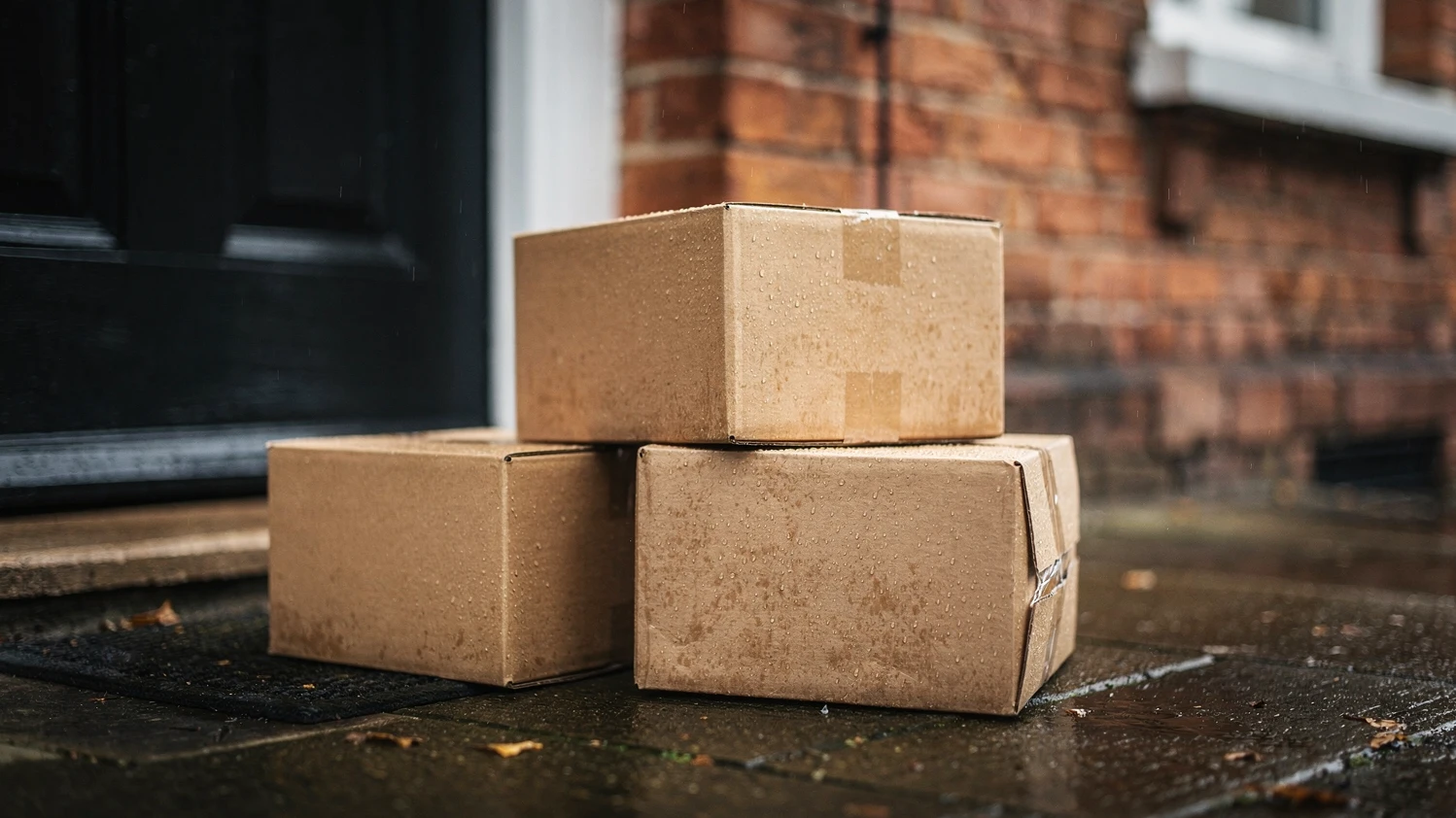
Evri and Yodel have been named the worst parcel companies in the UK for customer service for the fourth year running, according to Ofcom’s annual survey of parcel recipients published on Tuesday 27 October 2026. The regulator said average satisfaction across the industry fell for the first time in three years, and warned that it is now considering whether tougher rules are needed.
The findings land at an awkward moment for the delivery firms. The peak season of Black Friday, Cyber Monday and Christmas is weeks away, people in the UK sent and received a record 4.6 billion parcels last year, and seven in 10 recipients told Ofcom they had a delivery problem in the past six months.
In short
- Overall satisfaction fell to 75% in Ofcom’s fourth annual parcel survey, down from the 78% recorded every year since 2023.
- Amazon and FedEx again top the customer-service ranking, each with an average contact satisfaction score of 56%.
- Evri (26%) and Yodel (34%) rank worst for handling contacts and complaints for a fourth straight year; Evri also has the highest dissatisfaction at 42%.
- 71% of recipients had a delivery problem in the past six months, up from 68%, with delays (32%) and parcels left in the wrong place (28%) the most common.
- Ofcom is weighing stronger regulation and says it will set out next steps in its annual postal monitoring report in December.
What did Ofcom’s 2026 parcel survey find?
Ofcom’s survey is the closest thing the UK has to an official league table for delivery companies. It tracks how satisfied people are with the parcels they receive and, in more detail, how well each operator deals with customers who contact it about a problem. This is the fourth edition since the regulator expanded its consumer research after strengthening its rules in 2023.
The headline number is overall satisfaction. Ofcom found that average overall satisfaction remains “reasonably high” at 75%, but that is the first fall in three years: the figure had held at 78% in 2023, 2024 and 2025. Satisfaction also varies widely depending on which firm delivers the parcel, ranging from 64% at the weakest operator to 84% at the strongest.
The second measure, satisfaction with contact and complaints handling, is where the gap between firms is starkest. Across all operators, average satisfaction with the contact process fell from 47% to 43%, which means fewer than half of people who chased a parcel or complained came away satisfied with how it was handled.
Ofcom also published new figures on how often things go wrong. Across all operators, 71% of parcel recipients said they had experienced at least one delivery issue in the previous six months, up from 68% a year earlier, according to the regulator’s release as reported by the Press Association and trade titles Post and Parcel and ChannelX.
The headline figures at a glance
| Measure | 2025 survey | 2026 survey | Direction |
|---|---|---|---|
| Average overall satisfaction | 78% | 75% | Down 3 points |
| Average satisfaction with contact and complaints | 47% | 43% | Down 4 points |
| Recipients with a delivery issue in past six months | 68% | 71% | Up 3 points |
| Parcels sent and received in the UK (previous year) | 4.2 billion | 4.6 billion | Up 8.6% |
| Best contact score (Amazon, FedEx) | 57% | 56% | Down 1 point |
| Worst contact score (Evri) | 31% | 26% | Down 5 points |
The 2025 column is taken from Ofcom’s October 2025 release; the 2026 column is from the release published on 27 October 2026.
Which parcel companies are best and worst for customer service?
For the fourth year in a row, the same two names sit at each end of the table. Amazon and FedEx top the ranking for customer service, each with an average satisfaction score of 56% across all stages of the contact process, Ofcom said. Both companies also recorded the lowest dissatisfaction scores, at 15%, according to the Press Association.
At the bottom, Yodel and Evri again perform worst. Among customers who had reason to contact or complain to them about a delivery, satisfaction was 34% for Yodel and 26% for Evri, which Ofcom described as significantly below average. The two firms also have the highest levels of dissatisfaction, with Evri at 42% and Yodel at 33%.
The remaining national carriers, including UPS, DHL, Parcelforce, Royal Mail and DPD, sit between the leaders and the bottom two, according to Post and Parcel’s coverage of the Ofcom graphic. In last year’s survey, UPS and DHL both scored 55% on contact satisfaction, close behind Amazon and FedEx.
Contact satisfaction by carrier: 2025 against 2026
| Carrier | Contact satisfaction 2025 | Contact satisfaction 2026 | Dissatisfaction 2026 | Position |
|---|---|---|---|---|
| Amazon | 57% | 56% | 15% | Joint best |
| FedEx | 57% | 56% | 15% | Joint best |
| Yodel | 38% | 34% | 33% | Second worst |
| Evri | 31% | 26% | 42% | Worst |
| Industry average | 47% | 43% | Not published in coverage | Benchmark |
Two points stand out. First, even the best performers slipped slightly, so the decline is not confined to the weakest firms. Second, the gap between top and bottom has widened: last year Evri trailed Amazon and FedEx by 26 points on contact satisfaction, and this year the gap is 30 points.
Why Evri’s score matters more than most
Evri is one of the largest consumer parcel carriers in the country and is the default delivery option for a large share of online fashion, marketplace and small-seller orders. That means its score affects more shoppers than a low rating at a niche operator would. When roughly one in four people who contact Evri leave satisfied and more than four in 10 are actively dissatisfied, the effect reaches a very large number of households.
The company has been trying to change that picture. On Monday it set out Evri’s £32.2m peak investment ahead of the Christmas peak. Ofcom’s survey looks back over the past year, so it does not yet capture whether that spending improves the experience this winter.
What are the most common delivery problems?
Ofcom asked recipients which problems they had run into over the past six months. The most common issue was a late delivery, reported by 32% of recipients. Next came parcels being left in an inappropriate location (28%), drivers not knocking loudly enough (25%) and not being given enough time to answer the door (20%).
Every one of those four problems became more common compared with last year’s survey. The rise in drivers not knocking loudly enough, from 20% to 25%, is the largest jump, and it fits a long-running complaint that “sorry we missed you” cards are sometimes left when somebody was at home.
| Delivery problem | 2025 survey | 2026 survey | Change |
|---|---|---|---|
| Delivery delays | 28% | 32% | +4 points |
| Parcel left in an inappropriate location | 26% | 28% | +2 points |
| Driver did not knock loudly enough | 20% | 25% | +5 points |
| Not given enough time to answer the door | 19% | 20% | +1 point |
| Any delivery issue in past six months | 68% | 71% | +3 points |
Disabled customers still face more problems
Ofcom singled out disabled consumers in 2023 when it strengthened its rules, requiring parcel operators to have policies that meet the needs of disabled customers. The new survey shows the gap has not closed. Disabled consumers and people with limiting conditions are still more likely to have difficulties with the delivery process (76%) than people without such conditions (68%).
For a disabled shopper, a driver who does not wait long enough at the door or leaves a heavy box at the end of a path is not a minor annoyance. It can mean a missed delivery, a trip to a depot or shop that is hard to make, or a parcel that cannot be moved without help. That is why the regulator tracks the figure separately and why it is likely to feature in any further action.
Why is satisfaction falling when parcel volumes are at a record?
The survey does not set out a single cause, and Ofcom has not attributed the decline to any one factor. But the volume figures provide important context. Last year people in the UK sent and received a record 4.6 billion parcels, 8.6% more than the year before. The previous survey reported 4.2 billion parcels and growth of 7%, so the network is handling more items and growing faster.
More parcels means more pressure on delivery rounds, depots and contact centres. Where drivers are paid per drop or run to tight schedules, the incentive is to get through the round quickly, which can show up as less time waiting at the door and more parcels left in porches, bins or with neighbours. Ofcom’s figures on knocking and waiting times are consistent with that pattern, though the regulator has not drawn that link itself.
Shopping habits are also shifting. The rise of marketplaces, resale platforms and direct shipments from overseas sellers has added many low-value, lightweight items to the network. Online spending has also been patchy this autumn, with the latest September retail sales figures showing online sales slipping before Black Friday, so parcel firms are juggling volatile demand as well as growth.
Royal Mail’s changes add to the picture
The wider postal network is also in flux. Royal Mail has been moving to a new delivery model for letters, and this week paused the final stage of that change; our report on Royal Mail’s paused second-class delivery overhaul sets out what that means for post over Christmas. Changes to letter rounds are separate from parcels, but they share depots, staff and vans, and any disruption tends to be noticed by households as a single “post and parcels” experience.
Access to counters is changing as well. Many parcels are dropped off or collected at Post Office branches, and closures such as the TG Jones post office closures reduce the number of local places where people can send returns or pick up a missed delivery. That pushes more traffic towards lockers, convenience-store parcel points and doorstep collection.
What has Ofcom said it will do next?
Ofcom’s tone this year is noticeably firmer. The regulator said it is concerned that “there are still a significant number of customers experiencing issues” and that parcel operators “can, and should, do more”. It added that it is considering further action to make sure customers are adequately protected, “including whether strengthened regulation is needed”.
Fergal Farragher, Ofcom’s policy director, said: “Parcels are a vital part of everyday life, and people rightly expect packages to arrive on time and without hassle. While some firms are delivering a good service, too many customers are still experiencing problems.” He added: “Companies need to put customers first and improve performance, or we will consider further measures to make sure consumers are properly protected.”
The regulator has given a timetable for its next update. It said it will provide further information on this work when it publishes its annual monitoring report on the postal market in December. That report is the most likely place for any proposal on new rules, consultation or enforcement to appear.
What Ofcom’s existing rules already require
In 2023 Ofcom strengthened its consumer protection rules for parcels after finding problems with how complaints were handled and how disabled customers were treated. Under those rules, parcel operators must have clear and effective complaints processes, and they must have policies to meet the needs of disabled customers and make sure drivers follow them. Ofcom says that after the rules came into force, operators made “a number of improvements” to complaints handling, with signs of better customer experience in some areas.
The latest survey suggests those gains have not held across the board. The fall in average contact satisfaction, from 47% to 43%, is the clearest sign. It is the measure the 2023 rules were designed to move, which helps explain why Ofcom is now openly discussing stronger regulation rather than further monitoring.
What could stronger parcel regulation look like?
Ofcom has not published proposals, so any discussion of specific measures is speculative at this stage. The regulator has said only that it is considering whether strengthened regulation is needed and will update in December. What follows sets out the options that have been discussed publicly in the sector, not decisions.
The most straightforward route would be to tighten the existing complaints and accessibility rules, for example by setting clearer standards for how quickly complaints must be answered or how operators must record and resolve them. Another option often raised by consumer groups is greater transparency, such as requiring operators to publish their own complaint figures in a consistent format so shoppers and retailers can compare them.
Some campaigners have called for a dedicated parcels ombudsman or a formal route to independent redress when a carrier refuses to resolve a complaint. That would be a bigger change and is likely to need more than an Ofcom rule change. For now, the regulator’s message is that firms have a window, through the busy peak season and up to the December report, to show improvement.
What does this mean for UK online shoppers?
For shoppers, the most practical takeaway is that the carrier matters. Ofcom’s figures show overall satisfaction ranging from 64% to 84% depending on which firm delivers a parcel, and contact satisfaction ranging from 26% to 56%. Where a retailer offers a choice of carrier, or a choice between home delivery and click and collect, that choice can affect the chance of a smooth delivery.
Many retailers show the carrier at checkout or in the dispatch email. Some let customers choose a named-day slot, a locker or a parcel shop. If a delivery is important or valuable, a collection point can avoid the most common doorstep problems, including parcels left in the wrong place or a card left when someone was at home.
Who to contact when a parcel goes wrong
Under the Consumer Rights Act 2015, goods bought online remain the retailer’s responsibility until they are in the buyer’s physical possession, or that of someone the buyer has nominated. In practice, this means that if a parcel is lost, damaged or delivered to the wrong place, the shopper’s contract is with the retailer, not the delivery company, and the retailer should put it right.
That is why consumer advisers usually recommend contacting the retailer first rather than spending hours chasing the courier. The retailer chose the carrier and has a commercial relationship with it, so it is better placed to trace a parcel or claim compensation. If the retailer does not help, Citizens Advice can explain the next steps; Ofcom does not resolve individual complaints but uses complaint patterns to inform its work.
- Keep the order confirmation, dispatch email and any tracking screenshots.
- If tracking says “delivered” but nothing arrived, check with neighbours and any safe place you nominated, then contact the retailer promptly.
- Ask the retailer for a replacement or refund rather than a promise to “investigate with the courier”.
- Note any photo the driver took as proof of delivery; if it shows the wrong door, send it to the retailer.
- If you paid by card, a chargeback may be available through your bank if the retailer refuses to help.
How will this affect Black Friday and Christmas deliveries?
The survey arrives just before the busiest weeks of the year. Black Friday falls on 27 November 2026, followed by Cyber Monday and then the Christmas run, when parcel volumes peak. If 71% of recipients already report a problem over a typical six-month period, the risk of delays and misdelivery is likely to be higher during peak, when the network is at full stretch.
Shoppers buying gifts online should plan around the carriers’ deadlines rather than the retailers’ promotional dates. Our guide to Christmas 2026 last posting dates lists the Royal Mail, Parcelforce and other cut-offs. Ordering a few days before the advertised deadline gives a buffer for the kind of delays that Ofcom’s survey shows are now the most common problem.
Carriers will be keen to avoid a repeat of past peak seasons that generated waves of complaints. With Ofcom watching more closely and its December report due in the middle of peak, how firms perform over the next eight weeks is likely to shape the regulator’s next move.
Practical steps for peak season
- Check the carrier at checkout. Where there is a choice, Ofcom’s ranking gives an indication of which firms handle problems best.
- Use a collection point for valuable items. Lockers and parcel shops reduce the risk of a parcel being left in the wrong place.
- Set delivery instructions. Many carriers’ apps let you choose a safe place, a neighbour or a specific day.
- Order early. Delays were the most common problem in the survey, reported by 32% of recipients.
- Track and act quickly. If a delivery shows as completed but nothing arrived, contact the retailer the same day.
What does it mean for UK retailers and marketplace sellers?
For retailers, the carrier is part of the brand. A shopper whose parcel is left in the rain or never arrives tends to blame the shop they bought from, not the delivery firm. Ofcom’s survey therefore matters for any business that ships to UK homes, from large chains to marketplace sellers on eBay, Amazon, Etsy or Vinted.
Many smaller sellers choose carriers mostly on price, and the lowest-cost services are often provided by the operators with the weakest scores. The survey gives sellers a clearer basis for weighing cost against complaint rates, refund costs and negative reviews. Offering a premium or named carrier option at checkout, even at a small extra charge, is one way to let customers choose.
Retailers also have a direct legal interest. Because the goods remain at the seller’s risk until delivered, a carrier that loses or misdelivers parcels creates refund and replacement costs for the retailer. Sellers can reduce that exposure by checking each carrier’s compensation terms, insuring higher-value consignments and keeping a record of proof-of-delivery photos.
Questions for sellers to ask their carrier
- How does the carrier handle “delivered but not received” claims, and how quickly does it pay out?
- Does it offer photo or signature proof of delivery as standard?
- What is its policy for disabled customers, as required by Ofcom’s rules?
- What extra capacity has it added for peak season, and what are its last collection dates?
- Can customers redirect a parcel to a locker or parcel shop after dispatch?
How does the UK parcel market compare over four years of Ofcom surveys?
The consistency of the rankings is one of the most striking features of Ofcom’s research. Amazon and FedEx have topped the contact-satisfaction table for several years, and Evri and Yodel have been at the bottom in all four editions. That suggests the gap is structural rather than a one-off bad year for any single operator.
Overall satisfaction held at 78% for three consecutive surveys before slipping to 75% this year, so the 2026 result breaks a period of stability. Volumes, meanwhile, have kept growing: from 4.2 billion parcels reported in last year’s survey to 4.6 billion in this one. The combination of higher volumes and lower satisfaction is the pattern regulators tend to watch most closely.
Whether the decline continues will depend on how carriers handle the next peak and how Ofcom chooses to act in December. For now, the 2026 survey gives shoppers and sellers the clearest independent comparison of UK parcel firms available, and a clear signal that the regulator’s patience is wearing thin.
Frequently asked questions
Which is the worst parcel delivery company in the UK according to Ofcom?
Ofcom’s 2026 survey ranks Evri worst for handling customer contacts and complaints, with satisfaction of 26% and dissatisfaction of 42%. Yodel is second worst, with satisfaction of 34% and dissatisfaction of 33%. Both firms have ranked at the bottom for four years running.
Which parcel companies are rated best?
Amazon and FedEx top Ofcom’s 2026 ranking for customer service. Each scored an average of 56% for satisfaction across the contact process, and each had dissatisfaction of 15%, the lowest of the firms named.
What is the overall parcel satisfaction score for 2026?
Average overall satisfaction is 75%, down from 78%, which had held steady since 2023. It is the first fall in three years. Satisfaction ranges from 64% to 84% depending on which firm delivers the parcel.
How many people have problems with parcel deliveries?
Ofcom found that 71% of parcel recipients had at least one delivery issue in the past six months, up from 68% last year. The most common were delays (32%), parcels left in an inappropriate location (28%), drivers not knocking loudly enough (25%) and not being given enough time to answer the door (20%).
Is Ofcom going to introduce new rules for parcel firms?
Ofcom says it is considering further action, including whether strengthened regulation is needed. It has not published proposals and says it will give an update in its annual monitoring report on the postal market in December 2026.
Who should I complain to if my parcel is lost?
Contact the retailer you bought from first. Under the Consumer Rights Act 2015, goods remain the retailer’s responsibility until they reach you, so the retailer should offer a replacement or refund. If it will not help, Citizens Advice can explain your options; Ofcom does not handle individual complaints.
How many parcels are delivered in the UK each year?
According to Ofcom, people in the UK sent and received a record 4.6 billion parcels last year, 8.6% more than the year before. The previous year’s figure was 4.2 billion.
Are disabled customers treated differently by parcel firms?
Ofcom’s rules require parcel operators to have policies that meet disabled customers’ needs. The 2026 survey found disabled consumers and those with limiting conditions are still more likely to experience delivery difficulties (76%) than other consumers (68%).
Can I choose which courier delivers my online order?
It depends on the retailer. Some show the carrier at checkout and offer alternatives such as named-day delivery, lockers or parcel shops. Where there is a choice, Ofcom’s ranking is a useful guide to which firms handle problems best.