
Every retailer wants to talk about acquiring customers. Almost none want to talk about what happens when the customer sends the order back. Yet returns are now a structural cost line, not an edge case, and the software that manages them has quietly become one of the most consequential parts of the modern commerce stack. This guide maps the returns and reverse logistics tools 2026 retail and e-commerce teams are actually buying, how the categories fit together, and how to choose without overpaying for features you will never switch on.
Reverse logistics used to mean a spreadsheet, a prepaid label, and a back room where returned boxes went to die. That model does not survive contact with a business doing meaningful online volume. When 20% or more of what you ship comes back, the return trip needs the same rigor as the outbound one: routing, inspection, disposition, refund timing, and resale. The vendors below sit across that whole chain.
In short
- Returns are a system, not a step. The tooling now splits into distinct layers: returns management (RMA), reverse transportation, inspection and grading, disposition and resale, and analytics.
- The RMA platform is the control plane. Vendors like Loop, Returnly, ReturnGO, and Narvar own the customer-facing portal and the rules engine that decides what happens to each item.
- Exchanges beat refunds. The commercial argument for buying software in 2026 is retained revenue: pushing shoppers toward exchange, store credit, or resale instead of cash back.
- Disposition is where money leaks. Grading, re-warehousing, and resale routing decide whether a returned item recovers 70% of its value or 5%.
- Build-vs-buy is mostly settled. For anyone below enterprise scale, buying a specialist platform beats building, because the integrations and carrier relationships are the moat, not the code.
If you want the wider context of how the return trip fits alongside outbound fulfillment, warehousing, and last-mile, this piece sits inside our modern retail logistics guide, which frames reverse flows as one half of a single network rather than an afterthought bolted onto shipping.
Why returns tooling matters more in 2026
Three forces have turned reverse logistics from a cost nuisance into a board-level topic. The first is volume. E-commerce return rates run structurally higher than in-store, and categories like apparel and footwear routinely see a quarter or more of units come back. The second is margin pressure. When shipping, labor, and financing costs all rose at once, the free-returns-forever model stopped penciling out. The third is resale value decay: every day a returned item sits ungraded, its recoverable value drops.
The National Retail Federation has repeatedly flagged that returns represent a very large share of annual US retail sales, and the online slice of that is disproportionately expensive to process. You can see the broader industry framing on the NRF site. The practical takeaway is simple: at scale, a one or two point improvement in return-cost-per-order or resale recovery rate is worth more than most conversion-rate experiments.
The other shift is expectation. Shoppers now treat a smooth return as part of the buying decision. A clunky return experience does not just cost you the current order, it costs the next three. That is why the tooling conversation has moved from the warehouse to the growth team, and why the same vendors that pitch cost savings now lead with retained revenue.
Returns as a revenue lever, not just a cost
The single most important idea in this market is that a refund is a lost sale you already paid to acquire, while an exchange or store credit is a saved one. Modern platforms are engineered around that arithmetic. They intercept the refund at the portal, offer a better-fitting alternative, and only fall back to cash when nothing else works. Retailers running these flows well convert a meaningful fraction of would-be refunds into retained revenue.
That framing changes the buying criteria. You are no longer shopping for the cheapest label-generation tool. You are shopping for the platform that best keeps money inside the business. The rest of this guide is organized around that spine.
The five layers of the reverse logistics stack
Before naming vendors, it helps to see the shape of the stack. Most confusion in this market comes from comparing tools that do not actually compete because they sit in different layers. A returns portal is not a 3PL, and a grading platform is not an analytics suite. Here is how the layers divide.
| Layer | What it does | Representative vendors | Primary buyer |
|---|---|---|---|
| Returns management (RMA) | Customer portal, rules engine, exchange and credit logic, refund orchestration | Loop, Returnly, ReturnGO, Narvar, AfterShip Returns | E-commerce and growth |
| Reverse transportation | Return labels, carrier routing, consolidation, drop-off networks, box-free returns | Happy Returns, Inmar, carriers, 3PLs | Logistics operations |
| Inspection and grading | Condition assessment, photo capture, automated grading, fraud checks | Optoro, Inmar, warehouse WMS modules | Warehouse and finance |
| Disposition and resale | Restock, refurbish, liquidate, recommerce routing | Optoro, Trove, B-Stock, Reverse Logistics Group | Merchandising and finance |
| Analytics and prevention | Return-reason data, sizing insight, policy tuning, abuse detection | Built into RMA suites plus specialist add-ons | Product and finance |
Almost every real deployment mixes layers from more than one vendor. A mid-market apparel brand might run Loop for the portal, Happy Returns for physical drop-off, and a 3PL for grading and restock. Understanding which layer a pitch targets is the fastest way to cut through vendor noise.
Returns management platforms: the control plane
The RMA platform is where most retailers start, because it touches the customer directly and delivers the clearest revenue story. This is the layer that decides, for each returned item, whether the shopper is offered an exchange, store credit, a different product, or a refund, and under what rules. It is also where the returns and reverse logistics workflow becomes visible to the rest of the company through dashboards and refund timing.
The main contenders
Loop is the category leader for Shopify-native brands, built around exchange-first flows and deep merchandising integration. Returnly, now part of the Affirm ecosystem, pioneered instant credit so shoppers can rebuy before the return arrives. ReturnGO leans into automation and flexible policies with strong support for exchanges and gift returns. Narvar spans both tracking and returns, appealing to larger retailers that want one post-purchase layer. AfterShip Returns pairs returns with its widely used tracking suite.
The differences that actually matter in a bake-off are the rules engine flexibility, the range of resolution types beyond a plain refund, the carrier and drop-off integrations available, and how cleanly the platform writes back to your order and inventory systems. Pricing typically scales with return volume, sometimes with a per-return fee on top of a platform subscription.
| Platform | Best fit | Standout strength | Watch-out |
|---|---|---|---|
| Loop | Shopify apparel and lifestyle brands | Exchange-first UX, bonus-credit incentives | Tightest fit is Shopify; less ideal off-platform |
| Returnly | Brands wanting instant-credit rebuy | Instant credit before item ships back | Roadmap tied to Affirm priorities |
| ReturnGO | Automation-heavy mid-market | Flexible policy and exchange engine | Setup depth needs operator time |
| Narvar | Larger retailers, omnichannel | Unified tracking plus returns | Enterprise pricing and onboarding |
| AfterShip Returns | Teams already on AfterShip tracking | Bundled post-purchase suite | Returns depth trails pure-play leaders |
A practical note: the portal is only as good as the policy behind it. The best software in the world cannot rescue a returns policy that quietly trains shoppers to over-order. Getting the policy right first, as covered in our guide to writing a returns policy customers actually trust, is what lets the tooling do its job.
Reverse transportation and drop-off networks
Once the portal has authorized a return, the item has to physically travel back, and that trip is where a large share of reverse cost hides. The two big levers here are consolidation and box-free drop-off. Consolidation means aggregating many individual returns into fewer, fuller shipments before they hit your warehouse. Box-free drop-off means the shopper hands the item to a location without printing a label or finding packaging.
Happy Returns, now under UPS, built its business on box-free, label-free returns through a network of physical Return Bars, then consolidating and shipping items back in bulk. Inmar operates large-scale reverse networks for bigger retailers, including returns processing centers. Traditional carriers and 3PLs increasingly bundle reverse services, and many brands simply lean on their existing fulfillment partner for the return leg.
When drop-off networks pay off
Drop-off and consolidation economics improve with density and volume. If your customers cluster in metros with convenient return points, the per-item cost of box-free returns can undercut individual prepaid labels once you account for packaging, first-mile pickup, and reduced transit damage. For lower-density or lower-volume brands, a simple prepaid label through your carrier may still win on total cost. This is a spreadsheet decision, not an ideological one.
Transportation choices also shape the customer experience. A shopper who can walk into a nearby location and hand over an unboxed item, then see an instant refund or credit, rates the experience far higher than one juggling tape and printer ink. That experience premium is part of why the transportation layer increasingly gets bought for growth reasons, not only cost reasons.
Inspection, grading, and disposition: where value is won or lost
This is the least glamorous and most financially decisive layer. Once an item is back, someone has to decide what it is worth and where it goes: restock as new, refurbish, sell as open-box, liquidate in bulk, recycle, or dispose. Every hour of delay and every misgrade erodes recovery value. Disposition is the difference between a return that recovers most of its value and one that becomes pure loss.
Optoro is the best-known specialist here, combining inspection, automated disposition decisioning, and access to resale channels so that each returned unit is routed to its highest-value outlet. Inmar and Reverse Logistics Group operate at large scale for enterprise clients. Increasingly, warehouse management systems and 3PLs embed grading workflows directly, with photo capture and rules that assign a condition grade at the point of receipt.
Automation reaches the returns dock
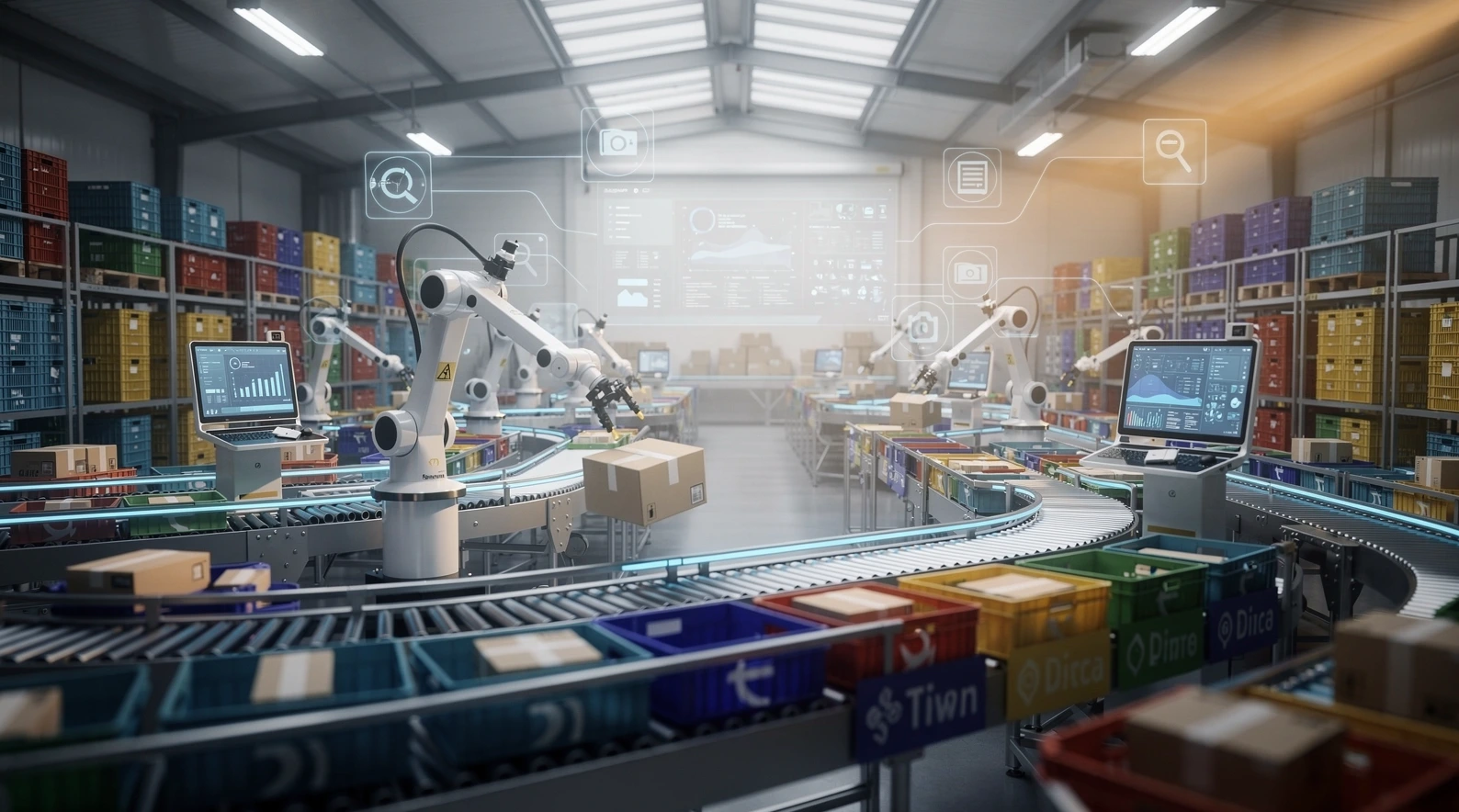
The same automation wave transforming outbound warehouses is arriving at the returns dock. Vision systems can grade condition, detect wrong-item and fraud cases, and trigger disposition rules without a human judgment call on every unit. That connects returns to the broader shift in warehouse automation and robotics, where the goal is to take repetitive, error-prone decisions off human hands and make them consistent at volume.
The disposition decision tree
A clean disposition model asks a short sequence of questions for every unit. Is it sellable as new? If not, can it be refurbished cost-effectively? If not, is there an open-box or secondary channel that beats liquidation? If not, liquidate or recycle. Encoding that tree in software, rather than leaving it to a busy warehouse worker, is what turns disposition from guesswork into a repeatable recovery rate.
| Disposition path | Typical value recovery | Best for |
|---|---|---|
| Restock as new | Highest | Unopened, undamaged, in-season items |
| Refurbish and resell | High | Electronics, opened-but-functional goods |
| Open-box or outlet | Medium | Cosmetic imperfections, out-of-box |
| Recommerce or resale marketplace | Medium | Brand-controlled resale, sustainability goals |
| Bulk liquidation | Low | Overstock, seasonal, damaged lots |
| Recycle or dispose | Lowest | Unsafe, unsellable, regulated items |
Recommerce and resale platforms
Returned inventory is the feedstock for a fast-growing resale economy, and a distinct set of vendors now specializes in turning it back into revenue under the brand’s control. Trove and Recurate power branded resale storefronts. B-Stock runs business-to-business liquidation auctions for returned and excess inventory. This is the layer where reverse logistics meets sustainability positioning and secondary-market economics.
The strategic pull here is that brand-controlled resale keeps margin, data, and customer relationships in-house rather than leaking value to third-party marketplaces. It is also consolidating fast as capital chases the category, a dynamic we tracked in our analysis of recommerce consolidation. For retailers with meaningful return volume in durable categories, plugging disposition directly into a resale channel is one of the highest-return moves in the whole stack.
Common mistakes and how to avoid them
The failure modes in this market are predictable, and most are self-inflicted rather than vendor problems. Recognizing them before signing a contract saves both money and a painful re-platforming later.
Buying a portal to fix a policy problem
The most common mistake is treating software as a substitute for policy. If your return rate is being driven by generous free-returns terms or misleading sizing, a slicker portal just processes the problem faster. Fix the policy and product data first, then buy tooling to run the improved system.
Ignoring the disposition layer
Many teams obsess over the customer-facing portal and never instrument what happens after receipt. That is backwards from a margin perspective. A great portal with no disposition discipline still bleeds value on every returned unit. Budget attention for grading and resale routing, not just the shopper experience.
Underestimating integration work
Returns tools have to write cleanly back to your order management, inventory, and finance systems, or you get refund timing errors, phantom stock, and reconciliation headaches. Underscoping integration is the leading cause of disappointing rollouts. Ask hard questions about write-back, webhooks, and error handling before, not after, you sign.
Forgetting fraud and abuse
Return fraud and policy abuse, from wardrobing to empty-box returns, scale with volume. Tools that flag suspicious patterns, verify received condition, and enforce policy consistently pay for themselves at scale. Treat abuse detection as a core requirement, not a nice-to-have.
Examples from US retail and e-commerce
The patterns are easiest to see in how different retailer profiles assemble their stacks. A Shopify-native apparel brand doing solid but not enormous volume typically runs an exchange-first portal like Loop, offers box-free drop-off through a network partner in dense metros, and leans on its 3PL for grading and restock. Its priority is retained revenue and a frictionless shopper experience.
A large omnichannel retailer with stores looks different. It uses stores as return and processing nodes, runs a broader post-purchase platform for tracking and returns together, and invests in dedicated returns processing centers or an enterprise disposition partner. Its priority is network efficiency and getting inventory back on a shelf, physical or digital, fast.
An electronics or durable-goods seller weights the stack toward inspection, refurbishment, and resale, because recovery value per unit is high and the refurbish path is genuinely economic. For this profile, a specialist disposition and recommerce partner often delivers more value than any customer-facing portal feature. The common thread across all three is that the right stack follows the economics of the category, not the loudest vendor.
Cross-border sellers add another wrinkle: returns that have to travel back across a customs border are expensive and slow, which pushes many to in-region returns hubs, local disposition, or resale rather than shipping items home. As reverse flows become part of the same network as outbound fulfillment, the case for treating returns as a first-class part of the retail logistics network only gets stronger.
How to choose: a build-vs-buy checklist
For nearly everyone below true enterprise scale, buying beats building, because the value lives in carrier relationships, drop-off networks, and resale channels rather than in code you could theoretically write. The decision is less about whether to buy and more about which layers to buy from which vendor. Run a short evaluation against these questions.
- Resolution range: Does the portal offer exchange, store credit, bonus credit, and product swaps, not just refunds?
- Rules flexibility: Can you set policies by product, category, customer segment, and reason without engineering help?
- Write-back quality: How cleanly does it sync to order management, inventory, and finance, and how are errors surfaced?
- Transportation options: Are box-free drop-off and consolidation available where your customers actually are?
- Disposition depth: Does anyone in the stack grade condition and route each unit to its highest-value outlet?
- Resale connectivity: Can returned inventory flow into branded resale or liquidation without manual handling?
- Fraud controls: Are abuse patterns detected and policy enforced consistently?
- Total cost: What is the true cost per return across software fees, transportation, labor, and recovered value?
The last point is the one to anchor on. The right metric is not the sticker price of the software but the change in fully-loaded cost per return and value recovered per unit. A platform that costs more but lifts recovery and retention can be the cheaper choice by a wide margin. For a sense of category-level market scale as you build the business case, the retail and e-commerce overviews on Statista are a reasonable starting reference.
The metrics that actually matter
Tooling is only useful if it moves numbers you can defend to a CFO. The trap is optimizing vanity metrics like portal completion rate while the expensive numbers drift. A disciplined returns program tracks a short list of measures and reviews them monthly, then feeds the insight back into policy, product data, and vendor choice.
Fully-loaded cost per return is the headline figure: software, transportation, labor, and write-down, divided by return count. Value recovery rate captures how much of the original item value you get back through restock and resale. Refund-to-exchange ratio shows how well the portal is doing its retained-revenue job. Return-to-restock cycle time measures how fast a unit gets back into sellable inventory, which directly drives recovery.
Reason codes are the cheapest insight you own
Structured return reasons are the highest-leverage data in the whole system, and most retailers under-use them. When a specific product shows a spike in “too small” returns, that is a product-page or sizing fix worth more than any logistics tweak. Route reason-code trends to merchandising and product teams, not just operations, and the returns program starts preventing returns rather than only processing them.
| Metric | What it tells you | Who owns it |
|---|---|---|
| Fully-loaded cost per return | True unit economics of the return trip | Finance and operations |
| Value recovery rate | Share of item value recouped via restock and resale | Merchandising and finance |
| Refund-to-exchange ratio | How well the portal retains revenue | E-commerce and growth |
| Return-to-restock cycle time | Speed a unit re-enters sellable stock | Warehouse operations |
| Return rate by reason code | Root causes worth fixing upstream | Product and merchandising |
Frequently asked questions
What are returns and reverse logistics tools?
They are the software and service platforms that manage the return trip of goods: the customer returns portal, return transportation and drop-off, inspection and grading, disposition decisions like restock or resale, and the analytics that tie it together. Together they turn a manual back-room process into a measured, revenue-aware system.
What is the difference between a returns platform and a 3PL?
A returns management platform is the software control plane: it runs the customer portal, the rules engine, and refund orchestration. A 3PL is the physical operation that receives, inspects, grades, and restocks items. Most retailers use both, with the platform directing what the 3PL should do with each unit.
How much do returns management tools cost in 2026?
Pricing usually combines a platform subscription with a per-return fee, and it scales with volume. The more useful figure is fully-loaded cost per return, which includes software, transportation, labor, and the value you recover on resale. Judge vendors on how they move that number, not on the headline subscription.
Which returns platform is best for a Shopify brand?
For Shopify-native apparel and lifestyle brands, Loop is the most common leader thanks to its exchange-first flows and deep merchandising integration. ReturnGO and AfterShip Returns are strong alternatives, and the right pick depends on your policy complexity, resolution mix, and how much automation you want out of the box.
Can returns tools actually reduce refunds?
Yes, that is their core commercial promise. By intercepting the refund at the portal and offering exchanges, product swaps, store credit, or bonus credit first, these platforms convert a meaningful share of would-be refunds into retained revenue. The lift depends on your catalog breadth and how well the incentives are tuned.
What is disposition and why does it matter?
Disposition is the decision about what happens to each returned item: restock, refurbish, open-box, resell, liquidate, or recycle. It matters because it determines value recovery. A unit routed to its best outlet quickly can recover most of its value, while the same unit left ungraded can become a total loss.
How does recommerce connect to reverse logistics?
Returned and excess inventory is the raw material for resale. Recommerce platforms let brands sell that inventory through their own resale storefronts or liquidation channels, keeping margin and customer data in-house. Plugging disposition directly into a resale channel is one of the highest-recovery moves in the stack.
Should we build our own returns system?
For most retailers below enterprise scale, no. The value in this market sits in carrier relationships, drop-off networks, and resale channels, not in code. Buying a specialist platform gets you those integrations immediately, while building means recreating years of vendor work before you see any benefit.
How do returns tools handle fraud and abuse?
Stronger platforms detect suspicious patterns such as wardrobing, serial returners, and empty-box or wrong-item returns, then verify received condition and enforce policy consistently. As volume grows, this abuse control becomes a core requirement rather than an optional extra, because losses from unchecked abuse scale directly with order count.
The takeaway
Reverse logistics has crossed the line from cost center to strategic capability, and the tooling market has matured to match. The winning approach in 2026 is to treat returns as a system with five layers, buy the specialist that fits each layer’s economics, and measure everything against fully-loaded cost per return and value recovered per unit. Get the policy right, instrument the disposition layer as seriously as the portal, and connect returned inventory to resale. Done well, the return trip stops being the part of retail nobody likes and starts being a place you quietly win margin.