
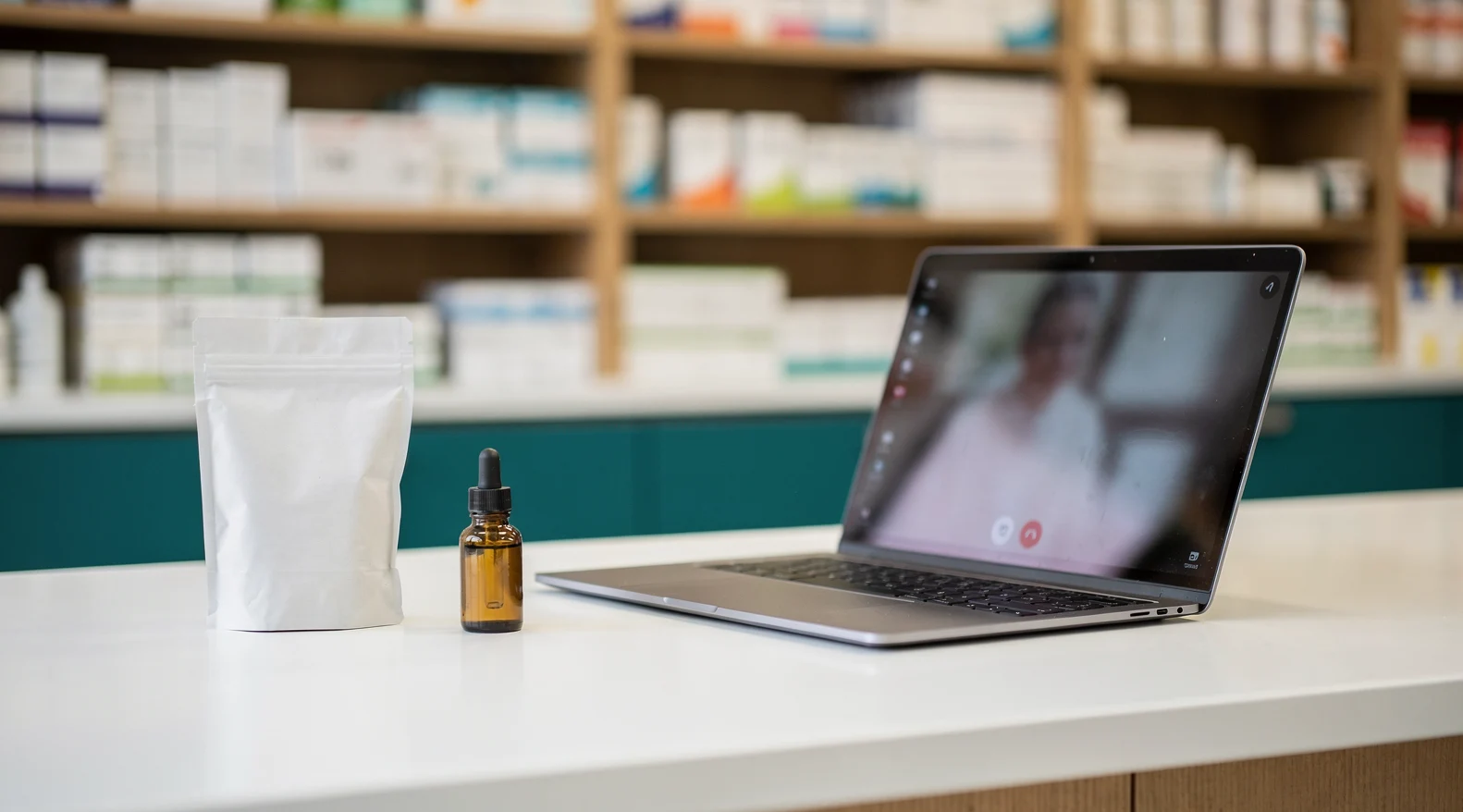
Boots has become the first UK high street pharmacy chain to prescribe medical cannabis. On Monday 16 November 2026 its Boots Online Doctor arm launched SureLeaf, a private, consultant-led service for adults aged 25 and over who live with chronic pain, generalised anxiety disorder or insomnia and who have already tried conventional treatment without enough relief. The service runs online, with a video consultation and home delivery, and the clinical fee is £99 a year before the cost of any medicine.
The launch was first reported by LBC as an exclusive on Monday morning and confirmed by Boots in a press statement. It has since been covered by the Guardian, the Sun, Metro, the Daily Mail, The Grocer and Pharmacy Magazine. This article sets out what Boots is offering, who can qualify, what it is likely to cost, how it compares with the specialist clinics that already dominate the market, and what it means for shoppers and for the high street.
In short
- Boots SureLeaf is a private medical cannabis service run through Boots Online Doctor, launched on 16 November 2026. It is the first such service from a UK high street pharmacy chain.
- Eligibility is limited to people aged 25 or over with chronic pain, generalised anxiety disorder or insomnia who have already tried conventional treatments, reportedly at least two, without adequate relief.
- Cost: Pharmacy Magazine reports a £99 annual plan covering an initial assessment and four follow-ups, plus an £89 one-month trial. Medicine is extra, with the lowest dose said to cost just under £40 for 28 days.
- Safeguards include a video consultation with a consultant on the GMC Specialist Register, an independent second-consultant review, a 28-day check and reviews at least every three months.
- Not on the NHS: this is a private service. NHS access remains limited to a few conditions, and recreational cannabis remains a Class B drug.
What exactly has Boots launched?
SureLeaf is a specialist medical cannabis service sold through Boots Online Doctor, the chain’s online clinic that already offers private prescriptions and home test kits. Boots describes it as giving eligible patients “access to consultant-led assessment, treatment and ongoing clinical care”. It is not available over the counter in Boots shops, and there is no walk-in route.
The service page states that treatment is dispensed by a GPhC-registered pharmacy and delivered “discreetly” to the patient’s door. Boots says the products come from a UK-only supplier and describes the cultivation as UK-grown, carbon negative and fully traceable, with every batch tested. It has not named the supplier.
Two forms are on offer. According to LBC, The Grocer and the Daily Mail, patients can be prescribed cannabis oil, usually taken by mouth or under the tongue, or dried cannabis flower, which is inhaled through a medically approved heat-not-burn vaporiser. Boots’ own FAQ is explicit that smoking prescribed cannabis is illegal.
Two Boots executives fronted the launch. Jamie Kerruish, the chief healthcare officer, said in the company statement that “millions of people live with ongoing pain and for some, conventional treatments do not provide adequate symptom relief”, adding that SureLeaf gives “eligible patients another treatment option to consider, supported by clinical expertise and robust ongoing care”.
Dr David Gwynne, medical director of Boots Online Doctor, struck a more cautious note. “Medical cannabis is not appropriate for everyone and prescribing decisions need to be made carefully on an individual patient basis,” he said, adding that the service “has therefore been designed with strong clinical safeguards and specialist oversight at every stage”.
Alongside the launch, Boots and the University of Nottingham are exploring a collaborative research programme on medical cannabis in chronic pain. Boots says the work would look at patient outcomes, prescribing practices and the experience of treatment, building on an existing partnership between the two. The university published its own announcement on Monday, and the wording from both sides is that the programme is being explored rather than formally signed.
Who can get medical cannabis from Boots?
Eligibility is deliberately narrow. Patients must be aged 25 or over, must have one of the listed conditions, and must already have tried conventional treatment without adequate symptom relief. Pharmacy Magazine reports that Boots requires at least two previous conventional treatments, such as prescription drugs or psychotherapy, and that an online questionnaire is used to screen out patients who have not yet tried them.
The press statement lists three groups of eligible conditions. The first is chronic pain, which covers a long list: chronic primary and neuropathic pain, fibromyalgia, complex regional pain syndrome, chronic back or neck pain, osteoarthritis, rheumatoid arthritis, sciatica, peripheral neuropathy, trigeminal neuralgia, phantom limb pain, chronic migraine, endometriosis-related pelvic pain and chronic abdominal or pancreatic pain. The second is generalised anxiety disorder, and the third is insomnia disorder.
Who is likely to be turned away
Boots told LBC that clinicians will screen applicants for histories of psychosis and other disqualifying conditions. Metro, which spoke to the chain, lists psychosis or schizophrenia, bipolar disorder, liver disease and heart problems as examples of underlying conditions that could rule someone out. Anyone under 25 is excluded outright, even if they have one of the listed conditions.
The scale of potential demand is large on paper. LBC cites NHS figures showing that about 26% of adults report living with chronic pain and that chronic insomnia affects more than five million people. The Daily Mail notes that around six in 100 people have generalised anxiety disorder. Only a small fraction of those people will pass Boots’ screening, but the addressable pool is far bigger than the epilepsy and multiple sclerosis cases that the NHS covers.
| Condition group | Examples listed by Boots | Key condition of entry |
|---|---|---|
| Chronic pain | Fibromyalgia, sciatica, osteoarthritis, rheumatoid arthritis, chronic back or neck pain, migraine, endometriosis-related pelvic pain, neuropathic pain | Conventional treatment tried without adequate relief |
| Generalised anxiety disorder | Diagnosed GAD | Conventional treatment tried without adequate relief |
| Insomnia disorder | Diagnosed insomnia disorder | Conventional treatment tried without adequate relief |
| All groups | Age 25 or over | No disqualifying history such as psychosis (per LBC and Metro) |
How the SureLeaf process works
The route from first click to delivery has five stages, according to the Boots Online Doctor service page and the press statement. It is designed to filter people out early and to put two consultants between the patient and any prescription.
- Free eligibility check. A short online questionnaire to see whether the service is likely to be suitable.
- Medical history. A fuller questionnaire, reviewed by Boots’ clinical team for suitability.
- Specialist video consultation. A call with a consultant in the relevant specialty who is on the General Medical Council Specialist Register.
- Independent review. Any proposed prescription is reviewed by a multidisciplinary team that includes a second, independent consultant before treatment starts.
- Dispensing, delivery and review. The medicine is posted to the patient, with an initial review after 28 days and further reviews at least every three months.
Boots says it will use validated questionnaires throughout treatment to track quality of life, pain, anxiety, sleep and mood. The specialist register requirement is not a Boots invention: in the UK, cannabis-based products for medicinal use can only be initially prescribed by doctors on that register, which is why the service is consultant-led rather than run by pharmacists or GPs.
Boots told LBC that prescriptions are written for 28 days at a time. That matters for budgeting, because the medicine is a recurring monthly cost on top of the clinical plan. It also means that a patient who stops responding, or who reports side effects, can be taken off treatment quickly at the next check-in.
How much does Boots medical cannabis cost?
Pricing is where the coverage has been most confused, so it is worth separating the two layers. The first is the clinical fee for assessments and reviews. The second is the medicine itself, which is charged separately each time a prescription is dispensed.
On the clinical side, Pharmacy Magazine reports that SureLeaf costs £99 a year, covering an initial assessment and four follow-up consultations, with treatment and any extra appointments charged separately. It also reports a one-month trial at £89, which includes an assessment and a 10ml “starter dose” of cannabis oil. The Boots service page confirms the trial contents and adds that people who move from the trial to the annual plan get £25 off the annual price.
On the medicine side, LBC, Metro and the Daily Mail all report that the lowest dose will cost “just under £40” for a 28-day supply. That is the figure behind headlines describing cannabis prescriptions from £40. It is a starting price, not an average, and higher strengths or flower products are likely to cost more.
What a first year could cost
Using only the published figures, a patient on the annual plan who stays on the lowest dose for a full year would pay £99 in clinical fees plus about 13 monthly supplies at just under £40, or roughly £500 to £520 in medicine. That puts a first year at around £600 to £620. This is a shopappy calculation for illustration only; actual costs will depend on the product and dose prescribed and any extra appointments.
A patient who starts with the £89 trial and then switches to the annual plan would pay £89 plus £74 (£99 minus the £25 switching discount) for consultations, and would receive the first month’s oil within the trial. In practice the trial route costs more up front but lets a patient test whether the treatment works before committing to a year.
How does Boots compare with private cannabis clinics?
Boots is not creating a new market. Medical cannabis has been legal on prescription in the UK since November 2018, and a cluster of specialist online clinics already serves private patients. Metro names Curaleaf Clinic and Releaf as examples, and The Grocer quoted Alternaleaf. What Boots brings is a household name, a national pharmacy brand and the trust that comes with it.
On clinical fees alone, Boots is not the cheapest option. The table below compares the published consultation pricing on each provider’s website as listed on 16 November 2026. All four charge for medicine separately, and clinic prices change often, so treat these as a snapshot rather than a quote.
| Provider | Clinical fee model (as published) | Annual or first-year consultation cost | Medicine pricing note |
|---|---|---|---|
| Boots SureLeaf | £99 annual plan (initial plus four follow-ups); £89 one-month trial with 10ml oil | £99 | Lowest dose just under £40 per 28 days (LBC, Metro) |
| Curaleaf Clinic | £30 per appointment; £5 a month subscription; £50 a year up front | £50 annual; typical £120 pay-as-you-go | Not included; varies by prescription |
| Alternaleaf | £29 per appointment; £5 a month membership | £60 membership; £116 pay-as-you-go | From about £20 a week, per the clinic |
| Releaf | Consultation advertised at £29.99; monthly membership options | Varies by plan | Flower from £54.90 per 10g; 30ml oil from £89.99 |
Two differences stand out. First, Boots’ entry rules are tighter than some rivals: the age limit of 25 and the requirement to have tried at least two conventional treatments narrow the pool. Releaf, by contrast, says on its pricing page that nine out of ten of its patients can receive medical cannabis. Second, Boots adds a mandatory second-consultant review for every prescription, which slows the process but is a selling point for patients and GPs who are wary of the sector.
Why the Boots name matters to rivals
The specialist clinics appear to welcome the move rather than fear it. Nabila Chaudhri, medical director at Alternaleaf, told The Grocer that “when one of the UK’s most trusted healthcare names treats medical cannabis as the legitimate medicine it is, it helps reduce the stigma that still stops too many people getting care that could help them”. Thorrun Govind, a former chair of the Royal Pharmaceutical Society in England, told Metro that the launch “highlights the changing landscape of pharmacy” and that the treatment could be “worth exploring” for patients who have not responded to conventional options.
For the clinics, a bigger and less stigmatised market may matter more than one extra competitor. For Boots, the service is a way to win high-value repeat customers online without adding shelf space in its shops.
Why this is not available on the NHS
Medical cannabis can be prescribed on the NHS, but only in a small number of cases. As the Guardian and the Daily Mail set out, NHS access is largely limited to rare, severe forms of epilepsy, nausea and vomiting caused by chemotherapy, and muscle stiffness or spasms caused by multiple sclerosis, and usually only when other treatments have not worked.
For chronic pain, the NHS position is shaped by NICE. Its 2019 guideline on cannabis-based medicinal products (NG144) recommends against offering them for chronic pain outside research, citing a lack of evidence that they are cost-effective. That is why almost every UK patient who uses cannabis for pain, anxiety or sleep does so privately, and why Boots has launched SureLeaf as a paid service.
The evidence is mixed and the Boots launch does not change it. The Guardian points to a 2026 review by researchers in Sydney, Brisbane, Melbourne and Bath, which found “very little evidence” that cannabis was effective for anxiety, anorexia nervosa, psychotic disorders, post-traumatic stress disorder or opioid use disorder. The same work found some evidence that it may help with insomnia, Tourette syndrome symptoms and cannabis dependence.
Critics have been quick to respond. The Daily Mail carried a warning from its columnist, the psychiatrist Dr Max Pemberton, who wrote that “in my experience cannabis is just about the worst thing you can take when anxious”, arguing that anxiety rebounds as each dose wears off. The paper also cited recent research in the journal Addiction estimating that around 1.2 million UK adults use cannabis every day. Boots’ answer is its screening, the 28-day check and the questionnaires it will use to track whether patients are actually improving.
What are the side effects and legal limits?
Boots lists the possible side effects on its service page: drowsiness, dizziness, dry mouth, reduced concentration, changes in mood and impaired coordination. Speaking to Metro, Thorrun Govind added appetite loss, nausea and diarrhoea, and warned that cannabis can affect mood in both directions, from feeling high to paranoia. Cannabis can also interact with other medicines, so patients should disclose everything they take.
The legal picture is clear in principle but has practical edges that patients need to understand before they sign up.
- Prescribed versus recreational. Recreational cannabis remains a Class B drug under the Misuse of Drugs Act 1971, as The Grocer notes. A legal prescription covers only the product dispensed to the named patient.
- No smoking. Boots’ FAQ states that smoking prescribed cannabis is illegal; flower must be used in a medically approved vaporiser.
- No “cannabis card” from Boots. Boots says it does not issue the voluntary ID cards that some organisations offer and that the prescription and dispensing records are the main evidence of legal supply.
- Keep the paperwork. Patients should keep the dispensing label, packaging and prescription details, since they are the proof that the medicine was legally prescribed.
Driving on prescribed cannabis
Driving is the question most patients ask first. Gov.uk guidance on drug driving says it is an offence to drive with certain drugs above specified limits in the blood if they have not been prescribed. The same guidance says patients can drive on a prescribed drug if they have followed the advice of a healthcare professional and the drug is not making them unfit to drive, even if they are above the specified limit.
That defence does not cover impairment. If a patient feels drowsy or dizzy, they should not drive, and police can still act if driving is impaired. A drug-driving conviction carries a minimum one-year ban, an unlimited fine, up to six months in prison and a mark on the licence for 11 years, according to gov.uk. Anyone starting treatment should ask the consultant directly about driving and keep proof of the prescription in the car.
A UK prescription does not travel well. Rules on cannabis-based medicines vary widely between countries, and some treat any cannabis product as a serious offence. Patients planning a trip should check the rules of the destination country and the Home Office guidance on travelling with controlled drugs before packing their medicine.
Is this the same as CBD sold on the high street?
No, and Boots goes out of its way to say so. Its FAQ explains that retail CBD products sold on the high street are classed as food supplements and cannot make medical claims, while prescribed cannabis-based medicines are made to pharmaceutical standards and supplied under medical supervision through a pharmacy.
The difference matters for shoppers, because the high street CBD market is large and loosely understood. CBD oils, gummies and drinks are widely sold online and in shops, but they must contain no more than trace amounts of THC, the psychoactive compound. Prescribed medical cannabis, by contrast, can contain THC at medicinal levels and is a controlled drug.
| Route | Who decides | Can contain THC? | Regulated as | Typical cost to the shopper |
|---|---|---|---|---|
| Boots SureLeaf | Specialist consultant plus second-consultant review | Yes, at prescribed levels | Prescription-only controlled medicine | £99 a year plus medicine from just under £40 per 28 days |
| Private specialist clinic | Specialist consultant | Yes, at prescribed levels | Prescription-only controlled medicine | Consultations from about £50 a year plus medicine |
| NHS | Specialist, within narrow criteria | Yes, for licensed or approved uses | Prescription-only medicine | Standard prescription charge in England; free in Scotland, Wales and Northern Ireland |
| High street or online CBD | The shopper | Trace amounts only | Food supplement | Shelf price; no medical claims allowed |
| Recreational cannabis | Nobody legally | Yes, unknown levels | Class B controlled drug | Illegal to possess or supply |
Online marketplaces already treat cannabis-related listings with caution. Shopappy’s guide to TikTok Shop restricted categories notes that CBD ingestibles are among the products platforms restrict, and the Boots launch will not change that for sellers of retail CBD. If anything, it sharpens the line between a regulated medicine and a supplement.
Shoppers should also be wary of sellers that blur the two. Products sold online with medical claims, or promising THC without a prescription, are a red flag in the same way as the fake cosmetics that Trading Standards found to contain mercury. A legal medical cannabis product in the UK comes only through a prescription and a registered pharmacy.
Why is Boots doing this now?
Boots has been building its online healthcare business for years, and SureLeaf fits a pattern: private, recurring, higher-margin services sold through Boots Online Doctor rather than over the counter. A patient on a 28-day prescription is, commercially, a subscriber who comes back every month and who may buy other health products along the way.
The timing also follows a change of ownership. On 7 October 2026 the Weston family’s holding company, Wittington Investments, agreed to buy Boots from Sycamore Partners in a deal reported by Sky News at about £6.7bn, after months of talks covered in shopappy’s report on how the Weston family neared a £7bn Boots deal. LBC and Metro pointed out that the Westons are a Canadian family and that Canada has allowed medical cannabis since 2001. There is no public evidence that the new owners drove the launch, and Boots has not said when the service was planned.
The launch also says something about the state of the high street. Boots operates around 1,800 shops across the UK and Ireland, and in its written evidence to MPs, covered in shopappy’s preview of the Commons high streets inquiry hearing, the chain said about two thirds of its stores are on high streets or in community locations. Yet SureLeaf is entirely online: there is no counter service, and the medicine arrives by post.
That reflects a broader shift in which high street brands use their physical presence to build trust and then sell services online. For local pharmacies, the competitive pressure is less about cannabis itself and more about patients getting used to buying specialist private care from a national brand on their phone.
What should patients check before signing up?
Anyone considering SureLeaf, or any private cannabis clinic, should treat it as a clinical decision first and a purchase second. The points below are a practical checklist drawn from the published terms and the regulatory picture.
- Talk to your GP. Your GP holds your records and can advise on interactions and whether conventional options have been exhausted. Private clinics usually ask for medical records.
- Check the full cost. Add the clinical plan to 12 or 13 monthly medicine supplies, and ask what higher doses or flower products cost.
- Read the cancellation terms. Annual plans and monthly memberships are subscriptions. New UK rules covered in shopappy’s guide to subscription contracts from 1 January 2027 will require clear reminders and easy online cancellation for many paid plans.
- Ask about driving and work. Get clear advice from the consultant and keep evidence of the prescription.
- Compare providers. Consultation fees range from about £50 to £120 a year across the clinics listed above, and medicine prices vary more widely.
- Do not mix with street cannabis. A prescription covers only the dispensed product.
What happens next?
Three things will decide whether SureLeaf is a niche service or a turning point. The first is uptake: Boots has not said how many patients it expects, and the narrow criteria suggest volumes will build slowly. The second is price: with the specialist clinics already charging as little as £5 a month for consultations, Boots may come under pressure on its £99 plan or compete on trust and convenience instead.
The third is evidence. If the University of Nottingham programme goes ahead, it could produce UK real-world data on chronic pain outcomes at a scale that NICE and the NHS have so far lacked. That would take years, but it is the route by which private prescribing has historically moved closer to the NHS.
Shoppers should also expect a wave of copycat marketing. Rival pharmacy chains and online doctors will watch the Boots launch closely, and CBD retailers may try to ride the publicity. The simple rule stays the same: in the UK, a legal medicine containing THC comes only on a specialist prescription, dispensed by a registered pharmacy.
Frequently asked questions
Can I buy medical cannabis in a Boots shop?
No. SureLeaf is an online service run through Boots Online Doctor. Patients apply online, have a video consultation and receive any prescribed medicine by post. There is no over-the-counter or walk-in option in Boots stores.
How much does Boots SureLeaf cost?
Pharmacy Magazine reports a £99 annual plan covering an initial assessment and four follow-ups, and an £89 one-month trial that includes a 10ml starter dose of oil. Medicine is charged separately, with the lowest dose reported by LBC and Metro at just under £40 for 28 days.
Who is eligible for medical cannabis at Boots?
Adults aged 25 or over with chronic pain, generalised anxiety disorder or insomnia disorder who have already tried conventional treatments without adequate relief. Pharmacy Magazine reports that at least two previous treatments are required. People with a history of psychosis and some other conditions are likely to be excluded.
Is medical cannabis from Boots available on the NHS?
No. SureLeaf is a private service. NHS prescribing of cannabis-based medicines is limited to a few conditions, such as some severe forms of epilepsy, chemotherapy-related nausea and multiple sclerosis spasticity.
Can I drive if I am prescribed medical cannabis?
Gov.uk guidance says you can drive on a prescribed drug if you follow medical advice and it is not making you unfit to drive, even above the specified limit. You must not drive if you feel impaired. Ask your consultant for advice and keep proof of your prescription.
Can I smoke cannabis prescribed by Boots?
No. Boots says smoking prescribed cannabis is illegal. Cannabis flower is prescribed for use in a medically approved vaporiser, and oil is taken by mouth or under the tongue.
Is SureLeaf the same as CBD oil sold in shops?
No. Retail CBD products are food supplements that may contain only trace THC and cannot make medical claims. Prescribed cannabis-based medicines can contain THC, are controlled drugs and are supplied under medical supervision through a registered pharmacy.
Is Boots the first UK pharmacy to prescribe cannabis?
Boots is the first UK high street pharmacy chain to offer it, according to LBC, the Guardian and Boots’ own statement. Specialist private clinics such as Curaleaf Clinic, Releaf and Alternaleaf have prescribed medical cannabis for several years.