
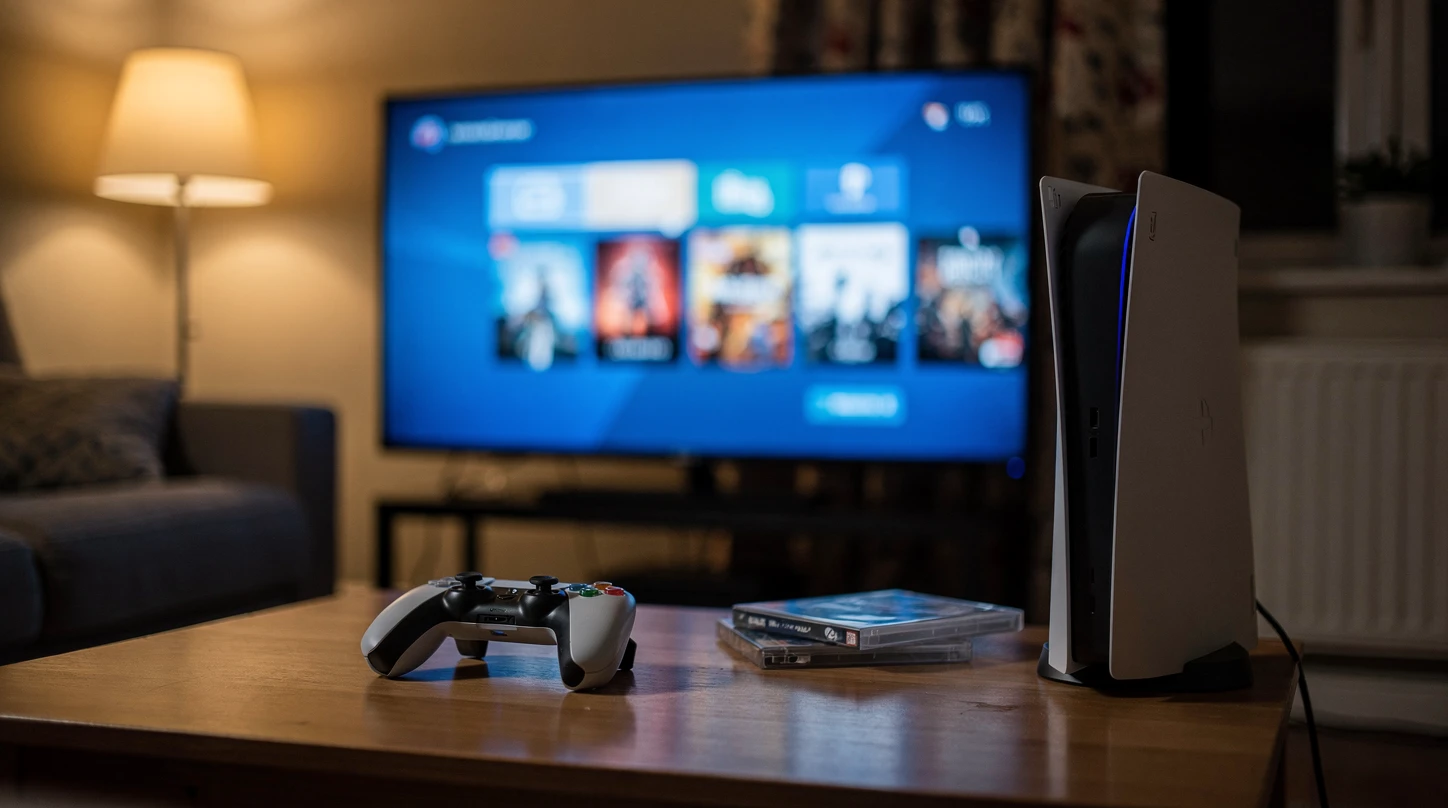
Sony has defeated the largest consumer competition claim ever brought over a games console in the UK. On 17 November 2026 the Competition Appeal Tribunal (CAT) in London dismissed, in its entirety, the opt-out collective action brought on behalf of about 12.2 million UK PlayStation users who bought digital games and add-on content through the PlayStation Store. The claim was worth about £1.97bn including interest.
The ruling means no compensation for anyone in the class, at least for now. It also sets a marker for how British courts will judge “walled garden” digital shops, a year after the same tribunal found against Apple over its App Store. This report explains what the tribunal decided, why the claim failed, what happens next, and what it changes for people buying games and other digital content in the UK.
In short
- Claim dismissed: the CAT ruled unanimously on 17 November 2026 that Alex Neill Class Representative Limited had failed to establish that Sony infringed competition law ([2026] CAT 86).
- No payout: about 12.2 million UK PlayStation buyers in the class receive nothing; the claim sought about £1.49bn in damages plus 8% simple interest, roughly £1.97bn in total.
- Market definition was decisive: the tribunal rejected a market limited to digital PlayStation content and said a wider systems market, including rival consoles and PC, was the right frame.
- Physical games mattered: discs sold by high street and online retailers were treated as a real alternative, even though Sony has said new PlayStation games will stop shipping on disc from January 2028.
- Next date: a hearing in the week of 14 December 2026 will deal with costs and any application for permission to appeal.
What did the Competition Appeal Tribunal decide?
The tribunal’s central finding is short. “We have concluded that the Class Representative has failed to establish that Sony has infringed competition law,” the panel of Ben Tidswell (chair), Lord Richardson and Derek Ridyard wrote in the non-confidential judgment published on 17 November. The decision was unanimous.
The formal disposition sets out four findings. The claimant’s proposed markets for the sale of digital PlayStation games and add-on content were “not a safe basis” on which to assess Sony’s conduct. The tribunal said a systems market was the more appropriate frame, that Sony had not been shown to be dominant in any relevant market, and that even on the claimant’s own market definition the alleged abuses had not been made out.
The claim was therefore “dismissed in its entirety”. The tribunal will convene a further hearing in the week of 14 December 2026 to hear submissions on consequential matters, including legal costs and any applications for permission to appeal.
The claim was brought by Alex Neill Class Representative Limited, a company whose sole director is Alex Neill, described in the judgment as an advocate for the support and protection of consumer rights. It was an opt-out claim, which means every eligible consumer was automatically included unless they chose to leave.
The class covered about 12.2 million consumers who made UK purchases of digital content on PlayStation consoles between 19 August 2016 (for those living in England and Wales), or 19 August 2017 (for those in Scotland), and 12 February 2026. The defendants were two UK-facing Sony subsidiaries, Sony Interactive Entertainment Europe Limited and Sony Interactive Entertainment Network Europe Limited.
The case was brought under section 18 of the Competition Act 1998 and, for the period before 31 December 2020, Article 102 of the Treaty on the Functioning of the European Union. Both prohibit the abuse of a dominant position. The claimant alleged four abuses: exclusive dealing, tying the PlayStation Store to the console, refusing to supply rival digital shops, and charging excessive and unfair prices.
The heart of the complaint was simple to explain to a shopper. On a PlayStation console, digital games and in-game extras can only be bought through Sony’s own PlayStation Store, and Sony sets the retail price. The claimant argued that, without those restrictions, prices for digital content would have been about 20% lower, and sought about £1.49bn in damages, plus simple interest at 8% a year, for a total of roughly £1.97bn.
Why did the £2bn PlayStation claim fail?
The case turned on a technical question that sounds dry but decides most competition cases: what is the market? The claimant said the relevant markets were narrow, covering the distribution of digital games and add-on content on PlayStation in the UK. On that view Sony, as the only shop on its own console, would be close to a monopolist.
The tribunal disagreed. It applied the standard “hypothetical monopolist” test, which asks whether a small but significant price rise would push enough buyers to alternatives. It found that physical games and the habits of people who play on several devices meant digital PlayStation content was not a market on its own.
Crucially, the claimant had not put forward a fallback case. In oral closings, the claimant’s counsel, Robert Palmer KC, accepted that the claim fails if the narrow market is rejected, because no case of infringement had been advanced on a wider market or on a systems market. Once the tribunal rejected the narrow definition, the claim could not succeed.
The systems market argument
The tribunal concluded that the better way to look at Sony’s position was as part of a systems market, where consumers effectively choose a whole gaming ecosystem: the console, the games, the subscription and the online services. In that frame, PlayStation competes with Microsoft’s Xbox, Nintendo and PC gaming, among others.
The judgment says potential PlayStation buyers “had both access to sufficient information and an incentive to consider that information in order to make informed purchasing decisions at the console level, especially in the case of high-value users who spend significant amounts in the digital gaming aftermarket”. Put plainly, the tribunal thought shoppers knew, or could find out, that games would cost money over the console’s life and factored that in when choosing which machine to buy.
Physical games as a check on digital prices
A large part of the reasoning rests on boxed games sold by retailers. According to the judgment, retail prices for physical PlayStation games are set between publishers and third-party retailers, with Sony playing no role, and retailers generally keep around 20–23% of the retail price to cover their own costs. By contrast, Sony agrees a wholesale price with publishers for digital games and then sets the retail price on the PlayStation Store, targeting a margin of 30% of that price.
The tribunal treated the ability to walk into a shop, or order a disc online, as a genuine constraint on PlayStation Store pricing during the claim period. That finding is now overshadowed by Sony’s own plans. The judgment records that, after the trial, the claimant told the tribunal that on 1 July 2026 Sony had announced that new PlayStation games would not be released on physical discs from January 2028. The claimant argued this showed there was never an effective constraint; the tribunal’s conclusion on the claim period did not change.
The table below sets out the main issues in the case, drawn from the judgment and from reporting by Retail Gazette, Courthouse News Service and The Game Business. It shows that the claim failed at the first hurdle and, according to the tribunal, would have failed at later hurdles too.
| Issue | Claimant’s case | Tribunal’s finding |
|---|---|---|
| Relevant market | UK digital distribution of PlayStation games and add-on content | Rejected as “not a safe basis”; a systems market is more appropriate |
| Dominance | Sony dominant in console, software and digital distribution markets | Not shown to be dominant in any relevant market |
| Exclusive dealing and tying | Store restrictions shut out rival digital shops | Not established; even on the narrow market, the abuse claims failed |
| Refusal to supply | Sony should have let third-party stores onto the console | Legal conditions from the refusal-to-supply case law not met |
| Excessive pricing | About 20% overcharge on digital content | Margin not shown to be excessive, and not shown to be unfair |
| Damages | About £1.49bn plus 8% simple interest (about £1.97bn) | None awarded |
Did the tribunal say PlayStation Store prices were fair?
Not in so many words, and the distinction matters. The tribunal did not certify that every digital game was good value; it found that the claimant had not proved the legal test for unfair pricing. Under UK competition law that test has two limbs: first, is the margin excessive, and second, is it unfair in itself or compared with similar products?
On the first limb, the tribunal said the claimant had not established that Sony’s margin was excessive. A key reason was the economics of consoles. The judgment records Sony’s evidence that it sells consoles at low or even negative profitability and recovers its investment through later sales of games, add-on content and services. Courthouse News Service reports that the panel also said investing in a console system carried risks that could not be measured simply by looking back at a successful product.
On the second limb, the tribunal said that even if the margin had been excessive, it was “not apparent” that it was unfair. The Game Business reports that the tribunal also found no evidence that rival digital stores on PlayStation would actually have brought prices down.
The claimant wanted the tribunal to accept that Sony should have let other retailers sell digital games directly on PlayStation hardware, much as rival stores compete on PC. The tribunal found that this would require significant technical changes and costs, which it described as a material interference with the way Sony runs its platform. The Game Business reports the tribunal said forcing Sony to allow third-party stores would be expensive, complex and could affect security, and that there was no legal duty to do so.
Sony called 12 factual witnesses, all cross-examined, while the claimant called none, according to the judgment. The parties relied on 14 expert reports covering technology, economics, valuation and accounting.
What does the ruling mean for UK PlayStation owners?
The immediate answer is that nobody in the class will receive money from this case. Before the ruling, some coverage implied that every PlayStation buyer might eventually get a payment. On our own rough arithmetic, £1.97bn spread across 12.2 million people would have been about £160 each before legal costs and the returns that litigation funders usually take, but collective awards are never split evenly and that sum is now hypothetical.
Shoppers do not need to do anything. There was no sign-up process for an opt-out claim, and there is nothing to claim. Anyone who receives a text, email or social media message offering to “process your PlayStation compensation” for a fee should treat it as a scam. Banks have already warned this month that fraudsters are using convincing AI-generated messages, and our report on the Barclays Black Friday scam warning sets out the warning signs that apply here too.
Prices on the PlayStation Store will not change because of the judgment. Sony’s model, in which it sets digital prices and targets a 30% margin, has been upheld for the claim period. In a statement reported by Retail Gazette and Courthouse News Service, Stephanie Burns, Sony Interactive Entertainment’s senior vice president and general counsel, said: “The ruling affirms Sony Interactive Entertainment’s business model.”
How UK shoppers can still pay less for games
The case does not remove the ways players already save money. Boxed games from UK retailers are often cheaper than the same title on the PlayStation Store, especially a few weeks after launch, and they can be resold or traded in. Retailers also sell PlayStation Store credit and digital codes, sometimes at a discount during sales events.
Black Friday is the obvious moment to compare. Amazon UK’s event runs from 19 to 30 November this year, as our report on Amazon UK’s Black Friday Week dates explains, and other UK retailers run parallel sales on consoles and boxed games. Checking the price of a physical copy, a digital code from a retailer and the PlayStation Store price side by side is the simplest way to see whether the tribunal’s “physical constraint” is working for you.
Second-hand and refurbished consoles are a further option for families on a budget. Marketplaces that grade and warranty used hardware have expanded in the UK this year, including the arrival of the platform covered in our report on the Refurbed UK launch.
How does this compare with the Apple App Store ruling?
The Sony judgment lands almost exactly a year after the same tribunal reached the opposite result against Apple. In Kent v Apple ([2025] CAT 67), handed down on 23 October 2025, the CAT found that Apple had abused its dominant position by charging excessive commissions on App Store purchases. The claimant’s lawyers estimated the damages owed to UK consumers at about £1.5bn. Retail Gazette reports that Apple is seeking to appeal.
The difference lies in market definition. In Apple’s case the tribunal accepted that the App Store was the relevant market for iPhone apps: a phone owner cannot easily buy apps elsewhere, and there is no boxed alternative. In Sony’s case, physical games sold by independent retailers and competition between console systems led the tribunal to a wider market in which Sony was not shown to be dominant.
The judgment shows the regulator’s influence on both cases. The Competition and Markets Authority (CMA) intervened under rule 50(2) of the Competition Appeal Tribunal Rules 2015, filing written observations on the law dated 9 July 2025. In a letter of 23 January 2026, the CMA said it agreed with the approach the tribunal had taken in Kent v Apple.
Where the big UK tech and payments claims stand
The following table summarises major UK opt-out claims that affect everyday digital and card purchases. Figures are claimed amounts or reported estimates, not court awards, unless stated.
| Case | What it concerns | Amount at stake | Status (November 2026) |
|---|---|---|---|
| Neill v Sony | PlayStation Store prices for digital games and add-ons | About £1.97bn including interest | Dismissed 17 November 2026; costs and permission to appeal hearing week of 14 December |
| Kent v Apple | App Store commissions passed on to iPhone and iPad users | About £1.5bn (claimant estimate) | Claimant won on 23 October 2025; Apple seeking to appeal |
| Coll v Alphabet | Google Play Store commissions passed on to Android users | About £1bn (claimant estimate) | Trial reported to have opened in London in October 2026; judgment awaited |
| Merricks v Mastercard | Card interchange fees passed on in shop prices | £200m settlement | Settled in 2025 after years of litigation |
What happens next in the case?
The next fixed date is the consequential matters hearing in the week of 14 December 2026. The tribunal will hear arguments on costs, which in a case of this size are likely to be very substantial, and on any application for permission to appeal. The parties have been asked to agree a draft order reflecting the judgment, or to bring any differences to that hearing.
The claimant has not ruled out an appeal. In a statement reported by Inven Global, Ms Neill said she was “disappointed” and that the case “has been five years in the making and raised important questions on behalf of 12 million UK consumers”. She added: “We believe these were important issues to test on behalf of consumers and we are now carefully considering the judgment and our options, including whether to appeal this first-instance decision.”
An appeal from the CAT goes to the Court of Appeal and is only possible on a point of law. Permission can be granted by the tribunal itself or, if refused, sought from the Court of Appeal. Because the tribunal said its findings on dominance and abuse were made “in case our findings on market definition should be overturned on appeal”, any challenge would need to overcome several layers of reasoning, not just one.
The case timeline
- 22 August 2022: claim filed at the CAT, initially reported at about £5bn.
- 21 November 2023: the tribunal certifies the claim to proceed as an opt-out collective action.
- 9 July 2025: the CMA files written observations on the law.
- 23 October 2025: the CAT rules against Apple in Kent v Apple.
- 10 March to 8 May 2026: trial at Salisbury Square House in London.
- 1 July 2026: Sony announces new PlayStation games will stop shipping on disc from January 2028.
- 17 November 2026: judgment dismisses the claim in full.
- Week of 14 December 2026: consequential hearing on costs and permission to appeal.
What does the end of PlayStation discs mean for UK retailers?
This is the question the ruling leaves open. The tribunal judged the claim period, from 2016 to February 2026, when boxed games were widely available and, in its view, a significant share of purchases. From January 2028, if Sony’s announced plan goes ahead, new PlayStation titles will be digital only, and the PlayStation Store becomes the only place to buy them for that console.
Eurogamer has noted the irony: the tribunal relied in part on physical games as a competitive alternative, at a time when that alternative is set to disappear for new releases. The tribunal’s systems market analysis, however, rests on more than discs. It also cited competition between consoles and the ability of informed buyers to choose another platform, which would still apply in a digital-only world.
For high street and online games retailers in the UK, the 2028 change is the bigger commercial story. Boxed games bring footfall and trade-in business to specialist and general retailers. A shift to digital-only releases would push more of that spending through the console maker’s own shop, where, according to the judgment, Sony targets a 30% margin compared with the 20–23% that physical retailers typically keep.
Lawyers will debate this for months, but the judgment gives some clues. A future claimant would probably need to argue on the basis of a systems market, or show that conditions had changed so that the narrow PlayStation-only market became the right frame, for example after physical games had gone. The tribunal’s detailed findings on Sony’s margins and the costs of opening the platform would still be a hurdle.
For British retailers, the ruling is a reminder that physical shelves still carry weight in competition law. The tribunal’s reliance on boxed games sold by independent retailers is, in effect, a legal recognition of their role in keeping a dominant platform’s prices in check. That is an argument retailers may make again if more categories go digital-only.
For online marketplaces and platform operators, the judgment is welcome but narrow. It shows that a closed system can survive a competition challenge if buyers face genuine alternatives and make informed choices when buying the hardware. It does not mean that any platform which controls its own store is safe: the Apple decision shows the opposite outcome where the tribunal accepted a narrow market.
For businesses selling to consumers more generally, the cost side matters. Sony faced a ten-week trial, 14 expert reports and a decision running to more than 170 pages, even though it won. Costs will be argued in December, and the result will shape how funders and claimant firms judge the risk of future consumer claims.
Is the UK’s class action regime working for shoppers?
The opt-out collective action regime was introduced by the Consumer Rights Act 2015 to let one representative sue on behalf of millions of consumers who individually lost too little to bring a case. Supporters say it gives shoppers a way to challenge large companies over small overcharges that add up. Critics, including many businesses, argue it has produced large claims, long timetables and modest payouts.
The Sony ruling will feed that debate. It is one of the first opt-out claims to go through a full trial and judgment, and it follows Apple’s defeat a year earlier. The Department for Business and Trade launched a review of the regime in 2025, and today’s result shows that certification is not the same as success: a claim can be allowed to proceed and still fail completely at trial.
Regulation, rather than litigation, is now doing more of the work on digital platforms. Under the Digital Markets, Competition and Consumers Act 2024, the CMA can designate firms with “strategic market status” and impose conduct requirements. It has used that power on Apple’s and Google’s mobile platforms, and it is also pursuing traditional competition cases, such as the probe described in our report on the CMA’s Meta competition investigation. Games consoles have not been designated.
What rights do you have when buying digital games in the UK?
The judgment does not affect the consumer protections that apply to every digital purchase. Under the Consumer Rights Act 2015, digital content such as games and add-ons must be of satisfactory quality, fit for purpose and as described. If a game does not work, the seller must offer a repair or replacement and, if that fails, a price reduction, which can be up to a full refund.
The 14-day cooling-off period for online purchases works differently for downloads. Under the Consumer Contracts Regulations 2013, you lose the right to cancel once the download or streaming starts, provided you agreed to that and acknowledged you would lose the right. That is why the PlayStation Store asks for confirmation before a download begins.
Subscriptions such as PlayStation Plus are also about to come under new rules. The DMCC Act’s subscription contract regime will require clearer reminders and easier online cancellation, and our report on the UK subscription rules taking effect on 1 January 2027 explains what changes for monthly and annual plans.
Quick checklist for digital game buyers
- Compare the PlayStation Store price with boxed and digital-code prices at UK retailers before buying.
- Keep receipts and order emails for digital purchases in case a game is faulty.
- Check the auto-renewal date on any PlayStation Plus subscription and switch it off if you do not want it to roll over.
- Ignore any message offering to claim PlayStation compensation for a fee; there is no payout from this case.
- If paying more than £100 for a console bundle, consider a credit card for section 75 protection.
Frequently asked questions
Will PlayStation owners get any compensation from the £2bn lawsuit?
No. The Competition Appeal Tribunal dismissed the claim in its entirety on 17 November 2026, so no damages have been awarded to the roughly 12.2 million UK consumers in the class. That could only change if the claimant obtains permission to appeal and wins on appeal.
Do I need to do anything if I bought PlayStation games in the UK?
No. It was an opt-out claim, so eligible buyers were included automatically and there is nothing to register or claim. Treat any message asking for a fee or personal details to process PlayStation compensation as a scam.
Why did the tribunal rule in Sony’s favour?
It rejected the claimant’s argument that digital PlayStation games and add-ons formed a market on their own. It said a wider systems market, in which PlayStation competes with other consoles and PC, was more appropriate, that Sony was not shown to be dominant, and that the alleged abuses and excessive pricing had not been proved.
Who was covered by the PlayStation class action?
About 12.2 million consumers who made UK purchases of digital content on PlayStation consoles between 19 August 2016 (England and Wales) or 19 August 2017 (Scotland) and 12 February 2026, according to the judgment.
Can the decision be appealed?
Possibly. Ms Neill has said she is considering options including an appeal. The tribunal will hear any application for permission to appeal, alongside arguments on costs, in the week of 14 December 2026. Appeals go to the Court of Appeal on points of law only.
How much does Sony take from each digital game sale?
According to the judgment, Sony agrees a wholesale price with publishers and sets the retail price on the PlayStation Store, targeting a margin of 30% of the retail price. Physical retailers generally keep around 20–23% of the retail price of boxed games.
Why did Apple lose a similar case when Sony won?
In Kent v Apple the tribunal accepted that the App Store was the relevant market for iPhone apps and found Apple dominant within it. In the Sony case it found physical games and competition between consoles meant the narrow PlayStation-only market was not a safe basis, so the claim fell at that first step.
Will PlayStation Store prices fall after the ruling?
There is no reason to expect a change as a result of the judgment, which upheld Sony’s model for the claim period. Shoppers can still compare boxed games, retailer digital codes and sale prices to pay less.