
In short
- Food inflation fell to 0.9% in the 12 months to October 2026, down from 1.3% in September and the slowest rate since September 2021, the Office for National Statistics (ONS) said on Wednesday.
- Headline CPI inflation rose to 3.6% from 3.5%, its highest level in a year, pushed up by petrol at 174.7p a litre and a record diesel price of 199.5p.
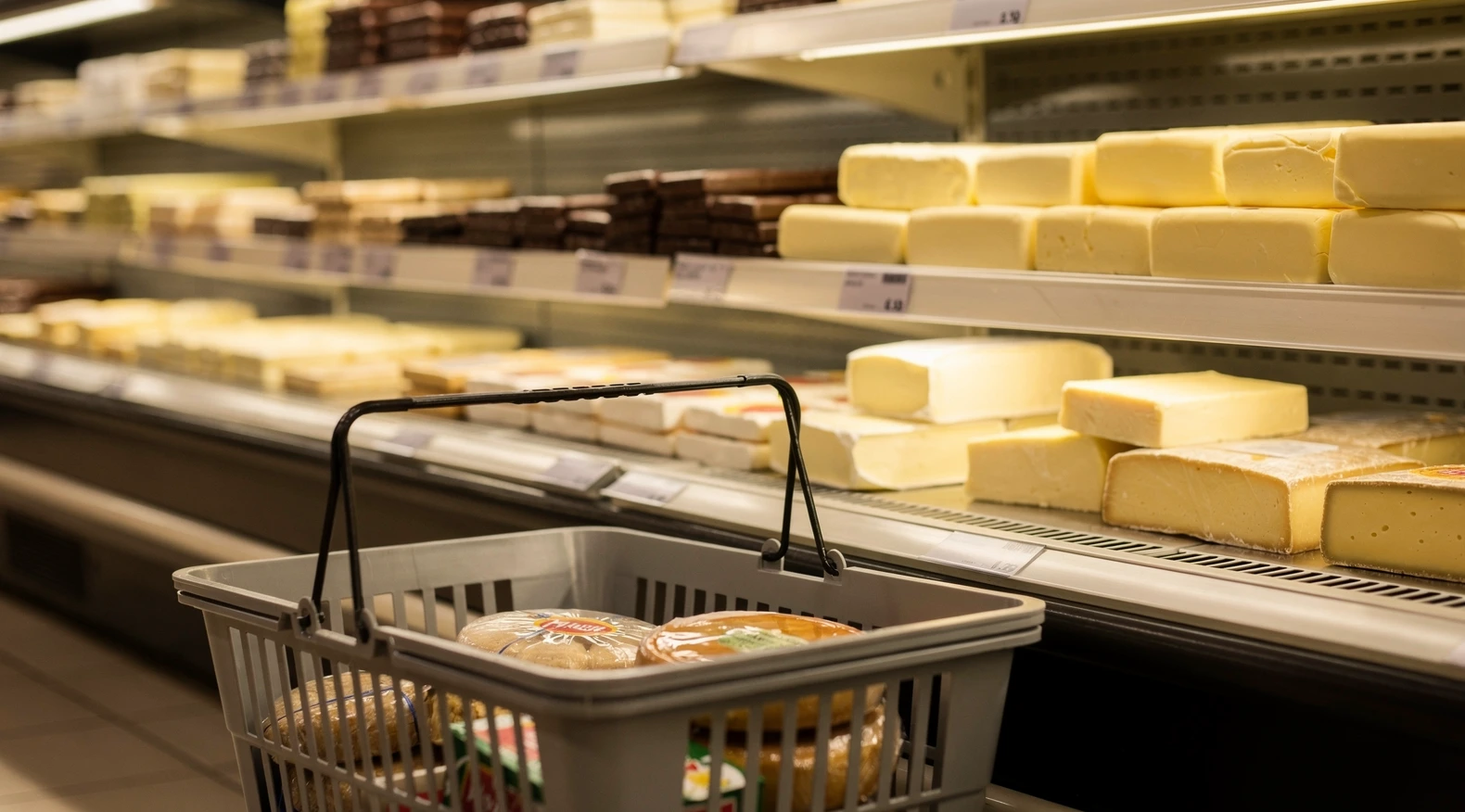
- Chocolate, butter and cheese led the falls in the shopping basket, and discounting on chocolate almost doubled between September and October, according to the ONS.
- Clothing and footwear slipped into deflation at minus 0.5%, while tobacco jumped after a duty rise on 1 October.
- The relief may be short-lived: the British Retail Consortium (BRC) warns food inflation could return towards 2% early next year, and Cornwall Insight forecasts a £443 rise in the energy price cap from January.
British shoppers heading into the Christmas food shop have been handed a rare piece of good news. Official figures published on Wednesday 18 November show that the price of food and non-alcoholic drinks rose by just 0.9% in the year to October 2026, the lowest annual rate in more than five years.
The same release showed the overall cost of living moving the other way. Consumer Prices Index (CPI) inflation climbed to 3.6% from 3.5% in September, the fourth successive rise and its highest level in a year, as fuel prices driven up by the conflict in the Middle East fed through to motorists and delivery costs.
That split, cheaper groceries alongside dearer fuel, energy and tobacco, is the defining feature of this month’s data. This article sets out what the figures mean for a typical UK basket, which products are getting cheaper or dearer, why other grocery price trackers show a higher number, and what the next few weeks of announcements could do to prices in the run-up to Christmas.
What did the October 2026 inflation figures show?
According to the ONS bulletin, the CPI rose by 3.6% in the 12 months to October 2026, up from 3.5% in September. On a monthly basis prices rose by 0.5%, compared with a 0.4% rise in October 2025. The CPIH measure, which adds owner occupiers’ housing costs and council tax, rose to 3.7% from 3.6%.
Grant Fitzner, the ONS chief economist, said inflation “rose slightly in October, with fuel prices once again a major contributor to the increase in the annual rate”. He added that the annual costs of “both raw materials and goods leaving factories continue to climb”, a reference to separate producer price figures published at the same time.
The headline number was in line with City forecasts, the Guardian reported, and slightly below the 3.7% the Bank of England had pencilled in earlier this month. Core CPI, which strips out energy, food, alcohol and tobacco, was unchanged at 2.8%. Services inflation was also flat at 3.7%, while goods inflation rose from 3.2% to 3.5%, its highest rate since September 2023.
The ONS splits the CPI basket into 12 divisions. The table below shows the ones closest to the high street and the weekly shop, with the annual rate in September and October 2026 taken from the ONS release.
| CPI division | Annual rate, Sep 2026 | Annual rate, Oct 2026 | Direction |
|---|---|---|---|
| All items (headline CPI) | 3.5% | 3.6% | Up |
| Food and non-alcoholic beverages | 1.3% | 0.9% | Down |
| Alcohol and tobacco | 2.5% | 4.5% | Up sharply |
| Clothing and footwear | 0.1% | -0.5% | Into deflation |
| Furniture and household goods | 1.0% | 1.1% | Broadly flat |
| Recreation and culture | 2.3% | 2.7% | Up |
| Restaurants and hotels | 3.8% | 3.4% | Down |
| Transport | 6.6% | 7.5% | Up sharply |
| Housing and household services | 5.3% | 5.3% | Flat |
For most households, the two lines that dominate the monthly budget are moving in opposite directions. Food is close to flat on a year ago, while transport and housing costs, which include energy bills, are rising at several times the rate of the weekly shop.
Why is food inflation falling while overall prices rise?
The short answer is that the forces pushing up the headline rate sit largely outside the supermarket aisle. The ONS said the largest upward contribution to the change in the annual rate came from transport, and particularly motor fuels, while the largest partially offsetting downward contribution came from restaurants and hotels.
Food, by contrast, has been on a steady downward path all year. ONS time series data shows the annual rate for food and non-alcoholic drinks was 4.9% in October 2025 and 4.5% in December 2025, before easing through 2026. The contribution of food to overall CPIH inflation fell from a recent high of 0.46 percentage points in August 2025 to 0.08 percentage points in October 2026, the smallest since September 2021, according to the ONS.
| Month | Food and non-alcoholic drinks (annual) | Headline CPI (annual) | Gap |
|---|---|---|---|
| October 2025 | 4.9% | 3.6% | Food 1.3 points above |
| December 2025 | 4.5% | 3.4% | Food 1.1 points above |
| March 2026 | 3.7% | 3.3% | Food 0.4 points above |
| May 2026 | 2.2% | 2.8% | Food 0.6 points below |
| July 2026 | 1.3% | 2.9% | Food 1.6 points below |
| September 2026 | 1.3% | 3.5% | Food 2.2 points below |
| October 2026 | 0.9% | 3.6% | Food 2.7 points below |
A year ago food was rising faster than prices in general. It is now rising at a quarter of the headline rate, the widest gap in the months shown. Narrowing the measure to food alone, excluding non-alcoholic drinks, the ONS put the annual rate at 0.8% in October, down from 1.2% in September.
Cheaper ingredients and heavier discounting
Two explanations stand out in the ONS commentary. First, some input costs have come down: the ONS noted that cocoa prices “are now much lower than they were in 2024”, which it said may be one of the reasons chocolate prices fell. Second, retailers and brands have been discounting more aggressively ahead of the Christmas trading period.
Dr Liliana Danila, chief economist at the Food and Drink Federation (FDF), told the Guardian it was “good news for consumers that food inflation is low in the run up to Christmas, especially as we approach the most important and competitive time of the year for the grocery market”. She said manufacturers were “single minded in their focus on keeping prices as low as possible”.
The FDF’s tone was notably different in September, when, as we reported at the time, it cut its Christmas food inflation forecast to 3.9% and warned of a peak in 2027. October’s official reading of 0.9% sits well below that projection, though the federation now argues that the low rate is masking cost pressures that will surface later.
Which foods are getting cheaper and which are getting dearer?
The ONS highlighted chocolate as the single most notable mover in the food basket. Prices in the chocolate subclass fell by 2.9% in October, compared with a rise of 0.4% in the same month a year earlier, after rising more or less continuously since October 2021. The proportion of discounted chocolate prices in the ONS sample almost doubled between September and October, a much bigger jump than the small rise recorded over the same period in 2025.
The ONS also drew a distinction that matters to anyone buying selection boxes. Products made mainly of chocolate saw prices fall, while the “minority-chocolate” segment, where most of the ingredients are not chocolate, saw a price rise of 0.8%. Fish was the other class the ONS identified as pulling the food rate down.
The FDF’s category breakdown
The FDF published its own reading of the ONS categories. According to the federation, as quoted by the Guardian, prices fell in 19 of the 49 food and drink categories it tracks, with the largest falls in butter, chocolate and cheese, and the fastest rises in fish, water and pasta.
| Category | Annual price change (FDF analysis) | What it means at the till |
|---|---|---|
| Butter | -9.4% | The biggest faller in the basket, useful ahead of Christmas baking |
| Chocolate | -3.9% | Lower cocoa costs and heavier promotions |
| Cheese | -3.8% | Cheeseboards and festive packs likely to be cheaper than last year |
| Pasta | +7.5% | One of the few cupboard staples still rising quickly |
| Water | +9.8% | Bottled water up sharply on a year ago |
| Fish | +13.2% | Still the fastest riser on the FDF’s list |
There is an apparent contradiction on fish. The FDF says fish prices are up 13.2% on a year ago, while the ONS says fish had a downward effect on the food rate in October. Both can be true: fish remains far more expensive than in October 2025, but the price rise between September and October was smaller than the one recorded a year earlier, which drags the annual rate down.
Chocolate also shows two different numbers. The ONS figure of minus 2.9% describes the change in the chocolate subclass during October itself, while the FDF’s minus 3.9% is an annual comparison across its own grouping of categories. Shoppers comparing tins on the shelf will find the picture varies by brand and pack, as our look at the Quality Street tub prices per 100g this Christmas showed.
Why do the BRC and Worldpanel show higher grocery inflation?
Shoppers who follow grocery price news may be puzzled. Three widely reported measures of food and grocery inflation, all published within the past four weeks, give three different answers.
| Measure | Latest reading | Period covered | What it tracks |
|---|---|---|---|
| ONS CPI food and non-alcoholic drinks | 0.9% | Year to October 2026 | Official prices collected across a large sample of shops, weighted to household spending |
| BRC-NielsenIQ Shop Price Index, food | 2.9% | October 2026 index | Shelf prices from BRC member retailers, split into fresh and ambient food |
| Worldpanel by Numerator grocery inflation | 2.6% | Four weeks to 1 November 2026 | Grocery price inflation from a consumer panel’s till receipts, including promotions |
The differences come down to method. The measures use different baskets, collect prices on different dates and treat promotions differently, so a month of heavy discounting can show up more strongly in one than another. When the BRC published its October shop price index, food inflation had risen to 2.9% from 2.5%, driven by ambient goods such as tins, jars and packets, while fresh food was flat at 2.6%.
Worldpanel’s reading, which we covered when it showed grocery inflation rising to 2.6% and Asda losing share, reflects what panel households actually paid over four weeks. That period took in the government’s Be Ready preparedness campaign, which lifted sales of water and tinned food. The ONS figure is the one used for official purposes, but none of the three is “wrong”; each answers a slightly different question.
Taken together, the three measures suggest grocery prices are rising slowly, somewhere between 1% and 3% a year depending on the basket. That is well below the headline rate and far below the double-digit food inflation of 2023. It also suggests that where and how people shop, and whether they buy on promotion, now makes more difference to the bill than the underlying rate of inflation.
What is pushing the headline rate up?
Fuel is the main story. The ONS said the average price of petrol rose by 5.2p a litre between September and October to 174.7p, the highest since August 2022. Diesel rose by 7.0p a litre to 199.5p, the highest price since ONS records began in January 1996. Overall motor fuel prices were up 33.2% on a year earlier, the largest annual rise since July 2022.
The BBC reports that energy prices have accelerated largely because of the US-Israel war with Iran. On Wednesday Brent crude was trading at about $91.35 a barrel, according to the Guardian, roughly £69 at the day’s exchange rate of $1.3165 to the pound. The ONS producer price figures show producer input prices up 10.8% in the year to October and factory gate prices up 5.1%, the largest annual rises since February 2023 and April 2023 respectively.
Alcohol and tobacco inflation almost doubled, from 2.5% to 4.5%. The ONS said tobacco prices rose by 5.2% between September and October, possibly because a tobacco duty increase took effect on 1 October 2026, whereas in 2025 the duty rise did not arrive until 26 November. That timing effect could unwind in next month’s figures.
Household energy pulled in two directions. Gas prices rose by 6.3% in October after Ofgem’s price cap change, while electricity prices fell by 0.8%, helped by the government’s temporary cut in VAT on domestic electricity from 5% to zero from 1 October 2026. Ofgem estimated that a typical dual-fuel household paying by direct debit faced an annual bill of £1,935 under the October cap, a rise of £73.
What do the figures mean for clothing and high street retailers?
Clothing and footwear prices fell by 0.5% in the year to October, against a 0.1% rise in September, the ONS said. On the month, prices still rose by 0.4% as autumn ranges arrived, but that was a smaller rise than the 1.0% recorded in October 2025, which pushed the annual rate below zero.
Harvir Dhillon, lead economist at the BRC, said in a statement reported by the Guardian that “clothing and footwear fell into deflation, while the onset of colder weather brought down garden furniture prices”. For fashion retailers that is a double-edged result: shoppers are paying less, but retailers are absorbing higher wage, energy and transport costs without the cushion of rising prices.
Clothing deflation is not new in 2026. ONS series data shows the annual rate dipped below zero in March and June this year before recovering, a sign that fashion pricing is being driven by promotions and stock levels as much as by underlying costs. With Black Friday on 27 November and many sales already running since late October, November’s clothing figure will capture another month of heavy discounting.
Recreation and culture prices rose 0.5% on the month, lifting the annual rate to 2.7% from 2.3%. The ONS listed small upward contributions from action cameras, laptops, DVDs bought online, water sports equipment, cat food, computer software, non-fiction paperbacks and package holidays. Prices fell for DVDs bought in store, Blu-rays bought online, CD albums and computer games bought online, among others.
The split between online and in-store versions of the same products is a reminder that the CPI basket now tracks prices across both channels. For shoppers, the practical point is that the cheapest route for a given item can change from month to month, and comparing a high street price with an online one remains worthwhile, particularly for media and electronics during the Black Friday period.
Will food prices stay low through Christmas and into 2027?
The retail and food industries are cautious. Mr Dhillon said food prices “have risen just 0.5% this year, but higher energy and transport costs could push food inflation back towards 2% and overall inflation towards 4% early next year”. Dr Danila of the FDF said the low October figure came “at the cost of delaying crucial investment” and warned that rising costs “will eventually be reflected in a higher rate of food inflation”.
The Bank of England has said there has been “limited evidence” so far of higher energy costs feeding through into food and other staples, the BBC reports, with some firms absorbing increases and accepting lower profit margins. That is the mechanism to watch: retailers can hold prices down in a competitive Christmas market, but only for so long if fuel, packaging and energy bills keep climbing.
The energy bill shock waiting in January
Consultancy Cornwall Insight forecasts that the energy price cap for Great Britain will rise by 26% from January, adding £443 a year to a typical dual-fuel bill and taking it to about £2,166, the BBC reports. Ofgem is due to announce the new cap on Wednesday 25 November. The government has pointed to the zero VAT rate on electricity, which runs until next July, and a £100 payment to 20 million homes in January.
Craig Lowrey, retail markets principal at Cornwall Insight, told the BBC that “ultimately this support can only chip away at the edges of a bill that continues to be pushed up by events in the Middle East”. Higher energy costs hit shoppers twice: directly through household bills, and indirectly as supermarkets, bakeries and manufacturers pay more to run stores, ovens and refrigeration.
The Bank of England’s own forecasts point the same way. According to the BBC, policymakers believe inflation could peak at 4.9% in the middle of next year and not return to the 2% target until 2028, with an “adverse scenario” in which a wider conflict pushes inflation to 6.2% in 2027.
What happens to interest rates and household budgets next?
The Bank of England raised Bank Rate from 3.75% to 4% earlier this month, its first increase in three years, and signalled that a further rise could follow unless the conflict in the Middle East is resolved, the BBC reports. A Bank spokesperson said after Wednesday’s data that it would “continue to set interest rates to make sure inflation returns to the 2% target and stays there”.
Economists are split on what comes next. Felix Feather, an economist at Aberdeen, told the Guardian that the report was “a touch less concerning than it might have been” because core and services inflation did not rise, and that February, when the Bank has fresh forecasts, was “a more natural moment to deliver a second hike”. The pound fell to a five-week low of $1.3150 against the dollar after the release, the Guardian reported.
For shoppers who rely on credit, a higher Bank Rate tends to raise the cost of some loans, credit cards and variable mortgages, though it can improve returns on savings. Buy now, pay later plans usually carry no interest if repaid on time, so they are less directly affected, but missed repayments can still lead to charges.
What retailers and politicians said
The BRC used the figures to press for help with employment costs. Mr Dhillon pointed to the Milburn review on youth unemployment, published on Tuesday, which proposed doubling the threshold at which retail and hospitality employers pay National Insurance for staff under 25. He said implementing it “as soon as possible would help ease employment costs just as inflationary pressures build” and would give retailers “greater confidence to keep younger seasonal staff on beyond Christmas and January”.
Retailers are already facing higher costs from April 2027, including a rise in the National Living Wage and changes to business rates set out in the October Budget, which also raised small business rates relief for many high street shops. Low food inflation leaves grocers with thin room to pass those costs on without losing customers to rivals.
Emma Reynolds, chief secretary to the Treasury, said the government was providing help for households with energy costs, the BBC reports. Shadow chancellor Andrew Griffith said the fourth successive rise in inflation was down to the UK’s “soaring energy costs” and to Labour’s decision to “hike taxes and employment costs”.
Key dates for shoppers and retailers
| Date | Event | Why it matters |
|---|---|---|
| Friday 20 November 2026 | ONS retail sales for October (scheduled) | Shows whether shoppers held back spending ahead of Black Friday |
| Wednesday 25 November 2026 | Ofgem announces the January to March price cap | Cornwall Insight forecasts a 26% rise to about £2,166 |
| Friday 27 November 2026 | Black Friday | The peak discount week for clothing, electronics and toys |
| Wednesday 16 December 2026 | ONS CPI for November | Will show whether food inflation stays below 1% in the Christmas run-up |
| Thursday 17 December 2026 | Bank of England rate decision | A second rise in a row is possible but not expected by all economists |
What does 0.9% food inflation mean for a typical weekly shop?
An annual rate of 0.9% means that, on average, the same basket of food and soft drinks that cost £100 in October 2025 would cost about £100.90 in October 2026. A year earlier the same calculation, at 4.9%, would have added £4.90. That is the arithmetic of the ONS average; the actual change for any household depends on what they buy and where.
For households whose incomes are rising faster than 0.9%, the weekly shop is becoming slightly more affordable in real terms. But the gains are being swallowed by fuel and energy. A household that fills a diesel car and heats with gas has seen much larger increases in those bills than any saving at the till.
Practical steps for the Christmas food shop
- Compare unit prices (per 100g or per kg) rather than headline pack prices, particularly on chocolate tubs, selection boxes and cheeseboards, where pack sizes vary widely.
- Expect heavier promotions on chocolate and confectionery in the weeks before Christmas, as the ONS data already shows discounting on the rise.
- Stock up on butter and hard cheese for baking and festive meals while prices are below last year’s levels.
- Watch the cupboard staples that are still rising, such as pasta and bottled water, and consider own-label alternatives.
- Check loyalty prices carefully: member-only prices can be genuine savings, but compare them with the same item at a discounter before assuming they are the cheapest option.
Frequently asked questions
What is the UK inflation rate for October 2026?
CPI inflation was 3.6% in the 12 months to October 2026, up from 3.5% in September, according to the ONS. The broader CPIH measure, which includes owner occupiers’ housing costs, was 3.7%.
What is UK food inflation now?
Prices of food and non-alcoholic beverages rose by 0.9% in the year to October 2026, down from 1.3% in September. It is the lowest rate since September 2021. Food alone, excluding soft drinks, rose by 0.8%.
Why are chocolate prices falling?
The ONS said chocolate subclass prices fell 2.9% in October. It pointed to cocoa prices, which are much lower than in 2024, and to a near doubling in the share of discounted chocolate prices between September and October.
Why is inflation rising if food prices are not?
The rise came mainly from transport, especially motor fuels. Petrol averaged 174.7p a litre and diesel a record 199.5p in October. Tobacco prices also jumped after a duty rise on 1 October, and gas prices rose after the October energy price cap change.
Why does the BRC say food inflation is 2.9%?
The BRC-NielsenIQ Shop Price Index uses shelf prices from its member retailers, a different basket and different collection dates from the ONS. Its October reading put food inflation at 2.9%, while Worldpanel’s till-receipt panel put grocery inflation at 2.6%. The ONS figure is the official measure.
Are clothes getting cheaper in the UK?
Yes, on average. Clothing and footwear prices fell 0.5% in the year to October 2026, according to the ONS. Prices still rose 0.4% on the month as autumn ranges arrived, but by less than a year earlier.
Will food prices go up again in 2027?
Industry bodies expect so. The BRC warns that higher energy and transport costs could push food inflation back towards 2% early next year, and the FDF says supply chain cost pressures will eventually feed into prices. The Bank of England expects overall inflation to peak at 4.9% in mid-2027.
When are the next UK inflation figures published?
The ONS will publish November’s CPI figures on Wednesday 16 December 2026, the day before the Bank of England announces its interest rate decision on 17 December.
This article is based on the ONS consumer price and producer price bulletins for October 2026, published on 18 November, together with reporting by the BBC and the Guardian and statements from the British Retail Consortium and the Food and Drink Federation. Figures will be updated if the ONS revises its data.