
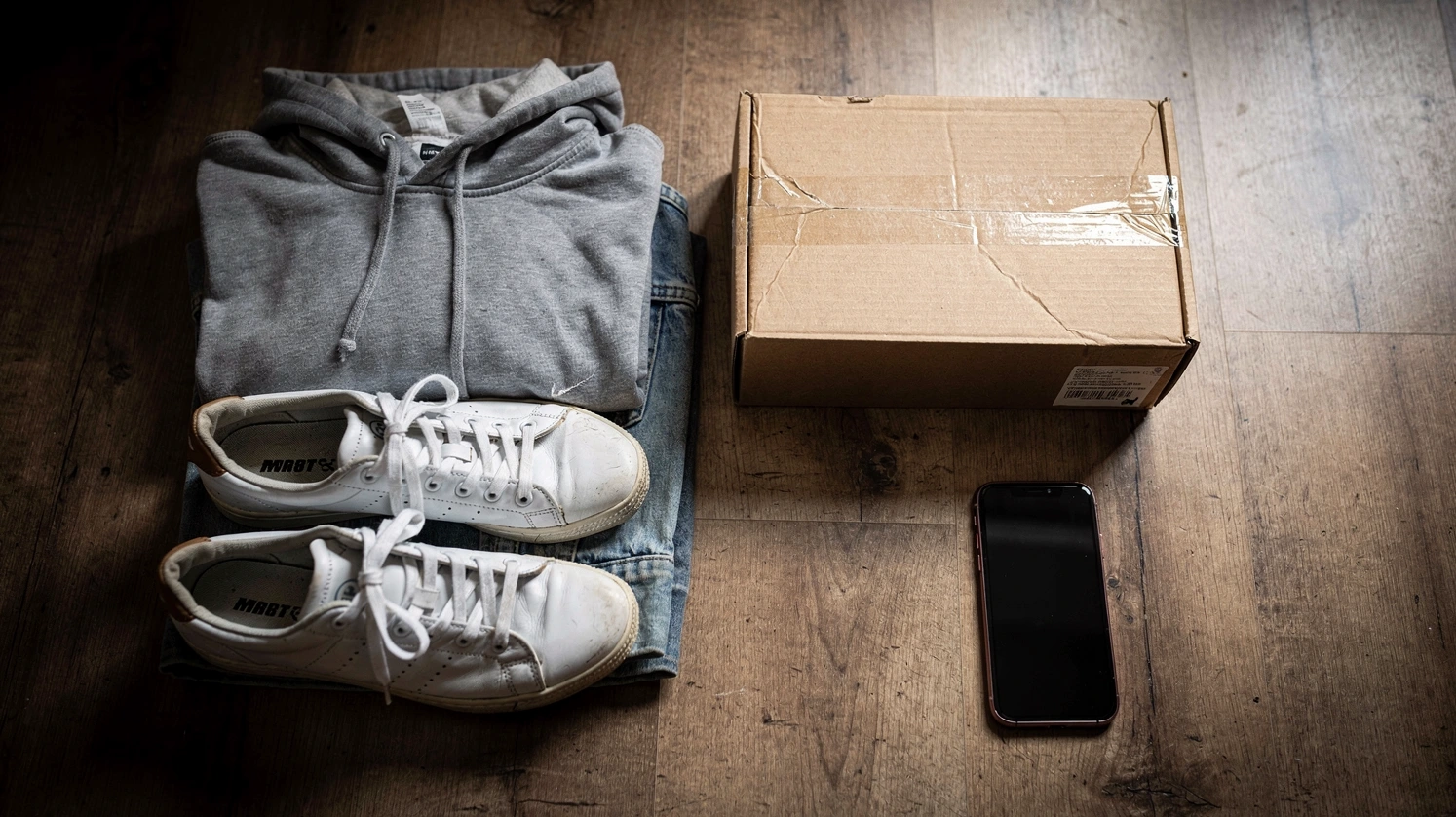
Children under 16 are set to be barred from second-hand marketplaces including eBay and Vinted, according to a report in the Times published late on Saturday 7 November. The newspaper says Lisa Nandy, the culture secretary, will expand the government’s planned social media ban for under-16s to cover online marketplaces because of grooming fears, and that the extension could also take in Depop and Facebook Marketplace.
If confirmed, it would be a significant change of direction. When the under-16 ban was announced in June, ministers said they wanted a “narrowly defined” set of exemptions so that e-commerce platforms, music streaming and educational services would not be caught. The Times report suggests resale apps, where strangers message each other and often meet in person, are now being treated as a risk in their own right.
This article sets out what has been reported, what is already law or settled policy, what eBay, Vinted, Depop and Facebook Marketplace require today, how age checks might work, and what the change would mean for teenagers who sell their old clothes, for parents, and for the millions of adult sellers who could face new verification steps.
In short
- The report: the Times says the culture secretary, Lisa Nandy, will extend the under-16 social media ban to online marketplaces, naming eBay and Vinted, with Depop and Facebook Marketplace also possibly in scope.
- The reason given: grooming fears, because resale apps combine private messaging between strangers with in-person collection.
- The existing plan: the social media ban is due to come into force in March 2027; in June the government said e-commerce platforms would be exempt.
- Today’s rules: eBay and Vinted already say users must be 18 or over in their UK terms, but neither currently requires the kind of hard age check Ofcom has set out for the ban.
- Not yet confirmed: as of Sunday morning there was no government statement, no list of platforms and no start date for the marketplace extension.
What has the Times reported about eBay and Vinted?
The Times published the story at 22:20 GMT on Saturday 7 November under the headline “Under-16s to be banned from eBay and Vinted over grooming fears”. Its summary states that Lisa Nandy, the culture secretary, “will expand the social media ban to cover online marketplaces, which could also include Depop and Facebook Marketplace”.
The full article sits behind the newspaper’s paywall, and by early on Sunday 8 November no other national outlet had published its own confirmation. Marketplace seller news services, including the cross-listing tool FLUF, relayed the Times headline overnight, but none added new detail. shopappy could not find a statement from the Department for Culture, Media and Sport on GOV.UK at the time of writing.
That matters for how much weight readers should place on specific details. The direction of travel (a ban for under-16s on platforms that let strangers contact children) is established government policy. The claim that this will now include online marketplaces rests, for the moment, on a single newspaper report. Any timing, enforcement mechanism or final list of named platforms should be treated as unconfirmed until the government publishes it.
Four services are mentioned in the Times summary. eBay and Vinted are named in the headline as platforms that will be covered. Depop and Facebook Marketplace are described as services that “could also” be included. No other marketplaces, such as Gumtree, Preloved or Shpock, were named in the material that has been made public.
The choice of names is telling. Vinted and Depop are the two resale apps most associated with teenagers and young adults in the UK. Facebook Marketplace sits inside a social network that is already on the list of platforms covered by the main ban. eBay is the oldest and largest general marketplace in Britain, and its inclusion suggests the government is thinking about marketplaces as a category rather than singling out fashion resale.
What is the under-16 social media ban and when does it start?
Sir Keir Starmer announced the ban on 15 June 2026. The BBC reported at the time that apps including TikTok, Snapchat and Instagram would become inaccessible to children under 16, with YouTube, Facebook and X also included. The government said it hoped to pass regulation before Christmas, with the ban coming into force in spring 2027.
The start date has since been narrowed. LBC reported in late September that the culture secretary had confirmed the ban would come into force in March 2027, and the BBC’s report on Ofcom’s age-check guidance on 29 October also gave March as the start. The BBC described the ban as covering ten of the biggest platforms.
The policy followed a three-month consultation that received more than 116,000 responses. According to the government, around nine in ten parents who responded backed a ban for under-16s, and more than 83% said the benefits of social media were outweighed by the risks.
What was in scope, and what was exempt
The Guardian reported in June that the government would use the same framework as Australia. That means the ban targets “user-to-user platforms” that let people interact, post material and receive algorithmic recommendations. Messaging services WhatsApp and Signal were excluded, as were YouTube Kids, Lego Play, Google Classroom and Pinterest.
Crucially for this story, the Guardian also reported that the list of exemptions would be “narrowly defined” because the government did not want to hit music streaming, e-commerce platforms or educational services. The Times report therefore describes a widening of the original plan, not simply a clarification of it.
The June package also went beyond an outright ban. Livestreaming and contact from strangers were to be blocked for under-16s on a “wider range of online services”, including gaming platforms such as Roblox, which itself was not banned. Those restrictions were also to be switched on by default for 16 and 17-year-olds on the major social media apps.
How the UK plan compares with Australia’s
The UK has explicitly modelled its ban on Australia’s, which came into force in December 2025. Australia’s list of age-restricted platforms covers Facebook, Instagram, Kick, Reddit, Snapchat, Threads, TikTok, Twitch, X and YouTube, according to the Guardian. Online marketplaces are not on it.
If the Times report is accurate, the UK would go further than Australia in two ways: by adding marketplaces, and by the “Australia plus” restrictions on livestreaming and contact from strangers on a wider range of services. UK ministers have said they want to learn from Australia’s experience, where many children have kept access.
| Feature | Australia (in force since December 2025) | UK plan announced June 2026 | UK plan as reported by the Times, November 2026 |
|---|---|---|---|
| Minimum age | 16 | 16 | 16 |
| Main social media apps | Covered (ten platforms) | Covered, using Australia’s definition | Covered |
| Online marketplaces | Not on the list | E-commerce intended to be exempt | eBay and Vinted to be covered; Depop and Facebook Marketplace possibly |
| Contact from strangers on other services | Not part of the ban | Blocked for under-16s on a wider range of services, such as gaming | No change reported |
| Start date | December 2025 | Spring 2027, later confirmed as March 2027 | Not reported for marketplaces |
Australia’s experience is the main argument used by both sides. The BBC reported that a survey by the Molly Rose Foundation in April found 61% of 12 to 15-year-olds who had accounts on restricted platforms before the ban still had access to at least one. Supporters say that is a reason for stricter checks; opponents say it shows bans push children to less safe corners of the internet.
Why would online marketplaces be added to the ban?
The Times attributes the move to grooming fears. Online marketplaces were not designed as social networks, but the most popular resale apps share several features with them: public profiles, follower counts on some services, private messaging between users who have never met, and photographs that users upload of themselves or their belongings.
The difference between a resale app and a shop is that the other party in a transaction is usually a member of the public. A teenager selling a hoodie on Vinted or Depop is, in practice, talking to strangers about an item they have worn, and may be asked for more photographs, for measurements or to meet in person. Child-safety campaigners have long argued that features which let adults contact children privately are the main risk, regardless of whether the service is described as social media or shopping.
Messaging, photographs and collection in person
Three features are likely to be at the centre of any government case. The first is private messaging, which on every major marketplace lets any buyer contact any seller. The second is photographs: second-hand fashion listings frequently show the seller wearing the item, which means images of children can appear in public listings. The third is collection in person, which is common on Facebook Marketplace and available on eBay and other classified-style services.
The government’s June package already targeted the second of those risks on gaming platforms, where it proposed to block contact from strangers for under-16s. Extending a ban to marketplaces would go further, removing access altogether rather than limiting particular features. Whether ministers have chosen a full ban or a feature-based restriction for marketplaces is one of the details the Times summary does not settle, and shopappy will update this article when the government sets out its plan.
The same question about how far child-safety rules reach into shopping has come up elsewhere this autumn. shopappy reported this week on how Amazon pulled an AI chatbot toy bunny as UK regulators investigated, after campaigners found it gave inappropriate answers to children. Both stories reflect pressure on marketplaces to take responsibility for what happens to children on their services, not just for the goods they sell.
The June Vinted listings scare
Vinted was at the centre of a separate child-protection scare in June 2026, although that episode did not involve grooming of users. IBTimes UK reported that screenshots spread from mid-June claiming toy listings with ages, heights, weights and phrases such as “small and healthy” were coded advertisements for children. One widely shared listing priced a Harry Potter figurine at £25,890.
France’s High Commissioner for Childhood, Sarah El Hairy, referred the matter to the French regulator Arcom and the PHAROS reporting platform on 19 June, and prosecutors in Nanterre opened a preliminary investigation on 25 June. Frankfurt police said there were “strong indications” the posts were fabricated. Vinted told IBTimes UK it had “found no credible cases linking them to child trafficking activity”, and that age fields on toy listings referred to the age group a product was intended for.
There is no reported link between that episode and the government’s thinking. It does show how quickly safety concerns about resale apps can spread, and how much public attention Vinted in particular now attracts as it has become one of the best-known shopping apps in Britain.
What age rules do eBay, Vinted, Depop and Facebook Marketplace use now?
The striking point about eBay and Vinted is that both already say children should not have their own accounts. The gap is enforcement. Neither platform currently runs the kind of “highly effective age assurance” that Ofcom has recommended for the social media ban, so a 14-year-old who enters a false date of birth and has access to a payment method can, in practice, sign up.
eBay’s UK user agreement says members may not use its services “if you are not able to form legally binding contracts (for example if you are under 18)”. Vinted’s UK terms define a user as someone who is at least 18. Vinted’s help centre says under-18s may use the service only through an account created and run by a parent or guardian, who takes responsibility for it, and that the company may ban an account if the user cannot verify their age.
The online safety charity Internet Matters, in its guide for parents, says Vinted has no actual age-verification process at sign-up, and links the 18-plus rule to the fact that money and goods change hands. The charity’s guidance is that a teenager who wants to sell clothes should do so through a parent’s account.
| Platform | Stated minimum age (UK) | Parent or guardian route | Hard age check at sign-up today | Named in Times report |
|---|---|---|---|---|
| eBay | 18 (user agreement: must be able to form a binding contract) | No separate route set out in the user agreement | No; relies on self-declared details and payment methods | Yes, in the headline |
| Vinted | 18 (UK terms) | Yes: a parent or guardian can open and run an account for a minor | No, according to Internet Matters | Yes, in the headline |
| Depop | 13, according to Internet Matters | Selling rules for under-18s are unclear in public guidance | No published hard check | “Could also” be included |
| Facebook Marketplace | Facebook itself is 13+; secondary guides say selling is limited to adults | Not applicable | Facebook is already in scope of the main ban | “Could also” be included |
The Depop and Facebook Marketplace rows carry more uncertainty than the others. Public guides disagree on whether 13 to 17-year-olds can sell on Depop, and shopappy could not confirm Meta’s current wording for under-18s on Marketplace. What is clear is that Depop, by Internet Matters’ account, allows users from 13, which makes it the service where an under-16 rule would change the most.
A rule written into a user agreement is a contractual condition, not a legal duty with a regulator behind it. If marketplaces are brought into the under-16 regime, the obligation to keep children off the service would sit with the platform under online safety law, with Ofcom able to take enforcement action for failures. That is a very different position from a terms-of-service clause that relies on users telling the truth.
Marketplaces with messaging already count as user-to-user services under the Online Safety Act, and Ofcom’s children’s safety codes have applied since July 2025. Those codes require services likely to be accessed by children to assess and reduce risks such as contact from strangers. A ban would move the bar from managing the risk to preventing access altogether.
How would age checks work on a marketplace?
Ofcom published its rapid assessment of age checks for the ban on 29 October. The regulator set out four methods it considers “highly effective” at establishing whether someone is over 16, all of which, according to the Register, depend on photo identification. The Ofcom assessment also confirmed that three methods used for 18-plus checks under the Online Safety Act cannot be used at 16.
Those three are credit card checks, mobile network checks and email-based age estimation. They work for adults because only adults can hold a credit card or ask a mobile operator to lift content blocks. They do not work for 16 and 17-year-olds, which is why Ofcom’s recommended methods lean on documents.
| Check | Usable to prove 18+ | Usable to prove 16+ | What a marketplace user would need |
|---|---|---|---|
| Credit card check | Yes | No | A credit card in the user’s name |
| Mobile network check | Yes | No | An adult-verified mobile contract |
| Email-based age estimation | Yes | No | An email address with a long history of adult services |
| Photo ID based methods (four recommended by Ofcom) | Yes | Yes | A passport, driving licence or PASS-accredited ID card |
Ofcom estimates that around 94% of 16 and 17-year-olds in the UK have some form of photo ID, and that around 150,000 have neither a passport, a driving licence nor a PASS card, according to the Register. The regulator has said its recommendations are subject to government approval, with a decision due by the end of the year.
Ofcom has also been clear that no system is watertight. It said “the risk of circumvention cannot be entirely eliminated”, and that it will monitor circumvention closely for the first 12 months after the ban is enforced. Ofcom told the BBC that the onus is on the platforms to choose methods that work, provided they preserve privacy and protect people’s data. Dame Melanie Dawes, its chief executive, said the regulator would be “ready to take swift and firm action against any company that fails to comply” when the ban comes into force.
What it could mean for adult sellers
The practical consequence that most UK marketplace users will notice is not the ban on children but the checks on adults. Ofcom told the BBC it did not have a firm number for how many adults would need to prove their age for the social media ban, but conceded it would be a “large number of accounts”.
The government said in June that many adults would not need to do checks because their accounts were already more than 16 years old, had a credit card linked, or had an email address already verified in other ways. Marketplaces may be better placed than social networks on that front, because most active eBay and Vinted sellers already have a payment method and a payout bank account linked, and platforms collect seller details for payments and HMRC reporting.
Even so, any extension would be likely to bring a new step for some users: a prompt to confirm age, a request for photo ID, or facial age estimation when an account looks young or has limited history. Privacy campaigners are already opposed. Silkie Carlo, director of Big Brother Watch, described the social media plan to the Register as “a national ID system by the back door”.
What would it mean for teenagers who sell and buy second-hand?
Selling unwanted clothes, trainers, games and trading cards online has become a common way for teenagers to earn money, and resale apps have made second-hand fashion mainstream for a generation of young shoppers. A ban for under-16s would end that for anyone without a parent willing to list items on their behalf, at least on the named platforms.
In practice, many younger sellers are already in breach of the 18-plus rules on eBay and Vinted, and some use accounts in a parent’s name. A properly enforced under-16 ban would force a sorting exercise: accounts that appear to belong to children would face age checks, and those that fail could be closed. Platforms would need to decide what happens to live listings, unfinished sales and balances held in those accounts.
Vinted already allows a parent or guardian to create and run an account for a child, with the adult taking responsibility. That model is likely to become the default for families if the extension goes ahead, because it keeps the adult as the account holder and the person who talks to buyers.
Parents considering that route should note that the parent, not the child, would be treated as the seller. That means the parent’s name, address and bank details are attached to the account, the parent is responsible for describing items accurately, and the parent handles any returns or disputes. For families who already help with postage and parcel drop-offs, the change may be small. For teenagers used to running their own shop, it would be a real loss of independence.
Money, tax and reporting
The tax picture for casual sellers is unaffected by the reported ban. Since January 2024, online platforms have had to collect and report information to HMRC on sellers who make 30 or more sales, or earn about £1,700 or more, in a calendar year. Reporting does not by itself mean tax is owed; most people clearing out a wardrobe are selling personal possessions at a loss and owe nothing.
For those who do trade, the trading allowance matters more. shopappy has explained how the trading allowance tripling to £3,000 benefits Vinted and eBay sellers, following the Budget. If more teenage selling moves into parents’ accounts, those sales would count towards the parent’s totals for platform reporting, which some families may not expect.
Buying is also affected. Under-16s who currently browse Vinted or Depop for cheaper clothes would lose direct access, which shifts purchases back to parents’ accounts or to retailers with their own websites. Retailers selling new stock through their own sites are not mentioned in the Times report, and the June plan explicitly sought to avoid hitting e-commerce, so ordinary online shopping should be unaffected.
What would it mean for UK resale sellers and the platforms?
For adult sellers, the immediate risk is a smaller pool of buyers in categories that rely on teenage demand: school uniform, teenage fashion, trainers, video games, phone cases and collectables such as trading cards. The FLUF summary of the Times story noted that a ban “may reduce risk but limit potential buyers”, which is the trade-off sellers will be weighing.
The bigger cost for platforms is the compliance build. Vinted, eBay and Depop would need to introduce Ofcom-standard age checks for anyone who might be under 16, design processes for flagged accounts, and handle complaints from adults wrongly asked for identification. Each extra step at sign-up loses some new users, which matters to platforms competing hard for UK sellers.
Second-hand selling online has already reshaped the UK resale market. shopappy reported last month that Oxfam’s charity shop profits fell 23% as Vinted and rising costs bit, a sign of how far resale apps have pulled donations and spending away from the high street. Any measure that slows sign-ups on those apps, even at the margin, could send some of that trade back towards charity shops and local second-hand stores, which sell face to face.
The report lands in a busy month for marketplace regulation in Britain. MPs on the Business and Trade Committee have been pressing platforms on consumer protection, and shopappy has covered how the committee’s chair pressed Amazon and TikTok to face a safety hearing before Black Friday. Product safety, fake discounts and seller identity checks are all being examined at the same time.
For the platforms, a child-access rule enforced by Ofcom would sit alongside existing duties under consumer law, product safety rules and the new digital markets regime. The direction is consistent: large marketplaces are increasingly being treated as responsible for who uses them and what happens on them, rather than as neutral noticeboards.
What is still unconfirmed, and what happens next?
The most important unknowns are the legal mechanism, the timing and the definition. It is not yet clear whether marketplaces would be added to the same regulations as the social media ban, which ministers hope to lay before the end of the year, or handled in a separate later step. Nor is it clear whether the rule would be a full ban or a set of restrictions on features such as messaging.
The definition of “online marketplace” is also open. A narrow definition might capture only peer-to-peer resale apps where members of the public sell to each other. A wider one could reach classified-ad sites and any retailer platform that lets third-party sellers message buyers, which would bring in far more businesses.
| Date | Event | Status |
|---|---|---|
| 15 June 2026 | Under-16 social media ban announced; e-commerce intended to be exempt | Confirmed (BBC, Guardian) |
| Late September 2026 | Culture secretary confirms March 2027 start | Reported (LBC) |
| 29 October 2026 | Ofcom publishes age-check assessment at 16 | Confirmed (Ofcom, BBC, Register) |
| 7 November 2026 | Times reports marketplaces including eBay and Vinted will be added | Single report, no government statement yet |
| By end of 2026 | Government decision on Ofcom’s methods; first regulations expected | Expected |
| March 2027 | Social media ban comes into force | Planned; marketplace timing unknown |
The platforms’ responses will be worth watching. eBay, Vinted, Depop and Meta had not, as far as shopappy could find, published public statements on the Times report by Sunday morning. Their positions on whether age verification should happen at app-store or device level, which Meta has argued for in the social media debate, are likely to shape how the marketplace rule is designed.
What can parents and teenage sellers do now?
Nothing changes for families today. The social media ban does not start until March 2027, and the marketplace extension has not been formally announced. But the existing rules on eBay and Vinted already require users to be 18, so parents whose children run their own accounts are relying on terms the platforms could enforce at any time.
- Check whose name is on the account. If a child under 18 runs an eBay or Vinted account in their own name, it is already outside the platform’s terms. Moving selling into a parent-run account now avoids disruption later.
- Keep conversations on the platform. Buyers who ask to move to WhatsApp, Instagram or text messages should be refused; staying in the app keeps a record and keeps the platform’s protections.
- Avoid photos that show a child’s face or school. Flat-lay photographs or images on a hanger sell clothes just as well and remove the most obvious risk.
- Use tracked postage or lockers rather than meet-ups. In-person collection is the highest-risk feature for younger sellers. Parcel lockers and drop-off points avoid sharing a home address.
- Get photo ID sorted if your child is 15 or older. If Ofcom’s methods are adopted, older teenagers who want to keep using social media from March 2027 will need a passport, driving licence or PASS card.
- Keep records of sales. Sales made through a parent’s account count towards that parent’s totals for platform reporting to HMRC.
Teenagers who sell regularly should also think about where their customers come from. If buyers under 16 lose access, demand for some items will shift to parents shopping on their children’s behalf, so listings that speak to parents (clear sizes, condition and age ranges) may sell better.
Frequently asked questions
Are under-16s being banned from eBay and Vinted?
The Times reported on 7 November 2026 that the culture secretary, Lisa Nandy, will extend the under-16 social media ban to online marketplaces including eBay and Vinted, because of grooming fears. As of Sunday 8 November the government had not published a statement, a start date or a final list of platforms, so the plan should be treated as reported rather than confirmed.
When does the UK under-16 social media ban start?
The ban on social media for under-16s is due to come into force in March 2027, as reported by LBC and the BBC. No date has been reported for the extension to online marketplaces.
Can under-18s use Vinted in the UK now?
Vinted’s UK terms say users must be at least 18. Its help centre says a parent or guardian can create and run an account for a child under 18 and takes responsibility for it. Internet Matters says Vinted does not currently run a hard age check at sign-up.
What is the minimum age for eBay in the UK?
eBay’s UK user agreement says you may not use its services if you are not able to form legally binding contracts, giving being under 18 as the example. In practice that makes 18 the minimum age for having your own account.
Will Depop and Facebook Marketplace be included?
The Times summary says the extension “could also include” Depop and Facebook Marketplace, which is less definite than its wording on eBay and Vinted. Facebook itself is already one of the platforms covered by the main social media ban.
Will adults have to prove their age to sell on Vinted or eBay?
Some may. For the social media ban, Ofcom has said a “large number of accounts” will need checking, although the government said in June that many adults would be cleared through account age, a linked credit card or a verified email. If marketplaces are added, accounts that look young or have little history are the most likely to be asked for ID or a facial age estimate.
Can my child keep selling through my account?
Vinted already allows parent-run accounts for under-18s, and that route is likely to remain the main option for families if a ban goes ahead. The parent is treated as the seller, so their details are on the account and their sales totals count for platform reporting to HMRC.
Does the ban affect online shopping on retailer websites?
Nothing in the Times report mentions ordinary retailers selling their own stock online, and in June the government said it wanted to avoid hitting e-commerce platforms. The reported change is aimed at marketplaces where members of the public contact and trade with each other.
Why are marketplaces seen as a grooming risk?
Resale apps let strangers message each other privately, listings often include photos of the seller wearing items, and some sales involve collecting in person. Those features give adults a way to contact children, which is the risk the government’s wider online safety package is designed to reduce.