
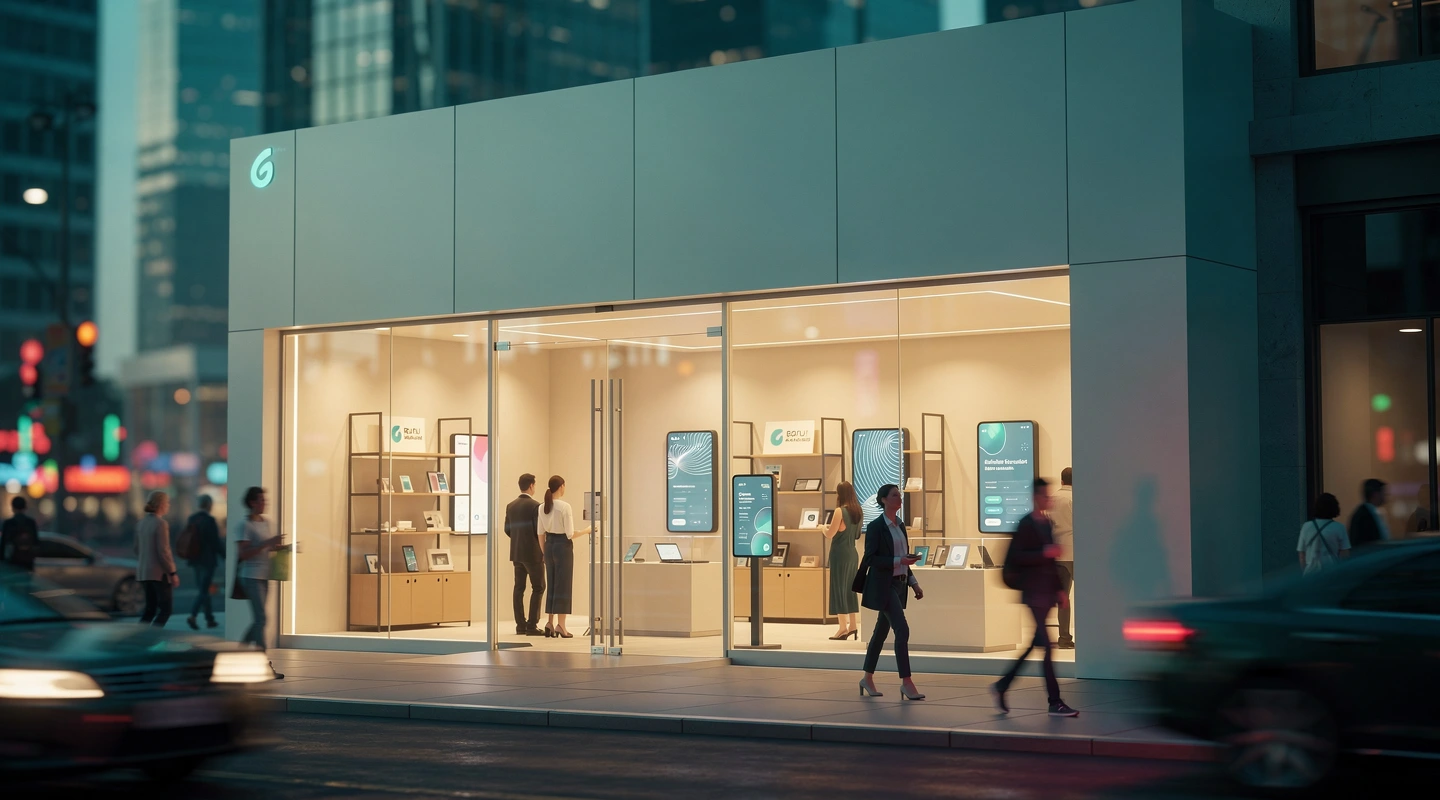
Direct-to-consumer brands spent the last decade learning that an online audience does not map neatly onto a physical one. A city that buys heavily online can still ignore a storefront, and a quiet e-commerce market can turn into a packed launch event. Pop-ups have become the cheapest way to settle that question with real foot traffic instead of a forecast. This guide explains how D2C brands use pop-ups to test new cities, what to measure, and when a temporary space should become a lease.
In short
- Pop-ups are market research with a cash register. A 30-day space turns a city hypothesis into measured demand, not a spreadsheet guess.
- The point is the data, not the revenue. A pop-up that breaks even but produces clean signal on traffic, conversion, and repeat intent has done its job.
- Location and timing decide the test before the product does. The same brand can read one neighborhood as a winner and the next block as a miss.
- Most failures are measurement failures. Brands that skip baselines, attribution, and a clear go or no-go threshold learn nothing expensive.
- The exit matters as much as the entry. The best pop-up programs are designed to convert into a lease, a permanent shop-in-shop, or a clean retreat with a customer list intact.
Why pop-ups became D2C’s city-testing tool in 2026
The economics of opening a permanent store have always punished guesswork. A multi-year lease, a build-out, staffing, and inventory can sink six figures before a single customer walks in. For a venture-backed D2C brand watching its burn rate, that is a bet few boards will sign off on without evidence. A pop-up compresses that risk into weeks and a fraction of the budget.
What changed recently is the supply side. Landlords sitting on vacant retail bays now treat short-term tenants as a way to keep lights on and signal vibrancy to long-term prospects. Flexible-lease platforms and turnkey retail operators have made a four-week space something a small team can book in days. The friction that once made temporary retail a stunt has mostly disappeared.
The demand side shifted too. Customer-acquisition costs on the major ad platforms have climbed for years, and a single channel rarely scales forever. Physical retail gives D2C brands a discovery surface they do not rent by the click, plus first-party data they increasingly cannot harvest online. A pop-up is where a brand tests whether a city will pay that acquisition cost in person.
There is also a strategic reason that has little to do with cost. A pop-up forces a brand to answer a concrete question: does this specific market want what we sell, at the price we charge, in the format we offer it. That clarity is hard to get from web analytics alone, where geography is blurred by shipping zones and promo-driven spikes. The store is the cleanest test environment a consumer brand can buy.
Key terms and definitions
Before designing a city test, it helps to agree on language. Pop-up retail has picked up jargon that means different things to different teams, and a sloppy definition leads to a sloppy read on results.
Pop-up versus pilot store
A pop-up is a fixed-duration space, usually one to twelve weeks, built to gather signal and create buzz. A pilot store is a longer commitment, often six to twelve months, used to refine operations once a market is already proven. The first answers whether to enter a city; the second answers how to run there profitably.
Market test versus brand activation
A market test exists to produce a go or no-go decision, so its success metric is demand quality. A brand activation exists to generate awareness, press, and content, so its success metric is reach and sentiment. Many pop-ups try to be both, which is fine, as long as the team knows which one it will be judged on.
Catchment and baseline
The catchment is the realistic geographic area a location can draw from, measured by travel time rather than a flat radius. The baseline is the pre-launch level of demand in that catchment, taken from existing online orders, email subscribers, and site traffic by zip code. Without a baseline, a pop-up’s numbers float free of any meaningful comparison.
Incrementality
Incrementality is the share of sales and signups that would not have happened without the pop-up. It separates genuine new demand from existing customers who simply shifted a purchase from online to in person. This is the single hardest number to measure and the one that most often gets ignored.
How a city test actually works, step by step
A pop-up city test is a project with a beginning, a middle, and an exit, not a one-off event. The brands that get the most out of the format treat it like a product launch with a fixed measurement plan. Here is the sequence that holds up across categories.
Pick the question before the city
Strong tests start with a single decision the pop-up must inform. Is it whether to sign a permanent lease in this metro, whether a region justifies regional shipping investment, or whether a wholesale partner should stock the line. The question dictates the location, the duration, and the metrics, so naming it first prevents an expensive experiment that proves nothing actionable.
Use your own data to shortlist markets
D2C brands sit on a map most retailers would envy. Order density by zip code, email open rates by region, and wish-list or waitlist signups all point at cities with latent demand. The smartest programs run pop-ups where the online signal is already strong enough to suggest a floor, then use the physical test to gauge the ceiling. Our breakdown of the state of retail across department stores, grocers, and experiences covers why that latent-demand read matters more than raw population.
Set the baseline and the threshold
Two weeks before opening, lock the baseline for the catchment and write down the go or no-go threshold. A threshold might be a minimum number of new email signups per day, a target conversion rate of walk-ins to buyers, or a repeat-visit rate within the run. Deciding the bar in advance stops the post-hoc rationalization that turns every result into a success.
Instrument the space
A pop-up that cannot count is a party, not a test. Door counters, a point-of-sale that captures zip codes, QR codes that tie in-store actions to the site, and a simple way to log conversations all turn a busy weekend into usable data. The cost of instrumentation is trivial next to the cost of the space, yet it is the step teams skip most often.
Run, observe, and talk to people
During the run, the qualitative layer matters as much as the dashboard. Why customers hesitated, which products they picked up and put down, what they assumed the brand cost: these notes explain the numbers the counters produce. A staffer trained to ask three consistent questions will surface insight no analytics tool can.
Decide and document
When the run ends, compare results to the threshold and write the decision down with its reasoning. Even a no-go is valuable if it is recorded clearly enough to inform the next city. The brands that build real expansion playbooks are the ones that treat each pop-up as a documented case, not a memory.
The metrics that tell you a city is worth it
Revenue is the noisiest signal a pop-up produces, because it is shaped by weather, location, and discounting as much as by genuine demand. The metrics below give a cleaner read on whether a market deserves more investment. None of them stands alone; the pattern across them is the real answer.
The table compares what each metric tells you and how to read it against a baseline.
| Metric | What it measures | How to read it | Common trap |
|---|---|---|---|
| New email or SMS signups per day | Top-of-funnel demand from people not already on your list | Compare to your baseline signup rate for the same catchment online | Counting existing subscribers who just resubscribe in person |
| Walk-in to buyer conversion | How well the format turns curiosity into a sale | Healthy ranges vary by category; track the trend across the run, not one day | Inflated by friends, press, and staff purchases on opening weekend |
| Incremental revenue | Sales that would not have happened online anyway | Compare catchment online sales during the run to the prior period | Crediting the pop-up for orders that simply shifted channel |
| Repeat visit rate | Whether the city has durable interest, not novelty traffic | Look for returning faces or scans within a multi-week run | Treating a one-time crowd as proof of a permanent market |
| Cost per acquired customer | Efficiency of the channel versus paid digital | Total cost divided by genuinely new customers, all-in | Excluding rent, staff, and build-out to flatter the number |
The most useful output is not a single score but a profile. A city that delivers cheap signups, strong incrementality, and a healthy repeat rate is a different prospect from one that posts big opening-day revenue and then goes quiet. Reading the profile, not the headline number, is what separates a disciplined program from an expensive hobby.
Common mistakes and how to avoid them
Most pop-up city tests fail quietly, not loudly. The space looks busy, the team feels good, and yet no clean decision comes out the other end. These are the recurring errors that drain the value from the format.
Treating the pop-up as a revenue center
When a team judges a market test by its sales, it optimizes for discounts and foot traffic instead of signal. Deep promotions can fill a room while telling you nothing about willingness to pay at full price. Decide upfront whether you are testing demand or generating cash, because the two pull the design in opposite directions. Our look at pop-up retail economics and what a 30-day space really costs lays out how the budget shapes that choice.
Choosing the venue for vibe over catchment
A photogenic space in a trendy district can draw the wrong crowd: tourists and scrollers who will never become customers. A slightly duller location inside your actual catchment often produces a truer read. Match the venue to the people you want to convert, not to the backdrop you want on social.
Skipping the baseline
Without a pre-launch baseline, every number is unanchored. A hundred signups means nothing until you know whether the catchment was already generating ten a day or zero. Pull the regional baseline before you commit to the space, because you cannot reconstruct it afterward.
Running too short to see repeat behavior
A three-day pop-up captures novelty but never durability. Repeat visits, word of mouth, and the slump after the opening rush all need a multi-week window to appear. If the decision hinges on whether interest holds, the run has to be long enough for interest to fade or persist.
Letting the brand experience drift
A pop-up is a brand’s physical handshake, and an off-brand space corrupts the test. If the fixtures, service, and pricing do not match what a permanent store would deliver, the data describes a version of the brand that will never exist. Build the temporary space to represent the permanent one, or accept that the read is distorted. The principles in experiential retail that drives sales rather than just footfall apply directly here.
Timing the test: seasons, events, and the calendar
When a pop-up runs shapes its read on a city as much as where it runs. A space that opens during a regional festival borrows energy it will never have in February, and a holiday-season test inflates traffic that says little about a normal Tuesday. The calendar is a variable to control, not a backdrop to ignore.
Match the season to the question
If the goal is to gauge baseline, everyday demand, the run should avoid the artificial peaks of the gift-giving season and major local events. If the goal is to test whether the brand can capture a known surge, then timing into that surge is the point. Either choice is valid, but it has to be deliberate, because the season silently rewrites every metric the test produces.
Use local events without being fooled by them
A street fair or a stadium nearby can fill a pop-up with people who would never return. Smart programs separate event-day numbers from ordinary-day numbers and weight the ordinary days more heavily in the decision. The event tells you the ceiling on a great day; the quiet days tell you the floor you can actually count on.
Give the run a fair weather window
Weather is the most underrated confound in physical retail, and a single washout weekend can drag a short run’s averages down. A test long enough to absorb a few bad days produces a steadier read than a three-day sprint at the mercy of a forecast. Plan the window so no single day carries too much weight in the verdict.
Examples from US retail and e-commerce
The pop-up-as-market-test pattern shows up across categories, and the specifics differ by what each brand needed to learn. The point of these examples is the method, not any single brand’s outcome, because the same playbook adapts to very different products.
Beauty and personal care
Beauty brands lean on pop-ups because their products reward touch, smell, and a try-before-you-buy moment that a website cannot deliver. A skincare label deciding between two coastal metros can run parallel pop-ups, hold the assortment and pricing constant, and compare conversion and signup quality side by side. The city that converts browsers into buyers at full price, not the one with the busier opening, signals the better lease.
Apparel and footwear
For apparel, fit and returns are the expensive unknowns, and a pop-up turns both into observable behavior. Brands watch which sizes sell through, how many shoppers try and leave, and whether in-person buyers return fewer items than online ones. A market where customers buy confidently in person can justify a store precisely because it lowers the return rate that erodes online margin.
Home, food, and specialty goods
Bulky or perishable categories use pop-ups to test logistics as much as demand. A home-goods brand can learn whether a city’s customers will carry products out themselves or expect delivery, which changes the entire unit economics of a local store. A specialty food brand can gauge whether a metro supports the cold-chain and footfall a permanent counter would need before committing to it.
What the examples share
Across categories, the winning programs share three habits: a named decision, constant conditions across compared markets, and a measurement plan locked before opening. The brands that improvise tend to walk away with a fun story and no decision. The brands that plan walk away with a city ranked and a lease justified or avoided.
Tools, partners, and vendors worth knowing
A modern pop-up program leans on a small stack of partners that did not exist at scale a decade ago. The categories below cover what most D2C teams assemble, whether they build in-house or outsource the run. For a broader vendor landscape, our roundup of tools and vendors worth knowing in 2026 goes wider than the retail-specific picks here.
This table maps the main partner categories to what they do and what to watch for when choosing one.
| Partner category | What it handles | When you need it | What to check |
|---|---|---|---|
| Flexible-lease marketplaces | Sourcing and booking short-term retail space | Any test where you do not already have a landlord relationship | True all-in cost, including utilities, insurance, and fit-out rules |
| Turnkey retail operators | Staffing, fixtures, and day-to-day running of the space | Small teams that cannot spare people for weeks on site | Whether their reporting captures the metrics you actually need |
| Mobile point-of-sale platforms | Checkout, inventory, and customer capture in store | Every pop-up; this is non-negotiable instrumentation | Zip-code capture and clean export to your e-commerce stack |
| Foot-traffic and analytics tools | Door counts, dwell time, and conversion measurement | Tests where walk-in to buyer rate drives the decision | Accuracy in small spaces and ease of tying counts to sales |
| Local marketing and PR | Driving the right catchment crowd to the space | Markets where your online list is thin | Targeting by catchment, not vanity reach across the metro |
The temptation is to over-buy the stack and turn a four-week test into a production. Resist it. The minimum viable program is a space, a point-of-sale that captures zip codes, a door counter, and a person trained to ask the same three questions. Everything else is optimization once the format is proven for your brand.
From pop-up to permanent: reading the signal
The hardest moment in a pop-up program is the decision it was built to inform. A busy run creates pressure to sign a lease while the energy is high, and that pressure is exactly when discipline pays off. The threshold set before opening exists to govern this moment, not to be quietly revised once the team has fallen for a city.
A market clears the bar when the metric profile holds together: cheap acquisition, real incrementality, and durable repeat interest rather than a single novelty spike. One strong signal with three weak ones is a reason to retest, not to commit. The decision math for crossing that line is laid out in detail in turning a pop-up into a permanent store, which walks through the lease-versus-retreat calculation.
Retreat is not failure when it is clean. A pop-up that ends with a no-go, a grown email list, and a documented reason has bought a cheap lesson and an asset for the next city. The brands that treat a closed pop-up as a loss tend to ignore the customer list it produced, which is often the most valuable thing the test created.
Pop-ups will keep spreading as a city-testing tool because the alternative, betting a lease on a forecast, only looks worse as retail costs rise. The discipline that separates a real expansion program from a string of events is unglamorous: name the question, set the baseline, instrument the space, and honor the threshold. Brands that do this turn a temporary storefront into the most reliable market-entry decision they own. For the wider context on where physical retail is heading, our overview of the state of retail sets these tactics against the larger shift toward experience-led stores. The format is also part of a broader move toward pop-up retail as a mainstream channel rather than a novelty, a trend visible in US retail sales data that increasingly blends online and physical demand.
Frequently asked questions
How long should a pop-up run to test a new city?
Long enough to see past the opening novelty, which usually means at least two to four weeks. Shorter runs capture curiosity but never show whether interest repeats or fades. If your decision depends on durability, give the slump after the opening rush time to appear.
How much does a city-testing pop-up cost?
It varies widely by metro, location, and duration, but the all-in figure should include rent, fit-out, staffing, inventory, and instrumentation. The point is to know the true number, since an artificially low cost flatters your cost-per-acquired-customer math. Budget for the full picture, then judge the test against it.
What is the single most important metric for a pop-up market test?
Incrementality, the share of demand that would not have happened anyway, is the cleanest signal, though it is also the hardest to measure. Pair it with cost per genuinely new customer to understand whether the city is efficient to acquire in. Revenue alone is the metric most likely to mislead.
How do D2C brands choose which cities to test?
They start with their own first-party data: order density, email engagement, and waitlist signups by region. Cities with strong latent online signal make the best candidates, because the pop-up is testing the ceiling rather than searching for a floor. Population and trendiness matter far less than existing demand inside the catchment.
Can a pop-up replace a permanent store?
For some brands it becomes the model rather than a test, running a rotating program of temporary spaces instead of fixed leases. For most, it is a step that de-risks a permanent commitment or a regular seasonal presence. The right answer depends on whether the category benefits more from constant presence or from recurring novelty.
How do you measure online sales lift from a pop-up?
Compare e-commerce orders inside the pop-up catchment during the run to the same area in the prior period, controlling for any national promotions. A genuine halo shows up as a regional lift that the rest of the country does not share. Tie in-store capture to your site through zip codes and unique codes to sharpen the read.
What is the biggest mistake brands make with pop-up city tests?
Failing to set a baseline and a go or no-go threshold before opening. Without them, every result gets rationalized into a success and no real decision emerges. The discipline of writing the bar down in advance is what turns an event into a test.
Do pop-ups work for higher-priced or considered purchases?
Yes, and often better, because expensive products benefit most from touch, demonstration, and a human conversation. The key is to hold pricing at the permanent-store level so the test reflects real willingness to pay. Heavy launch discounting on a considered purchase tells you almost nothing useful.