
In short
- 36 more closures: Morrisons has proposed shutting another 36 company-owned Morrisons Daily convenience stores, all of them former McColl’s shops it took on in 2022.
- No list yet: the locations and closing dates have not been published, because a consultation with affected staff has only just begun.
- Second round in six months: the cut follows the plan announced on 21 May 2026 to close around 100 loss-making Daily stores, which began with closures in Woodley and Stokesley in July.
- Small share, real local impact: Morrisons says the 36 stores are about 2% of its convenience estate of roughly 1,700 shops, but in a village or estate parade one closure can remove the only grocer, cash machine or Post Office counter.
- Franchise model keeps growing: Morrisons opened 71 franchised Daily stores in the first nine months of its financial year and says hundreds more are planned, so the brand is shifting from company-run shops to independent operators.
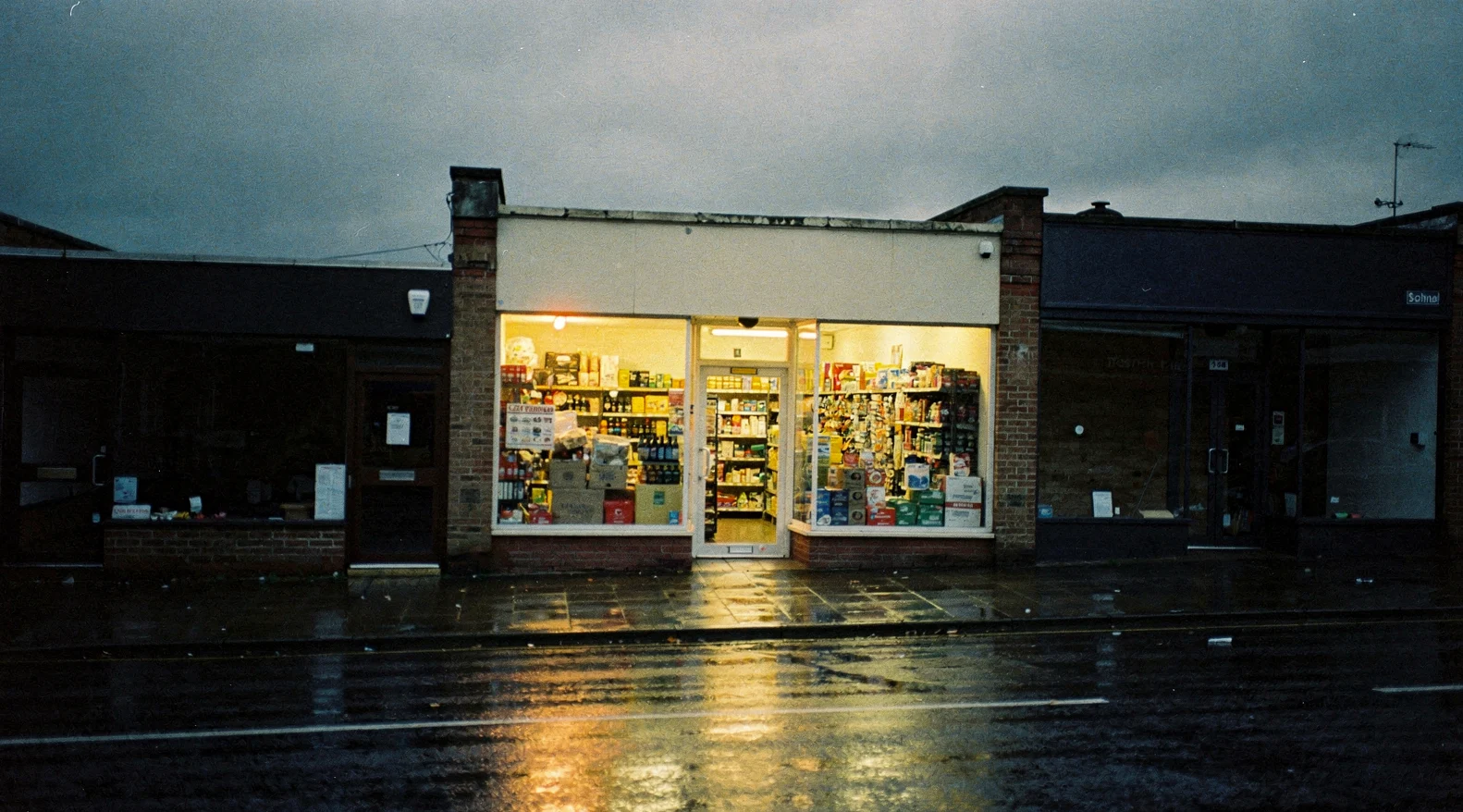
Morrisons is to close a further 36 of its Morrisons Daily convenience stores, the second round of cuts to the former McColl’s estate this year. The proposal, first reported by The Grocer on Wednesday evening and confirmed to The Sun, Talking Retail and other outlets over the following two days, puts the jobs of staff at three dozen shops at risk and leaves shoppers in an unknown number of towns and villages waiting to learn whether their local store is affected.
The supermarket group, owned by the US private equity firm Clayton, Dubilier & Rice, describes the stores as “persistently loss-making” and says it has “exhausted all viable commercial options” to return them to profit. It insists the move does not change its plan to grow in convenience, which now runs mainly through franchise partners rather than company-operated shops.
This article sets out what has been confirmed, what has not, how the new round compares with the 100 closures announced in May, and what the change means for people who rely on a Morrisons Daily for top-up shopping, parcels, cash or a Post Office counter.
What exactly has Morrisons announced?
Morrisons has proposed the closure of 36 company-owned Morrisons Daily stores. According to the company statement quoted by Talking Retail and The Sun, every store on the list is a former McColl’s shop, the convenience chain Morrisons acquired out of administration in 2022.
A Morrisons spokesman said the performance of its company-owned Daily stores “continues to improve as they benefit from the changes to range, customer service and logistics we have implemented this year”. He added: “However, a small number of these stores remain challenged and, as part of the ongoing review of the estate, we have taken the difficult decision to propose closure of 36 former McColl’s stores. These stores represent only 2% of our overall convenience estate.”
The statement continued: “Despite significant effort and investment, these locations have remained persistently loss-making in the face of challenging market conditions and increased costs, and we have exhausted all viable commercial options to return them to profitability.” The company said a consultation with affected colleagues would now start and that it would try to redeploy as many as possible into roles in its retail, manufacturing and logistics operations.
The Grocer published the first report on 18 November. The Sun ran the company’s statement on the morning of 19 November, and the Newark Advertiser reported the same day that Morrisons had declined to say whether its Southwell shop on Leeway Road was affected. On 20 November Talking Retail, Asian Trader, Retail Gazette and the Daily Express (syndicated through AOL) all carried the story, with Talking Retail describing it as a confirmed cull.
None of those reports includes a store list. Asian Trader states that “a full list of the stores facing closure and their proposed closing dates has not yet been released”, and the Express report says the locations “have not yet been disclosed”. Any list circulating on social media should be treated with caution until Morrisons or a reliable local report names a specific shop.
Which Morrisons Daily stores are closing?
At the time of writing, Morrisons has not published the locations. The company’s stated reason is that staff consultation comes first: employees at the affected shops are being told before the public, which is the usual sequence when a retailer proposes store closures.
What is known is the profile of the stores. All 36 are company-owned rather than franchised, all are former McColl’s sites, and Morrisons says all have been loss-making for a sustained period. That rules out the newer franchise stores, the fuel-forecourt Daily shops run with partners and any store that has opened under the Daily brand since 2022 without a McColl’s history.
The earlier round offers a guide to how the information is likely to emerge. When Morrisons announced around 100 closures in May, it did not publish a full list either. Instead, locations surfaced over the following weeks through local newspapers, notices in store windows and Post Office branch-change notices, and national titles later compiled partial lists from those sources.
For shoppers, the practical steps are simple. Ask staff in store, look for a closure notice near the entrance or till, check the store page on the Morrisons store finder for a changed closing date, and, if the shop hosts a Post Office counter, check the Post Office branch finder, which normally shows a temporary or permanent closure notice for the counter several weeks ahead.
How does this round compare with the 100 closures announced in May?
The new proposal is the third set of convenience cuts in under two years. According to Asian Trader, Morrisons said in 2025 that it would close 52 cafés and 17 convenience stores. On 21 May 2026 it announced plans to shut around 100 unprofitable Morrisons Daily stores, blaming rising costs and what it called “government policy choices”. Now it has added 36 more.
| Round | When announced | Convenience stores affected | Stated reason | Store list published? |
|---|---|---|---|---|
| 2025 cuts | 2025 | 17 convenience stores (plus 52 cafés) | Estate and cost review | Partly, via local reports |
| May 2026 programme | 21 May 2026 | Around 100 company-owned Daily stores | Long-term losses, “significant cost increases resulting from government policy choices” | No full list; locations emerged locally from June |
| November 2026 proposal | 18–20 November 2026 | 36 company-owned Daily stores | “Persistently loss-making”, “increased costs”, all viable options exhausted | Not yet |
The language has shifted slightly. In May, Morrisons pointed directly at government policy, saying the stores’ problems had been “exacerbated in more recent years by significant cost increases resulting from Government policy choices”, according to the Express. The November statement refers more generally to “challenging market conditions and increased costs”, and opens by stressing that the rest of the company-owned Daily estate is improving.
The May programme moved quickly. According to Asian Trader and the Express, the first stores, including branches in Woodley, Berkshire, and Stokesley, North Yorkshire, closed in July. Asian Trader reported that more than 50 Post Office counters were expected to be affected by that wider round, and the Express later published a list of Post Office branches inside Morrisons stores that were due to change.
The two rounds together bring the number of former McColl’s shops Morrisons has proposed closing in 2026 to around 136. That is a significant slice of an estate that, at the time of the 2022 rescue, numbered more than 1,100 shops.
Why is Morrisons closing former McColl’s stores?
The roots of the problem go back to the collapse of McColl’s. The chain entered administration in May 2022, and Morrisons won the contest to buy it in a reported £190 million rescue deal, taking on more than 1,100 shops and around 16,000 employees, according to Asian Trader. At the time only about 270 of those stores already traded as Morrisons Daily; the rest were converted over the following years.
A convenience shop inherited from a failed chain is not always a good site. Some McColl’s stores sat on small neighbourhood parades with limited parking, some had leases signed in a different trading era, and some competed with newer Tesco Express, Sainsbury’s Local, Co-op and discounter stores that have opened nearby since. Morrisons has invested in range and logistics, but its own statement concedes that a minority of sites have not responded.
The cost pressures behind the decision
Convenience stores are labour-intensive relative to their sales. Long opening hours, small baskets and a high share of staff costs make them sensitive to every rise in wages and employment taxes. Morrisons chief executive Rami Baitiéh has previously described an “avalanche of costs” hitting the sector, citing higher employer National Insurance contributions, increases in the minimum wage and new packaging recycling levies, as Asian Trader has reported.
The figures behind that complaint are public. Employer National Insurance rose to 15% from April 2025, with the earnings threshold cut to £5,000 a year. The National Living Wage rose to £12.71 an hour in April 2026, and the government has confirmed it will rise to £13.21 from April 2027. For a store open 15 hours a day, seven days a week, with at least two colleagues on shift, each step in the hourly rate feeds directly into the weekly wage bill.
Business rates are the other fixed cost a small shop cannot easily trim. From April 2026 the government introduced lower multipliers for retail, hospitality and leisure properties alongside a higher multiplier for the most valuable sites. The small business retail, hospitality and leisure multiplier for 2026–27 is 38.2p, against a standard small business multiplier of 43.2p, according to gov.uk figures. That helps smaller neighbourhood shops, but it does not change the rent, energy and wage costs that make some stores unprofitable regardless of rates.
The debate over whether rates, rents or footfall are to blame for empty high-street units is now before Parliament. The MPs’ inquiry into the future of high streets held an evidence session with retail groups on 17 November, and closures by large chains of small neighbourhood shops are part of the evidence it is weighing.
Is Morrisons in trouble, or just reshaping its shops?
The closures sit alongside steadily improving trading at group level. Morrisons reported its 14th consecutive quarter of like-for-like sales growth in June, and growth accelerated in the summer. The closures are a portfolio decision, not a sign that sales across the business are falling.
| Period | Like-for-like sales | Total sales | Other points | Source |
|---|---|---|---|---|
| Q2, 13 weeks to 26 April 2026 | +2.2% | £4.0bn (up 1.7%) | H1 underlying EBITDA up 5.7% to £323m; 30 franchise Daily openings in the quarter, 52 in the half | Company results via Asian Trader |
| Q3, 13 weeks to 26 July 2026 | +3.2% | £4.1bn | Hot weather and the World Cup helped; volumes and share grew ahead of the market | Company results via Reuters |
| 12 weeks to 6 September 2026 | Total till sales +2.8% | Not stated | Market share 8.4%, flat year on year | Worldpanel via Reuters |
| 12 weeks to 1 November 2026 | Total till sales +2.0% | Not stated | Market share 8.3% | Worldpanel |
One correction is worth flagging. The Sun’s report says Morrisons’ “total sales hit £41billion” in its latest results. Reuters reported total sales of £4.1 billion for the third quarter, the 13 weeks to 26 July, which is the figure in the company’s statement; the larger number appears to be a misreading.
The balance sheet behind the stores
The group’s finances remain stretched by the debt taken on in the £7 billion takeover by CD&R in 2021. Reuters reported that Market Topco Limited, Morrisons’ ultimate holding company, said in July that it made a loss before tax, including exceptional costs, of £926 million in the year to October 2025, and ended that period with net debt of £3.2 billion.
Against that backdrop, Morrisons has been pursuing a cost-saving programme. In its second-quarter update it reported a further £48 million of savings, taking the cumulative total to £942 million against a £1 billion target, according to Asian Trader. The company has also tested and dropped some technology bets: earlier this month it ended its trial of AI smart trolleys at its Preston store after Instacart wound down the product globally. Closing loss-making shops fits the same pattern of cutting what does not pay its way.
How does Morrisons compare with other UK supermarkets?
Morrisons has slipped out of the traditional “big four” and now trails Lidl on market share. The latest Worldpanel by Numerator figures, covering the 12 weeks to 1 November 2026, put Morrisons on 8.3%, behind Lidl at 8.6%, with sales up 2.0% year on year. Our coverage of the latest grocery market share figures sets out the full table and the effect of the government’s Be Ready campaign on essentials buying.
| Grocer | Market share, 12 weeks to 1 Nov 2026 | Sales change year on year | Convenience format |
|---|---|---|---|
| Tesco | 27.8% | +1.2% | Tesco Express, plus One Stop franchise and company stores |
| Sainsbury’s | 15.5% | +0.8% | Sainsbury’s Local |
| Asda | 11.3% | −0.5% | Asda Express, largely forecourt sites |
| Aldi | 10.4% | +0.4% | Mostly full-size discount stores |
| Lidl | 8.6% | +6.6% | Mostly full-size discount stores |
| Morrisons | 8.3% | +2.0% | Morrisons Daily, company-owned and franchised |
| Co-op | 5.3% | +0.7% | Convenience-led estate |
| Waitrose | 4.5% | +2.2% | Little Waitrose |
The table shows why convenience matters to Morrisons. Its larger supermarkets compete with discounters that are taking share, while the convenience channel gives it a presence in neighbourhoods where it has no big store. That makes the franchise model, rather than company-run shops, the route it is now backing.
Morrisons is not alone in trimming small shops. TG Jones, the former WH Smith high-street chain now owned by Modella Capital, has been closing stores and Post Office counters through 2026, and its owner put the business up for sale this week. The Co-op, meanwhile, was told by the Competition and Markets Authority to sell 15 convenience stores to clear its Southern Co-op deal, a reminder that a small shop that cannot make money for one owner can still be worth something to another operator.
Why is Morrisons opening franchise stores while closing its own?
The two moves are part of the same strategy. A company-owned store carries Morrisons’ wage bill, lease and running costs. A franchise store is run by an independent retailer who buys stock through Morrisons Wholesale and trades under the Daily fascia, so Morrisons earns a wholesale margin without carrying the store’s overheads.
The numbers show the scale of the shift. Morrisons has around 1,700 convenience stores, of which about 700 are franchise sites, according to the Birmingham Mail in August 2026. The company opened more than 120 franchise stores in 2025, according to Asian Trader, and 71 in the first nine months of its current financial year. Its statement this week says “new, modern Morrisons Daily franchise stores are opening every week nationwide” and that it sees potential to add “hundreds more”.
| Measure | Figure | Basis |
|---|---|---|
| Total Morrisons convenience stores | About 1,700 | Company figure reported by Asian Trader and the Birmingham Mail |
| Franchise sites | About 700 | Birmingham Mail, August 2026 |
| Company-owned sites (implied) | About 1,000 | shopappy calculation: 1,700 less 700 |
| Proposed closures as share of all convenience stores | About 2.1% | 36 of 1,700; Morrisons says “2%” |
| Proposed closures as share of company-owned stores | About 3.6% | shopappy calculation: 36 of about 1,000 |
| Franchise openings, first nine months of financial year | 71 | Asian Trader |
Put simply, the franchise openings this year already outnumber the 36 proposed closures, but they are not replacing the same shops. A franchise Daily opens where an independent retailer chooses to invest, which may be miles from the closing McColl’s site. The headline store count can stay flat or rise while a particular village loses its shop.
Morrisons has not said whether any of the 36 sites will be offered to franchisees or other operators. When a large chain exits a convenience lease, the landlord will often seek a new grocery tenant, and independent retailers or symbol-group operators sometimes take over former chain sites. That is a possibility, not a commitment, and shoppers should not assume a closing shop will reopen under a new name.
What happens to Post Office counters in closing stores?
This is likely to be the biggest practical worry in many communities. McColl’s was one of the largest hosts of Post Office branches in the UK, and many of those counters moved into Morrisons Daily stores. Asian Trader reported that more than 50 counters were expected to be affected by the May round. Morrisons has not said how many of the 36 newly proposed closures host a Post Office.
When a host retailer closes, the Post Office normally looks for a new operator in the area. Until one is found, it may run an outreach service, such as a part-time counter in a village hall or a mobile van, or direct customers to the nearest branch. The government’s access criteria require that 99% of the UK population lives within three miles of a Post Office and 90% within one mile, which gives the Post Office an incentive to replace lost branches, but replacements can take months.
The same squeeze has hit other host chains. Our report on TG Jones closing 70 Post Office counters found that only a small number had been reopened elsewhere, with some towns losing two branches. If your local counter is inside a former McColl’s, it is worth checking now whether the Post Office has published a change notice.
Cash, parcels and bill payments
Former McColl’s stores often provide more than groceries. Many host a cash machine, a PayPoint terminal for bill payments and energy top-ups, a parcel collection point for carriers such as Evri or InPost, and the National Lottery. When a store closes, each of those services disappears with it, and the replacements are run by separate companies on separate timetables.
For people who still rely on cash, the Link network, which oversees free-to-use cash access, can be asked to assess whether a community needs a new cash machine or a banking hub after a closure. Residents or local councillors can request a review through Link’s website. Parcel carriers usually redirect pending deliveries to the next nearest collection point automatically, but it is worth checking any orders due around the closing date.
What should Morrisons Daily shoppers do now?
Most customers will not be affected: 36 stores out of about 1,700 is a small minority. For those who are, the closure of a neighbourhood shop is still disruptive, especially for older shoppers, people without a car and households who use the store for daily essentials. The table below sets out the main questions and what is known.
| If you use the store for… | What happens | What to do |
|---|---|---|
| Top-up grocery shopping | Stops on the closing date, not yet announced | Check the nearest other Morrisons Daily, supermarket or independent shop; ask staff for the date |
| More Card points and vouchers | Points sit on your account, not with the store | Keep using the card or app at other Morrisons stores; check the app for participating Daily stores |
| Rapid delivery | Morrisons Daily works with Snappy Shopper at about 100 stores, with 100 more due in 2027 | Check whether another nearby store delivers through the app; Morrisons.com home delivery remains an option |
| Post Office counter | Counter closes with the store unless moved | Check the Post Office branch finder for change notices and outreach services |
| Cash machine or PayPoint | Removed with the store | Ask Link for a cash access review; use PayPoint finder for bill payments |
| Parcel collection | Carrier drop point closes | Check pending orders; carriers usually redirect to the next point |
| Faulty goods bought in store | Your rights stay with Morrisons, not the shop | Return to another Morrisons store with proof of purchase under the Consumer Rights Act 2015 |
Your consumer rights when a shop closes
A store closure does not cancel your rights on goods already bought. Under the Consumer Rights Act 2015, goods must be of satisfactory quality, fit for purpose and as described, and you have 30 days to reject faulty items for a full refund. Because the shops are company-owned, your contract is with Morrisons as a business, so you can return a faulty item to another Morrisons store with a receipt or bank statement.
Shoppers who prefer to order online have alternatives. Morrisons runs its own home delivery service and operates its Morrisons Now rapid delivery, which the company reported was growing at a double-digit rate in its second quarter. Those services depend on postcode coverage, which tends to be thinner in rural areas, the places where a neighbourhood shop matters most.
What happens to the staff?
Morrisons has not said how many jobs are at risk. Talking Retail, The Sun and Asian Trader all report that consultation has started and that the company will try to redeploy staff into its supermarkets, its manufacturing sites and its logistics network. The company has not said whether redundancy pay will exceed the statutory minimum.
Under UK employment law, where an employer proposes 20 or more redundancies at one establishment within 90 days, it must consult collectively and notify the government; the minimum consultation period is 30 days, rising to 45 days where 100 or more redundancies are proposed. Whether those thresholds apply depends on how the stores are grouped, because each small shop may employ fewer than 20 people. Individual consultation applies in every case.
Redeployment works best where a closing shop sits near a Morrisons supermarket or depot. A colleague in a suburban parade a mile from a large store may be offered hours there; a colleague in a village with no other Morrisons site within reach may not have a practical alternative. Morrisons has not said how many staff it expects to redeploy, and the outcome of the May round, in terms of jobs retained, has not been published.
The redundancies also come against the wider rise in retail job losses this year. Morrisons itself put around 200 roles at risk at its Bradford head office in April, according to Asian Trader, and the British Retail Consortium has repeatedly warned that higher employment costs would lead to fewer entry-level jobs in shops.
What comes next for Morrisons Daily?
Several things are worth watching over the coming weeks. The first is the store list: locations should emerge as consultation progresses, probably through local reports first. The second is the closing timetable; in May, Morrisons said closures would take place “over the next few months”, and the first shops shut roughly seven weeks after the announcement.
The third is the Post Office response. Each closing counter that is not quickly replaced adds to pressure from MPs and campaigners already concerned about the loss of branches in TG Jones and other hosts. The fourth is Morrisons’ next trading statement, covering the fourth quarter of its financial year, which ended in late October, where the company may update on convenience performance and franchise openings.
The direction of travel across the market is clear. Large grocers are shifting risk in convenience on to franchise partners and symbol-group retailers, while keeping the brand and the wholesale supply. That can keep shops open in places where a company-run store would lose money, but it also means the decision to open or close a neighbourhood shop increasingly rests with an independent operator weighing local costs.
For shoppers, the result is a more fluid map of local stores. The brand above the door may stay the same while the owner changes, and a closure in one street may be matched by an opening on a forecourt a few miles away. For the communities losing a former McColl’s this winter, the question is not the national store count but whether anyone steps in to fill the gap.
Frequently asked questions
How many Morrisons Daily stores are closing?
Morrisons has proposed closing 36 more company-owned Morrisons Daily stores. This is in addition to the programme of around 100 closures announced on 21 May 2026, which began with stores in Woodley and Stokesley in July.
Is there a list of the 36 Morrisons Daily stores closing?
Not yet. Morrisons has not published the locations or closing dates because consultation with affected staff has only just started. Local newspapers and in-store notices are likely to be the first sources of confirmed locations.
Why is Morrisons closing these stores?
The company says the 36 shops, all former McColl’s stores, have been persistently loss-making despite investment, in the face of challenging market conditions and increased costs. It says it has exhausted all viable options to make them profitable.
Are franchise Morrisons Daily stores affected?
No. The proposal covers company-owned stores only. Morrisons says new franchise Daily stores are opening every week and it plans to add hundreds more, having opened 71 in the first nine months of its financial year.
Will my Post Office counter close too?
If the counter is inside a closing store, it will close with the store unless the Post Office finds a new host. The Post Office usually looks for a replacement operator and may run an outreach service in the meantime. Check the Post Office branch finder for change notices.
Can I still use my More Card?
Yes. More Card points are held on your account rather than at a particular shop, so you can keep collecting and spending them at other Morrisons stores and online, subject to the scheme’s normal terms.
Can I return something I bought at a store that has closed?
Yes. The stores are run by Morrisons, so your rights under the Consumer Rights Act 2015 are against the company. You can return faulty goods to another Morrisons store with proof of purchase, such as a receipt or bank statement.
How many jobs are at risk?
Morrisons has not given a figure. It says consultation has started and that it will try to redeploy as many colleagues as possible into its retail, manufacturing and logistics operations.
Is Morrisons in financial trouble?
Group sales are growing: like-for-like sales rose 3.2% in the 13 weeks to 26 July 2026, its latest reported quarter. However, the group carries heavy debt from its 2021 private equity takeover, with net debt of £3.2 billion at its holding company in the year to October 2025, and is cutting costs and loss-making sites.