
Ocado Group has confirmed for the first time that it is actively engaged in succession planning for its founder and chief executive Tim Steiner, an acknowledgement that hardens months of speculation into an official process. The statement, issued after a Sky News report by Mark Kleinman, lands as the online grocery technology company’s shares sit roughly 91% below their pandemic-era peak. For a business that was briefly worth more than Tesco, the gap between the 2020 promise and the 2026 reality has become impossible for the board to manage quietly.
The development matters far beyond one boardroom. Ocado is not just a British online grocer. It is a technology and logistics vendor that has sold its automated warehouse system to some of the largest supermarket chains in the world, and a barometer for whether grocery automation can ever pay for itself. A change at the top would mark the first leadership transition in 25 years, and it arrives at the most fragile moment in the company’s listed history.
Update, July 2026: Heuveldop emerges as frontrunner to replace Steiner
As of mid-July 2026, Vonage chief executive Niklas Heuveldop has emerged as the frontrunner to succeed Tim Steiner as Ocado Group chief executive, according to reporting first surfaced by Sky News. The formal search is being led by chairman Adam Warby. No appointment has been confirmed, and some reports suggest the handover could run toward 2028. Ocado is targeting positive cash flow in the second half of 2026, and the board wants a leader focused on commercial discipline over capital-heavy expansion.
Update: investors move to oust chair Warby and back Steiner
The succession fight has since turned on the board itself. In early July 2026, investors holding around a quarter of Ocado’s shares moved to oust chairman Adam Warby, angry at the attempt to accelerate Steiner’s exit, according to the Grocery Gazette and Retail Gazette. Several top-10 shareholders wrote to the board backing Steiner and asking for a slower, collaborative handover, with one warning that Warby and other directors could face a no-confidence vote at a shareholder meeting. The revolt leaves the search Warby is running under a cloud, even as Heuveldop stays the reported frontrunner.
In short
- Ocado has confirmed succession planning for chief executive Tim Steiner, its first public acknowledgement after a Sky News report said the board had approached external candidates.
- Chairman Adam Warby is leading the search, and one name reported to have been sounded out is Niklas Heuveldop, the chief executive of Ericsson-owned cloud communications firm Vonage.
- The trigger is a brutal share-price slump: Ocado traded above GBP 29 (about USD 39) in September 2020 and closed this week near 178p, a fall of roughly 91% from the peak.
- A lost Kroger contract crystallised the pressure, with the US partner closing three warehouses that used Ocado technology and the shares dropping 17% in a single November session to a 12-year low.
- A successor would inherit unresolved questions about international growth, the path to sustained profit, and the long-running commercial relationship with joint-venture partner Marks and Spencer.
What Ocado just confirmed
Ocado said its leadership “continually engage in long-term succession planning” and “regularly engage with potential candidates”, language that stops short of announcing a departure but ends the company’s silence on the subject. According to Sky News, the board has gone further than routine planning and has approached external executives about the role. The combination of a public statement and reported outreach is what moved the story from boardroom gossip to a confirmed corporate process.
Tim Steiner co-founded Ocado in 2000 and led the company through its 2010 stock market debut at 180p. He still holds a stake of roughly 2%, a level of skin in the game that has made his position both symbolically and financially significant. Replacing a founder who has run a FTSE-listed company for a quarter of a century is rarely a clean process, and Ocado’s board appears to be preparing the ground rather than forcing an exit.
The shares slipped about 5% on the day the succession reports landed, a reaction that reads less as relief and more as uncertainty. Investors who have watched the stock fall for five years now face a fresh layer of risk: a leadership vacuum at a company still searching for a profitable identity. That backdrop of weak demand and soft sentiment has dogged a string of UK-listed retailers, a theme visible in the latest UK retail sales data for May, where headline growth masked uneven performance beneath the surface.
Why the share-price collapse is forcing the board’s hand
No single event explains the pressure on Steiner. It is the cumulative weight of a multi-year derating, a lost flagship contract, and a strategy that promised global scale but has so far delivered persistent losses. Each leg of that story has chipped away at the patience of the shareholder base.
From pandemic darling to penny-stock pressure
In September 2020, Ocado traded above GBP 29 a share. At that level the company carried a market value of more than GBP 20 billion (about USD 27 billion at current rates of roughly USD 1.35 per pound), enough to briefly make it more valuable than Tesco, a chain with thousands of stores and many times the revenue. The bull case was simple: Ocado would become the default automation layer for grocers worldwide, a kind of operating system for online food retail.
This week the shares closed near 178p. On that price the company is worth in the region of GBP 1.5 billion (about USD 2 billion), a small fraction of the peak. A roughly 91% decline from a high is the kind of move that ends careers, regardless of how compelling the original thesis looked. The market has effectively repriced Ocado from a high-growth technology platform to a capital-intensive business with an uncertain payback.
The Kroger blow
The single most damaging event was the decision by Kroger, Ocado’s marquee US partner, to close three of the automated warehouses built on Ocado’s technology. The news, which broke in November, sent Ocado shares down about 17% in one session to around 179p, a 12-year low at the time. For a company whose valuation rested on the credibility of its international licensing model, losing capacity at its most important overseas customer was a strategic and symbolic blow.
Kroger’s own caution has been visible in its public guidance, with the US grocer leaning on price investment to defend volume rather than chasing aggressive expansion, as covered in our analysis of how Kroger held its 2026 outlook while price cuts squeezed grocery margins. A partner focused on protecting its own margins is a partner less likely to keep funding expensive new automated sites, and that calculus sits at the heart of Ocado’s growth problem.
The 12-month picture
Even setting aside the 2020 peak, the recent trend is poor. The stock is down about 20% over the past year, according to market data cited in coverage of the succession reports. In February the company warned of “significant” job cuts and said it was seeking new partners, a signal that management itself saw the existing pipeline as insufficient. A profit warning, a restructuring, and a leadership question in the same six-month span is a difficult combination for any board to defend.
| Moment | Approx. share price | What it signalled |
|---|---|---|
| 2010 IPO | 180p | Online grocer goes public |
| September 2020 peak | Above 2,900p | Valued above Tesco at the height of the platform thesis |
| November 2026 (Kroger news) | Around 179p | 12-year low after US warehouse closures |
| February 2026 warning | Fell about 10% | Job cuts flagged, search for new partners |
| This week | Around 178p | Succession confirmed, shares off about 5% on the day |
Who is in the frame to replace Steiner
Naming a successor to a founder is delicate, and Ocado has been careful not to confirm any individual. Reporting has nonetheless surfaced both a likely candidate and the executive running the process, which gives a sense of the direction the board may be taking.
The Vonage connection
According to reports, one executive approached about the role is Niklas Heuveldop, chief executive of Vonage, the cloud communications business owned by Ericsson. The choice would be notable. Heuveldop’s background sits in enterprise technology and communications rather than grocery retail, which would reinforce the idea that Ocado increasingly sees itself as a software and automation vendor first and a grocer second.
Ocado has not commented on any specific name or on a timetable, so the Heuveldop link should be read as reported interest rather than a confirmed appointment. Boards routinely sound out multiple candidates before settling on one, and external outreach does not guarantee a hire. Still, the profile of the executives reportedly in the conversation hints at the kind of leader the board may want: someone fluent in selling technology platforms to large enterprise customers.
The chairman running the process
The search is being led by chairman Adam Warby, who previously ran the executive search firm Heidrick and Struggles. A chairman with a headhunting background is unusually well placed to manage a high-profile CEO transition, and his involvement signals that the board is treating this as a structured search rather than an emergency. Warby’s experience also means the process is likely to be deliberate, with the board weighing internal continuity against the case for an outsider who can reset strategy.
How Ocado actually makes money
To understand why the leadership question carries such weight, it helps to separate Ocado’s two very different businesses. The market has spent years debating which one defines the company, and a new chief executive would have to pick a lane.
Ocado Retail and the Marks and Spencer marriage
Ocado Retail is the UK online supermarket most consumers recognise. It operates as a joint venture in which Marks and Spencer holds a 50% stake, a position M and S acquired in 2019 in a deal worth up to GBP 750 million (about USD 1 billion at current rates). That partnership replaced Ocado’s previous sourcing arrangement with Waitrose and tied the grocery offer to the M and S food range.
The relationship has not been smooth. The two companies have been locked in a long-running commercial dispute, including disagreement over a final payment tied to the original deal’s performance targets. For a new chief executive, stabilising or renegotiating the M and S relationship would be one of the first and most sensitive tasks, because Ocado Retail is the cash-generating shop window for the whole group.
The technology arm and the platform bet
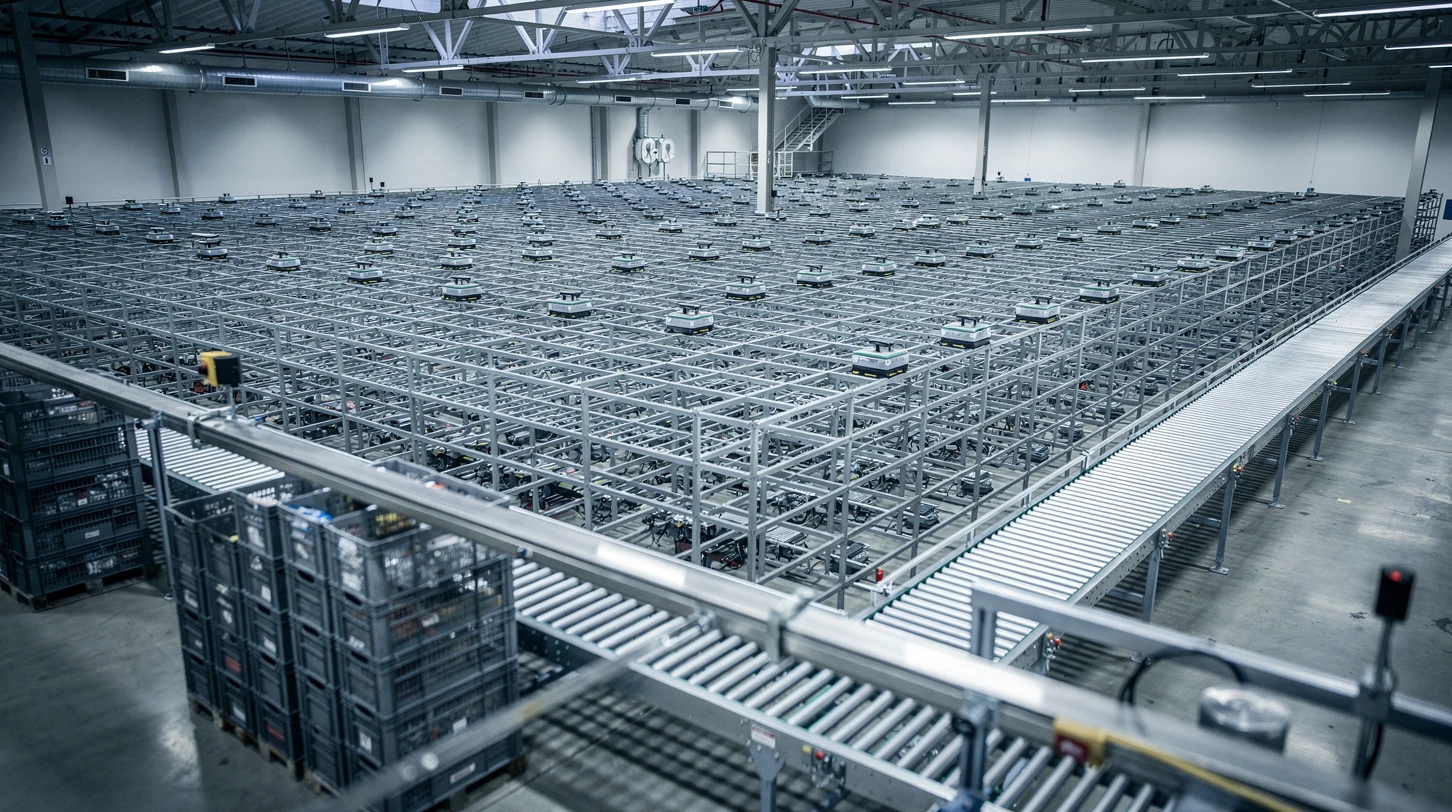
The other Ocado is a technology company. It licenses the Ocado Smart Platform, a system that combines robotic grid warehouses, software, and logistics, to grocers that want to run online operations without building the infrastructure themselves. This is the business that justified the GBP 20 billion valuation, on the theory that recurring fees from global supermarket chains would compound for years.
The economics are demanding. Each automated customer fulfilment centre requires heavy upfront capital, and returns depend on partners committing enough order volume to fill them. That dynamic is part of a broader capital-spending cycle across the sector, a trend we examined in our look at why a US retail automation capex wave is likely before holiday 2026. The promise is efficiency at scale; the risk is stranded capacity when a partner pulls back, exactly what the Kroger closures exposed.
The international licensing model under strain
Ocado’s growth story was always global. Over the past decade the company has signed automation deals with a roster of large international grocers, positioning the Smart Platform as the infrastructure layer for online food retail across several continents. The breadth of that partner list is real, but the pace at which sites get built and filled has become the central question.
Steiner himself acknowledged the strain in North America, reportedly conceding that accepting some US contracts had been “naive” while arguing that partners must commit volume to the sites they order. That candor underlines the core tension in the model: Ocado can build the technology, but it cannot control whether a partner’s online grocery business grows fast enough to justify the warehouses. When demand disappoints, the automation that looked like an asset becomes a fixed cost.
| Ocado business line | What it is | Key relationship | Main risk |
|---|---|---|---|
| Ocado Retail | UK online supermarket | 50/50 joint venture with Marks and Spencer | Commercial dispute, thin grocery margins |
| Technology Solutions | Licensing the Ocado Smart Platform to grocers | International partners including Kroger | Partners cutting capacity or order volume |
| Logistics | Robotics, software and fulfilment systems | In-house and partner-operated warehouses | High capital cost, long payback periods |
What a new chief executive would inherit
Whoever succeeds Steiner would take on a company in the middle of a strategic reset rather than a steady state. The to-do list is unusually concrete, and each item carries financial and reputational stakes.
The first priority is a credible route to sustained profit. Ocado has spent years promising that scale would convert revenue into cash, and investors have run out of patience with the timeline. A new leader would need to either accelerate that path or reframe expectations around a smaller, more disciplined business. The contrast with peers that have already turned the corner is stark, as shown by the way AO World lifted profit toward GBP 50 million as the online electricals retailer scaled up, demonstrating that UK online specialists can reach profitability when the model is tuned.
The second priority is the partner pipeline. With Kroger trimming capacity and the company openly seeking new partners, a successor would have to prove the Smart Platform can still win and retain large customers. The third is the M and S relationship, where a settlement or reset would remove a persistent overhang. None of these is quick, and all of them would define the early tenure of any new chief executive.
The cost question
February’s warning of “significant” job cuts suggests the next phase will involve tighter spending. A founder who built the company through expansion may find it harder to lead a contraction than an outsider hired specifically to impose discipline. That is one reason boards often turn to external candidates during a strategic pivot, and it may explain the reported interest in executives from outside grocery.
How investors and analysts are reading it
The market reaction has been cautious rather than celebratory. A 5% fall on the succession news indicates that investors do not yet see a clear upgrade in leadership, only the removal of certainty about who is in charge. For a stock already down sharply over the year, fresh ambiguity is not welcome.
The bull interpretation is that a new chief executive, unencumbered by the founder’s original vision, could make harder choices faster: rationalise the international footprint, settle the M and S dispute, and run the business for cash. The bear interpretation is that the underlying economics of grocery automation remain unproven at scale, and that changing the person at the top does not change the math. Both readings will be tested over the coming months as the search progresses and any successor sets out a plan.
Where Ocado sits among online grocery models
Ocado is unusual because it tries to be both a retailer and the vendor that other retailers buy from. Most companies in online grocery pick one model. Some run their own delivery operations using a network of stores as fulfilment points. Others operate centralised automated warehouses. A third group acts as a marketplace or a platform that connects shoppers, stores and couriers without owning much physical infrastructure.
Each approach has a different cost profile and a different scaling logic. Store-based picking is cheaper to launch but harder to make efficient at high volume. Centralised automation, Ocado’s chosen path, is expensive upfront but designed to lower the cost per order once a warehouse runs near capacity. Platform models avoid heavy capital but depend on partner economics and can struggle to differentiate. Ocado’s bet was that automation would win on unit cost, and that bet still hinges on volume that has been slow to materialise at some sites.
| Model | Example approach | Capital intensity | Main advantage |
|---|---|---|---|
| Centralised automation | Robotic grid warehouses serving a wide area | High | Low cost per order at scale |
| Store-based picking | Orders fulfilled from existing supermarket shelves | Low | Fast to launch, uses existing estate |
| Platform and marketplace | Connecting shoppers, retailers and couriers | Low | Asset-light, quick geographic spread |
| Hybrid retail and technology | Operating a grocer while licensing the platform | High | Recurring fees plus a retail shop window |
Ocado occupies the bottom row, the hardest position to value because it blends a low-margin grocery business with a capital-heavy technology business. That blend is precisely what has confused the market for years. When sentiment was positive, investors valued the technology arm like software. When sentiment turned, they valued the whole company like a struggling retailer with a large fixed-cost base. A new chief executive may have to choose which story to tell, because trying to be both has not held the share price together.
Steiner’s legacy
Whatever happens next, Steiner’s record is consequential. He took an online grocer public, convinced some of the world’s largest supermarket chains to license British-built warehouse robotics, and at one point led a company the market valued above Tesco. That is a rare arc for a founder. The difficulty is that the same vision that drove the expansion has become the source of the strain, because the capital committed to global automation now has to prove its worth in a far less forgiving market. A successor inherits both the platform Steiner built and the expectations he set.
What it means for the wider grocery-tech sector
Ocado has long been treated as a bellwether for the idea that software and robotics can transform low-margin grocery into a high-margin technology business. Its struggles therefore carry weight for the entire category, from automation vendors to delivery platforms.
The most direct read-across is to other companies trying to convince investors they are infrastructure rather than commodity operators. That debate is playing out vividly in the US, where the market is reassessing how to value grocery-tech platforms, a shift we explored in our piece on why Instacart’s re-rating as grocery-tech infrastructure is likely before year-end. If even Ocado, the most committed pure-play on grocery automation, cannot sustain a premium valuation, peers face a higher bar to justify theirs.
There is also a sober lesson on capital intensity. Automated fulfilment is genuinely efficient once volume fills the system, but the upfront cost and the dependence on partner demand make the payback fragile. The Ocado experience suggests that the winners in grocery technology may be those who can match capacity to demand conservatively, rather than building ahead of orders and hoping the volume arrives.
Could a low valuation invite a bid?
A company that has fallen roughly 91% from its peak inevitably attracts questions about whether it is now cheap enough to be acquired. Ocado owns genuinely valuable intellectual property in warehouse robotics and software, assets that a larger logistics group, a private equity buyer or a technology company could view as undervalued. Leadership uncertainty can sharpen that interest, because a transition is often when boards are most open to approaches.
There are counterweights, however. The capital tied up in automated sites, the unresolved Marks and Spencer relationship, and the dependence on partner volume all complicate any takeover math. No approach has been confirmed, and the takeover angle remains speculation rather than reported fact. It is included here because it is the natural market question when a former high-flyer trades at a deep discount, not because any deal is in prospect.
What happens next
For now, Ocado has confirmed a process, not an outcome. Tim Steiner remains chief executive, and the company has declined to put a date on any transition. The realistic expectation is a measured search led by the chairman, with internal and external candidates assessed against the strategic challenges the company faces.
Three milestones are worth watching. The first is any formal confirmation of a candidate or a timetable, which would crystallise the transition. The second is the company’s next set of results and whether management updates guidance on profitability and partner pipeline. The third is the state of the M and S relationship, where any movement would signal how a new era might begin. Until then, the share price will likely stay volatile, caught between hope that fresh leadership resets the story and fear that the fundamentals have not changed.
Frequently asked questions
Has Ocado confirmed that Tim Steiner is leaving?
No. Ocado has confirmed it is engaged in long-term succession planning and that it regularly engages with potential candidates, but it has not announced a departure date for Steiner or named a successor. Reports indicate the board has approached external executives, yet the company has stopped short of confirming any specific individual or timetable.
Who is leading the search for a new chief executive?
Chairman Adam Warby is leading the process. Warby previously ran the executive search firm Heidrick and Struggles, which gives him direct experience managing senior leadership transitions. His involvement signals a structured search rather than an emergency replacement.
Who has reportedly been approached about the role?
According to reports, Niklas Heuveldop, chief executive of Ericsson-owned cloud communications company Vonage, has been sounded out. Ocado has not confirmed this, and outreach to a candidate does not guarantee an appointment. The reported interest in an enterprise technology executive hints at how the board views Ocado’s identity.
Why has Ocado’s share price fallen so much?
The shares traded above GBP 29 in September 2020 and now sit near 178p, a fall of roughly 91% from the peak. The decline reflects investor doubts about the path to profit, the high capital cost of its automation model, and damaging news such as Kroger closing three warehouses that used Ocado technology.
What was the Kroger problem?
Kroger, Ocado’s most important US partner, decided to close three automated warehouses built on Ocado’s platform. The news, which broke in November, sent Ocado shares down about 17% in a single session to a 12-year low. It undermined the credibility of Ocado’s international licensing model at its largest overseas customer.
How does Ocado make money?
Ocado has two main arms. Ocado Retail is a UK online supermarket run as a 50/50 joint venture with Marks and Spencer. The technology business licenses the Ocado Smart Platform, combining robotic warehouses, software and logistics, to grocers worldwide. The technology arm is the one that drove its peak valuation.
What is the dispute with Marks and Spencer?
Marks and Spencer bought 50% of Ocado Retail in 2019 in a deal worth up to GBP 750 million. The two companies have since been in a long-running commercial disagreement, including over a final payment linked to the original deal’s performance targets. Resolving it would be an early priority for any new chief executive.
What should investors watch next?
Three things: any formal confirmation of a candidate or transition timetable, the company’s next results and guidance on profitability and new partners, and any movement in the Marks and Spencer relationship. Each would shape how a leadership change affects the business and the share price.
Does a new chief executive change Ocado’s fundamentals?
Not on its own. A new leader could make faster strategic choices, such as rationalising international operations or settling the M and S dispute, but the core challenge is whether grocery automation can deliver sustained profit at scale. That economic question would remain regardless of who runs the company.