
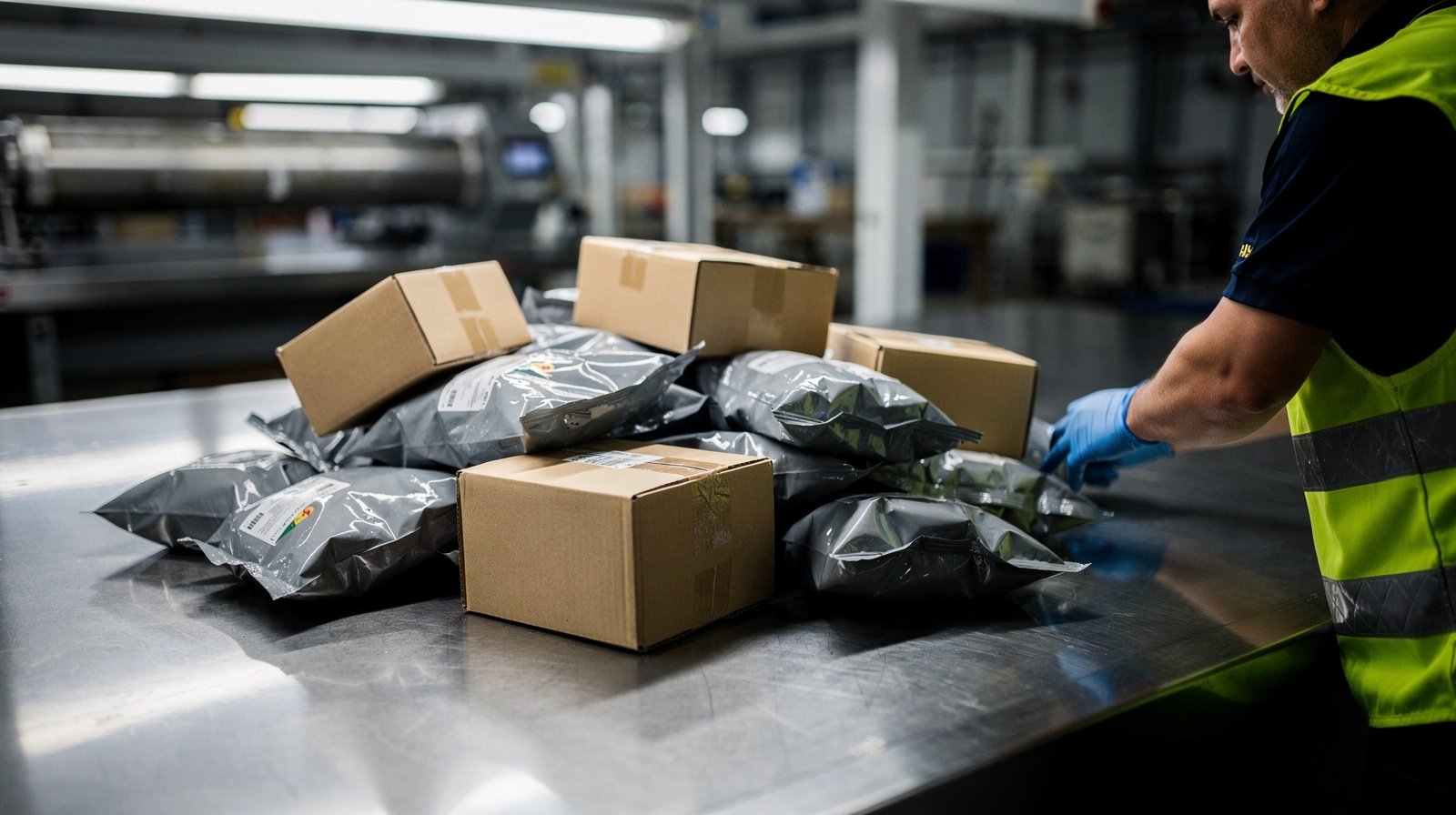
Temu and Shein have had a remarkable run. Two Chinese platforms, both barely known in the West five years ago, both now among the most downloaded shopping apps on the planet, both built on a simple promise: unbelievable prices, delivered to your door, no strings attached. For a long time that promise held. In 2026 it stops holding.
The reason is not one big event. It is several arriving at once, from different directions, and all of them pointing at the same soft spot. The cheap parcel that crossed a border and paid almost nothing on the way in.
In brief
- The United States scrapped its de minimis duty exemption in 2025, and the effect on low-value Chinese parcels was immediate.
- The European Union is now closing the same gap, removing its €150 duty-free threshold and adding a per-parcel handling fee.
- Product safety and consumer rules (the GPSR, plus Digital Services Act scrutiny) are tightening at the same time.
- Temu and Shein are not sitting still: both are shifting to local warehouses, local sellers, and a marketplace model that moves risk onto third parties.
- The pure cross-border arbitrage that powered their growth is ending. What comes next is a normal, taxed, regulated retail business, and that is a very different game.
What actually changed
For years, the single most important number in this whole story was a threshold most shoppers had never heard of. In the US it was 800 dollars. In the EU it is 150 euros. Below it, a parcel could enter without paying customs duty. It was designed decades ago for the odd holiday gift or mail-order book, back when nobody imagined twelve million small packages a day pouring in from a single country.
Temu and Shein did not invent the loophole. They just industrialised it. Ship everything direct from Chinese warehouses, keep every consignment under the threshold, and a jacket that would carry duty and paperwork if it arrived by the container-load instead slips through as a lone padded envelope. Multiply by billions.
Washington moved first. In 2025 the US ended de minimis for commercial shipments, and the change was not gentle. Parcels that used to clear customs untouched suddenly needed duty, data and a broker. Prices on the apps went up. Some products simply vanished from American baskets. Both companies scrambled to route more stock through US warehouses so the goods were already inside the border when you clicked buy.
Now Europe is walking the same road, a little slower and with more committees, but in the same direction.
Europe is late, but it is coming
Brussels has agreed to scrap the €150 customs-duty exemption and, in the meantime, to bolt a flat handling fee onto low-value parcels, in the region of two euros each. Two euros does not sound like much. On a €6 top with wafer-thin margins and free shipping baked in, it is a lot. Stack a customs charge on top of that, add the cost of actually declaring the goods properly, and the economics that made the firehose work start to leak.
There is more coming behind it. The General Product Safety Regulation now demands a responsible economic operator inside the EU for products sold to European consumers, which is awkward if your entire model is a seller in Guangzhou and no legal presence here at all. France has gone further still, pushing measures aimed squarely at ultra-fast fashion, from environmental charges to advertising limits. And under the Digital Services Act, both platforms have been poked repeatedly over illegal and unsafe products, addictive design, and how they handle the sellers on their marketplaces.
None of these on its own is fatal. Together they change the weather.
How Temu and Shein are already reacting
Give them this: they are quick. Neither company is waiting to be told twice.
The clearest move is localisation. Both are onboarding local and regional sellers, holding stock in European and American warehouses, and pushing a “local to local” story hard. If the goods are already inside the bloc, the cross-border charge does not bite the same way, delivery is faster, and returns become possible. It looks less like a Chinese export machine and more like, well, Amazon.
The second move is the marketplace pivot. Shein in particular has leaned into a model where independent third-party sellers list on the platform. That spreads the catalogue, yes, but it also spreads the liability. When a product turns out to be unsafe or a tax goes unpaid, the platform can point at the merchant. Regulators know this trick and are trying to close it by making the platform responsible anyway. That fight is only starting.
So do they actually get hurt?
Honest answer: partly, and unevenly.
The companies themselves are enormous, well funded, and clearly able to adapt. They will not disappear because a customs form got harder. What dies is the magic, the specific edge that let a product land on your doorstep for less than it costs a European shop to buy the same thing wholesale. Once Temu and Shein pay roughly what everyone else pays, in duty, in VAT, in compliance, in local logistics, they become a very large, very efficient discount retailer competing on ordinary terms. Still dangerous. No longer uncatchable.
The parcels that should worry are not theirs. It is the long tail of tiny sellers who rode the same loophole without any of the resources to adapt, and the European small businesses who have spent five years being undercut by a subsidy nobody was officially paying. For them, the shift is overdue. We dig into exactly how that under-the-counter subsidy works, and why the EU took so long to notice, in our longer piece on the DDP customs loophole and why Brussels keeps waving it through.
What people keep getting wrong
Two myths are worth killing. The first is that this is about tariffs on China in a trade-war sense. It is not, mostly. It is about a decades-old exemption being abused at a scale it was never built for, and governments finally rewriting the rule.
The second is that shoppers will revolt when prices rise. Some will. But a chunk of Temu’s appeal was never really price, it was the slot-machine feeling of the app, the games, the “grab it before it is gone” churn. That does not vanish with a two-euro fee. Which is precisely why regulation, not just economics, is doing the heavy lifting this time.
FAQ
Is de minimis really gone in Europe?
The EU has agreed to remove the €150 customs-duty exemption and, as a bridge, to apply a flat per-parcel handling fee on low-value consignments. The full customs overhaul lands in stages over the following years, but the direction is settled: the free pass on duty for cheap imports is ending.
Will Temu and Shein just leave Europe?
Almost certainly not. Europe is too big a market. The more likely path, already visible, is heavy localisation: local warehouses, local sellers, and faster delivery, with the companies absorbing thinner margins rather than walking away.
Does this make products more expensive for me?
On the cheapest imported items, yes, expect prices to drift up as duty, VAT and handling costs are properly applied. The gap between an app bargain and a high-street price narrows, which is rather the point of the reform.
Is this good or bad for local retailers?
Broadly good. Independent shops have competed for years against imports that skipped duty, often VAT, and most product-safety costs. Levelling those obligations does not hand local retail a win, but it removes a distortion that was never fair to begin with.
The tax and customs side of this is where the real story sits, and it is uglier than a simple price rise. If you want the mechanics, the numbers and the reason enforcement has been so weak, read our deep dive on how China’s DDP machine drives a lorry through EU customs. And for more of our coverage of the businesses reshaping global retail, start at the ShopAppy homepage.