
Order a dress on one of the big cross-border apps and it turns up in a grey plastic envelope, no duty to pay, no VAT collected at your door, delivery apparently free, all for a price a European shop could not match if it tried. It feels like a bargain. It is really an accounting trick, and somebody, somewhere, is not paying what they owe.
Most of the time that somebody is the state, and by extension every business and taxpayer who does play by the rules. This is the story of how the trick works, who runs it, how big it has quietly become, and why the European Union has spent years clearing its throat about it while doing remarkably little that bites.
The short version
- Roughly 4.6 billion low-value parcels entered the EU in a single recent year. Around nine in ten came from China. That is more than twelve million packages a day.
- Most travel DDP, Delivered Duty Paid, which hides the customs step from the shopper and hands control of the paperwork to the seller’s side of the chain.
- Three tricks do the damage: undervaluation, de minimis splitting, and VAT number abuse. All are hard to catch at this volume.
- European retailers pay duty, VAT and product-safety costs in full. Their imported competition frequently does not. That is not competition, it is a subsidy nobody voted for.
- The EU’s answer, scrapping the duty exemption, a small handling fee, a new customs authority for 2028, is heading the right way and arriving far too slowly.
The scale nobody in Brussels likes to say out loud
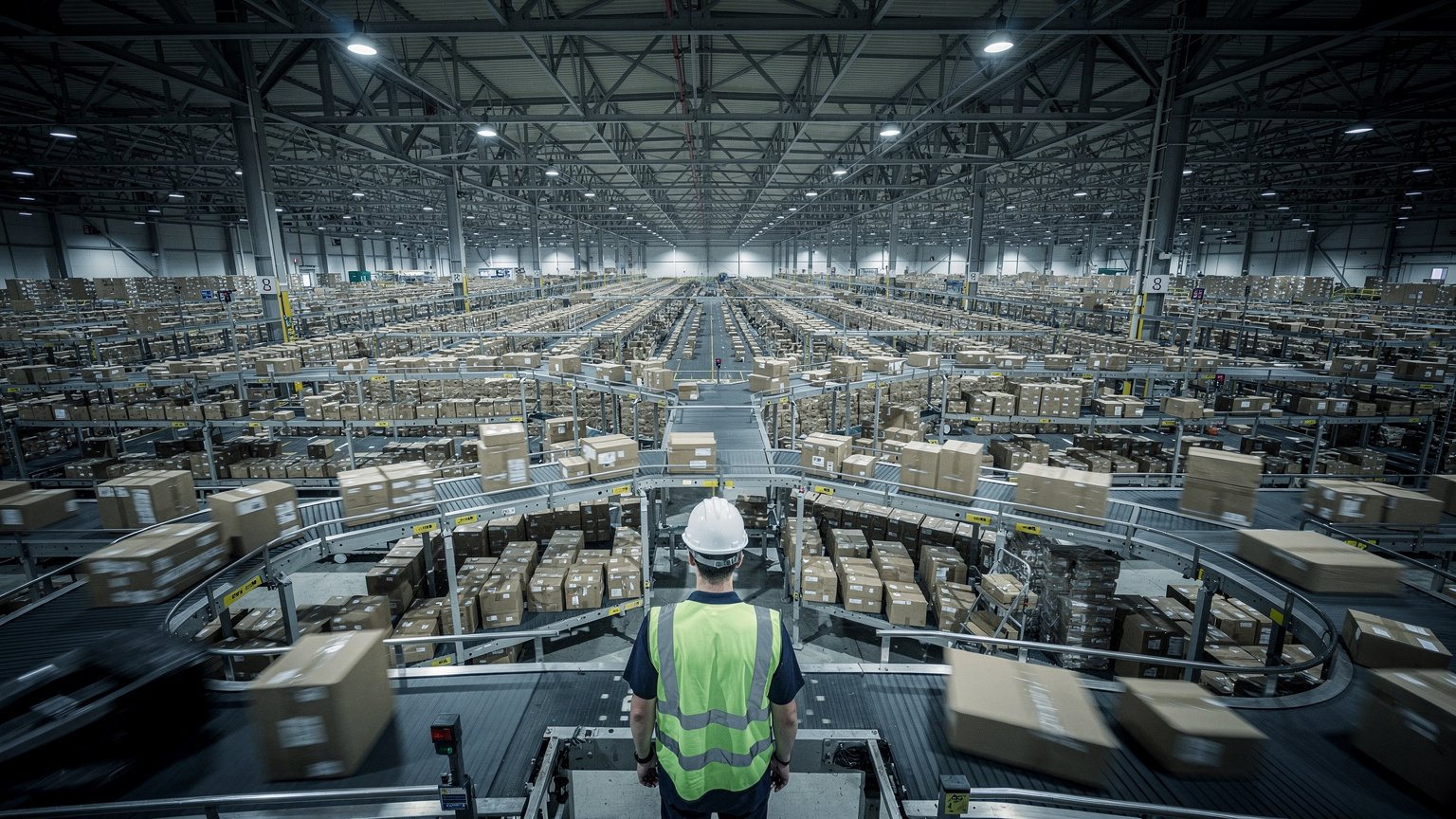
Start with the number, because the number is the whole argument. The European Commission’s own figures put low-value consignments entering the bloc at around 4.6 billion in a year, the overwhelming majority from China, and the trend line only points up. Twelve million parcels a day is not a market quirk. It is a structural feature of how Europe now shops.
Now ask the obvious question. How many of those parcels does a customs officer actually open, weigh, and check against the value written on the label? The honest answer, which no minister enjoys giving, is a rounding error. You cannot physically inspect twelve million packages a day. You cannot even meaningfully inspect one percent of them. The system was built for a trickle and is being asked to police a flood, and everyone moving goods through it knows exactly that.
When enforcement is effectively optional, the declared value on a customs form stops being a fact and becomes a negotiating position. That is the door the whole model walks through.
What DDP actually means, and why the platforms love it
DDP stands for Delivered Duty Paid. It is an Incoterm, one of the standard shorthand terms that decide who is responsible for what as goods move across a border. Under DDP, the seller takes on everything: shipping, export clearance, import clearance, duties, and any taxes due on the way in. The buyer just receives the parcel.
From a shopper’s point of view this is lovely. No surprise text message demanding twelve euros before the courier will hand over your order, no trip to a depot, no forms. You paid the price on the screen and that was that. The friction that used to make people wary of buying from abroad simply disappears.
From the platform’s point of view it is better than lovely, it is control. Because the seller’s side arranges clearance, usually through a handful of specialist logistics firms and customs brokers who consolidate millions of parcels, the whole customs conversation happens inside a system the exporter controls, in bulk, at a border post of their choosing, far from the shopper and largely out of sight of the retailer’s home tax authority. DDP does not create fraud on its own. But it puts the person with the biggest incentive to under-declare in charge of the declaration, and then buries that declaration in a pile twelve million high.
The three tricks that do the real damage
Strip away the jargon and the leakage comes down to three moves, often stacked on top of each other.
1. Undervaluation
The simplest and the biggest. A coat that retails for forty euros is declared to customs at four. Duty, where it applies, is charged on the four. Import VAT, if it is collected at all, is charged on the four. The shopper paid forty, the platform booked forty, and the customs paperwork records a fiction. At container scale a discrepancy like that gets noticed. At single-parcel scale, inside a flood, it does not.
2. De minimis splitting and abuse
The old €150 duty-free threshold was meant to spare customs the bother of chasing pennies on genuinely trivial imports. Turn it into a business rule and it becomes a design spec: keep every consignment below the line. Orders get split, bundled and re-labelled so that nothing ever crosses the threshold that would trigger duty. The exemption built for the occasional gift became the load-bearing wall of an industrial supply chain.
3. VAT and IOSS abuse
Since 2021 the EU has, in theory, required VAT on these imports through a scheme called IOSS, the Import One-Stop Shop. In theory the seller registers, collects VAT at the point of sale, and remits it. In practice investigators keep finding under-declared values feeding the VAT calculation, IOSS numbers being borrowed or misused, and consignments structured to slip the net entirely. The tool exists. The enforcement behind it does not match the scale of what it is meant to catch.
| Trick | What it dodges | Why it is hard to catch |
|---|---|---|
| Undervaluation | Customs duty and import VAT | Declared value cannot be checked at parcel volume |
| De minimis splitting | Customs duty | Each parcel looks individually legitimate |
| VAT / IOSS abuse | Import VAT | Registration data is trusted, rarely audited at source |
Why your local shop cannot win this fight
Picture two sellers of the same forty-euro coat. One is a shop on a British or European high street. The other is a listing on a cross-border app shipping DDP from Asia.
The local shop pays VAT in full, pays any duty on its own imported stock at the real value, carries the cost of product-safety testing and compliance, honours consumer returns rights, pays rent, pays local wages, and pays business rates or their local equivalent. Every one of those is a line on a spreadsheet, and every one is priced into that forty euros.
The cross-border parcel, if it is playing the game described above, sheds most of that. Under-declared value shrinks the duty and the VAT. No local presence means little to no compliance overhead. The result is not a slightly keener price. It is a structurally lower cost base, achieved by not paying things the local shop has no choice but to pay.
This is the part that gets lost in the noise about cheap Chinese goods. The issue is not that the goods are cheap. It is that a chunk of the price gap is not efficiency at all. It is unpaid tax and skipped obligation, dressed up as a bargain.
We have written before about how this squeeze plays out for the platforms now that governments are finally reacting, in our piece on why 2026 is the year the bill lands for Temu and Shein. The short version: the arbitrage is closing. The longer version is that it should never have been allowed to open this wide.
The safety problem riding in the same parcel
Money is only half of it. The same wall of unchecked parcels that hides an undervalued invoice also hides products that would never pass a European safety test. Market-surveillance authorities, the people whose job is to keep dangerous goods off the shelves, face the identical arithmetic as customs. Too many parcels, too few hands.
Investigations by consumer groups keep pulling the same rabbits out of the hat: toys with detachable small parts, electricals with dodgy chargers, cosmetics with banned ingredients, jewellery with illegal levels of heavy metals. When there is no responsible operator inside the bloc to hold accountable, a recall is close to meaningless. You can order the product off a website. You cannot un-sell the ten thousand already in people’s homes.
What the EU actually does, and why it does not bite
To be fair, and it is worth being fair, Brussels is not doing nothing. It is doing several things, slowly.
It has agreed to scrap the €150 customs-duty exemption, the single most important structural fix. It is introducing a flat handling fee on low-value parcels to help fund the customs work and take some of the shine off the economics. It has proposed a wider customs reform, including a new EU-level customs authority and a shared data hub, to drag a fragmented, member-state-by-member-state system into something that can actually see patterns across borders. On paper, it is a serious agenda.
Here is the problem. Much of it does not fully arrive until 2028, and in a channel moving twelve million parcels a day, 2028 is not a deadline, it is a lifetime. Every quarter of delay is billions more parcels through the gap. Meanwhile the day-to-day enforcement still leans on national customs services that are under-resourced, unevenly funded, and competing against a counterparty that optimises full-time for exactly their blind spots.
The uncomfortable truth is that the EU has diagnosed the disease correctly and prescribed a treatment that starts next decade. The patient is being undercut right now.
What would actually work
If the goal is a level field rather than a press release, a few things move the needle more than a two-euro fee.
- Data at source. Require full, honest transaction data from the platforms themselves, matched against the price the shopper actually paid, not the value a broker types onto a form. The platform knows the real number. Make the platform hand it over.
- Real platform liability. Hold the marketplace responsible for unpaid duty, unpaid VAT and unsafe goods sold through it, so the marketplace pivot stops being a liability laundry.
- Inspection that is random but real. You cannot check every parcel. You can make the odds of getting caught high enough, and the penalty steep enough, that systematic under-declaration stops being a rational strategy.
- Fund the customs services properly, from the handling fee if need be, so the people at the border are not permanently outgunned.
None of this is exotic. It is roughly how you would run any tax system you actually intended to collect. The reason it has not happened is not that it is hard to imagine. It is that it is politically easier to keep the cheap parcels flowing than to tell twenty-seven member states to rebuild customs, and easier still to announce a fix for 2028 and hope the headlines move on.
What this means if you sell things for a living
For retailers and brands, the practical read is straightforward. The arbitrage window is closing, unevenly and later than it should, but closing. If your pricing strategy has quietly assumed you simply cannot compete with the cross-border apps, it is worth revisiting, because the gap that beat you was partly artificial and is partly going away.
For anyone building a cross-border business the other way, into Europe, the message is blunter. The era of treating customs as an optional formality is ending. Build for a world where the value on the form has to match the price on the receipt, because that world is being legislated into existence, and the platforms that survive the transition are already preparing for it.
Common misconceptions
“It is just cheap Chinese manufacturing.” Some of it is genuinely efficient manufacturing, and that part is fair game. The problem is the slice of the price advantage that comes from unpaid duty, uncollected VAT and skipped compliance. That slice is not efficiency.
“Customs must be checking this.” At twelve million parcels a day, customs checks a vanishing fraction. Trust in the declared value is doing the work that inspection cannot.
“The €2 fee fixes it.” The fee helps fund enforcement and dents the economics a little. It does not, by itself, make anyone declare the honest value of the goods.
FAQ
What does DDP mean in plain English?
Delivered Duty Paid. The seller handles and pays for everything to get the goods to your door, including import duties and taxes, so you receive the parcel with nothing extra to pay. It is convenient for shoppers and it hands control of the customs paperwork to the seller’s side of the chain.
Is undervaluing a customs declaration illegal?
Yes. Declaring a value below the real transaction price to reduce duty or VAT is customs fraud. The difficulty is not the law, it is enforcement at a scale where checking each parcel is impossible.
How much tax is actually being lost?
Precise figures are contested, but with billions of parcels a year and systematic undervaluation, credible estimates run into the billions of euros in uncollected duty and VAT annually across the bloc. The exact number is unknown precisely because the system cannot measure what it cannot inspect.
Will removing de minimis stop the problem?
It removes the biggest structural loophole, so it helps a great deal. It does not, on its own, solve undervaluation or VAT abuse, which need better data from platforms and real enforcement to address. Removing the exemption is necessary but not sufficient.
When do the EU changes actually take effect?
In stages. The handling fee and the removal of the duty exemption are moving first, while the broader customs overhaul, including a new EU customs authority and shared data systems, is timed for later in the decade. That gap between decision and full effect is the core criticism.
What can a European retailer do right now?
Revisit any pricing assumption built around being unable to compete with cross-border apps, since part of that gap is closing. Lean into the things the parcel model cannot replicate: service, trust, returns, provenance, and being a real accountable business in your customer’s own market.
For the platform side of this story, and how Temu and Shein are scrambling to adapt as the rules tighten, read Temu and Shein: 2026 is the year the bill lands. You can follow the rest of our trade and customs coverage from the ShopAppy homepage, and the European Commission sets out its own customs reform plans on the DG Taxation and Customs Union site.