
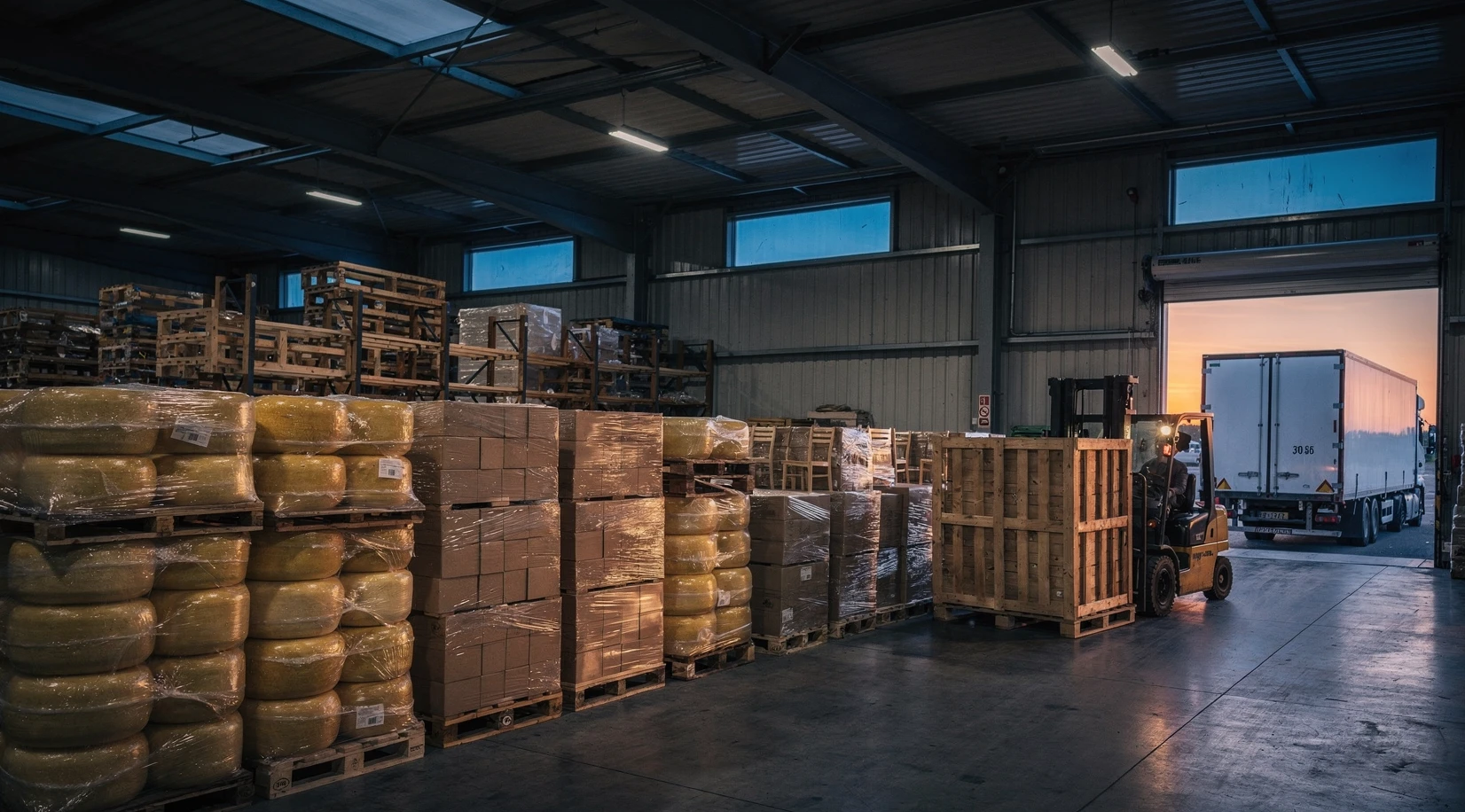
A New Jersey food importer asked the US Court of International Trade on Tuesday, October 20, 2026, to strike down the 50% tariffs President Donald Trump imposed on a wide range of Canadian goods this summer. It is the first direct court test of Section 338 of the Tariff Act of 1930, a Depression-era provision that no president had used to impose a tariff until this year. Reuters, Bloomberg, CNBC and The New York Times all reported the filing on Tuesday afternoon.
The case, Gellert Global Group Corp. v. Trump, was brought by the Liberty Justice Center, the legal nonprofit that has already challenged the administration’s tariffs under three other statutes. The complaint is filed on behalf of Gellert and a proposed class of importers. If the court agrees, the remedy sought is a declaration that the duties are unlawful, an order to stop collecting them, and refunds with interest. That is the same remedy structure that sent tens of billions of dollars back to importers after the Supreme Court ruled against most of the 2025 tariffs.
In short
- Gellert Global Group, a third-generation family food importer, filed suit on October 20, 2026 at the US Court of International Trade, seeking to void the 50% Section 338 tariffs on Canadian goods for itself and a proposed class of importers.
- The complaint argues Section 338 only allows duties that offset genuine foreign discrimination, that Congress replaced it with the Section 301 procedure in 1974, and that the administration skipped the statute’s 30-day waiting period.
- The tariffs cover roughly $20 billion of Canadian imports by USTR’s estimate, apply regardless of USMCA origin, and were widened on September 15 to cheeses, furniture, lamps, paperboard and aluminum foil.
- Gellert’s own cheeses were added on September 8 and duties were collected seven days later, the core of the procedural claim.
- Retailers and importers paying the duty should preserve entry records now: a refund, if one comes, will turn on what was paid, when, and whether entries have liquidated.
What did Gellert Global Group file, and what does it want?
Gellert Global Group describes itself as a third-generation, family-run US food business. According to the Liberty Justice Center’s announcement, it also has a Canadian division that sells American-made cheeses in Canada, which means it is hit from both sides of the border: by the 50% US duty on Canadian cheese coming in, and by Canada’s counter-tariffs on American cheese going out. One of its Canadian suppliers buys fluid milk from dairy farms in upstate New York, turns it into brie in Canada, and ships the cheese back to the United States, according to the filing as described by the group.
The complaint asks the court for a declaration that the Section 338 tariffs are unlawful, an order blocking their collection, and refunds with interest for importers who have already paid. The plaintiffs filed motions for a preliminary injunction and for summary judgment alongside the complaint, signaling that they want the court to decide the legal question quickly rather than after a long factual record is built.
The suit is filed as a proposed class action. That matters for retailers who are not parties: if a class is certified and the plaintiffs win, relief could extend to every importer of record that paid the duty, not only to Gellert. One account of the filing put Gellert’s own exposure at about $40 million a year on Canadian cheese alone; the company has not published that figure itself, so it should be read as an estimate.
The Liberty Justice Center is a nonprofit public-interest law firm. Its chief executive, Sara Albrecht, framed the case in institutional rather than partisan terms. “This case is not about the president. It is about the presidency,” she said in the group’s statement. She added that “the executive branch cannot keep moving the same policy from one statute to another and pretend the limits disappear.”
Jeffrey M. Schwab, the group’s senior counsel and director of litigation, focused on the statutory argument. “Congress already gave the executive branch a tool for responding to unfair foreign trade practices,” he said, a reference to Section 301 of the Trade Act of 1974. Thomas Gellert, the company’s co-chief executive, described the commercial impact in a single line: “These tariffs disrupt those relationships overnight.”
What is Section 338, and why has it never been used before?
Section 338 is codified at 19 U.S.C. 1338 and was enacted as part of the Tariff Act of 1930, the law better known as Smoot-Hawley. It lets the president impose additional duties of up to 50% ad valorem on imports from a country that discriminates against US commerce, or that places unreasonable restrictions on US goods that it does not apply equally to other countries. The duty is meant to offset the burden of that discrimination, which is why the White House described the Canada tariffs as “designed to offset the burden and disadvantage on U.S. commerce.”
The provision is unusually light on procedure: according to an analysis by law firm Holland & Knight published in July, it requires only a presidential finding and a proclamation. There is no mandatory investigation by the US International Trade Commission, the Office of the US Trade Representative or the Commerce Department, and no public comment period. The president can suspend, amend or revoke a proclamation at any time. Under Section 338(b), if the discrimination continues, the president can escalate from a tariff to an outright ban on imports of the products concerned.
For most of the past nine decades, administrations used other tools instead: Section 301 for unfair trade practices, Section 232 for national security, antidumping and countervailing duty law for pricing and subsidy cases, and, in 2025, the International Emergency Economic Powers Act. Section 338 sat on the books unused. Trade lawyers had long flagged two open questions about it: whether Section 301 effectively superseded it, and whether a prior ITC investigation is required before it can be invoked. The Gellert suit puts both questions in front of a court for the first time.
The administration has now used five different legal bases for tariffs in under two years. The table below sets out the main differences that matter for importers and for this lawsuit.
| Authority | Prerequisite | Rate limit | Status for Canada (October 2026) |
|---|---|---|---|
| IEEPA (1977) | Declared national emergency | None stated in statute | Supreme Court ruled against most 2025 IEEPA tariffs in February 2026; Canada’s 35% IEEPA rate fell with them |
| Section 122, Trade Act of 1974 | Balance-of-payments problem | Up to 15%, 150 days unless Congress extends | 10% global surcharge expired July 24, 2026 |
| Section 232, Trade Expansion Act of 1962 | Commerce Department national security investigation | None stated | 50% on Canadian steel, aluminum and copper remains in force |
| Section 301, Trade Act of 1974 | USTR investigation, consultation and public comment | None stated | Applies to Canada through the 10% forced-labor action, with a USMCA duty-free carve-out |
| Section 338, Tariff Act of 1930 | Presidential finding of discrimination; proclamation | Up to 50%; escalation to import ban | 50% on about $20 billion of goods since late August; challenged in court on October 20 |
The comparison explains the plaintiffs’ strategy. Section 301 and Section 232 come with investigations, records and comment periods that courts can review. Section 338 does not, and the complaint’s argument is that a president should not be able to choose the statute with the fewest constraints to reach the same outcome.
Which Canadian goods carry the 50% tariff?
President Trump signed three Section 338 proclamations on July 20, 2026, numbered 11046 (alcoholic beverages), 11047 (dairy) and 11048 (motor vehicles), according to customs guidance from Zonos and law firm summaries. They were published on July 23. Each proclamation is named after the Canadian policy it is meant to offset, not after the goods it taxes. That distinction is central to the lawsuit, because the products on each list are often unrelated to the policy in the title.
The White House fact sheet said the lists run “from wine to hockey sticks to cement.” Holland & Knight counted about 439 tariff lines under the motor vehicle proclamation, none of them in the vehicles chapter of the tariff schedule; that list spans agricultural products, textiles, wood products, cement, furniture, consumer goods and some machinery and electrical equipment. The dairy proclamation covered about 52 classifications, including certain milk and cream products, whey, lactose and casein. USTR estimated the total at nearly $20 billion of Canadian imports.
The September 15 expansion
On September 8, the president signed five further Section 338 proclamations, according to a September 15 client update from law firm Thompson Coburn. Two of them amended the original lists with effect from 12:01 a.m. Eastern on September 15. The motor vehicle list gained more dairy, paper, aluminum and iron products and furniture, while salt, toilet tissue and refined lead were removed. The alcoholic beverage list gained Swiss, cheddar, Parmesan, Roquefort and Gouda cheeses, raw hides and skins, and motorboats, while whiskies and liqueurs in containers over four liters were removed.
Zonos, summarizing the CBP bulletin that implemented the change, said 122 tariff classifications were added in total, including many cheeses, paperboard, aluminum foil, base-metal fittings, seating and furniture, and lamps. Rock salt, cement and lead came off. CBP announced the change in CSMS message 69851916, titled “Modifying Section 338 Additional Duties on Certain Goods of Canada.”
For retail buyers, the practical point is that the lists reach well beyond autos, liquor and milk. Zonos’s breakdown of the motor vehicle annex alone includes wigs, plywood, furniture, cosmetics, textiles and apparel, jewelry, toys and stationery; the alcohol annex includes hockey equipment. Coverage is determined at the eight-digit tariff code level and by country of origin, not by the country a shipment leaves from, so a Canadian-made item routed through a US distribution center is still covered.
| Proclamation (stated Canadian policy) | Examples of goods taxed at 50% | Change since July |
|---|---|---|
| Motor vehicles (Proc. 11048) | Furniture, cosmetics, apparel, toys, jewelry, plywood, stationery, some machinery | September 15: added dairy, paper, aluminum and iron products, more furniture; removed salt, toilet tissue, refined lead. September 29: motorcycles barred from import |
| Alcoholic beverages (Proc. 11046) | Wine, beer, spirits, hockey equipment | September 15: added Swiss, cheddar, Parmesan, Roquefort, Gouda, raw hides, motorboats; removed large-container whiskies and liqueurs. September 29: most beer, wine and spirits barred from import |
| Dairy (Proc. 11047) | Certain milk and cream products, whey, lactose, casein | September 29: whey, molasses and non-alcoholic beer barred from import |
Why do the plaintiffs say the tariffs are unlawful?
The complaint, as summarized by the Liberty Justice Center and by Tampa Free Press, rests on five arguments. Some are statutory, one is procedural, and one goes to the fit between the tariff and the stated justification. Any one of them, if accepted, could be enough to void at least part of the program.
- No qualifying discrimination. Section 338 applies to foreign discrimination against US commerce. The plaintiffs argue that two of the three Canadian policies cited were responses to US tariffs, not discrimination, and that the third concerns dairy rules already governed by the USMCA.
- Products unrelated to the grievance. Canadian cheese was placed on the lists tied to liquor and auto policy, even though the dairy proclamation does not cover cheese. The plaintiffs say an “offset” duty must bear some relationship to the discrimination it offsets.
- Implied repeal. Congress built a full procedure for responding to unfair foreign practices in Section 301 of the Trade Act of 1974, with investigations and public comment. The complaint argues that later statute impliedly repealed or superseded Section 338.
- The 30-day rule. Section 338 says new duties cannot take effect until 30 days after the proclamation. Gellert’s cheeses were added on September 8 and collection began seven days later.
- Separation of powers. The broader theme, stated by Albrecht, is that the Constitution gives the tariff power to Congress, and that shifting the same policy across statutes is an attempt to escape the limits each statute imposes.
The strongest and weakest points
The 30-day argument looks like the most concrete. The White House’s own July fact sheet said “the tariffs will take effect 30 days after signing,” and the original effective date of August 19 was exactly 30 days after the July 20 proclamations. The September 8 amendments, by contrast, took effect on September 15, a gap that Thompson Coburn flagged in its own client note as worth checking against the official text. If the court finds the waiting period applies to amendments as well as original proclamations, at minimum the duties collected between September 15 and October 8 on the newly added goods would be exposed.
The implied repeal argument is harder. Courts generally disfavor finding that a later law silently repealed an earlier one, and Congress has amended the tariff code many times since 1974 without touching Section 338. The discrimination argument will likely turn on how much deference the court gives a presidential finding in foreign affairs, an area where courts have historically been cautious. That is the same tension the Supreme Court resolved against the administration in the IEEPA cases, but on a different statute with different text.
How did the US and Canada get here?
The Section 338 tariffs are the latest stage of a trade conflict that began with US tariffs on Canada in early 2025. Canada responded with counter-tariffs, and most provinces pulled American alcohol from the shelves of their government-run liquor stores starting in March 2025. In February 2026, the Supreme Court ruled against most of the tariffs Trump imposed in 2025 under IEEPA, Reuters reported, which removed the legal basis for the 35% IEEPA rate on non-USMCA Canadian goods.
On July 1, 2026, the president chose not to extend the USMCA, starting a wind-down of the pact unless the three countries agree on revisions, according to Reuters. On July 20, he signed the three Section 338 proclamations. Asked on Fox News on July 28 whether he would update the agreement, he said: “I don’t care,” according to Reuters. Talks between Ottawa and Washington continued through August but collapsed on August 22, CNBC and NBC News reported, with USTR Jamieson Greer saying Canada declined to finalize a deal and Prime Minister Mark Carney blaming last-minute US changes.
The administration’s case for discrimination
The White House fact sheet gave three grounds. On autos, it said Canada “imposes certain tariffs and quotas on cars imported to Canada from the U.S.” and that Canadian imports of US motor vehicles fell about 22%, or $5.6 billion, between April 2025 and March 2026 compared with the prior year, while other countries filled the gap. On alcohol, it said all but two Canadian provinces and territories had halted purchasing, distributing or retailing US alcohol, and that Canadian imports of US alcoholic beverages fell about 81%, or $582 million, between March 2025 and February 2026.
On dairy, the fact sheet said Canada’s tariff-rate quotas on US cheese are more restrictive than those on comparable cheese from the European Union under the Canada-EU trade agreement. It concluded that “Canada has elected to discriminate against the United States rather than address Canadian trade barriers.” Those findings are the administration’s own characterization; the lawsuit disputes that any of them meets the statutory definition of discrimination.
What has Canada done in response?
Canada imposed counter-tariffs of 15%, 25% and 50% effective September 8, 2026, on more than 700 US-origin products, according to customs and trade publications summarizing the Department of Finance Canada list. The value was reported as C$27.6 billion, or about $19.9 billion at the conversion used in reporting at the time. Each product’s rate was set to match the US rate on comparable goods, and Canada’s existing counter-tariff on US steel and aluminum rose from 25% to 50%.
The Canadian list reaches into retail shelves. It includes agricultural equipment, aluminum, dairy, fish, honey and molasses, pulp and paper, steel, sunscreen and other cosmetics and skincare products. Toilet paper and paper towels from the United States face a 25% duty, according to one widely cited summary. US brands selling into Canada through Canada’s counter-tariffs and the low-value parcel rules are therefore dealing with the mirror image of what Canadian suppliers face in the US.
The September 8 US proclamations escalated further, using the import-ban power in Section 338(b). From 12:01 a.m. Eastern on September 29, most Canadian beer, wine, vermouth, brandy, bourbon, rye, rum, gin, vodka and tequila, plus whey, molasses, non-alcoholic beer and Canadian motorcycles, were excluded from US importation. The early weeks of that regime, when CBP began rejecting Canadian alcohol entries, showed how quickly a ban moves from proclamation to dock.
How do the duties stack with other tariffs?
The Section 338 duty is added on top of the product’s ordinary tariff rate and on top of any antidumping or countervailing duties, according to Zonos. It is also added to the 10% Section 301 forced-labor tariff, except for goods that enter duty-free under the USMCA. Importantly, USMCA certification does not exempt a product from Section 338; it only lowers the ordinary duty rate. That is a sharp change from the IEEPA era, when USMCA-qualifying goods were largely spared.
The treatment of Section 232 goods has shifted. Under the July proclamations, products already subject to Section 232 tariffs (steel, aluminum, copper, certain vehicles and parts, specified wood products, semiconductors and some pharmaceuticals) were excluded from Section 338. After September 15, according to Zonos’s reading of the CBP bulletin, that exclusion was narrowed to goods on the dairy list only, so goods on the alcohol and general lists now pay both. Energy, potash, fish, critical minerals and qualifying civil aircraft remain outside the program.
The program uses Chapter 99 headings 9903.03.12 through 9903.03.14 for the duties, with 9903.03.15 and 9903.03.16 for the Section 232 and civil aircraft exclusions, according to Zonos. There is no in-transit grandfather clause: the date of entry for consumption decides whether the duty applies. Goods admitted to a foreign trade zone after the effective date must be held in privileged foreign status and pay the duty when entered for consumption, Holland & Knight noted.
What would a ruling mean for importers and retailers?
The direct prize is refunds. The plaintiffs want every dollar of Section 338 duty returned with interest. Using USTR’s own estimate of about $20 billion in covered imports, a 50% duty implies an annualized collection on the order of $10 billion before any shift in buying patterns, although actual receipts will be lower because importers have cut volumes, switched suppliers and, since September 29, been barred from bringing in some products at all. CBP has not published Section 338 collections, so that figure is an upper-bound illustration, not a reported number.
Retailers have a template for how a refund might work. After the IEEPA ruling, CBP built a dedicated refund process, and the trade court has since dealt with importers whose claims fell outside it, including the certified class of IEEPA payers left out of CBP’s refund system. The lesson of that cycle is that liquidation status, protest deadlines and who was the importer of record decided who got paid quickly. A Section 338 refund, if ordered, would likely raise the same questions.
Who pays, and who might be repaid
Only the importer of record is repaid in a customs refund. A retailer that bought Canadian furniture or cheese from a domestic distributor paid the tariff indirectly, through a higher wholesale price, and would have no direct claim. Retailers that import directly, including large grocers and specialty chains, would. That split matters for pricing: if refunds flow to distributors, whether those savings reach store shelves will depend on contracts, not on the court.
| Scenario | Effect on duties | What importers should expect |
|---|---|---|
| Court grants a preliminary injunction | Collection paused, possibly only for named plaintiffs or class members | Faster relief, but the government would likely appeal to the Federal Circuit |
| Ruling on the 30-day argument only | Duties on goods added September 15 exposed for the gap period | Narrow refunds; core program survives |
| Ruling that Section 338 does not cover these findings | Program voided | Refunds with interest sought; administration could re-impose under Section 301 or 232 after an investigation |
| Government wins | Duties continue; import bans stay | Section 338 becomes a tested, fast-acting tariff tool for future disputes |
What happens next in court?
No hearing date or briefing schedule had been reported as of Tuesday evening. Because the plaintiffs filed for a preliminary injunction and summary judgment at the outset, the government will have to respond on the merits relatively early, and the court will also have to decide whether the case should proceed as a class action. The Court of International Trade has exclusive jurisdiction over challenges to tariff proclamations, and its decisions are appealable to the US Court of Appeals for the Federal Circuit and then to the Supreme Court.
The plaintiffs’ lawyers have been here before. The Liberty Justice Center has challenged tariffs under IEEPA, Section 122 and Section 301, according to its statement. The theory that the administration is “moving the same policy from one statute to another” is meant to link this case to that history. The Section 301 argument also overlaps with the separate litigation over the reach of that statute, including the brief filed by the drafters of Section 301 in another trade case this fall.
A court ruling is not the only way the duties could end. Section 338 is explicitly an offset tool, and the Holland & Knight analysis noted that resolving the underlying grievances could trigger a reduction. The president can amend or revoke the proclamations at any time. Earlier this fall, the president said a deal with Canada could come fairly soon, but no agreement had been announced by October 20 and the USMCA wind-down continues in the background.
What should retailers and importers do now?
Nothing in the filing changes what CBP collects today. The duties remain in force, the September 29 import bans remain in force, and an importer that stops paying will face penalties regardless of how the case turns out. The practical work is in record-keeping and contracts, so that a business can claim a refund quickly if one is ordered and can price accurately if one is not.
- Map exposure by tariff code. Check every Canadian-origin SKU against the eight-digit codes in the annexes, including the September 15 additions. Furniture, lamps, cheeses, cosmetics, apparel and toys are the categories most likely to surprise retail buyers.
- Keep entry-level records. Entry numbers, entry dates, Chapter 99 headings claimed, duties paid and liquidation dates are what a refund process will ask for.
- Watch liquidation and protest deadlines. In the IEEPA cycle, whether entries had liquidated decided how easily refunds came. A customs broker can track this per entry.
- Read supplier contracts. If a distributor is the importer of record, the contract decides whether any refund is passed back. Some retailers renegotiated tariff pass-back clauses after the IEEPA ruling.
- Do not assume USMCA protects you. USMCA origin does not exempt goods from Section 338, and the Section 232 exclusion has been narrowed.
The administration’s own published rationale is available in the White House fact sheet on the Canada tariffs, which sets out the trade figures the government relies on and is likely to be cited heavily in its defense.
Why this case matters beyond Canada
Section 338 is not specific to Canada. It allows duties on any country the president finds is discriminating against US commerce, with no investigation, no comment period and an escalation path to an import ban. If the trade court upholds its use here, the administration will have a tested tariff authority that can be invoked within weeks rather than months, at a time when IEEPA is no longer available and Section 122 is limited to 150 days.
If the court rules for Gellert, the effect runs the other way. The administration would be left with Section 232 and Section 301 as its main tools, both of which require investigations that build a record and take time. For retailers who have spent most of 2026 re-pricing for one tariff regime after another, a ruling that forces future tariffs through a slower, more predictable process would itself be a meaningful outcome, regardless of what it does for Canadian cheese.
Frequently asked questions
What is the Gellert Global Group lawsuit about?
Gellert Global Group, a US food importer, sued the Trump administration at the US Court of International Trade on October 20, 2026, arguing that the 50% tariffs on Canadian goods imposed under Section 338 of the Tariff Act of 1930 are unlawful. It seeks a declaration, an order stopping collection, and refunds with interest for itself and a proposed class of importers.
What is Section 338 of the Tariff Act of 1930?
Section 338 lets the president impose additional duties of up to 50% on imports from a country that discriminates against US commerce, and escalate to an import ban if the discrimination continues. It requires no prior investigation by the ITC, USTR or Commerce. It had never been used to impose a tariff before 2026.
Which Canadian products have a 50% US tariff?
The lists cover about $20 billion of Canadian imports by USTR’s estimate, including wine, cement, furniture, cosmetics, apparel, toys, hockey equipment, certain dairy products and, since September 15, cheeses such as cheddar, Swiss, Parmesan, Roquefort and Gouda, plus paperboard, aluminum foil and lamps. Energy, potash, fish and critical minerals are excluded.
Do USMCA-qualifying goods avoid the Section 338 tariffs?
No. The White House said the duties apply regardless of whether a good originates under the USMCA. USMCA certification only reduces the ordinary duty rate; the 50% Section 338 duty is still owed.
Can importers get a refund of Section 338 tariffs?
Only if the court rules the duties unlawful and orders refunds, or if the administration revokes them with retroactive relief, which is uncommon. The lawsuit seeks refunds with interest for a proposed class. Importers should keep entry records and track liquidation dates now so they can claim promptly if relief is granted.
What is the 30-day waiting period argument?
Section 338 says new duties cannot take effect until 30 days after the proclamation. The plaintiffs say Gellert’s cheeses were added to the tariff lists on September 8 and duties were collected from September 15, seven days later, so collection on those goods began too early.
Which Canadian goods are banned from import into the US?
Since September 29, 2026, most Canadian beer, wine, vermouth, brandy, bourbon, rye, rum, gin, vodka and tequila, plus whey, molasses, non-alcoholic beer and Canadian motorcycles, have been excluded from US importation under Section 338(b), according to the September 8 proclamations as summarized by trade counsel.
When will the Court of International Trade rule?
No schedule had been reported as of October 20. The plaintiffs filed motions for a preliminary injunction and summary judgment alongside the complaint, which asks the court to decide the legal questions early. Any ruling can be appealed to the Federal Circuit and then the Supreme Court.