
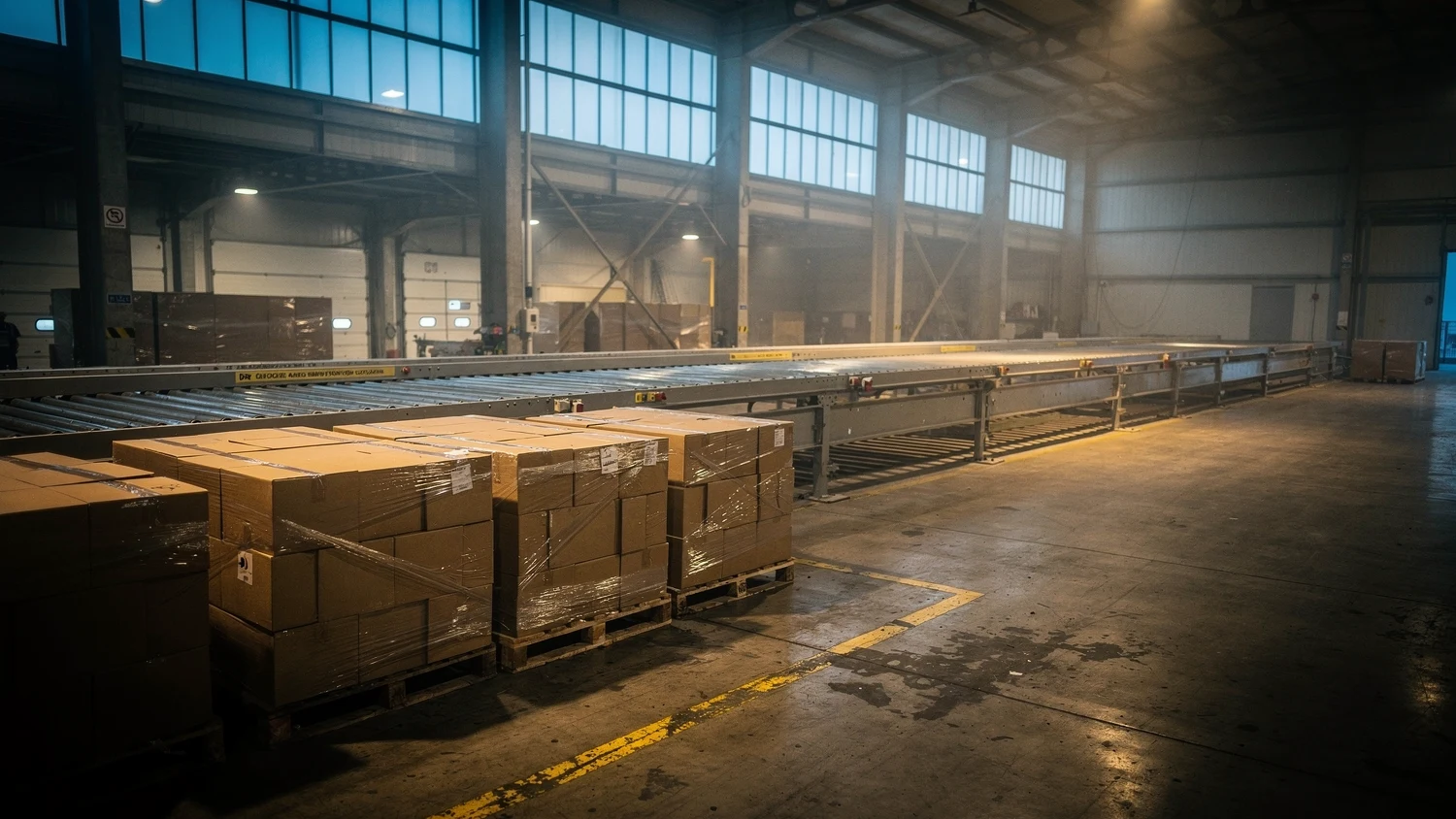
Canada’s counter-tariffs on United States goods take effect at 12:01 a.m. on Monday, September 8, 2026, covering roughly CAD 27.6 billion (about USD 19.9 billion at the rate of about USD 0.72 per Canadian dollar used by publishers reporting the package) of annual imports at rates of 15%, 25% or 50%. For cross-border retail the important detail is not the headline number. It is that Canada’s CAD 150 duty-free threshold for courier shipments offers no protection at all, because the surtax attaches to the tariff classification of the goods rather than to the value of the parcel.
In short
- Effective 12:01 a.m., September 8, 2026. Canada applies counter-tariffs of 15%, 25% or 50% to United States origin goods, with each rate mirroring the corresponding US tariff on that product.
- No de minimis shield. The CAD 150 courier threshold governs shipment value, not classification, so a low-value direct-to-consumer parcel is dutiable exactly like a full container.
- CUSMA does not exempt you. Unlike earlier rounds, preferential origin under the Canada-United States-Mexico Agreement gives no relief from the countermeasure.
- Coverage is broad. Publishers count more than 700 products across several hundred tariff items, spanning steel and aluminum, furniture, apparel, appliances, dairy, beauty, plastics, paper and electronics.
- Relief exists but is narrow. Ottawa intends to extend the United States Surtax Remission Order (2025) to the new measures, subject to Governor in Council approval, and remission is claimed at entry rather than recovered later.
What changes at 12:01 a.m. on September 8
The Department of Finance Canada published the definitive product list in late August, setting the effective moment at 12:01 a.m. on September 8, 2026. From that moment, goods entering Canada that are classified in a listed tariff item and determined to be of United States origin attract a surtax on top of any duty that would otherwise apply. The measure is framed as a dollar-for-dollar response to the latest round of American action, and Ottawa has repeatedly described the matching as deliberate.
Canada also announced a support package of CAD 7.5 billion (about USD 5.4 billion) for workers and small and medium-sized businesses exposed to the trade dispute. That package is a fiscal cushion, not a tariff exemption, and it does nothing to change the duty a Canadian consumer pays on an inbound parcel. Sellers should treat the two announcements as separate: one is domestic industrial support, the other is a border charge.
How the sequence arrived at Monday
The path to September 8 was compressed. American proclamations landed in July, took effect in August, and negotiations aimed at heading off escalation collapsed in the third week of August. Ottawa announced its matching list within days, giving importers roughly two weeks of notice before the effective moment.
That is a short runway by the standards of trade measures, and it is why classification work is being done under time pressure rather than in an orderly planning cycle. Reporting at the time described the Canadian government’s framing as unusually combative, with NPR noting Carney’s characterization of the relationship in near-conflict terms. The rhetorical temperature matters mainly as a signal about how quickly the measures might be unwound.
For context on how the list was assembled and which categories drew the top rate, our earlier report on the Canada counter-tariff announcement and its 15, 25 and 50 percent tiers covers the political sequencing. What follows here is the operational picture: what a customs broker, a carrier and a checkout page actually have to do on Monday morning.
The three rate bands are set per tariff item
The rate is not assigned at category level. It is assigned at the specific tariff item, which means two products a merchandiser would treat as near-identical can land in different bands. ShipStation, which published guidance for shippers on September 4, made the point bluntly: the rates sit at the tariff item level, not the category level. Classification accuracy has therefore moved from a compliance hygiene issue to a pricing input.
Each rate corresponds to the American tariff rate applied to the equivalent Canadian good. Where the United States imposed 50%, Canada answers at 50%. Where the American action was lighter, the Canadian band steps down to 25% or 15%.
How wide the list actually is
Counts vary by source because publishers are measuring different things. Al Jazeera, Global News and the Washington Post each reported the list as covering more than 700 products. ShipStation’s shipper-facing note put it at nearly 900 United States origin products, while the Department of Finance publishes it as several hundred individual tariff line items. The safe operating assumption is that the list is long enough that no cross-border retailer should assume exclusion without checking the item.
Why the CAD 150 de minimis will not shield a single parcel
This is the single most consequential point for e-commerce, and it is the one most likely to be misread. Under Article 7.8(1)(f) of CUSMA, Canada maintains a de minimis threshold for courier shipments from the United States or Mexico of at least CAD 150 for customs duties and CAD 40 for taxes. Merchants have spent years building checkout logic around those numbers. That logic does not help here.
The reason is structural. A de minimis threshold is a rule about the value of a shipment: below the line, ordinary customs duty is not collected. A counter-tariff surtax of this type is assessed on the basis of how the goods are classified, which means the charge is triggered by the tariff item and the origin, not by whether the parcel is worth CAD 90 or CAD 9,000. There is no minimum order value that lets a seller route around the rate.
Value threshold versus tariff classification
Put plainly, the CAD 150 threshold and the surtax are answering different questions. The threshold answers “is this shipment small enough to skip normal duty collection?” The surtax answers “is this good on the countermeasure list and is it American?” A parcel can pass the first test and still fail the second.
Guidance circulated to shippers this week has been consistent on the point. The CAD 150 duty-free threshold applies to the value of a shipment, not to tariff classification, so low-value parcels are hit in the same way as commercial freight. Merchants running direct-to-consumer volume into Canada on courier lanes are therefore exposed at full rate from Monday.
What a USD 40 apparel parcel now costs
ShipStation’s worked example is the clearest illustration in circulation. A USD 40 t-shirt falling into the 50% band carries USD 20 of duty, before any brokerage fee, tax or carrier disbursement charge. On a garment with a typical direct-to-consumer gross margin, that is not a line item to be absorbed quietly.
Apparel is not an edge case here. Clothing sits in the top band alongside steel, furniture and personal care, which are precisely the categories that dominate cross-border consumer parcels from American merchants into Canada. The exposure is concentrated exactly where the parcel volume is.
Which goods sit in the 15, 25 and 50 percent bands
The table below summarizes how publishers and customs brokers have characterized the bands. It is a working guide for triage, not a substitute for checking the published tariff item, and merchants should verify every stock-keeping unit against the Department of Finance list before repricing.
| Rate band | Representative categories reported | Retail relevance |
|---|---|---|
| 50% | Steel and iron products, aluminum, furniture, clothing and apparel, dairy, honey and molasses, beauty and personal care, plastics, paper products | Highest. Covers the bulk of direct-to-consumer parcel categories and home furnishing freight |
| 25% | Cheese, wood products, textiles, carpets, appliances, fish and seafood, steel and aluminum derivatives | High for home, hardline and grocery assortments |
| 15% | Assorted remaining listed goods where the matching US rate was lower | Moderate, but still material on thin-margin categories |
Note one apparent tension in the reporting worth flagging. The Department of Finance material places dairy in the 50% band while broker summaries place cheese specifically at 25%, which is a reminder that band assignment is per tariff item and that summaries will diverge. Where a category matters to your margin, read the line, not the summary.
Sector-level framing from the government and from wire coverage points at steel and aluminum, dairy, appliances, agricultural equipment, pulp and paper, plastics and electronics as the strategic targets. Consumer categories such as apparel and beauty were added on top of that industrial core, which is what converts an industrial dispute into a checkout problem.
How Canada’s measure compares with the US action that triggered it
The countermeasure is a response to American proclamations issued under Section 338 of the Tariff Act of 1930. Three proclamations were signed on July 20, 2026, covering motor vehicles, alcoholic beverages and dairy products, imposing an additional 50% ad valorem duty. Our earlier analysis of how Section 338 overrode USMCA preference for Canadian goods set out why the legal basis mattered: preferential origin did not buy an exemption.
Canada has now mirrored that design choice. The symmetry is not accidental, and it is the reason CUSMA eligibility is irrelevant on both sides of the line.
| Feature | US Section 338 action | Canadian counter-tariffs |
|---|---|---|
| Legal instrument | Section 338, Tariff Act of 1930 (three proclamations) | Surtax order under Canada’s Customs Tariff |
| Signed or published | July 20, 2026 | Late August 2026 |
| Effective | 12:01 a.m. Eastern Time, August 19, 2026 | 12:01 a.m., September 8, 2026 |
| Headline rate | Additional 50% ad valorem | 15%, 25% or 50% matched to the US rate |
| Named coverage | Motor vehicles, alcoholic beverages, dairy products | Steel, aluminum, furniture, apparel, appliances, dairy, beauty, plastics, paper, electronics |
| Preferential origin relief | None. USMCA eligibility does not exempt | None. CUSMA eligibility does not exempt |
| Stated carve-outs | Energy products, potash, Section 232 goods, certain fish, critical minerals, civil aircraft articles | Goods in transit when the measure comes into force |
| Trade value affected | Prompted the matching Canadian response | About CAD 27.6 billion (roughly USD 19.9 billion) |
The negotiating context is documented. Talks collapsed in the third week of August, and Prime Minister Mark Carney said in a statement that progress had “not been enough to meet our objectives for Canadians,” adding that “last-minute changes in the U.S. proposed terms were unfair, uneconomic, and called into question the reliability of any deal.” CNBC, CNN and NPR each reported the breakdown at the time.
What the duty does to a typical cross-border basket
The following illustration applies the reported bands to representative order values. These are arithmetic examples built from the published rates, not observed transaction data, and they exclude sales taxes, brokerage and carrier disbursement fees, which typically add further cost.
| Example order | Declared value (USD) | Band applied | Surtax added | Duty-inclusive value |
|---|---|---|---|---|
| Graphic t-shirt, single unit | 40 | 50% | 20 | 60 |
| Skincare and cosmetics set | 75 | 50% | 37.50 | 112.50 |
| Apparel basket, four units | 140 | 50% | 70 | 210 |
| Small kitchen appliance | 250 | 25% | 62.50 | 312.50 |
| Upholstered accent chair | 900 | 50% | 450 | 1,350 |
| Assorted listed goods, lower band | 200 | 15% | 30 | 230 |
Two observations follow. First, the CAD 140 apparel basket illustrates the de minimis trap directly: it sits close to the CAD 150 courier threshold that merchants have historically treated as a safe zone, and it is dutiable anyway. Second, the furniture example shows why the 50% band on furnishings is the one most likely to break a cross-border assortment outright rather than merely compress it.
The concentration risk is worth stating precisely. Cross-border parcel flow from the United States into Canada is dominated by apparel, beauty and small home goods, and all three sit at or near the top band. A merchant whose Canadian revenue is spread across those categories does not have a diversification hedge inside the assortment; the exposure is close to uniform.
Freight-scale items behave differently but no better. On an upholstered furniture order, a 50% surtax is measured in hundreds of dollars per unit, which typically exceeds the entire delivery cost and often exceeds the retailer’s gross margin on the piece. Those lines tend not to survive repricing; they are withdrawn.
Who is caught: origin marking, CUSMA and the in-transit rule
Three tests determine exposure, and all three have to be worked before Monday. The first is classification, covered above. The second is origin. The third is timing.
Origin is decided by the marking regulations
The countermeasure applies to goods originating in the United States as determined under the Determination of Country of Origin for the Purpose of Marking Goods (CUSMA Countries) Regulations. That is a specific legal test, and it is not the same question as whether a shipment left an American warehouse. Goods of third-country origin that merely transited or were distributed from the United States are assessed on their own origin.
Brokers have flagged a stacking consequence. Where American goods do not qualify for CUSMA preferential treatment, the most-favoured-nation duty rate applies in addition to the countermeasure duty, which compounds the landed cost. Merchants who have been casual about origin documentation now have a direct financial reason to tighten it.
CUSMA preference buys nothing here
This is the departure from earlier tariff rounds and it deserves emphasis. In previous episodes, goods qualifying for preferential treatment under CUSMA were frequently exempt from the measure in question. Canada’s counter-tariffs apply regardless of CUSMA eligibility, mirroring the American Section 338 design. When the United States moved first and 50% tariffs on Canadian goods went live as negotiations collapsed, that precedent was set.
What “in transit” means on Monday morning
Canada’s countermeasures do not apply to United States goods that are in transit to Canada on the day the measures come into force. The exemption is real and it is worth money, but it is narrow and evidentiary. Importers need documentation supporting shipment timing and status, because the burden of proof sits with them.
Critically, goods sitting in a warehouse do not qualify. Inventory already staged in an American fulfillment centre on Sunday night is not in transit; it is stock. Merchants who read the exemption as covering everything already bought will be surprised at entry, and the surprise will arrive as a duty bill rather than as a warning.
Who actually pays, and why the checkout decision matters now
A surtax at the border is a cost that lands on somebody, and cross-border merchants get to choose who. The choice is made in the shipping terms, and it is made before the order is placed, not after.
Delivered duty paid moves the cost to the merchant
Under delivered duty paid, the seller calculates and collects the duty at checkout and covers it on the customer’s behalf. The customer sees a higher total at the point of purchase and receives no unexpected bill at the door. The trade-off is transparent: conversion pressure at checkout in exchange for a clean delivery experience.
Delivered duty unpaid moves the cost to the doorstep
Under delivered duty unpaid, the carrier collects from the customer on delivery. Guidance published this week is explicit about the failure mode: customers who were not expecting a duty bill at the door often refuse packages or request returns. At a 50% rate on apparel, that is not a marginal risk, and refused parcels convert a margin problem into a reverse logistics problem.
Several shipping platforms now offer guaranteed prepaid duty and tax products on express carriers, calculating the charge at label creation without post-shipment adjustment. Whichever route a merchant picks, the operational requirement is the same: the duty has to be computed from an accurate tariff item and an accurate origin, at the moment the label is created.
What relief exists, and how do you claim it
Relief exists, but it is designed for industrial inputs rather than for consumer parcels, and merchants should calibrate expectations accordingly.
The remission order and its scope
Subject to Governor in Council approval, the Government of Canada intends for goods affected by the new counter-tariffs to benefit from remission under the existing United States Surtax Remission Order (2025). Steel goods currently eligible for relief at the 25% level would also receive relief where the applicable counter-tariff rises to 50%. The relevant reference for brokers is CBSA Customs Notice 25-19.
Qualifying categories reported to date are narrow and input-focused. They include inputs for public health, safety and national security entities; steel used in automotive and aerospace manufacturing; non-steel goods for manufacturing, processing, food and beverage packaging and agriculture (NAICS 31-33 and 11); fish and seafood processing inputs; pet food manufacturing materials; and inputs for fishing activity. A direct-to-consumer apparel or beauty parcel does not obviously fit any of them.
The horizontal remission provisions are reported to expire on June 30, 2027, which sets a planning horizon. New remission requests continue to be handled under the existing United States remission framework.
Claim at entry, not by refund
Broker guidance is emphatic on process. Importers should claim remission at the time of entry rather than paying and pursuing a refund afterwards. Refund pathways are slower, more document-intensive and more likely to fail, and the working capital cost of paying a 50% surtax and waiting is substantial.
| Relief mechanism | Who it is built for | Practical value to a cross-border retailer |
|---|---|---|
| In-transit exemption | Any importer with goods moving on September 8 | High but one-off. Requires documentary proof of shipment timing |
| United States Surtax Remission Order (2025) | Manufacturers and processors using listed inputs | Low for consumer parcels. Scope is input-driven, and extension awaits Governor in Council approval |
| New remission request under the US framework | Businesses with exceptional circumstances | Case by case, slow, and not a checkout-timeframe answer |
| CAD 150 courier de minimis | Low-value courier shipments | None against this measure. It governs value, not classification |
| CUSMA preferential origin | Qualifying North American goods | None. Preference does not exempt from the countermeasure |
How this fits the third de minimis rewrite of 2026
Monday’s change is not an isolated event. It is the third major recalibration of low-value cross-border treatment this year, and together they have removed most of the structural advantage that small parcels enjoyed over commercial freight.
The United States indefinitely suspended its USD 800 de minimis administrative exemption on June 24, 2026, requiring informal or formal entry for shipments that previously moved duty-free. From July 24, 2026, imports valued at USD 2,500 or less arriving through the international postal network must be entered under a new and considerably more burdensome process. CBP has estimated that the postal informal entry process alone will increase duties by more than USD 100 million per year.
The European Union moved on the same axis. A EUR 3 levy on imports under EUR 150 took effect on July 1, 2026, which functions as roughly a 10% charge on a typical EUR 30 order. The structural direction was reinforced when the Council adopted its customs overhaul and platforms became the importer of record for goods sold into the bloc.
| Jurisdiction | Change in 2026 | Effective | Effect on low-value parcels |
|---|---|---|---|
| United States | De minimis exemption suspended indefinitely; new postal entry process | June 24 and July 24, 2026 | USD 800 exemption gone; formal or informal entry required |
| European Union | EUR 3 handling levy on consignments under EUR 150 | July 1, 2026 | Fixed fee behaves as a steep effective rate on small baskets |
| Canada | Counter-tariff surtax assessed by tariff item | September 8, 2026 | CAD 150 courier threshold provides no protection |
The precedent for how sellers respond
The European levy offers an early read on behavior, and it is not primarily about price. Analysis of Google Shopping data indicates that Temu roughly halved its advertising visibility after the levy took effect, while Shein moved toward a near-total exit from that surface to avoid consignments being caught at the border. The first response to a border charge was a marketing withdrawal, not a price increase.
Pricing moved second, and in the opposite direction to what a duty would suggest. Bloomberg tracking reported by trade press found Temu’s best-selling items down about 18% on average in early September against late April, with some cuts as deep as 60%, as the platform pushed back into the American market. The lesson for Canada-bound sellers is that duty shocks are absorbed through channel mix and promotional spend well before they show up on the shelf price.
The pattern is consistent across all three. Low-value cross-border parcels are being pulled into the same duty and data regime as commercial cargo, and the arbitrage that supported a decade of direct-to-consumer cross-border growth is being closed deliberately rather than incidentally.
What retailers should do in the next 72 hours
The window before Monday is short, and the highest-value work is unglamorous. Classification and origin data are the two inputs that determine everything downstream.
- Re-verify tariff items for every Canada-bound stock-keeping unit. Because rates are assigned per tariff item, a category-level mapping will misprice part of the assortment. Check the published Department of Finance list line by line for anything material.
- Confirm origin, not just ship-from. Apply the marking regulations test rather than assuming that an American warehouse implies American origin, and retain the supporting documentation.
- Decide the incoterm before Monday. Choose delivered duty paid or delivered duty unpaid deliberately, and make sure the checkout, the label and the commercial invoice agree.
- Document anything genuinely in transit. Capture proof of shipment timing now for goods that will be moving at 12:01 a.m. on September 8, and do not extend the assumption to warehoused inventory.
- Model the margin at each band. Run 15%, 25% and 50% scenarios on the Canada-bound assortment and identify which lines stop working entirely rather than repricing across the board.
- Brief customer service before the first duty bill lands. Refused deliveries and return requests are the predictable second-order effect, and scripted answers reduce both.
- Watch the postal lane separately. Postal and courier channels are being reworked on different timetables, and the CBP electronic mail entry test opening on September 22 is a reminder that the American side of the lane is also in flux.
The official product list is published by the Department of Finance Canada and remains the controlling reference for classification questions. Merchants can consult it directly at the Department of Finance Canada counter-tariff product list.
What to watch after Monday
Three variables will decide whether this becomes a durable cost or a short episode. The first is whether the Governor in Council approves the remission extension and how quickly CBSA operationalizes it. The second is whether negotiations restart, since both sides have built measures that can be withdrawn as readily as they were imposed.
The third is behavioral. If enough American merchants respond by suppressing Canadian shipping options rather than repricing, the practical outcome will be assortment withdrawal rather than inflation, which is harder to measure and slower to reverse. Watch checkout availability on mid-market direct-to-consumer sites, not just posted prices.
Frequently asked questions
When exactly do Canada’s counter-tariffs take effect?
At 12:01 a.m. on Monday, September 8, 2026, per the Department of Finance Canada notice publishing the product list.
Does the CAD 150 de minimis threshold protect low-value parcels?
No. The CAD 150 courier threshold applies to the value of a shipment, while the counter-tariff is assessed on the tariff classification of the goods. There is no minimum order value that avoids the rate.
What are the rates and how are they assigned?
Rates are 15%, 25% or 50%, each matched to the corresponding United States tariff on the equivalent good. They are assigned at the specific tariff item level rather than by product category.
Does CUSMA preferential origin exempt my goods?
No. Canada’s counter-tariffs apply regardless of CUSMA eligibility, mirroring the American Section 338 measures that triggered them. Where United States goods do not qualify for CUSMA preference, brokers report that the most-favoured-nation rate stacks on top of the countermeasure.
What counts as goods in transit?
Goods physically moving to Canada when the measure comes into force at 12:01 a.m. on September 8 are exempt, provided the importer holds documentation supporting the shipment timing. Inventory sitting in a warehouse does not qualify.
How much duty would a USD 40 t-shirt attract?
About USD 20 if the item falls in the 50% band, before sales taxes, brokerage and carrier disbursement fees. The example is drawn from shipper guidance published on September 4.
Is any relief available, and how do I claim it?
Ottawa intends to extend the United States Surtax Remission Order (2025) to the new counter-tariffs, subject to Governor in Council approval, with qualifying categories weighted toward manufacturing and processing inputs. Broker guidance is that remission should be claimed at entry rather than pursued as a refund afterwards.
How large is the measure in trade terms?
It covers roughly CAD 27.6 billion of annual United States imports, about USD 19.9 billion at the conversion used by publishers reporting the package in late August. Ottawa separately announced CAD 7.5 billion (about USD 5.4 billion) in support for affected workers and businesses.
Who pays the duty, the merchant or the customer?
It depends on the shipping terms. Under delivered duty paid the merchant collects and covers it at checkout; under delivered duty unpaid the carrier collects from the customer on delivery, which raises the risk of refused parcels and return requests.