
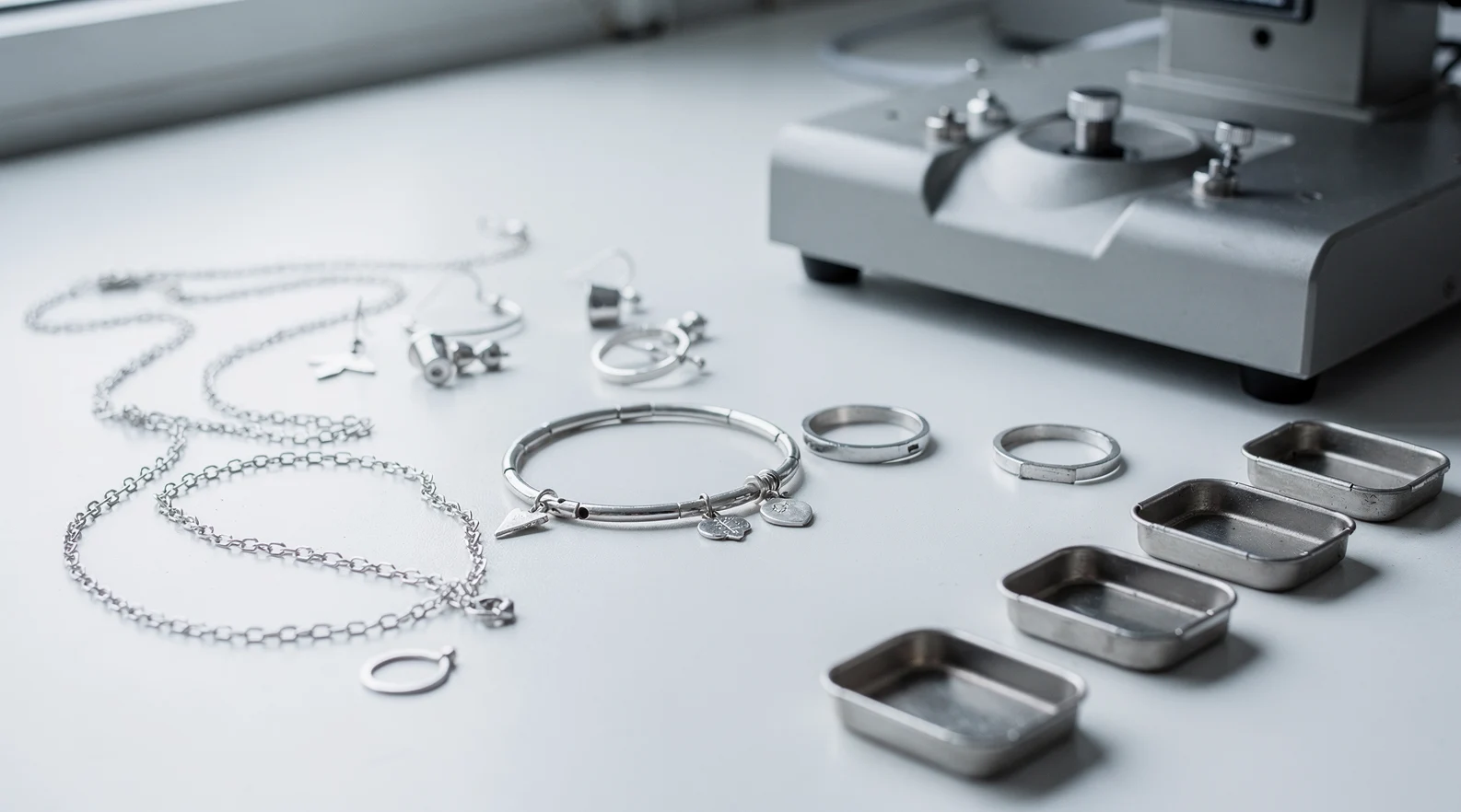
Cheap jewellery sold as sterling silver on some of the UK’s biggest online marketplaces has been found to contain illegal levels of cadmium, a toxic metal classed as a carcinogen. An investigation by BBC Watchdog on The One Show, published on Tuesday 3 November 2026, bought 25 pieces advertised as 925 or sterling silver from Amazon, eBay, Temu, Etsy and OnBuy and sent them to the Sheffield Assay Office for laboratory analysis.
Eight of the 25 items breached the legal cadmium limit of 0.01%, and some contained as much as 10% cadmium. Only two of the 25 could be classed as genuine sterling silver. The findings land three and a half weeks before Black Friday on 27 November, at the start of the busiest gifting season of the year, and on the same day that a Commons committee said Amazon, TikTok and John Lewis had declined to appear before MPs to explain how online shoppers are protected.
This article sets out what the tests found, which marketplaces sold the failing items, what the law in Great Britain says about silver, cadmium and nickel, what the platforms have said, and exactly what UK shoppers can do if they own a piece that may be affected or are buying jewellery as a Christmas present.
In short
- 8 of 25 failed: BBC Watchdog bought 25 items sold as sterling silver; eight contained cadmium above the 0.01% legal limit, some up to 10%, according to Sheffield Assay Office tests.
- Only 2 genuine: just two of the 25 pieces could be classified as sterling silver, which must contain at least 92.5% silver.
- Amazon and Temu each sold three of the eight cadmium failures; OnBuy and Etsy sold one each, according to the BBC.
- Recalls and refunds: Amazon has issued recall notices, OnBuy has offered refunds and a recall, Temu says it is testing similar products, and Etsy did not respond to the BBC.
- What to do: check for a full UK hallmark (not just a “925” stamp), stop wearing suspect pieces, keep them away from children and claim a refund under the Consumer Rights Act 2015.
What did the BBC Watchdog investigation find?
The BBC reports that Watchdog bought 25 pieces of jewellery advertised as 925 or sterling silver from five online marketplaces: Amazon, eBay, Temu, Etsy and OnBuy. The items were deliberately cheap, the sort of thing that sells in large volumes as stocking fillers, and included a bracelet for £1.55 and a pair of earrings for £1.99. All 25 were analysed by the Sheffield Assay Office, one of the four official UK assay offices that test and hallmark precious metals.
The headline result was that eight of the 25 contained cadmium above the legal limit of 0.01% by weight. Some of the failing items contained up to 10% cadmium. Sophie Langley, who led the analysis at the Sheffield Assay Office, told the BBC that this level “is absolutely massive, relative to the limits we’re adhering to”.
The second finding is almost as striking for shoppers who simply want what they paid for. Only two of the 25 items could be classified as sterling silver, which in the UK means an alloy containing at least 92.5% silver by weight. In other words, 23 of the 25 pieces sold as silver were not silver in any meaningful legal sense, regardless of whether they also contained toxic metals.
The necklace that started with a rash
The BBC’s report centres on Meranda, 34, who bought a £15 necklace on Etsy that was advertised as handmade sterling silver. She told the BBC that after a few days of wearing it, her “neck started getting really irritated” and that she remembered thinking “the colour on this doesn’t look right” when she took it off.
Preliminary testing at the Sheffield Assay Office found nickel in her necklace, with a concentration as high as 11% in one part of the chain. The piece was stamped 925, the number that signals sterling silver, yet testing found that part of the necklace contained only 8.9% silver.
“It was very shiny. It looked legit,” Meranda told the BBC. She received a full refund from the Etsy seller after speaking to Watchdog.
How the eight failures split by marketplace
According to the BBC, of the eight items that breached cadmium limits, three were bought from Amazon, three from Temu, one from OnBuy and one from Etsy. None of the cadmium failures came from eBay. A BBC caption indicates that Watchdog bought five items from each of the five marketplaces, which means three in five of the Amazon and Temu samples failed on cadmium alone.
The sample is small and was not designed to be a statistical survey of each platform, so the figures should not be read as a failure rate for every silver listing on these sites. What it does show is that a shopper picking cheap “sterling silver” from mainstream UK marketplaces in the run-up to Christmas has a real chance of receiving something that is neither silver nor legal to sell.
| Marketplace | Items bought (per BBC caption) | Over cadmium limit | Response reported by the BBC |
|---|---|---|---|
| Amazon | 5 | 3 | Misleading listings prohibited; items removed; recall notices issued; customers told to contact Amazon |
| Temu | 5 | 3 | Misleading listings prohibited; items removed; testing of similar products arranged |
| OnBuy | 5 | 1 | Misleading listings prohibited; refunds offered; recall initiated |
| Etsy | 5 | 1 | Did not respond to the BBC |
| eBay | 5 | 0 | Misleading listings prohibited; items removed; customers told to contact eBay |
| Total | 25 | 8 | Only 2 of 25 were genuine sterling silver |
Why is cadmium in jewellery dangerous?
Cadmium is a soft, cheap metal that is sometimes used in low-cost alloys because it lowers the melting point and makes castings easier to produce. It is also a recognised carcinogen. Rob Chilcott, a retired professor of toxicology, told the BBC that cadmium is particularly associated with lung cancer and poses a risk if it is inhaled or ingested.
For jewellery, the main concern is ingestion rather than skin contact. Professor Chilcott gave the example of an earring falling into food that is then eaten. “If you put something containing cadmium in your mouth, or indeed if you swallow it, that is really bad news,” he told the BBC. That risk is highest for young children, who are more likely to chew or swallow small items, and the cheap end of the jewellery market is exactly where charm bracelets, novelty earrings and children’s gift sets sit.
Government guidance on cadmium, published by the UK Health Security Agency, notes that the metal accumulates in the body over time and can damage organs, including the kidneys. That is why the legal limit in jewellery is set so low: 0.01% means no more than 100 milligrams of cadmium per kilogram of metal. A piece with 10% cadmium contains a thousand times that amount.
What about nickel?
Nickel is a different problem. It is not treated as a carcinogen in jewellery in the way cadmium is, but it is one of the most common causes of allergic contact dermatitis in the UK. People who become sensitised to nickel can react to watch backs, belt buckles, jeans studs and earrings for the rest of their lives, which is why the law limits how much nickel can be released from items that sit against the skin for long periods.
Genuine sterling silver does not typically contain nickel, the BBC notes, but nickel is common in cheaper base-metal jewellery that is plated or coloured to look like silver. Meranda’s experience, a rash after a few days of wear, is a textbook nickel reaction, and it is the most likely way a shopper will discover that a “silver” gift is not what it claimed to be.
What does UK law say about selling fake silver?
Three separate bodies of law apply to the items Watchdog bought, and each catches a different part of the problem. Hallmarking law deals with the word “silver” itself. Chemicals law, inherited from the EU and now known as UK REACH, deals with cadmium and nickel. Consumer law deals with what the shopper was promised and what they can claim back.
The Hallmarking Act 1973
Under the Hallmarking Act 1973, it is an offence for a trader to describe an article as silver, or to supply one described that way, unless it carries an approved hallmark or falls within an exemption. The main exemption is weight: silver items under 7.78 grams do not need to be hallmarked. Much cheap jewellery falls below that threshold, which is one reason sellers can stamp “925” on a light chain without sending it to an assay office.
The exemption does not, however, allow a trader to sell something as silver when it is not silver. Sophie Langley told the BBC that selling fake sterling silver is a breach of the Hallmarking Act and carries the risk of fines or imprisonment. A full UK hallmark is made up of a sponsor’s mark (identifying the maker or importer), a fineness mark such as 925, and the mark of the assay office that tested it: a leopard’s head for London, an anchor for Birmingham, a rose for Sheffield and a castle for Edinburgh. A bare “925” stamp on its own is not a hallmark.
In Great Britain, restrictions on hazardous substances in consumer products are set out in Annex XVII of UK REACH and enforced through the REACH Enforcement Regulations 2008. Entry 23 bans cadmium at or above 0.01% by weight in metal parts of jewellery. Entry 27 limits the rate at which nickel can be released from items in direct and prolonged contact with the skin, with a tighter limit for posts inserted into pierced ears.
These rules are enforced by local authority Trading Standards teams, often at ports and airports, and by the Office for Product Safety and Standards (OPSS). When a product is found to breach them, OPSS publishes a product safety report or recall notice on gov.uk, and the import may be rejected at the border or destroyed.
| Rule | What it covers | Limit or test | Who enforces it |
|---|---|---|---|
| Hallmarking Act 1973 | Describing an item as silver, gold, platinum or palladium | Silver items over 7.78g must carry a UK (or recognised international) hallmark; sterling must be at least 92.5% silver | Trading Standards; assay offices test and mark |
| UK REACH Annex XVII, entry 23 | Cadmium in metal parts of jewellery | Below 0.01% by weight (100mg per kg) | Trading Standards, OPSS |
| UK REACH Annex XVII, entry 27 | Nickel released from items in prolonged skin contact | Release limit per square centimetre per week, stricter for piercing posts | Trading Standards, OPSS |
| Consumer Rights Act 2015 | Goods must be as described and of satisfactory quality | 30-day right to reject faulty or misdescribed goods for a full refund | Civil claim; Trading Standards; card provider chargeback |
| Digital Markets, Competition and Consumers Act 2024 | Misleading actions and omissions in sales | Prohibits misleading claims about the nature or composition of goods | Trading Standards, CMA |
Is this the first time cheap “silver” has failed UK tests?
No. The Watchdog findings follow a run of official notices and press investigations in 2026 that point to the same supply chain: low-cost, silver-coloured base-metal jewellery, largely shipped from overseas sellers through online marketplaces. Several of the cases have involved Amazon listings, and Trading Standards officers have been stopping consignments at the border.
On 7 July 2026, OPSS published a product safety report on MOTONG Heart-Shaped Planet Silver Earrings sold via Amazon. The report said the earrings contained cadmium at a concentration of 717,000mg per kg, or 71.7%, which it described as 7,170 times greater than the maximum permissible limit. The import was rejected at the border and destroyed, following a notification by local authority Trading Standards.
A month earlier, on 8 June 2026, OPSS published a report on silver snake rings sold via Amazon that contained excess concentrations of cadmium; that import was also rejected at the border. Earlier in the year, OPSS notices covered a Shop TJC diamond silver bracelet found with excess nickel, cadmium and lead (7 January), a Lost Souls initial necklace with excess nickel (9 January) and a Bees Jewellery hand chain, bangle and earrings set with excess heavy metals (3 February).
In July 2026, the Sunday Times reported that it had sent jewellery bought on Amazon and TikTok Shop to the Birmingham Assay Office, and that a ring sold as 925 silver was estimated to contain about 92% cadmium, according to trade press accounts of the investigation. TikTok Shop reportedly recalled a bracelet and removed the seller, and Amazon said it was removing affected products.
| Date (2026) | Source | Item and channel | Finding | Outcome |
|---|---|---|---|---|
| 7 January | OPSS product safety report | Shop TJC diamond silver bracelet | Excess nickel, cadmium and lead | Import rejected at border |
| 9 January | OPSS product safety report | Lost Souls “S” initial necklace | Excess nickel | Products destroyed |
| 3 February | OPSS product safety report | Bees Jewellery hand chain, bangle and earrings | Excess heavy metals | Import rejected and destroyed |
| 8 June | OPSS product safety report | Silver snake rings sold via Amazon | Excess cadmium | Import rejected at border |
| 7 July | OPSS product safety report | MOTONG planet earrings sold via Amazon | 71.7% cadmium (7,170 times the limit) | Import rejected and destroyed |
| July | Sunday Times (reported by trade press) | Rings and bracelets via Amazon and TikTok Shop | Ring estimated at about 92% cadmium | Listings removed; TikTok Shop recall reported |
| 3 November | BBC Watchdog | 25 items via Amazon, eBay, Temu, Etsy, OnBuy | 8 over cadmium limit; up to 10%; 2 of 25 genuine silver | Items removed; Amazon recall notices; OnBuy refunds |
Jewellery is not the only category where testing has turned up toxic metals in products bought online this autumn. Last week, Trading Standards published results showing that fake beauty products contained mercury and lead, including a skincare item with 13,200 parts per million of mercury. The common thread is that a product can look convincing in a listing photo and still be chemically dangerous.
What have Amazon, Temu, eBay, OnBuy and Etsy said?
According to the BBC, Amazon, eBay, Temu and OnBuy all said that misleading listings were prohibited on their platforms and that they had removed the jewellery Watchdog identified. Etsy did not respond to the BBC’s request for comment. The Sun, which followed up the BBC’s findings on Tuesday morning, reported the same four platforms confirming that fake sterling silver listings are prohibited.
Beyond removal, the platforms’ responses differed. Amazon has since issued recall notices for the products Watchdog identified as unsafe, and both Amazon and eBay said customers with concerns should contact them for support. OnBuy said it had offered affected customers refunds and initiated a recall of the product found to contain cadmium. Temu told the BBC it had arranged testing of similar products to identify potential risks.
Removing a specific listing does not stop an identical item reappearing under a different seller name or product title, which is a pattern that consumer groups have documented repeatedly. Which? said last month that it had found 40 potentially dangerous products from third-party sellers in a matter of hours across several marketplaces, and that items flagged in official safety alerts were still on sale. Our coverage of how Which? is demanding a new UK law on unsafe products sold on Amazon and eBay sets out the campaign in detail.
For shoppers, the practical point is that the recall applies to the products the BBC bought, not to every similar-looking piece on sale. Anyone who has bought cheap “sterling silver” jewellery from any marketplace this year, and especially anyone who received an unhallmarked item that discoloured, caused a rash or felt unusually light, should treat it with caution rather than assume it is safe because it was not on the BBC’s list.
Why are MPs and regulators under pressure before Black Friday?
The Watchdog findings arrived on the same day that the Commons Business, Innovation, Science and Trade Committee said TikTok, Amazon and John Lewis had declined to appear before it for a hearing on the mis-selling of consumer items ahead of Black Friday. In a statement published on Tuesday 3 November, the committee said it would instead hear evidence on Wednesday 4 November from Which? and the Chartered Trading Standards Institute about whether online prices are inflated ahead of the discount season and about other online sales tactics.
The committee said the pre-Christmas rush “can leave consumers exposed to shoddy or dangerous goods, misleading pricing and sales practices that range from dodgy to outright fraudulent”, and that online shoppers can find it harder to authenticate products. Liam Byrne, the committee’s chair, said people hunting for a bargain “should be able to trust the price they see and the goods they buy”, and that the companies’ refusal to appear “leaves us with little option but to now deepen our investigations into whether Black Friday is becoming yet another rip off”.
The row had been building for a week. We reported on 27 October that MPs were pressing Amazon and TikTok to face a safety hearing after Mr Byrne wrote to both companies about their reluctance to attend. Tuesday’s fake silver results give the committee a fresh, concrete example of the authentication problem it says shoppers face.
The missing marketplace duty
The wider policy question is whether online marketplaces should carry a legal duty for the safety of products sold by third-party sellers. The Product Regulation and Metrology Act 2025, which received Royal Assent on 21 July 2025, gives ministers powers to set new obligations for online marketplaces through secondary legislation. The government consulted on proposals between 31 March and 23 June 2026, including treating marketplaces as regulated economic operators with duties around seller information, safety complaints and recalls.
As of 3 November, no government response to those consultations has been published, and no regulations have been laid before Parliament. That leaves enforcement relying largely on Trading Standards teams catching consignments at the border and on platforms’ own voluntary takedown processes, which is precisely the gap that the Watchdog test illustrates.
How can UK shoppers spot fake sterling silver?
There is no way to measure cadmium at home, and shoppers should not try to test jewellery with chemicals or heat. What is possible is to reduce the chance of buying a fake in the first place and to recognise the warning signs on items already owned. The steps below draw on hallmarking law and on the patterns seen in the BBC’s results.
- Look for a full UK hallmark, not just “925”. A genuine UK hallmark has at least three parts: a sponsor’s mark, the 925 fineness mark and an assay office symbol (leopard’s head, anchor, rose or castle). A lone “925” or “S925” stamp proves nothing, as Meranda’s necklace showed.
- Be wary of very low prices. Silver is a precious metal with a quoted market price. Chains, bracelets and earrings sold for one or two pounds, as in the BBC sample, are very unlikely to contain much silver at all.
- Check who the seller is. On marketplaces, the seller name and address are usually listed under the product. Items shipped directly from overseas sellers have featured in most of the 2026 OPSS jewellery notices.
- Read the listing for weight and material. Reputable sellers state the weight in grams and the metal composition. Vague descriptions such as “silver tone”, “silver colour” or “fashion silver” are a signal that the item is not silver.
- Watch for physical signs. Rapid discolouration, a coppery or grey layer showing through, green marks on the skin, a rash or itching after a few days, or a piece that feels unusually light can all indicate plated base metal.
- Buy hallmarked items from retailers you can trace. Independent jewellers on the high street and established online jewellers can show you the hallmark and will usually tell you which assay office tested the piece.
The cheapest part of the market is also the most heavily promoted in November. With early deals already running, it is worth reading our guide to how Black Friday 2026 sales have started early and the UK rules on fake countdown deals, because inflated “was” prices and urgent timers are often used to push low-cost jewellery bundles.
What should you do if you own an affected piece?
The first priority is safety. If you have cheap jewellery sold as sterling silver that lacks a full hallmark, and particularly if it came from one of the marketplaces in the BBC test, stop wearing it, keep it away from young children and do not let anyone put it in their mouth. Store it in a sealed bag rather than throwing it in household waste while you seek a refund.
Next, check whether your item is covered by a recall. Amazon has issued recall notices for the products Watchdog identified, so Amazon customers should look in their account messages and order history, and OnBuy says it has contacted affected customers about refunds. Recalls and product safety reports for jewellery are also published by OPSS on the gov.uk product safety alerts page, which is searchable by product type.
Under the Consumer Rights Act 2015, goods must match their description and be of satisfactory quality. Jewellery described as sterling silver that is not silver does not match its description, and a piece that is illegal to sell because of its cadmium content is not of satisfactory quality. Within 30 days of delivery you have a short-term right to reject it for a full refund; after that, you can still ask for a repair, replacement or refund, and the retailer must deal with the claim.
For online purchases, the Consumer Contracts Regulations also give a 14-day cancellation period for most goods, regardless of fault. If the seller or marketplace will not help, you can ask your card provider for a chargeback; Section 75 protection on credit cards applies only to items costing more than £100, so it will not cover most cheap jewellery. You can report a seller to Trading Standards through the Citizens Advice consumer helpline on 0808 223 1133 in England and Wales, Advice Direct Scotland in Scotland or Consumerline in Northern Ireland.
| Situation | What to do | Where |
|---|---|---|
| Bought one of the items in the BBC test | Stop wearing it; follow the recall notice; request a refund | Marketplace account messages, order history |
| Unhallmarked “925” item, any marketplace | Stop wearing it if it has caused irritation; ask the seller about composition; claim a refund if misdescribed | Seller messaging, marketplace help centre |
| Seller ignores you | Escalate through the marketplace’s guarantee scheme, then a card chargeback | Marketplace dispute route; your bank |
| Suspect a seller is still selling fakes | Report the listing and the seller | Marketplace report button; Citizens Advice consumer helpline |
| Rash or reaction after wearing | Remove the item and seek advice from a pharmacist or GP if it persists | Local pharmacy, NHS 111 |
What happens next?
The immediate next step is in Parliament. The Business, Innovation, Science and Trade Committee hears from Which? and the Chartered Trading Standards Institute on Wednesday 4 November, and Mr Byrne has said the committee will “deepen” its investigations after Amazon, TikTok and John Lewis declined to attend. Fake and unsafe goods sold through marketplaces are likely to feature, alongside inflated pre-sale prices.
The government still has to publish its response to the spring consultations under the Product Regulation and Metrology Act, which would determine whether online marketplaces carry a legal duty for the safety of third-party products. Consumer groups have argued that the response should arrive before the Christmas peak; ministers have not given a date. In the meantime, Trading Standards will continue to rely on border checks and OPSS notices, and the platforms on their own takedown and recall processes.
For shoppers, the timetable is more pressing. Black Friday falls on 27 November, and jewellery is one of the most common impulse gifts in the weeks around it. The simplest protection is the oldest one in the British jewellery trade: if it says silver, look for the hallmark.
What it means for UK jewellery sellers and independent jewellers
For legitimate sellers, including the many small UK makers who sell handmade silver on Etsy, eBay and their own sites, the Watchdog results are a reputational risk as much as a regulatory one. Every report of fake silver makes shoppers more sceptical of unbranded listings, and the burden of proof is shifting towards sellers who can show a hallmark and explain where their metal came from.
Sellers of silver items above 7.78 grams must have them hallmarked by a UK assay office or carry a recognised Convention mark, and anyone dealing in hallmarked goods is required to display the official dealer’s notice explaining hallmarks. Sellers below the weight threshold still cannot describe base metal as silver, and those importing low-cost jewellery have a duty under product safety law to ensure that cadmium and nickel stay within the legal limits. Assay offices offer testing for traders who want independent confirmation before listing.
For independent jewellers on the high street, the story is a reminder of the value of the things they already do: hallmarked stock, a named shop and a person to complain to. The cheapest gifts will always sell online in volume, but a shopper buying a meaningful present this Christmas has a clear, low-cost way to reduce the risk, which is to ask to see the hallmark before paying.
Frequently asked questions
Which marketplaces sold jewellery that failed the BBC Watchdog test?
According to the BBC, the eight items that breached the cadmium limit came from Amazon (three), Temu (three), OnBuy (one) and Etsy (one). None of the cadmium failures came from eBay, although only two of all 25 items across the five marketplaces were genuine sterling silver.
How much cadmium was found in the fake sterling silver?
The legal limit for cadmium in metal parts of jewellery is 0.01% by weight. The Sheffield Assay Office found eight items above that limit, and some contained up to 10% cadmium, which the analyst who led the work described to the BBC as “absolutely massive”.
Is wearing cadmium jewellery dangerous?
The main risk comes from swallowing or inhaling cadmium rather than from touching it. A retired professor of toxicology told the BBC that putting cadmium in your mouth or swallowing it is “really bad news”. Keep suspect items away from children, who are most likely to chew or swallow small jewellery.
Does a “925” stamp mean my jewellery is real silver?
No. A “925” stamp on its own is not a UK hallmark. A genuine hallmark includes a sponsor’s mark, the 925 fineness mark and an assay office symbol. The Etsy necklace featured by the BBC was stamped 925 but part of it contained only 8.9% silver.
Can I get a refund for fake silver jewellery?
Yes. Under the Consumer Rights Act 2015, goods must match their description. Jewellery sold as sterling silver that is not silver is misdescribed, so you can reject it for a full refund within 30 days, and still claim a remedy after that. Amazon has issued recall notices and OnBuy has offered refunds for the items in the BBC test.
Do all silver items in the UK need a hallmark?
Silver items weighing more than 7.78 grams must be hallmarked before they can be described as silver, under the Hallmarking Act 1973. Lighter items are exempt from hallmarking, but they still cannot legally be sold as silver if they are not silver.
Where can I report a seller of fake or unsafe jewellery?
Use the marketplace’s report button on the listing, and report the seller to Trading Standards through the Citizens Advice consumer helpline on 0808 223 1133 in England and Wales, Advice Direct Scotland or Consumerline in Northern Ireland. OPSS publishes jewellery recalls and safety reports on gov.uk.
Why did Amazon and TikTok decline to appear before MPs?
The Commons Business, Innovation, Science and Trade Committee said on 3 November that TikTok, Amazon and John Lewis had declined to appear at a hearing on mis-selling ahead of Black Friday. The companies’ reasons were not set out in the committee’s statement. The committee will hear from Which? and the Chartered Trading Standards Institute on 4 November instead.