In short
- The consultation closed today: the Scottish Government’s consultation on legal price caps for essential food items such as bread, milk and eggs ended on Tuesday 24 November 2026, almost three months after it opened on 1 September.
- Only big supermarkets would be covered: the draft model applies to grocery businesses with more than 250 staff, more than £250 million in annual turnover and more than half of that turnover from groceries, in store and online.
- One capped line per product: a qualifying retailer would have to sell at least one version of each listed product at or below a maximum price set by ministers, and swap in another version if that line sold out.
- Industry is united against it: the Scottish Wholesale Association, NFU Scotland, the Scottish Grocers’ Federation, the Scottish Retail Consortium and Food and Drink Federation Scotland all used their final responses to urge ministers to drop or rethink the plan.
- Nothing changes at the till yet: no products, prices or start date have been chosen, a Bill would still be needed, and the government says ministers will decide next steps once responses have been analysed.
The Scottish Government’s plan to put a legal ceiling on the price of everyday groceries reached its first real milestone on Tuesday, as the public consultation on the policy closed and Scotland’s food and retail trade bodies lodged their final, largely hostile, responses. The proposal, first set out in the SNP’s Holyrood election manifesto and championed by First Minister John Swinney, would oblige the largest supermarket chains to sell at least one version of a list of essential foods at or below a price fixed by ministers.
For shoppers, the immediate answer to the obvious question is simple: nothing changes at the checkout this Christmas. The consultation paper, published on 1 September, sets out one possible model and dozens of open questions, but it does not name a single product or price. What the documents and today’s responses do reveal is how the scheme would work, which retailers it would catch, how online grocery orders would be treated and why farmers, wholesalers and corner shops fear the cost of lower shelf prices will land on them.
What did the Scottish Government actually propose?
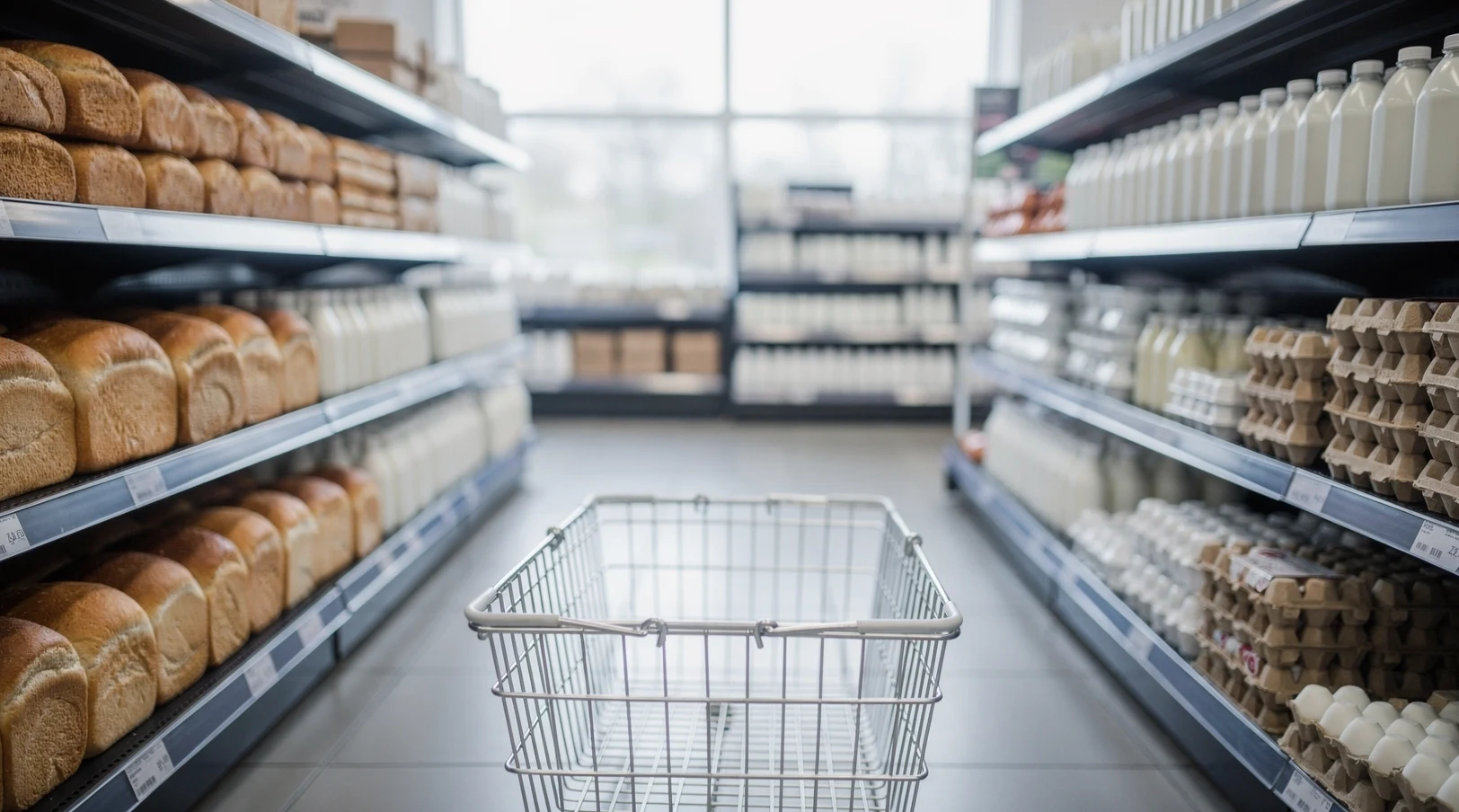
The consultation, titled Price controls on essential food items and fronted by Tom Arthur, Minister for Business and Fair Work, proposes what officials call an item-level price cap. Ministers would publish, in regulations, a list of “specified food products” and a maximum price for each. Any qualifying retailer that offers one of those products for sale, in a store or on a website or app, would be under a legal duty to sell at least one type of it at or below the cap.
The retailer would choose which particular product meets the duty, provided it matches the description in the regulations. If that line sold out, the shop would have to substitute another version of the same product at or below the capped price, if one is on sale, or risk breaching the duty. A retailer could always sell below the cap, but it could not satisfy the rule through a multi-buy: the paper says a “3 for the price of 2” offer would not count.
Crucially, the model does not force anyone to stock a capped product. The duty only bites where the product is actually offered for sale. The paper openly acknowledges the risk this creates: “the proposed approach may simply mean that retailers affected choose not to stock a specific item that is subject to a price cap.” Officials say they would try to limit that by choosing products with strong consumer demand and by keeping the list broad enough to cope with seasonal changes.
The government presented the item-level cap as its illustrative option because it is “relatively straightforward for consumers to understand and for retailers and regulators to monitor”. It also asked respondents to weigh four alternatives: a temporary price freeze on food items, a cap on the profit a retailer can make on a specified product, mandatory discounting on specified products, and a requirement to sell a whole basket of goods for a maximum total price while leaving individual prices to the retailer.
Each alternative has been tried somewhere. Hungary moved from fixed prices to mandatory discounts and then to a cap on retail margins, while Mexico used a negotiated basket price. The paper notes that more flexible models may help retailers cope with supply shocks but could make the benefit harder for shoppers to see and harder for inspectors to check.
Which shops would have to cap prices?
The draft provisions define a “qualifying business” using three tests that apply to the company as a whole, not to an individual store. A retailer would be in scope if more than 50% of its annual turnover comes from groceries, it has more than 250 employees and its total annual turnover exceeds £250 million. Takeaways, cafes and other businesses that mainly sell food for immediate consumption would be exempt, and the scheme would not apply to catering, hospitality or trade sales.
Because the test looks at the size of the business rather than the size of the shop, a small city-centre convenience store run by a big chain would be covered, while a larger independent supermarket next door would not. The 250-employee threshold matches the Companies House definition of a large company; the paper says the turnover and grocery-share tests were chosen after analysis of the business models of the major chains.
The government has not published a list of businesses it expects to qualify. Applying the three published tests to the UK’s familiar grocery names gives a rough picture, but it is only an indication, and the final definition could change after the consultation.
| Retailer type | Examples | Likely position under the draft tests | Why |
|---|---|---|---|
| Big four and discounters | Tesco, Sainsbury’s, Asda, Morrisons, Aldi, Lidl | Likely in scope | Grocery-led businesses far above 250 staff and £250m turnover |
| Chain convenience formats | Tesco Express, Sainsbury’s Local, Morrisons Daily company stores | Likely in scope | Store size is not a test; the parent business qualifies |
| Other large grocers | Co-op, Iceland, Waitrose, Ocado Retail | Probably in scope | Large, grocery-led; final definitions of “groceries” still matter |
| Mixed retailers | Marks & Spencer, B&M, Home Bargains | Unclear | Depends on whether groceries exceed half of group turnover |
| General marketplaces | Amazon | Likely out on current tests | Groceries are a small share of total turnover |
| Independents, symbol and franchise stores | SPAR, Londis, Premier, Nisa, family-run shops | Out as drafted | Below the thresholds; the paper asks whether franchise and symbol groups should be added |
| Takeaways and cafes | Bakery cafes, chip shops | Exempt | Specific exemption for food mainly sold for takeaway or eating in |
The gap for rural and island shoppers
The government accepts that limiting the duty to large chains means the benefit would not reach everyone equally. The paper notes that many low-income households, disabled people and residents of remote, rural, island and inner-city areas rely on independent convenience stores rather than a large supermarket. It asks whether bringing online sales into scope could close part of that gap, and whether franchise and symbol group stores, or small shops that sell a supermarket’s own-brand products under agreement, should also be covered.
For now the proposal is a single national cap for each product, with no higher ceiling for island stores that pay more for distribution. The paper says it does not currently propose different caps by business type, size or location, but invites views on whether that should change.
Would the cap apply to online grocery orders?
Yes, and this is one of the most significant details for online shoppers. The consultation proposes that the duty should apply wherever a qualifying retailer, “in any registered location”, offers a capped product for sale on a website or app to a customer in Scotland. That would cover home delivery, click and collect, and sales through third-party online platforms acting as an intermediary for the retailer.
In practice, an English-registered grocer delivering to a Glasgow postcode would be treated the same as a store in Glasgow. The paper argues that including online sales helps reach households without a qualifying store nearby, including in island and rural communities, and it proposes a power for ministers to set out further detail on online marketplaces and cross-border sales in regulations.
The draft provisions would not stop an online retailer charging delivery fees, service fees or minimum basket charges. A capped loaf could therefore arrive with the usual delivery charge attached, so the saving for an online shopper would depend on the rest of the basket and the retailer’s fee structure. The paper also recognises that enforcing the rule online is harder than walking into a store, especially where websites or supply arrangements operate across the border, and asks whether retailers should have to submit regular pricing reports.
Which foods could be capped, and at what price?
No list exists yet. The consultation proposes that products would be specified by ministers in secondary legislation rather than written into the Bill, so the list could be updated without a new Act. The scheme would cover food and non-alcoholic drinks only; the paper rules out cleaning products, toiletries and pet food. The examples it uses are bread, milk and eggs, and it says capped items should be “basic products which are considered part of a nutritious and balanced diet”.
Products could be defined by size, weight or volume (a 2 litre container of milk, a loaf within a weight range), by pack format (six free-range eggs), by ingredients (wholemeal bread with specified ingredients), by nutritional criteria, or by whether they are fresh, frozen, tinned, loose or pre-packed. The paper raises whether foods high in fat, sugar and salt should be excluded, how to handle seasonal fruit and vegetables, and whether infant formula, recently examined by the Competition and Markets Authority, should be treated as a special case.
On price, the government floats five ways of setting the initial cap. The market price option sets it at or near a baseline drawn from the lower end of the market. An affordability assessment would set prices so a low-income household could meet basic food needs within a set share of income. A “market plus” cap would sit above today’s prices as a backstop against future spikes.
A cost-based cap would track inputs such as feed, energy and packaging, and an averaging model would use a rolling average price. Caps could then be uprated each year by the Consumer Price Index, by wage growth or by a hybrid index.
| Price-setting option | How it works | Immediate saving for shoppers? | Main risk flagged |
|---|---|---|---|
| Market price | Cap set at or near a low-end baseline price | Small at first; grows if other prices rise | Few items already priced below the baseline |
| Affordability assessment | Cap set so a low-income “average shop” costs a target share of income | Potentially large | Gap between cap and cost of supply |
| Market plus | Cap set a percentage above today’s baseline | None at first | Only helps in a future price spike |
| Cost-based | Cap linked to input costs such as feed, energy and transport | Varies by product | Administratively resource intensive |
| Averaging | Cap based on a rolling average over, for example, a year | Protects against short spikes | Can lag behind real cost changes |
Whatever is chosen, the paper concedes that a fixed cap will drift away from market prices over time, becoming “either too restrictive or too generous”, which is why it expects periodic reviews.
Why are ministers pushing for a price cap now?
The consultation rests its case on the gap between food prices and incomes. Citing Office for National Statistics data, it says cumulative food inflation since 2020 reached 38.1% by July 2026, against 32.1% for general inflation and 35.3% growth in average incomes to June 2026. It notes that the average UK household spends 10.9% of equivalised income on food and non-alcoholic drinks, rising to 15.2% for the poorest fifth.
The paper also cites Trussell’s estimate that one million people in Scotland, including 210,000 children, live in food insecure households, and polling by Obesity Action Scotland in which 65% said the cost-of-living crisis had made healthy food harder to buy, rising to 78% in the most deprived communities. It is notably candid that the problem is not a lack of competition: it quotes Competition and Markets Authority evidence that recent food inflation “largely reflected increases in costs” through supply chains “rather than a weakening of competition in the grocery sector”.
The timing is awkward for the government’s argument. The latest official figures show UK food inflation falling to 0.9% in October, its slowest rate in more than five years, even as headline CPI rose to 3.6% on fuel costs. Retailers have seized on that. The Scottish Retail Consortium says food inflation “has stayed under 3% despite the rocketing cost of fuel and energy”, and argues Scots already benefit from some of the most affordable food prices in Western Europe.
The cap began as a campaign promise. According to the Daily Record, Mr Swinney used a speech in Govan one week before the Holyrood election in May to say he wanted the scheme “in place by the end of the year”. When the consultation was published on 1 September, the same paper reported that the document stated “no decisions have been taken regarding implementation timescales”. Shirley-Anne Somerville, the Cabinet Secretary for Social Justice, told STV News that the government is committing around £3.5 billion in 2026-27 to policies tackling poverty and the cost of living, and described the cap as one strand of that work alongside the Scottish Child Payment.
What are supermarkets, farmers and wholesalers saying?
Today’s final responses read as a coordinated rejection. The Scottish Wholesale Association, which says it represents 74 members and 95% of Scotland’s food and drink wholesale sector by sales, told ministers that capping shelf prices does not remove the cost of producing or supplying food.
Its chief executive, Colin Smith, said, as reported by The Herald and Asian Trader: “Putting a cap on the price of a product doesn’t make the cost of producing or supplying it disappear. Those costs remain.” The association values the Scottish wholesale sector at £3.3 billion, employing more than 6,500 people and serving 5,200 convenience stores and 30,000 hospitality, tourism and leisure outlets, as well as schools, hospitals and prisons.
NFU Scotland said its member survey found 81% opposed food price controls and 90% had little or no influence over the prices paid for their produce, according to The Scottish Farmer. Only 12% believed they could track the effect of a price cap on their own business. President Andrew Connon warned: “Farmers are not the main drivers of food price inflation, yet there is a real risk they will be expected to absorb the costs of keeping prices artificially low.” The union also cited agricultural input inflation of 7.8% in September 2026 against an estimated 1.3% fall in farm output prices over the previous year.
The Scottish Retail Consortium, which speaks for the big chains that would actually carry the duty, has gone furthest. In comments carried by PA ahead of the deadline, deputy head Ewan MacDonald-Russell called the cap a “potty election gimmick”, described the consultation as “peely-wally” and urged ministers to “swallow some humble pie and ditch the cap”. He argued that similar policies abroad “forced retailers to reduce ranges and bring in imports at the expense of local suppliers”, and that products in scope ran out.
Food and Drink Federation Scotland chief executive David Thomson told STV News that manufacturers “remain deeply concerned” and that “price caps will not tackle the underlying causes of food inflation”. When the consultation launched, he had complained to the Daily Record that despite a paper “running to nine chapters”, the government still could not say which products would be capped.
The farm gate fear
The government’s paper accepts the farming concern in principle. It warns that where Scottish-produced items are capped, “the costs of meeting the cap could be passed back through the domestic supply chain, potentially to processors and primary producers”, and that shoppers could switch to cheaper imports. However, it proposes dealing with producer protection through “policy interventions” rather than specific clauses in the Bill. NFU Scotland says it welcomes assurances but has “yet to see credible safeguards that could deliver that protection in practice”.
Angus dairy farmer Sandy Milne put the point plainly to STV News: “If there’s going to be a price cap on milk, somebody has to carry the financial can on it.” Trussell, Scotland’s largest food bank charity, has also questioned the idea. Its senior policy manager Cara Hilton told STV the plan “really doesn’t stack up on the basis of evidence” and urged ministers to focus on getting more cash into people’s pockets.
Why do corner shops object if they would be exempt?
Independent convenience retailers sit outside the scheme as drafted, yet their trade bodies are among its loudest critics. The Scottish Grocers’ Federation told Talking Retail that independents lack the buying power of the large chains and often pay wholesalers more for identical products. If shoppers come to expect a capped price for milk or bread, local shops could be forced to match it below their own purchase cost, or watch customers drift to the supermarket.
The federation’s response paints a picture of a sector with little room to absorb another shock. It says investment in Scottish convenience stores fell to £70 million over the past year, from £89 million in 2025 and £94 million in 2024, and that employment fell by 10%, from 55,000 in 2024 to 49,000 in 2025. Chief executive Dr Pete Cheema urged the government to tackle “the costs of overregulation, energy, distribution, employment, and business rates, while taking meaningful action on retail crime”, a long-running concern after Police Scotland figures showed shoplifting in Scotland reaching 56,920 recorded crimes in the year to June 2026.
The government acknowledges the competitive risk in its own paper: price capping “might increase the difference in price between the convenience store’s products and items at the supermarket” where both trade side by side. Federation of Small Businesses Scotland director Colin Borland told Better Retailing earlier this month that when governments intervene in prices “the costs often appear elsewhere”, with higher prices on other products and reduced choice on shelves.
Wholesalers add a further concern: if supermarkets respond by trimming ranges or changing supplier terms, reduced orders and changes in product availability could raise distribution costs for wholesalers serving small and scattered customers. Range reductions are already a live issue in British grocery, with chains such as Waitrose raising London prices and planning a range cut this month, and trade bodies argue a cap would add another reason to thin out shelves.
Have food price caps worked in other countries?
Annex B of the consultation sets out four international examples, and both sides of the argument draw on them. Retailers point to empty shelves and legal challenges; the government points to measurable short-term relief.
| Country | Model | Scope | What happened, per the consultation |
|---|---|---|---|
| Croatia | Statutory maximum retail prices (2022 onward) | 29 products and 71 product categories, including some hygiene items | 2023 caps set 10–53% below end-2022 prices; Zagreb study found lower measured inflation and some relief; no sunset clause |
| Hungary | Price freeze, then mandatory discounts, then margin cap | Sugar, flour, oil, milk, chicken, pork, later eggs and potatoes; margin cap on about 1,000 products | Freeze at October 2021 prices scrapped after 17 months; CJEU ruled it incompatible with EU law in 2024; Commission referred the margin cap to the CJEU in July 2026 |
| France | Voluntary “anti-inflation quarter” (2023) | Retailer-chosen basket | About 75 manufacturers cut prices on around 5,000 products by 2–10%; shrinkflation disclosure rules followed |
| Mexico | Negotiated basket price (PACIC) | 24 staple products | Total basket ceiling with retailer flexibility; renewed and adjusted several times |
| Scotland (proposed) | Statutory item-level cap | Unnamed essential foods at large grocers, in store and online | Consultation closed 24 November 2026; no list, prices or start date |
Croatian economist Hrvoje Stojić, speaking to STV News, offered a measured warning: caps “will of course have a positive effect on prices in the beginning”, but where the cap cannot cover the cost of a product, supply falls, and “retailers will try to compensate on all other products”. The Scottish Government’s own impact assessment, as reported by the Daily Record, warns that once a long-running cap ends shoppers “could face a relatively sharp increase in prices” as the market adjusts.
How would the cap be enforced?
Enforcement would fall to local authorities, which would appoint authorised officers to carry out day-to-day checks. The main tool would be a compliance notice, issued where an officer has reasonable grounds to believe a qualifying business is breaching the duty, giving it a set period to put things right. If the business complies, no offence is committed. If it does not, an offence is committed and the council could refer the case to the Procurator Fiscal.
The draft provisions allow for a fine on summary conviction up to the statutory maximum, currently £10,000, or an unlimited fine under solemn procedure. The paper also floats fixed penalty notices as an alternative to prosecution and promises an appeals route that would pause the compliance period. Responsibility would sit with the business as a whole rather than individual staff, unlike the rules on underage alcohol sales.
The scheme would not last indefinitely by default. Ministers would have to review it and lay a report before the Scottish Parliament after a period of four to six years from the first price regulations, and the legislation would expire unless ministers made regulations to continue it, with a backstop expiry eight years after the first price regulations take effect. Ministers would also gain powers to suspend and revive caps, either wholesale or for a single food.
Can Holyrood legally do this?
The paper addresses the UK Internal Market Act 2020, which can limit devolved rules that affect trade between the nations of the UK. It argues that a price cap is a “manner of sale” requirement, meaning the mutual recognition principle is unlikely to apply, though the non-discrimination principle would be relevant to the final design. That view will be tested if a Bill appears, and the SRC has questioned whether the policy is even within the competence of the Scottish Parliament. It sits alongside other trade changes affecting shelf prices, including the UK-EU food deal due to apply from March 2028, which retailers have also said will not cut prices quickly.
What happens next, and what should shoppers do now?
The next formal step is analysis. Business minister Tom Arthur said in a statement carried by The Herald: “The purpose of the consultation was to test both the principle of a price cap and how any future scheme could be best implemented… I have engaged closely with businesses throughout the consultation and all views and evidence will be carefully considered.”
The government says ministers will decide on next steps once responses have been analysed. Scottish Government consultations normally lead to a published analysis of responses, but no date has been given.
If ministers press ahead, the sequence would be long. A Bill would have to be introduced and passed by the Scottish Parliament; regulations would then name the products and set the prices, with ministers required to consult again before doing so; and retailers would need time to change pricing systems, stock processes and staff training, which the impact assessment explicitly expects. The government has given no timetable; when the paper was published, the Daily Record reported that the government had admitted caps could be years away. The full consultation paper is available on the Scottish Government website.
For shoppers in Scotland, the practical advice this winter has not changed. Own-label “essentials” lines, discounter prices and loyalty schemes already offer the lowest prices on the staples a cap would target, and the gap between chains is wide: our analysis of this year’s cheapest Christmas dinner found more than £21 between the cheapest and most expensive supermarkets for the same ten items. Comparing the unit price on the shelf edge label, rather than the pack price, remains the most reliable way to judge whether a cheap loaf or carton is really the best value.
Key dates to watch
- 1 September 2026: consultation and illustrative draft Bill provisions published.
- 24 November 2026: consultation closed.
- Next: analysis of responses and a ministerial decision on whether to proceed, with no date set.
- If a Bill follows: parliamentary stages, then regulations naming products and prices, then a period for retailers to comply.
Frequently asked questions
When will the Scottish food price cap start?
There is no start date. The consultation closed on 24 November 2026 and the Scottish Government says ministers will decide on next steps after analysing responses. A Bill would need to pass the Scottish Parliament and regulations would then have to name products and prices, so no cap can apply this Christmas.
Which foods would be capped?
None has been chosen. The consultation uses bread, milk and eggs as examples and says the list would be set by ministers in regulations. It would cover food and non-alcoholic drinks only, not toiletries, cleaning products or pet food.
Would every product on the shelf be cheaper?
No. Under the draft model a qualifying retailer would only have to sell at least one version of each listed product at or below the cap. It could choose which version, for example its own-label 2 litre milk, and sell premium versions at normal prices.
Which supermarkets would be covered?
Businesses with more than 250 employees, more than £250 million annual turnover and more than half of that turnover from groceries. That would appear to capture the major chains, including their small convenience formats, but the government has not published a list and independents, symbol and franchise stores are outside the draft scheme.
Does the price cap apply to online grocery shopping?
The proposal says yes. Qualifying retailers selling to customers in Scotland online, including home delivery, click and collect and sales through third-party platforms, would be covered wherever the retailer is registered. Delivery charges, service fees and minimum basket fees would not be capped.
Would the price cap apply in England, Wales or Northern Ireland?
No. This is a Scottish Government proposal using devolved powers and would only cover sales to customers in Scotland. There is no equivalent plan from the UK Government.
What happens if a supermarket breaks the rules?
Local authority officers would first issue a compliance notice giving the business time to fix the problem. Failing to comply would be an offence, with a fine of up to £10,000 on summary conviction or an unlimited fine under solemn procedure. Fixed penalty notices are also being considered.
Why do farmers oppose the plan?
NFU Scotland fears supermarkets would pass the cost of lower shelf prices back to producers or switch to cheaper imports. Its survey found 81% of members opposed price controls and 90% said they had little or no influence over the prices they receive.
Could the cap be scrapped later?
Yes. The draft provisions include a review after four to six years, an expiry unless ministers renew the scheme, an eight-year backstop and powers to suspend caps for all foods or a single product.