
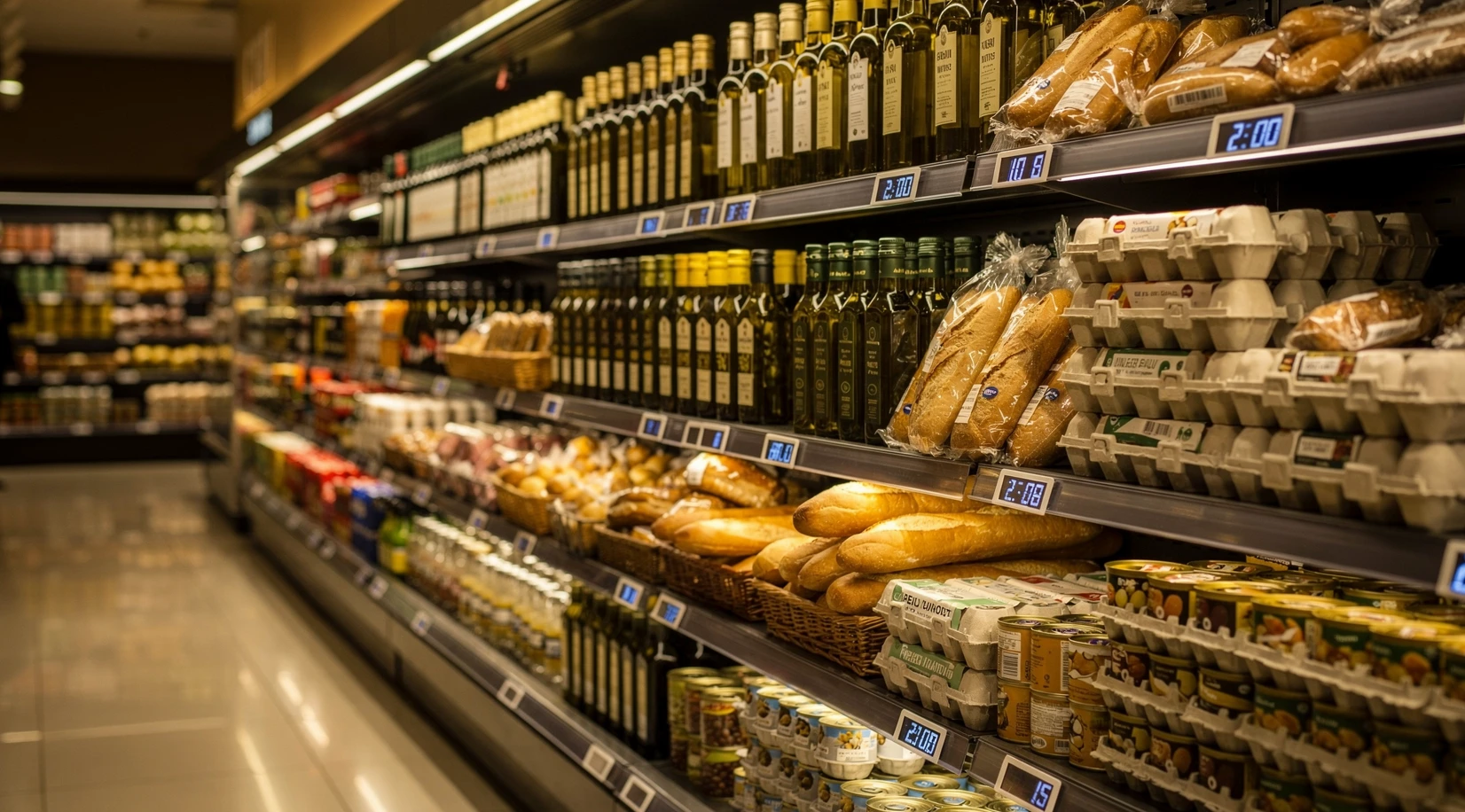
Waitrose has quietly raised shelf prices at a group of its London supermarkets, charging shoppers up to 13.6% more for everyday items than it does in its Canary Wharf flagship or on its own website. The Telegraph reported on Saturday 14 November 2026 that up to 15 London branches have been reclassified internally as “convenience stores”, and that new prices were pushed through on digital shelf labels from head office on Wednesday 11 November.
On the same day, the Times reported that Waitrose is preparing to cut thousands of products from its shelves as part of its “Home of Food Lovers” strategy, and is in talks with suppliers about which lines go. Taken together, the two reports show the John Lewis Partnership grocer pulling two levers at once: charging more where its running costs are highest, and trimming a range that its own buyers say carries a long tail of slow sellers.
This article sets out what has changed, which stores are affected, how big the price gaps are, what the range review could mean for your basket, and what you can do about it before Christmas.
In short
- Higher London prices: up to 15 Waitrose branches, including Bloomsbury, Marylebone and Chelsea King’s Road, now charge more than Canary Wharf and Waitrose.com on some items, the Telegraph found.
- Up to 13.6% more: six free-range eggs cost £1.59 in Bloomsbury against £1.40 online; a 14-item basket cost £30.68 against £28.60 for home delivery.
- Waitrose confirms the change: a spokesman said prices are rising “in a small number of shops to reflect their higher running costs”, while about 1,000 convenience-shop prices are being cut to match supermarkets.
- Range cut planned: the Times reports Waitrose will axe thousands of lines from a range of more than 15,000 products in its larger stores, choosing them by how loyal customers are to each item.
- What to do: compare shelf prices with the Waitrose app or website, use online delivery or a larger branch for big shops, and stock up on favourite lines that look at risk of delisting.
What has Waitrose changed in its London stores?
According to the Telegraph’s consumer affairs team, a group of Waitrose supermarkets in London has been moved into the retailer’s “convenience” pricing tier. Convenience pricing is the higher price list that most big grocers apply in their smaller neighbourhood shops, where rents, staffing and delivery costs per item sold tend to be higher.
The unusual part is the type of store involved. The branches named by the Telegraph are full-size supermarkets, not small Little Waitrose shops. The newspaper pointed out that they are restricted to six hours of trading on Sundays, which under the Sunday Trading Act 1994 applies to shops in England and Wales with a sales area of more than 280 square metres. In other words, the law treats them as large shops, while their price list now treats them as convenience stores.
The change was not announced. A member of staff told the Telegraph that the new prices came through on electronic shelf labels from head office on Wednesday, and that the branch had since received complaints from customers. Another staff member said the Bloomsbury change had been made because of “inflation and competitors such as Tesco”, according to the newspaper.
Which branches are affected?
The Telegraph reported that up to 15 branches have been reclassified and named eight of them. Waitrose itself said it was unable to confirm the exact number or locations of the affected stores, so the list below should be treated as the newspaper’s reporting rather than an official schedule.
- Bloomsbury (Brunswick Centre)
- Marylebone
- Stratford East
- Crouch End
- King’s Cross
- Islington
- Clapham Junction
- Chelsea King’s Road
The Bloomsbury store sits in the Grade II-listed Brunswick Centre, which includes social housing, and several University of London halls of residence are nearby. That detail matters because the shoppers most exposed to a local price rise are those who walk to the nearest store and do not have a car or a regular online delivery slot.
Is Canary Wharf affected? No, on the Telegraph’s evidence. Its comparisons used the Canary Wharf flagship and Waitrose.com as the benchmark, and found that prices for the items it checked were the same in both places. That suggests the main supermarket price list, which also drives online prices, has not moved, and that the rises apply to the reclassified branches only.
How much more are shoppers paying?
The Telegraph priced a basket of 14 identical products at the Bloomsbury branch and on Waitrose.com for home delivery. The basket cost £30.68 in store against £28.60 online, a gap of £2.08 or about 7.3%. Eight of the 14 items, including 1.5kg bags of flour and tins of chopped tomatoes, were the same price in both places, so the whole difference came from six products.
The table below sets out the five items the newspaper named, with the percentage gaps calculated by shopappy from the prices reported.
| Item | Bloomsbury price | Canary Wharf and online | Difference | Increase |
|---|---|---|---|---|
| Essential free-range white eggs (6) | £1.59 | £1.40 | 19p | 13.6% |
| Light-coloured olive oil (500ml) | £6.69 | £5.95 | 74p | 12.4% |
| Heinz baked beans (4-pack) | £3.05 | £2.75 | 30p | 10.9% |
| Chicken breast fillets (2-pack) | £6.05 | £5.50 | 55p | 10.0% |
| Part-baked white baguettes (2) | £1.65 | £1.50 | 15p | 10.0% |
| 14-item basket | £30.68 | £28.60 | £2.08 | 7.3% |
The five named items account for £1.93 of the £2.08 gap. The remaining 15p comes from a sixth product that the Telegraph did not name in its published article.
What does that mean over a year?
For a household that buys a similar basket once a week in an affected branch, a £2.08 gap works out at about £108 a year on shopappy’s arithmetic. A household that does its main shop online or at an unaffected supermarket and uses the local branch only for top-ups would pay far less extra. The real cost depends on how much of your weekly spend goes through the affected store, and on which lines you buy, because more than half of the basket checked did not change at all.
One regular shopper, Jon Robertson, told the Telegraph he was “taken aback” when he saw the higher prices at both Marylebone and Bloomsbury. “It’s pretty brutal… just as the cold weather kicks in,” he said, adding that he would not return until prices improved. A 64-year-old local resident told the paper she would have to “make things stretch out a bit longer” if the rise made a big difference to her purse.
What has Waitrose said about the price rises?
Waitrose did not dispute the substance of the report. A spokesman told the Telegraph: “While pricing in the vast majority of our shops won’t change, we’re updating the prices in a small number of shops to reflect their higher running costs.”
He added: “At the same time, we’re reducing prices on around 1,000 popular items in our convenience shops to match our supermarkets, alongside our New Lower Prices on hundreds of everyday staples, regular rewards, and promotions across all stores.”
That second sentence is the part many shoppers will miss. If Waitrose is cutting convenience-shop prices on about 1,000 items to match supermarket prices, then shoppers in Little Waitrose branches should see some prices fall, while shoppers in the reclassified London supermarkets see some rise. The net effect will differ store by store, and Waitrose has not published a list of the items or the shops involved.
Why would a supermarket charge different prices in different stores?
Location pricing is legal in the UK and widely used. Grocers set their prices by store format, and sometimes by individual store, to reflect rent, business rates, wages, security and the cost of delivering small volumes to busy city centres. Central London branches tend to sit at the top of that cost range. What retailers cannot do is mislead shoppers about the price they will pay, which is why the price on the shelf edge and at the till must match the price charged.
The Waitrose case stands out for two reasons. First, the reclassified stores are large supermarkets that many residents treat as their main shop. Second, the change appears to have been made without notice and through electronic shelf labels, which allow head office to change thousands of prices in an instant. Waitrose said in its September 2026 half-year results that it had rolled electronic shelf labels out to 225 branches, according to the John Lewis Partnership statement.
What is Waitrose planning for its product range?
The second story concerns what is on the shelves rather than what it costs. The Times reported on 14 November that Waitrose is set to axe thousands of products as part of its “Home of Food Lovers” overhaul, and has signalled to suppliers that low-selling lines have outlived their shelf life. The Sun, following up the Times report, said the grocer is in talks with suppliers and sells more than 15,000 individual products in its large stores.
According to the Sun’s account of the Times story, Waitrose will decide which products to remove based on “how loyal customers are to certain products”, and it is not yet known whether any well-known brands will be affected. The retailer is known for stocking unusual cooking ingredients that can be hard to find in rival supermarkets, which is exactly the kind of long-tail range most at risk in a review of this type.
A Waitrose spokesperson told the Times: “We are growing sales and customer numbers and are confident there is headroom to build on this momentum by being absolutely focused on our strategy to be the home of food lovers. This is about ensuring we have exactly what our customers want, a differentiated range focused on the quality and the values that set us apart, combining well-known brands with new and exciting ones that our customers will love.”
Has Waitrose said this before?
Yes. In June 2026 The Grocer reported that Waitrose had told suppliers at an online briefing that it planned to “optimise” its range. Chief commercial officer Charlotte Di Cello said around 25% of Waitrose’s range accounted for just 3% of its sales, and identified this as an area of concern, according to the trade magazine.
At that point The Grocer understood that no decisions had been taken on range resets or delistings. Waitrose said it would “optimise our range by reducing complexity, which will deliver better on-shelf availability and improve efficiency within our supply chains”, and that any changes would be “informed by data on our customers’ behaviour and habits”. The Times report suggests that process has now moved from principle to supplier negotiations.
Waitrose has not given a number. As a rough guide only, a quarter of a range of 15,000 products would be about 3,750 lines, and on The Grocer’s figures that tail generates around 3% of sales. That is shopappy’s illustration, not a Waitrose target, and range sizes vary widely between a large supermarket and a Little Waitrose. It does, however, show why “thousands” is a plausible scale for a full range review.
Why is Waitrose doing this now?
Waitrose is the profit engine of the John Lewis Partnership. In the year to 31 January 2026 it made £256m of adjusted operating profit on £8.5bn of sales, more than four times the £58m delivered by John Lewis, according to the Partnership’s annual results. In the half to 1 August 2026, Waitrose sales rose 4% to £4.3bn, while adjusted operating profit slipped by £7m to £103m, a margin of about 2.6%, as the business invested in loyalty pricing and price cuts. shopappy covered those numbers in its report on the John Lewis Partnership half-year loss.
With John Lewis still losing money in the first half, the Partnership needs Waitrose to protect its margin through Christmas. Higher prices in its most expensive-to-run stores and a leaner range that reduces waste and supply-chain cost are two ways to do that without cutting headline prices across the estate.
Waitrose is also growing. Worldpanel by Numerator data for the 12 weeks to 1 November 2026 showed Waitrose’s sales up 2.2% and its market share edging up from 4.4% to 4.5%, one of only three grocers to gain share, as shopappy reported in its analysis of grocery inflation rising to 2.6%. Like-for-like grocery inflation across the market reached 2.6% in the four weeks to 1 November.
The price and range changes sit alongside a run of other announcements. The table below brings the main 2026 moves together.
| Date (2026) | Move | Detail | Reported by |
|---|---|---|---|
| May | Price cuts, round one | £20m on more than 160 own-brand lines, average cut 12% | Waitrose, trade press |
| Late June | Supplier briefing on range | 25% of range said to deliver 3% of sales; “optimise” plan | The Grocer |
| 10 September | Half-year results | Sales +4% to £4.3bn; adjusted operating profit £103m; labels in 225 branches | John Lewis Partnership |
| 16 September | Price cuts, round two | £20m on more than 370 products, average 11%, up to 37% | Retail Gazette, Grocery Gazette |
| October | Cricklewood opening | 18,000 sq ft store, first of that size in over 10 years | The Sun |
| 12 November | Hale Barns opening | 15,000 sq ft, more than 15,000 products, 73 new recruits | Retail Times |
| 11–14 November | London price tier change | Up to 15 branches reclassified as convenience stores | The Telegraph |
| 14 November | Range cut reported | Thousands of lines to go, supplier talks under way | The Times |
Waitrose said in September that its New Lower Prices programme has now passed £180m of investment across more than 1,000 products since 2023. It also said the May round of cuts produced a 4% year-on-year rise in sales across the lines involved, according to Retail Gazette. Those figures help explain the strategy: invest in price on the products people buy most, and recover margin elsewhere.
How do Waitrose convenience prices compare with rivals?
Charging more in smaller shops is not unique to Waitrose. The most recent large comparison by Which?, published in September 2024, compared 42 branded and own-label items in Tesco Express, Sainsbury’s Local and Morrisons Daily stores against the same chains’ larger supermarkets.
| Retailer | Convenience format | Average premium found | Source and date |
|---|---|---|---|
| Morrisons | Morrisons Daily | 21% (up to 22% for More Card members) | Which?, September 2024 |
| Tesco | Tesco Express | 10% (about 11% for Clubcard holders) | Which?, September 2024 |
| Sainsbury’s | Sainsbury’s Local | 5% (about 14% for Nectar holders) | Which?, September 2024 |
| Waitrose | Reclassified London supermarkets | 7.3% on a 14-item basket; 10–13.6% on named items | The Telegraph, November 2026 |
The figures are not directly comparable. Which? used a wider basket and averaged across many stores, while the Telegraph priced one store against the website. But they show that a convenience premium of around 10% is normal across the big four, and that the Waitrose gaps sit within that range. The difference is that Waitrose has applied the premium to large supermarkets, not just to small shops.
Which? retail editor Ele Clark said when that study was published that many people “are without easy access to transport or online deliveries”, which leaves them reliant on smaller nearby stores. That is the same group most affected by the London changes.
Is it legal to charge more in one branch than another?
Yes. There is no UK law requiring a retailer to charge the same price in every store or online. A business can set different prices by location, format or channel, provided it does not mislead customers about the price they will pay.
Several rules do apply. The Price Marking Order 2004 requires retailers to show the selling price clearly, and for most food and drink sold by weight or volume, the unit price as well (for example, price per 100g or per litre). Under the Digital Markets, Competition and Consumers Act 2024, which took over the unfair trading rules from April 2025, giving false or misleading price information is a misleading action that the Competition and Markets Authority can now fine directly.
None of that prevents a supermarket from raising prices overnight. It does mean that if the shelf label and the till disagree, or a promotion claims a saving that is not real, the retailer is exposed. Unit pricing is useful here: it lets you compare the same product across sizes and stores, as shopappy showed in its report on the Yorkshire Tea Bedtime Brew price rise, where a smaller pack hid a much higher cost per cup.
What about delisted products?
Shoppers have no legal right to insist that a supermarket keeps stocking a product. Suppliers have some protection. Waitrose is one of the large grocers covered by the Groceries Supply Code of Practice, which is enforced by the Groceries Code Adjudicator. The code requires designated retailers to have genuine commercial reasons for delisting a supplier and to give reasonable notice. That protects the supplier’s business, not the shopper’s favourite jar of harissa, but it does mean delistings are usually phased rather than sudden.
What should Waitrose shoppers do now?
The practical steps depend on how you shop. The aim is to make sure you are not paying the convenience price for a full weekly shop.
- Check the app or website before you go. The Telegraph found that Waitrose.com prices matched the Canary Wharf flagship. If a shelf price in your branch looks higher, compare it with the online price on your phone.
- Move the big shop online or to a larger branch. If your nearest store is one of the reclassified branches, a weekly online order or a trip to an unaffected supermarket keeps you on the main price list. Delivery charges and minimum order values apply, so check the total at checkout.
- Use unit prices, not pack prices. The unit price on the shelf label is the fairest way to compare stores and pack sizes.
- Keep your receipts. If the till charges more than the shelf label, ask for the difference back at customer service, and photograph the label if the store disputes it.
- Use My Waitrose offers. Waitrose says its member offers and promotions run across all stores, so personalised offers may narrow the gap on items you buy often.
- Stock up selectively. If you rely on a niche product, such as a specialist ingredient or a small brand, buy a few extra with long shelf lives while the range review plays out.
The timing is awkward for shoppers in affected areas, because December is when many households do their biggest grocery shops of the year. Booking a Christmas delivery slot is one way to stay on the main price list for the large order. Waitrose, Tesco, Sainsbury’s, Asda and Morrisons all opened their Christmas slots in early November, and shopappy’s guide to Christmas delivery slots and supermarket order deadlines lists the key dates.
What does this say about UK supermarket pricing?
The Waitrose story is part of a wider shift in how British grocers set prices. Electronic shelf labels make it cheaper and faster to change prices, loyalty schemes split shoppers into members and non-members, and store-by-store pricing is becoming more granular. The result is that “the Waitrose price” or “the Tesco price” for an item is increasingly a range rather than a single figure.
Rivals are moving in different directions. Asda’s new leadership has focused on restoring staffed checkouts and cutting fuel prices to win back shoppers, as shopappy reported in its coverage of Asda’s third-quarter trading. Aldi and Lidl continue to grow on a single national price list, which is one of their main selling points. Waitrose, at the premium end of the market, is betting that its shoppers will accept higher prices in its most expensive locations in return for quality and service.
The risk for Waitrose is reputational. It has spent £180m since 2023 telling shoppers that it is becoming better value. A report that a handful of London stores have become more expensive overnight, without notice, cuts against that message just as Christmas trading begins. How the retailer responds, and whether it publishes which stores and items are affected, will shape how far the story spreads.
For suppliers, the range review is the bigger story. Small and specialist brands often win a first listing at Waitrose because of its food-loving customer base, and a delisting can remove a large share of their UK supermarket sales. The Grocer reported in June that one branded supplier said “we need to wait and see what the implications of ‘25% delivers 3%’ translates into”, while welcoming the promise of more space for better-selling lines. Waitrose told suppliers then that it was committed to “maintaining a vibrant, diverse portfolio that champions established names, smaller brands, and exciting innovations alike”.
What happens next?
Several things are worth watching over the coming weeks.
- A store list: Waitrose has not confirmed how many branches are affected or which ones. A published list, or further reporting, would show whether the change is limited to central London.
- The 1,000 convenience price cuts: shoppers in Little Waitrose branches should see some prices fall to supermarket levels. Waitrose has not said when the cuts take effect or which items are included.
- Range decisions: supplier talks are under way, according to the Times. Delistings would normally show up in store over months rather than weeks.
- Christmas trading: the John Lewis Partnership usually updates on Christmas trading in January, and its full-year results follow in March. Those will show whether the margin strategy is working.
- Market share: the next Worldpanel grocery market share release is due in early December and will show whether Waitrose has held its gains.
Frequently asked questions
Which Waitrose stores have put prices up?
The Telegraph reported that up to 15 London branches have been reclassified as convenience stores and named eight: Bloomsbury, Marylebone, Stratford East, Crouch End, King’s Cross, Islington, Clapham Junction and Chelsea King’s Road. Waitrose said it could not confirm the exact number or locations.
How much more expensive are the affected stores?
The Telegraph found named items up to 13.6% dearer at the Bloomsbury branch than at Canary Wharf or online. A basket of 14 identical products cost £30.68 in store against £28.60 on Waitrose.com, about 7.3% more, and eight of the 14 items were the same price.
Are Waitrose online prices higher too?
Not on the Telegraph’s evidence. Its comparison found Waitrose.com prices matched the Canary Wharf flagship for the items checked, so the rises appear to apply to the reclassified branches only.
Why has Waitrose raised prices in these shops?
A Waitrose spokesman said it is “updating the prices in a small number of shops to reflect their higher running costs”. A staff member told the Telegraph the Bloomsbury change was due to “inflation and competitors such as Tesco”.
Is Waitrose cutting any prices?
Yes. The spokesman said Waitrose is reducing prices on around 1,000 popular items in its convenience shops to match its supermarkets. Separately, its New Lower Prices programme has cut prices on more than 1,000 products since 2023, including more than 370 in September 2026.
Is Waitrose getting rid of products?
The Times reported on 14 November 2026 that Waitrose plans to axe thousands of products and is in talks with suppliers. Its large stores sell more than 15,000 lines. Waitrose has not said how many will go or which ones, and decisions will reportedly be based on how loyal customers are to each product.
Is it legal for a supermarket to charge different prices in different stores?
Yes. UK law allows retailers to set different prices by store or channel. The price must be clearly displayed, including the unit price for most food sold by weight or volume, and retailers must not give misleading price information.
What can I do if the till charges more than the shelf?
Ask customer service to refund the difference and show them the shelf label, ideally with a photograph. Persistent mispricing can be reported to Trading Standards through the Citizens Advice consumer helpline.
How can I avoid paying the higher prices?
Check prices in the Waitrose app or website before buying, do your main shop online or in an unaffected larger branch, compare unit prices, and use My Waitrose offers on items you buy regularly.