
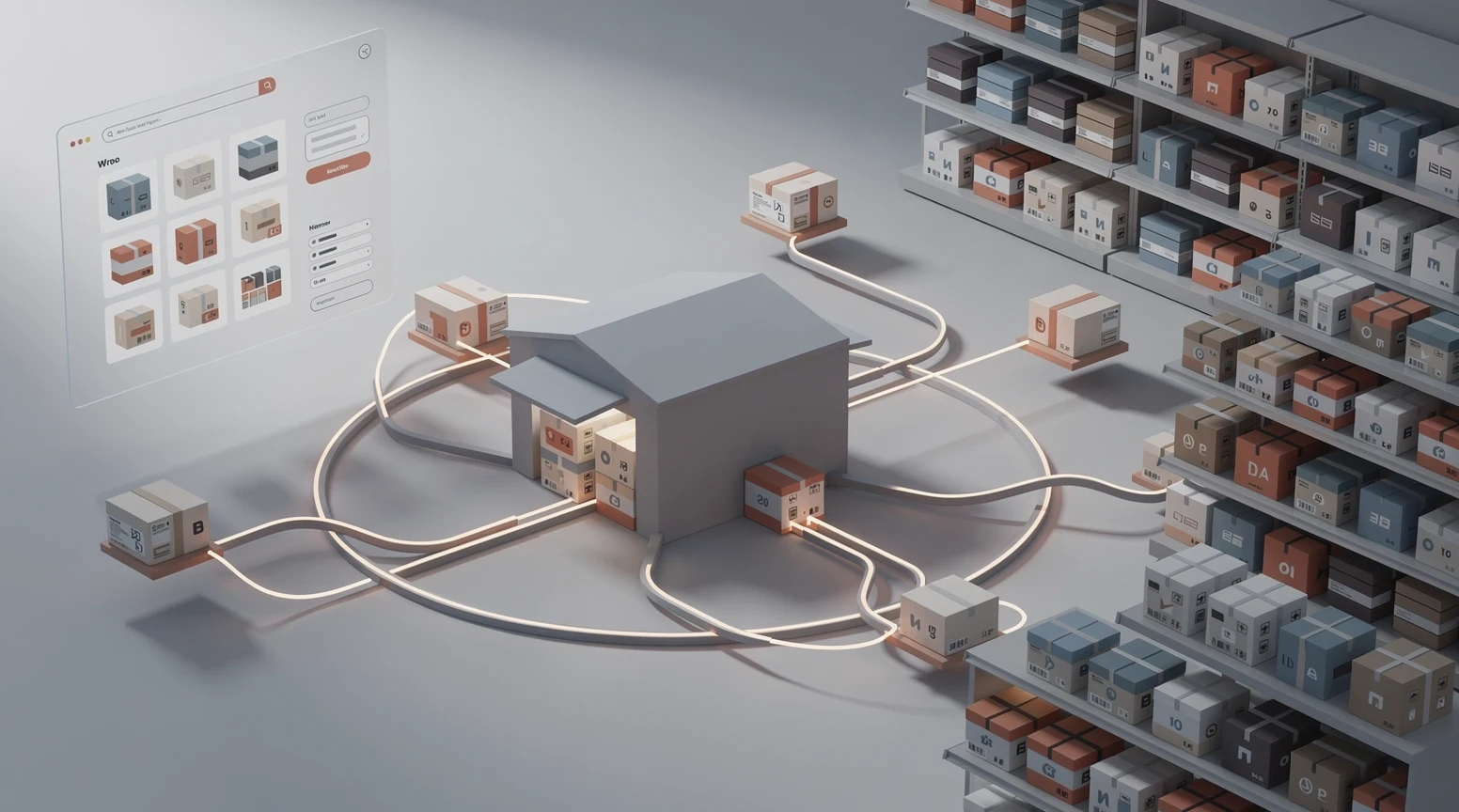
Adding wholesale is one of the most consequential growth decisions a direct-to-consumer brand can make, and in 2026 it has stopped being optional for a large share of US founders. Rising paid acquisition costs, softer organic reach and the maturation of retail media have pushed many D2C operators to look for revenue that does not depend on buying every customer twice. Wholesale, the practice of selling products in bulk to retailers who then resell them, offers scale, shelf credibility and cash flow that a pure online model rarely matches on its own. It also introduces lower margins, longer payment terms and a buyer relationship that behaves nothing like a Shopify checkout. This guide explains when a D2C brand should add wholesale, how to do it well, and the specific mistakes that turn a promising channel into a margin sink.
In short
- Wholesale is a channel, not a pivot. The strongest D2C brands add wholesale to layer on reach and distribution while keeping their owned site as the high-margin core, rather than replacing one with the other.
- Timing depends on signals, not revenue size. Consistent repeat purchase rates, stable unit economics, reliable supply and inbound retailer interest matter more than hitting an arbitrary sales milestone before you open the channel.
- The math changes completely. Wholesale typically halves your effective margin per unit, so brands that price for D2C alone often discover their product cannot survive a standard keystone retail markup without a costing redesign.
- Operations break before strategy does. Most wholesale failures trace back to fulfillment, compliance and cash flow, not to the decision itself, because retail buyers run on routing guides, EDI and net-60 terms that D2C systems were never built to handle.
- Start narrow and prove it. A focused launch with a small set of aligned retailers, clear pricing discipline and a dedicated owner outperforms a broad push into every store that says yes.
Why adding wholesale matters for D2C brands in 2026
The economics that made pure D2C attractive a decade ago have shifted. Customer acquisition cost on the major ad platforms has climbed steadily, organic social reach has compressed, and privacy changes have made attribution harder and retargeting weaker. For many brands the result is a business that grows only as fast as the ad budget allows, with thin or negative contribution margin on the first order. Wholesale offers a different growth lever: a retail partner absorbs the cost of acquiring the end shopper, and the brand earns on volume instead of on a single hard-won conversion.
There is also a credibility effect that pure online presence struggles to replicate. A product on the shelf at a respected national or regional retailer signals legitimacy in a way that a well-designed website cannot. Shoppers who would never click an unfamiliar ad will pick up the same product when a trusted store has already vetted it. That halo often lifts the brand’s own D2C site, with founders frequently reporting that direct traffic and branded search rise after a major retail placement goes live.
The broader retail data supports the shift. The US Census Bureau reports that retail and food services sales run in the trillions annually, and the overwhelming majority of that spend still happens through retailers rather than brand-owned channels, even after years of e-commerce growth (see the US Census Bureau retail trade data). For a D2C brand, that gap is the opportunity: the customers exist, they are already shopping, and wholesale is the route to meet them where they buy. Understanding how this fits the wider retail business landscape helps founders see wholesale as one channel inside a portfolio rather than a leap into the unknown.
What does adding wholesale actually mean? Key terms and definitions
Before deciding when to move, founders need a shared vocabulary, because the wholesale world uses terms that rarely appear in a D2C dashboard. The language matters because each term carries an operational and financial commitment that compounds at scale.
The core pricing terms
Manufacturer suggested retail price, or MSRP, is the price the brand recommends the retailer charge the shopper. Wholesale price is what the retailer pays the brand, usually around half of MSRP, a ratio known as keystone markup. Cost of goods sold, or COGS, is what it costs the brand to make and land the unit. The gap between wholesale price and COGS is the brand’s wholesale margin, and it is almost always far thinner than the D2C margin on the same product.
The commercial and operational terms
A purchase order, or PO, is the retailer’s formal commitment to buy a specified quantity. A line sheet is the catalog document buyers use to place orders, listing SKUs, wholesale prices, MSRP, minimums and case packs. A routing guide is the retailer’s rulebook for how shipments must be labeled, packed and delivered, and breaking its rules triggers chargebacks. Minimum order quantity, or MOQ, is the smallest order the brand will accept, while minimum advertised price, or MAP, is the lowest price a retailer is permitted to advertise publicly.
The payment and risk terms
Net terms describe when the retailer pays, commonly net-30, net-60 or net-90, meaning the brand ships now and collects weeks or months later. A chargeback is a deduction the retailer takes from payment for a compliance failure such as a late delivery or a mislabeled carton. Return-to-vendor, or RTV, covers unsold or damaged goods sent back at the brand’s expense. Each of these terms represents cash leaving the business or arriving late, which is why wholesale rewards operational discipline as much as good products.
When should a D2C brand add wholesale?
The right moment is defined by readiness signals, not by a revenue number. A brand doing two million dollars in D2C with chaotic operations is less ready than a disciplined brand at five hundred thousand dollars with clean margins and reliable supply. The following signals, taken together, indicate that wholesale is likely to add value rather than strain.
The first signal is proven repeat demand. If a meaningful share of customers buy again without being re-acquired through paid ads, the product has genuine pull, and that pull is what makes a retail buyer confident the item will sell through on their shelf. A brand that survives only by constantly buying new first-time customers has not yet proven the product, and putting it into retail simply moves the sell-through risk onto a partner who will drop it fast.
The second signal is stable unit economics with margin to spare. Because wholesale roughly halves the effective margin, a product that is only marginally profitable in D2C will lose money in wholesale once you account for fulfillment, chargebacks and slow payment. The third signal is supply reliability: retail buyers expect consistent availability, and a stockout on a retail shelf damages the relationship far more than a sold-out banner on your own site. The fourth signal is inbound interest, where retailers or distributors approach the brand first, which is the cleanest possible validation that demand exists on the retail side.
| Readiness signal | Not ready | Ready for wholesale |
|---|---|---|
| Repeat purchase | Most revenue from paid first orders | Strong organic repeat rate without re-acquisition |
| Margin | Thin or negative contribution margin | Healthy margin that survives a 50 percent wholesale cut |
| Supply | Frequent stockouts, single fragile supplier | Reliable lead times and buffer inventory |
| Demand pull | Brand chasing every store that will listen | Inbound interest from retailers or distributors |
| Operations | Founder hand-packs every order | Systems and a 3PL that can handle case packs and EDI |
Founders weighing the move should also look at their team. Wholesale needs an owner who understands retail buyers, line sheets and compliance, which is a different skill set from performance marketing. Brands that are still building their core team should sequence carefully, and our guide to hiring the first ten roles at a scaling D2C brand covers where a wholesale or sales hire fits against other early priorities. Trying to run wholesale as a side project owned by no one is a reliable way to generate chargebacks and abandoned accounts.
How does wholesale work in practice? The operational playbook
Once the decision is made, execution determines whether wholesale becomes a profit center or a cash trap. The mechanics follow a predictable sequence, and each stage has standards that retail buyers expect a serious brand to meet without hand-holding.
Building the line sheet and pricing structure
The line sheet is the brand’s pitch document, and buyers judge professionalism by it. It lists every SKU with its wholesale price, MSRP, case pack, MOQ and lead time, alongside clean product imagery and any MAP policy. Pricing has to be reverse-engineered from the shelf: start at the realistic retail price the shopper will pay, halve it for the wholesale price, and confirm that the remaining margin above COGS is genuinely workable. If it is not, the costing or the product needs to change before approaching a single buyer.
Getting in front of buyers
Brands reach buyers through three main routes: direct outreach to category buyers, wholesale marketplaces that aggregate independent retailers, and trade shows where buyers source in volume. Independent stores often place orders through online wholesale platforms with little friction, which makes them an ideal proving ground. Larger chains require a formal buyer relationship, a vendor setup process and often a distributor in between. A disciplined brand starts with independents to build sell-through evidence, then uses that data to approach larger accounts with proof rather than promises.
Fulfillment, compliance and getting paid
This is where most brands underestimate the workload. Retailers issue routing guides that dictate carton labeling, pallet configuration, advance shipping notices and delivery windows, and deviations trigger chargebacks that quietly erode margin. Larger accounts require electronic data interchange, or EDI, to exchange purchase orders and invoices, which usually means adding software or a 3PL that supports it. Payment arrives on net terms, so a brand shipping a large PO on net-60 needs the working capital to carry that inventory cost for two months before collecting. Planning for this cash gap before the first big order is the difference between healthy growth and a liquidity crisis.
Pricing and margin: making the unit economics work
The single most common reason D2C brands fail at wholesale is that their product was never priced to support it. A D2C brand selling a product for forty dollars with a ten dollar COGS enjoys a comfortable margin online. The same product at wholesale sells for roughly twenty dollars, leaving ten dollars before any wholesale-specific costs, and chargebacks, freight allowances and slow payment can erode that quickly.
The fix begins at product costing, not at the negotiating table. Brands that intend to add wholesale should design their cost structure from day one so that the wholesale price still leaves a defensible margin. That can mean higher MSRPs, redesigned packaging, larger production runs to lower per-unit cost, or trimming features that add cost without adding shelf appeal. Retrofitting a wholesale-viable cost structure onto a product designed purely for D2C is painful, which is why the earlier a brand decides wholesale is in its future, the easier the math becomes.
Channel pricing discipline is equally critical. If a brand routinely discounts heavily on its own site, retailers will resent competing against the brand’s own store and may demand deeper terms or drop the line. Maintaining a consistent MSRP across channels, with promotions that do not undercut retail partners, protects the relationship. This is the same discipline that governs adjacent decisions like which payment and financing options to offer at checkout, an area our comparison of Klarna, Afterpay and Affirm for US merchants examines for the D2C side of the business.
| Cost component | D2C channel | Wholesale channel |
|---|---|---|
| Selling price per unit | $40 (MSRP) | $20 (wholesale) |
| COGS | $10 | $10 |
| Acquisition or channel cost | $12 (paid ads) | $0 (retailer acquires) |
| Fulfillment and compliance | $4 (pick, pack, ship) | $3 (case pack, chargeback risk) |
| Approximate contribution | $14 per unit | $7 per unit, paid in 30 to 60 days |
The table shows why volume is the entire point of wholesale. Per unit, the channel earns less and pays later, so it only makes sense when retail moves enough units to dwarf what the brand could sell directly. A brand that wins a placement in a few hundred stores can sell more in one PO than in months of D2C, and that volume, multiplied by a thinner but real margin, is what makes the channel worthwhile.
Common mistakes and how to avoid them
Most wholesale failures are self-inflicted and predictable. Knowing the common traps in advance lets a brand design around them rather than learn the hard way through lost margin and damaged buyer relationships.
The first mistake is saying yes to every retailer. A brand flattered by interest spreads itself across mismatched stores, dilutes its positioning and stretches operations past breaking point. Disciplined brands qualify retailers the way retailers qualify them, choosing partners whose customers and merchandising fit the brand. The second mistake is pricing for D2C and discovering too late that the product cannot survive a wholesale cut, which forces either a painful repricing or an exit from the channel.
The third mistake is ignoring compliance. Founders who treat routing guides as suggestions watch chargebacks consume their margin, sometimes turning a profitable PO into a loss. The fourth is underestimating the cash flow gap, where a brand wins a large order, ships it on net-60, and then cannot fund the next production run because the cash is locked in receivables. The fifth is channel conflict, where aggressive D2C discounting undercuts retail partners and erodes trust. Avoiding these is less about cleverness and more about treating wholesale as a discipline with its own rules.
How to protect margin once you are in
The brands that keep wholesale profitable build guardrails early. They negotiate clear chargeback dispute processes, audit deductions monthly, and push back on invalid claims rather than absorbing them. They hold firm on MOQs so small orders do not consume disproportionate operational effort. They build buffer inventory to avoid retail stockouts, and they keep a tight MAP policy so the brand’s own pricing power does not collapse. None of this is glamorous, but it is what separates a wholesale channel that compounds from one that quietly bleeds.
Examples from US retail and e-commerce
The strongest patterns come from brands that built D2C demand first, then used that proof to enter retail on favorable terms. A brand that spends a year building a loyal online following and a clear product story walks into a buyer meeting with sell-through data, customer reviews and a recognizable identity. That evidence shifts the negotiation: the buyer is choosing a proven product rather than gambling on an unknown, which earns the brand better placement and less punitive terms.
Beauty, food and beverage, and household consumables are the categories where the D2C-to-wholesale path is most worn. These products have repeat purchase built in, travel well in case packs, and benefit enormously from physical shelf presence where shoppers can see and grab them. A supplement or snack brand that proves repeat demand online is a natural fit for grocery and convenience retail, where impulse and habit drive volume that a website alone could never match.
There is also a reverse pattern worth noting: brands that started on a marketplace, moved to owned D2C, and then layered wholesale on top, building a three-channel portfolio. The journey of a founder who moved a brand from Amazon to owned D2C shows how channel sequencing compounds, with each stage funding and de-risking the next. The lesson across all these examples is the same: wholesale works best as an addition to a proven base, not as a rescue plan for a brand that has not yet found product-market fit.
What scaling brands get right
Brands that scale wholesale successfully treat it as a parallel operation with its own owner, systems and targets, rather than bolting it onto the D2C team. They invest in a dedicated sales lead, a 3PL that handles retail compliance, and clear internal reporting that separates wholesale margin from D2C margin so the two channels are never confused. Founders pursuing international expansion alongside wholesale face an even more demanding version of this, which our guide to scaling D2C internationally without losing your margin addresses in depth. The common thread is operational seriousness: wholesale rewards brands that respect it as a discipline.
Tools, partners and vendors worth knowing
Executing wholesale well requires a stack that D2C-native brands often lack at the start. The categories below cover the partners that matter most, and choosing them early prevents the scramble that derails first orders.
Wholesale marketplaces let independent retailers discover and order from brands with minimal friction, and they are the most accessible entry point for a brand testing the channel. Third-party logistics providers that specialize in retail fulfillment handle case packing, routing-guide compliance, EDI and advance shipping notices, which a standard D2C fulfillment setup usually cannot. EDI software or an integrated 3PL becomes essential the moment a brand sells to larger chains that mandate electronic document exchange.
On the financial side, brands frequently need working capital partners to bridge the gap between shipping on net terms and collecting payment, whether through inventory financing, receivables factoring or a revenue-based facility. Chargeback management and deduction-audit services recover margin that retailers claw back, often paying for themselves several times over. Bringing the right operational owner in-house ties the stack together, and our guide to hiring your first ops leader as a scaling retail brand covers exactly the kind of person who should own this complexity. A brand that assembles this stack before its first large PO ships into retail with confidence rather than improvising under pressure.
| Partner category | What it solves | When to add it |
|---|---|---|
| Wholesale marketplace | Access to independent retailers | At launch, for testing demand |
| Retail-ready 3PL | Case packing, routing compliance, EDI | Before the first chain order |
| Working capital partner | Bridging net-terms cash gaps | When PO sizes outgrow cash reserves |
| Deduction audit service | Recovering invalid chargebacks | Once chargebacks become material |
Frequently asked questions
Is wholesale lower margin than D2C?
Yes, almost always on a per-unit basis. Wholesale typically sells at around half of MSRP, so the effective margin per unit is far thinner than selling direct. The channel makes sense because retail can move volumes that a brand-owned site cannot match, so a thinner margin on many more units can exceed the total profit from a smaller number of direct sales.
How do I price a product for wholesale?
Work backwards from the shelf. Start with the realistic retail price a shopper will pay, set the wholesale price at roughly half of that, and confirm the remaining margin above COGS still covers fulfillment, chargeback risk and the cost of slow payment. If the math does not work, the product needs to be re-costed before you approach buyers, not after.
What is a routing guide and why does it matter?
A routing guide is a retailer’s rulebook for how shipments must be labeled, packed, palletized and delivered, including delivery windows and advance shipping notices. It matters because breaking its rules triggers chargebacks, which are deductions the retailer takes from your payment. Consistent compliance is one of the clearest ways to protect wholesale margin.
What are net terms and how do they affect cash flow?
Net terms define when the retailer pays, commonly net-30, net-60 or net-90 days after delivery. You ship and incur the inventory cost now but collect weeks or months later, which creates a cash flow gap. A brand winning large orders on long net terms needs working capital to fund the next production run while waiting to be paid.
Should I start with big chains or independent stores?
Independents first, in almost every case. They place orders with less friction, carry lower compliance overhead, and let you build sell-through evidence with limited risk. That data then strengthens your pitch to larger chains, so you approach them with proof of demand rather than projections.
How do I avoid channel conflict with my own website?
Maintain consistent MSRP across channels and avoid deep discounting on your own site that undercuts retail partners. Run promotions in ways that do not make your store the cheapest place to buy the same product. Retailers will resent competing against the brand’s own discounting and may demand better terms or drop the line entirely.
Do I need EDI for wholesale?
Not for small independent retailers, who often order through simple online platforms. You do need electronic data interchange for most larger chains, which mandate it for exchanging purchase orders, invoices and shipping notices. The practical solution is usually a 3PL or software platform that supports EDI so you are ready when a major account requires it.
How much inventory should I hold for wholesale?
Enough to fill orders reliably and maintain buffer stock, because a stockout on a retail shelf damages the buyer relationship far more than an out-of-stock banner on your own site. Forecast against confirmed purchase orders plus expected reorders, and keep safety stock for your strongest accounts. Reliable availability is one of the main reasons buyers keep a brand on the shelf.
Can a brand do D2C and wholesale at the same time?
Yes, and the strongest brands do exactly that, treating wholesale as a parallel channel with its own owner, systems and margin targets. The owned site keeps the high-margin direct customer relationship while wholesale adds reach and volume. The key is to run them as distinct operations rather than letting one quietly undermine the pricing or inventory of the other.