
In short
- £12,000 pitches: Liverpool traders say they have been priced out of this year’s Christmas market on St George’s Plateau after a new operator, Underbelly, set a fee structure that roughly doubles last year’s costs.
- Line by line: one coffee shop owner was quoted £11,840 for a 4 x 2.5 metre pitch, made up of a £7,500 pitch fee, £2,000 hut hire and charges for water, power, card machines and internet.
- Takings cut: traders report compulsory card-only tills, a share of sales of between 10% and 20% depending on the trader quoted, and payouts held back for up to 90 days after the market closes.
- Council response: Liverpool City Council leader Liam Robinson says he has met business owners and will look at options for future years; the council knew the price structure when it awarded the contract and will take a share of some income.
- For shoppers: the market runs from 21 November 2026 to 3 January 2027, is free to enter and has a new ice rink, but fewer stalls are expected and some long-standing local makers will not be there.
What happened in Liverpool this weekend?
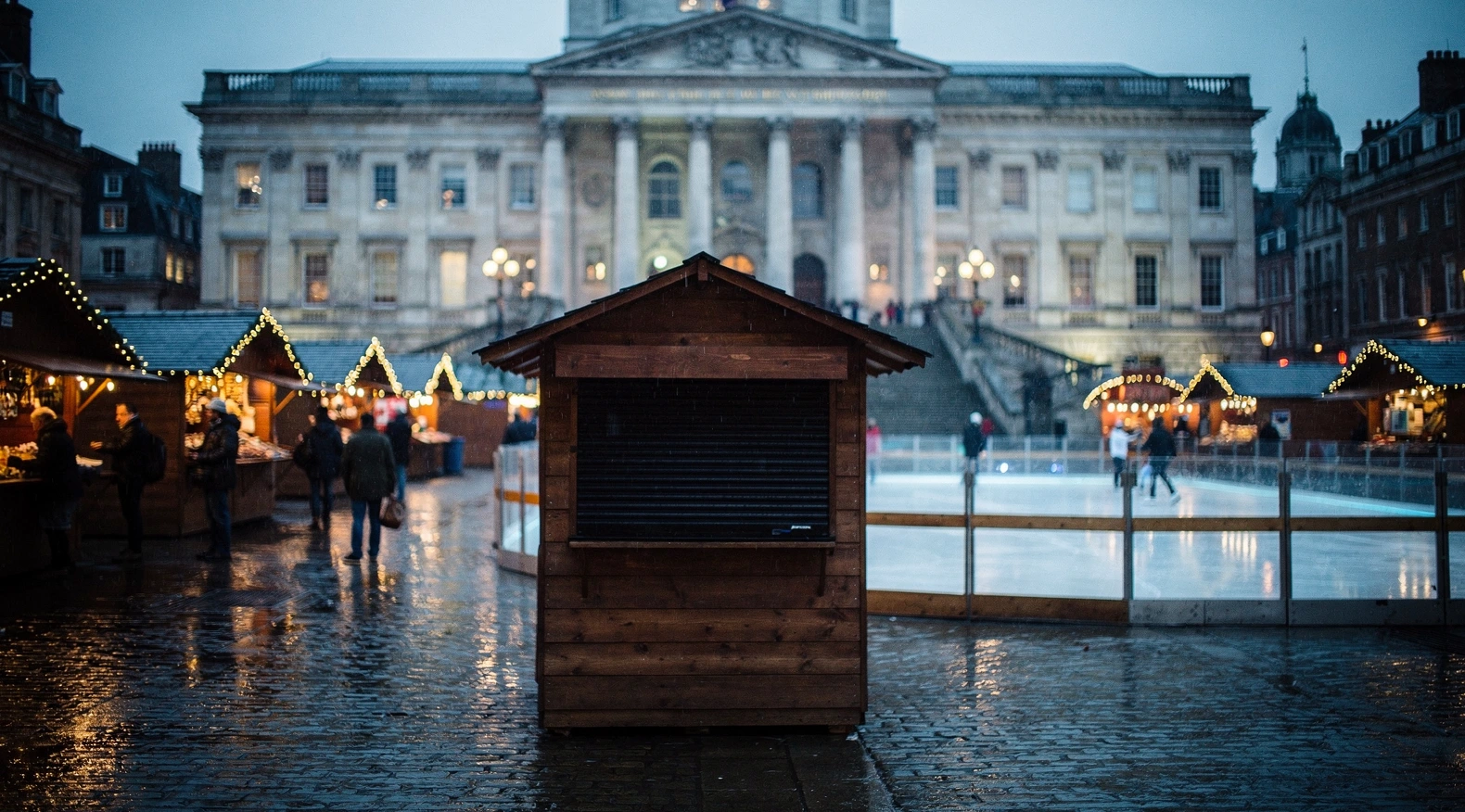
Independent traders have told the leader of Liverpool City Council that they cannot afford to take a stall at this year’s Christmas market, the BBC reported on Sunday morning. The market, which has filled St George’s Plateau outside St George’s Hall for about a decade, is being run for the first time by Underbelly, the London events company behind Christmas in Leicester Square and Christmas in Trafalgar Square.
Anthony Grice, who runs the Fika coffee shop, told the BBC he had been quoted £12,000 for a stall selling hot chocolate and cakes. Silversmith Alex Healy, from Gateacre, rang a BBC Radio Merseyside phone-in to tell council leader Liam Robinson that a stall would cost her “in the region of £14,000 to £15,000” even though she has “the smallest hut available”. She has traded at the market every year since 2021 and says she will not be returning.
Robinson said he had met business owners to “understand the challenges and the issues that they might have had this year” so the council could “look at different options in future”. He also confirmed two points that traders have been pressing for months: the council was aware of the price structure Underbelly was offering when it won the contract, and the council will receive a share of some of the income.
The Sunday report is the latest turn in a dispute that the Liverpool Echo first reported in July, when traders received Underbelly’s terms. The Manchester Evening News published Grice’s itemised quote in September. With the market due to open on 21 November, the question has moved from whether the prices are fair to who will actually be selling on the plateau, and what that means for shoppers who go looking for local gifts.
How much are Liverpool Christmas market traders being charged?
No single published price list exists, because Underbelly sets terms with traders individually and the company has not commented publicly on the figures. What is on the record comes from traders who have shared their quotes or contracts with the Liverpool Echo, the Manchester Evening News and the BBC. Taken together, they point to total costs of roughly £12,000 to £15,000 for a small stall, before staff, stock and travel.
| Trader (business) | What they sell | 2025 cost (Clarke Events) | 2026 quote (Underbelly) | Source |
|---|---|---|---|---|
| Alex Healy (Pare de Bijoux) | Handmade silver jewellery | £6,780 incl. VAT and electricity | Just under £14,000 before extra charges; “£14,000 to £15,000” all in | Liverpool Echo, BBC |
| Sarah-Jane Lowndes (Lewis and Lowndes) | Engraved keepsakes | Similar to Healy | Just under £15,000 | Liverpool Echo |
| Max Ruether (O’Donnell Moonshine) | Craft spirits and liqueurs | About £10,000, excluding staff | About £14,000 plus 10% of gross takings; £20,000–£25,000 estimated in total | Liverpool Echo |
| Anthony Grice (Fika) | Hot chocolate and cakes | Not a previous stallholder | £11,840 for a 4 x 2.5 metre pitch (about £12,000) | Manchester Evening News, BBC |
Healy’s figures give the clearest year-on-year comparison. She told the Echo that her application listed a hut fee of £2,000, which she first thought was “so cheap”, before realising that a pitch fee of around £7,700 had to be paid on top. She said fees had previously risen by about 10% a year, so she had saved for £8,000 or £9,000. Her total roughly doubled instead.
The £11,840 hot chocolate pitch, line by line
Grice’s quote is the only one published in full. He told the creator site Creatorzine, in comments reported by the Manchester Evening News, that it was the “bottom-tier pricing structure” because he needed only a hot chocolate churner, some water and a fuse. The individual charges add up exactly to the £11,840 total.
| Charge | Amount | Share of total |
|---|---|---|
| Pitch fee | £7,500 | 63% |
| Hut hire | £2,000 | 17% |
| Power | £1,000 | 8% |
| Water supply | £750 | 6% |
| Card machine installation | £350 | 3% |
| Internet | £180 | 1.5% |
| Water removal | £60 | 0.5% |
| Total | £11,840 | 100% |
Grice said he had expected something nearer £4,000. He called the quote “legalised theft” and posted a video of the breakdown that had drawn close to 200,000 views by late September. The Manchester Evening News described the pitch as lasting four weeks; the published dates for the market run to 44 days, and it is not clear from the reporting whether his quote covered the full run.
Card-only tills, commission and delayed payouts
The fixed fees are only part of the cost. According to an Underbelly email seen by the Liverpool Echo, traders are also expected to pay for water and grey waste, chiller and storage space, electrical supply and gas safety checks, plus a refundable deposit of £100 per metre of frontage. The Echo reported that electrical supply charges can reach £6,400 depending on a trader’s needs.
Several traders say they must use the organiser’s card machines, cannot take cash and cannot bring their own terminals. Grice said organisers take 20% of card-machine earnings; Ruether said his terms set the cut at 10% of gross takings. The difference may reflect different contract tiers, but neither figure has been confirmed by Underbelly. For a small business used to paying a card processor around 1% to 2% per transaction on its own pop-up till and payments kit, a percentage cut of that size changes the economics of every sale.
Healy also told the Echo that takings would be held for 90 days after the market ends, meaning she would not see her Christmas money until March. Grice said the same, telling Creatorzine “you might not get paid out until February or March”. For a maker who buys silver or ingredients in the autumn, that is a long gap to fund out of savings or credit.
Why have prices doubled under Underbelly?
The short answer is that Liverpool has changed both the operator and the format. The Liverpool Echo reported that the market was run for the past decade by Clarke Events. This year the council tendered the city’s Christmas markets again and awarded contracts to Underbelly for St George’s Hall and to Icebox Live for the Pier Head site.
From Clarke Events to Underbelly
Underbelly is best known for its programme at the Edinburgh Festival Fringe and for Skate Leicester Square in London. Its Liverpool event is branded Skate St George’s, built around a 675 sq ft open-air ice rink on the plateau opposite Lime Street station. Alongside the rink there will be a Big Wheel, a carousel, a Wave Swinger, a helter skelter, a Santa Train, a reindeer ride, a Christmas Tree Maze and three themed bars: the rooftop Snowed Inn, the family Bar Humbug and the 1980s and 1990s themed On the Piste.
That is a bigger, more ticketed attraction than the chalet market Liverpool shoppers were used to. The Echo reported that the number of traders is expected to be lower than in previous years to make room for the rink, though an exact figure has not been confirmed. Underbelly co-founder Ed Bartlam said in August that the company was “looking forward to working with the local community to create a new seasonal highlight”. The company did not respond to the BBC’s requests for comment on trader costs, either in August or this weekend.
What the council says it gets
Liverpool City Council’s position has shifted over the summer. In August and September its spokesperson said the operators at St George’s Hall and Pier Head “manage their own trader arrangements independently”. On Sunday Robinson went further, telling BBC Radio Merseyside that the council knew the price structure when Underbelly won the tender, that the company won “on quality and price”, and that the council would receive a share of some of the income.
The council has not said how large that share is or which income streams it covers. That matters for local traders, because a concession model in which the landlord takes a slice of turnover gives the operator a reason to maximise revenue per pitch rather than the number of small, local stallholders. Carl Cashman, the leader of the Liberal Democrat opposition on the council, called a £14,000 stall “a rip-off”, adding that small businesses are already “feeling the pinch” from business rates, inflation and payroll costs.
Grice said that when he asked at a meeting how many local traders had signed up, the council did not know. “These markets should be a chance to showcase the best of what you’ve got, but not having the ‘Scouse soul’ there is so annoying,” he told the BBC. “Aren’t our people good enough?”
Can a small trader still make £12,000 back?
The traders’ complaint is not just about the headline fee; it is about how many sales it takes to cover it. A simple calculation on Grice’s published figures shows why he decided against trading. He said he would charge £5 to £5.50 for a hot chocolate. Taking £5.25 as the midpoint and the 20% card commission he described, he would keep £4.20 a cup before paying for milk, chocolate, cups and staff.
On that basis he would need to sell about 2,820 cups just to cover the £11,840 in fixed charges. Spread across the 44 days the market is open, that is about 64 cups a day before any ingredient, wage or travel cost, and before he made a penny. On a wet Tuesday in late November, or in the week after Christmas, that is a demanding target for a single-product stall.
| Scenario (shopappy calculation) | Net per £5.25 sale | Sales needed to cover £11,840 | Per day over 44 days |
|---|---|---|---|
| 20% card commission (Grice’s terms) | £4.20 | About 2,820 | About 64 |
| 10% commission (Ruether’s terms) | £4.73 | About 2,505 | About 57 |
| Own card reader at about 1.5% | £5.17 | About 2,290 | About 52 |
The table excludes VAT, ingredients, staff and insurance, so the real break-even point is higher in every row. It also shows that the percentage cut matters less than the fixed fee: even with no commission at all, the pitch alone would require more than 2,200 hot chocolates. Traders who measure pop-up return beyond the till, through new customers, mailing list sign-ups and later online orders, may still see value in a high-profile pitch, but that case is much harder for a one-person business to fund upfront.
Ruether’s experience points to a second problem: the calendar. He told the Echo that Liverpool’s market used to end on or around Christmas Day, and that the week after Christmas is “basically loss-making” for every trader he knows because footfall collapses. This year the plateau stays open until 3 January 2027, the first time the event has run past Christmas. That suits an ice rink selling tickets to families on school holidays, but it adds days on which a gift stall pays staff and power for very little trade.
How do Liverpool’s pitch fees compare with other UK Christmas markets?
Christmas market pricing is rarely published, which makes comparisons difficult. The figures that are on the record suggest Liverpool now sits at the expensive end for a city-centre chalet, though not in a different league from other large markets.
| Market | Operator | 2026 dates | Published trader cost | Source |
|---|---|---|---|---|
| Liverpool, St George’s Plateau | Underbelly | 21 Nov to 3 Jan | £11,840 (small food pitch) to about £15,000 (gift chalet), plus 10–20% of card takings reported | Liverpool Echo, MEN, BBC |
| Bristol, Broadmead | Relevention | 11 Nov to 23 Dec | 3m chalet £3,960 + VAT; 6m chalet £7,900 + VAT (£9,480); £140 roof decoration; £500 bond | Bristol Post |
| Farnham, Surrey (one day) | Farnham Town Council | 13 Dec | 3m x 3m pitch £140 + VAT | IBTimes UK |
| Boldmere, Sutton Coldfield | Boldmere Futures CIC | Cancelled | About £24,000 to run the whole event | Daily Express |
Bristol: lower fees, stricter rules
Broadmead’s market is the closest published comparison. According to a trader information pack reported by the Bristol Post in August, a six-metre retail chalet costs £9,480 including VAT for the whole run, which the paper calculated at just under £200 a day. Power, external decorations, security and bins are included, food and drink rents are negotiated separately, and Relevention has frozen pitch fees in recent years. The trade-off is tight control: traders must decorate in green, red and gold, cannot play music or use tinsel, and risk losing a £500 bond for breaking the rules or opening late.
Liverpool’s quotes work out at more than £300 a day for a gift chalet on the published dates, before the card commission, and that is for a smaller hut than the Bristol six-metre unit. The gap is large enough to explain why traders who previously paid around £7,000 are now walking away.
Manchester: the scale player
Manchester’s Christmas Markets, now in their 27th year, opened on 6 November with around 200 stalls across ten sites, according to Secret Manchester and the Manchester Evening News. Most locations close on 22 December; Albert Square and Cathedral Gardens stay open to 3 January. The city council runs the markets and has not published pitch fees. What visitors do see is the price end of the chain: a £3.50 deposit on the collectible mug, and a £7.75 pint at the new Guinness stall on St Ann’s Square, which the Manchester Evening News reported shoppers were happy to photograph if not to pay for.
Joe Harrison, chief executive of the National Market Traders Federation, told the Daily Express on Sunday that the big city markets in London, Manchester and Birmingham “will be fine” because they generate income and attract tourists. His concern is the layer beneath them.
Why are smaller Christmas markets being cancelled?
Liverpool’s problem is a market that is too expensive for small traders; elsewhere in England, some markets are not happening at all. The Express reported that three have been cancelled this year: Fowey in Cornwall, which was due to run from 4 to 6 December and was called off after a decade by organisers Live Events South West, citing financial and operational challenges; Boldmere in Sutton Coldfield, cancelled for a second year after the local council reportedly refused funding for an event costing about £24,000; and Kimberley in Nottinghamshire, an 80-stall market dropped over security fees and a shrinking pool of volunteers and replaced by a smaller event at Kimberley Library.
Harrison pointed to two pressures. The first is security. The Terrorism (Protection of Premises) Act 2025, known as Martyn’s Law after Martyn Hett, who was killed in the Manchester Arena bombing in 2017, places duties on publicly accessible premises and events with a capacity of 200 or more, with a higher tier for 800 or more. The Act received Royal Assent in April 2025 with an implementation period of at least two years, so its duties are not yet being enforced, but organisers are already planning and budgeting for them. “Safety equals more expense and the money isn’t there at the minute,” Harrison said.
The second is the cost of running anything with staff. Harrison cited higher employer National Insurance contributions and the rise in the minimum wage, and said councils are increasingly spending only on essential services. He also described “hidden costs” for small vendors, including card-only payment rules under which organisers take between 10% and 30% commission on sales, and separate charges for electricity, wifi, waste removal and upfront damage bonds. That description matches what Liverpool traders say they have been offered.
The backdrop for all of this is a weak autumn for physical retail. Shop visits fell 4.7% year on year in October, with high streets down 5.2%, as storms hit UK footfall hardest on high streets. A Christmas market is supposed to reverse that by giving people a reason to come into town. The NMTF says it is now setting up regional market partnerships, one in Greater Manchester that has run for about a year and one in the West Midlands, in which groups of councils share costs and promote a region rather than a single market.
What changes for shoppers visiting Liverpool Christmas Market 2026?
For visitors, the market is bigger, longer and more ticketed than before, and it is likely to have fewer independent stalls. Here are the practical details from the BBC, the Liverpool Echo and the organisers.
- Dates: Saturday 21 November 2026 to Sunday 3 January 2027, the first time the event has run past Christmas.
- Location: a U-shape around St George’s Hall, with the rink on St George’s Plateau opposite Lime Street station and stalls on William Brown Street and St George’s Place. Postcode for sat navs: L1 1JJ.
- Entry: free. Skating and some rides are ticketed.
- Skating prices: the Echo lists tickets from £11.50 for adults and £10 for children, with family tickets from £38; the BBC reported prices from £13 for adults and £11 for children up to 12. Prices are likely to vary by session, so check the booking page before you go.
- Hours: the Echo’s visitor guide gives 10am to 10pm daily; the Skate St George’s announcement gives weekdays from noon and weekends from 10am, with skating sessions from 10.15am to a final session at 9.15pm.
- Bars: Snowed Inn, Bar Humbug and On the Piste replace the old Alpine, Tipi Tent, Windmill and Ski Lodge bars.
- Getting there: Lime Street is directly opposite; Liverpool Central is about six minutes’ walk and Queen Square bus station about five. Parking is available at St John’s Shopping Centre, Queen Square Q-Park and Mount Pleasant.
The Echo says the market will still offer Bavarian food, sweet treats, gifts and personalised decorations. What it cannot yet say is how many of those stalls are run by Merseyside businesses, the question Grice put to the council. If you go specifically to buy from local makers, it is worth checking a stall’s own social media before you travel. Underbelly is also running a schools art project, Winter Windows, with the Walker Art Gallery, in which 20 illuminated designs by pupils from across the Liverpool City Region will be displayed at the event.
Shoppers should also expect the cost pressures to show up in prices. Grice put it bluntly in September: “Customers say that everything is overpriced and think it’s the traders ripping people off, but they’re covering the costs.” The NMTF’s Harrison made the same point to the Express, saying a family visit can now cost “another £80 or £100” once drinks and food are added up.
Where can you still buy from Liverpool’s independent traders this Christmas?
Liverpool City Council says local traders will have cheaper options this year. According to its spokesperson, artisan sellers can trade at a street market on Basnett Street every Saturday in November, and at regular and pop-up markets on Lark Lane and in Woolton Village in the run-up to Christmas. Those are run by Liverpool Markets, the council’s own markets service, which describes them as a “cost-effective way for traders to showcase and sell their products”.
For shoppers who want to spend money with Merseyside makers, those smaller markets may be a better bet than the plateau. Healy, for example, told the BBC in August that the St George’s market had provided about 80% of her Christmas market income, and Robinson has now invited her to meet him to discuss how the council could support her business. Lowndes told the Echo that exposure from last year’s market helped her win a permanent kiosk at Belle Vale Shopping Centre in Huyton.
The wider question of who gets space in a town centre is also on the national agenda. The government’s high streets strategy on empty units and dodgy shops gives councils more tools to shape what fills their town centres. Liverpool’s dispute shows the other side of that power: when a council tenders a flagship space, the terms it accepts decide which businesses can afford to be there.
A separate row at the Pier Head
Liverpool’s waterfront has its own trader dispute this weekend. The BBC and the Liverpool Echo reported that Patsy Murphy, 67, and Harry Khanijau, 73, who have run a hot food stall and an ice cream van next to the Gerry Marsden Ferry Terminal since 2009, could lose their street trading permits from April 2027. A council committee report says the Pier Head has become “a major visitor destination” since their consents were granted, and that permits are granted for fixed periods with no permanent right to a location. The council’s street trading sub-committee is due to vote next week.
“This is our livelihoods, this is our lives,” Khanijau told the BBC. “We run at a loss but we’re here on the bad days when nobody is around.” The council says it is “exploring new arrangements which will give more opportunities to businesses interested in trading from the site”. The case is separate from the Christmas market, but it is the same pattern: prime public space being reorganised around bigger visitor attractions, with long-standing small traders asking where they fit.
What should traders check before paying for a Christmas market pitch?
The Liverpool row has been followed closely by makers across the country, many of whom are still booking festive events. Based on the terms Liverpool traders have described and the warnings issued by councils and trade bodies, these are the points to check before signing.
- The full cost, not the hut fee. Healy’s first reading, by her own account, was to take a £2,000 hut fee as the price. Ask for every charge in writing: pitch, hut, power, water, waste, storage, internet, card terminal, gas safety and deposits.
- Who takes your money and when. If you must use the organiser’s tills, ask what percentage is deducted, whether it applies to gross or net takings, and when the balance is paid. A 90-day hold on December takings means you fund January and February yourself.
- The trading dates. Check which days you must open. Days after Christmas may be quiet for gift stalls even if they are busy for the rink.
- Whether the organiser is real. IBTimes UK reported in September that fraudsters have been posing as organisers to collect pitch fees, including fake invitations for Farnham Town Council’s market and a £50 “fee” demanded in the name of The George Hotel in Dereham. Farnham says genuine emails come only from its own domain, and the hotel says it collects fees on the day.
- Your rights if you are scammed. Since October 2024, payment firms must reimburse victims of authorised push payment fraud on Faster Payments and CHAPS, for individuals, micro-enterprises and charities, up to £85,000 per claim. Claims must be made within 13 months, and firms can deduct an excess of up to £100. Report fraud to Report Fraud on 0300 123 2040 and forward suspicious emails to report@phishing.gov.uk.
- Your tax position. Occasional makers selling at a few markets may fall within the trading allowance. The Budget confirmed the trading allowance rising to £3,000, which affects hobby sellers who trade at markets as well as online.
What happens next?
The immediate deadline is 21 November, when the plateau opens. Robinson has said the council will look at “different options in future”, which points to changes for the 2027 tender rather than this year’s market. He has not said whether the council will publish the terms of the Underbelly contract or the size of its income share, both of which traders and opposition councillors are likely to press for.
Underbelly has not responded publicly to the cost complaints since July. A statement setting out its trader pricing, the number of Merseyside businesses on site and how card takings are paid out would answer most of the questions raised by Grice, Healy and Ruether. If the company publishes a stallholder list before opening, it will show how much of the “Scouse soul” Grice asked about has survived the new model.
Beyond Liverpool, the NMTF’s warning suggests more small-town markets will be cut or shortened before the Martyn’s Law duties take effect. Shoppers who want local Christmas markets to survive can help in the simplest way: turn up to the smaller ones, buy something, and tell the council that the market matters.
Frequently asked questions
When does Liverpool Christmas Market 2026 open?
The market opens on Saturday 21 November 2026 and runs until Sunday 3 January 2027 around St George’s Hall. It is the first year the event has stayed open after Christmas Day.
Is Liverpool Christmas Market free to enter?
Yes. Entry is free. The Skate St George’s ice rink and some rides are ticketed, with skating from around £10 to £13 per person depending on age and session.
Who runs Liverpool Christmas Market now?
Underbelly, the events company behind Christmas in Leicester Square and Christmas in Trafalgar Square, runs the St George’s Hall market for the first time in 2026. Clarke Events ran it for the previous decade. Icebox Live has the contract for the Pier Head site.
How much does a stall at Liverpool Christmas Market cost?
Traders have reported quotes of £11,840 for a small food pitch and about £14,000 to £15,000 for a gift chalet, plus extra charges and a share of card takings of 10% to 20%. Last year a jewellery trader paid £6,780 including VAT and electricity.
Why are traders paying a percentage of their sales?
Traders say they must use the organiser’s card machines and cannot take cash, with the organiser keeping a percentage of takings. One trader reported 20% of card earnings and another 10% of gross takings. Underbelly has not confirmed the terms publicly.
Does Liverpool City Council get money from the Christmas market?
Yes. Council leader Liam Robinson told BBC Radio Merseyside that the council will receive a share of some of the income. He has not said how much, and said the council knew the pricing when it awarded the contract.
Where can I buy from local Liverpool makers this Christmas?
The council says local artisans can trade at a Basnett Street market every Saturday in November and at regular and pop-up markets on Lark Lane and in Woolton Village before Christmas. Many independent makers also sell through their own shops and social media pages.
Why have some smaller UK Christmas markets been cancelled?
Organisers of markets in Fowey, Boldmere and Kimberley cited rising running costs, security fees, lack of council funding and fewer volunteers. The National Market Traders Federation also points to the cost of preparing for Martyn’s Law security duties.
How can I tell if a Christmas market pitch offer is a scam?
Check the sender’s email domain, call the organiser on a number you find yourself, and be wary of advance fees by bank transfer. If you have paid a fake organiser, contact your bank straight away; reimbursement rules for authorised push payment fraud may apply.