
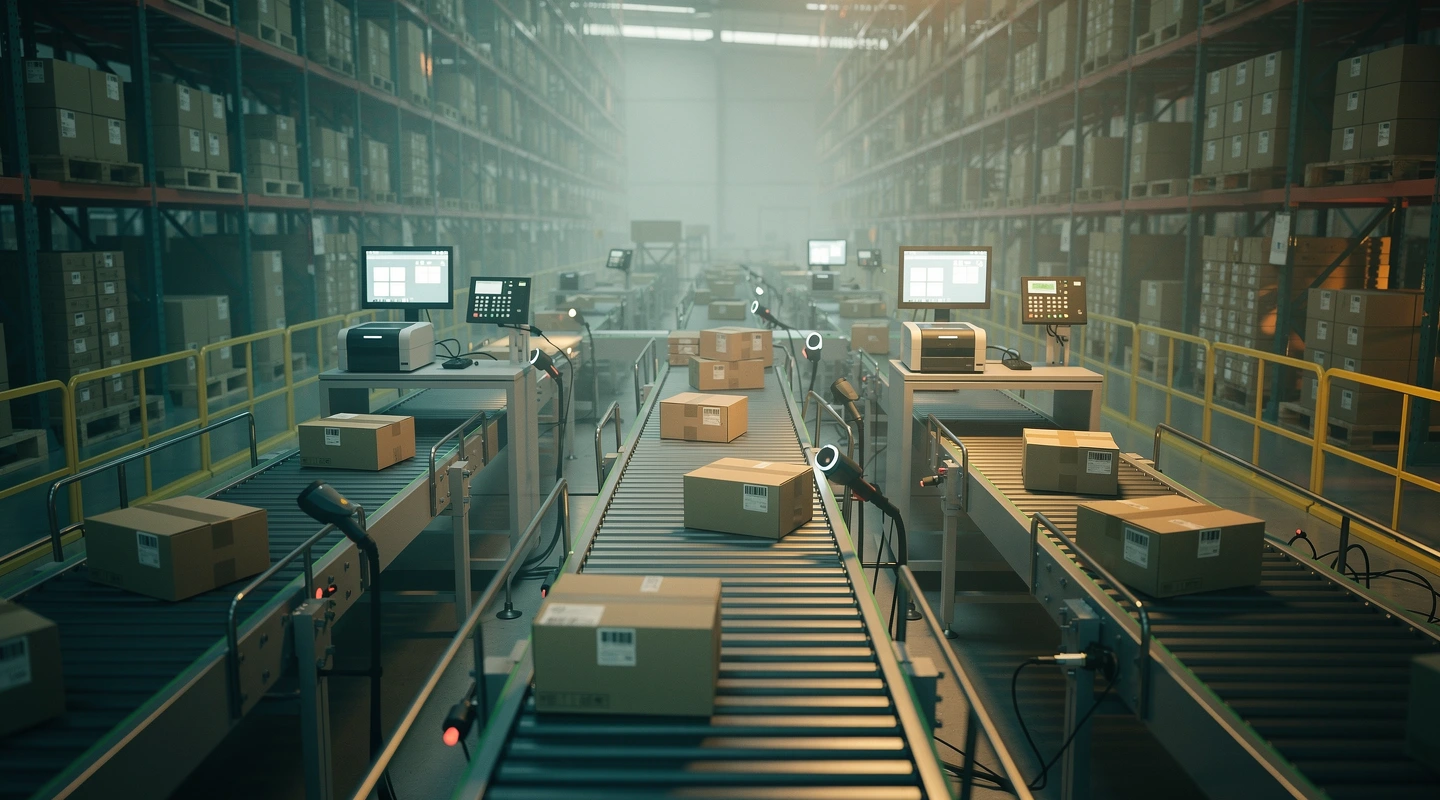
Returns stopped being a back-office afterthought years ago, but in 2026 they sit at the center of margin conversations in almost every US retail and e-commerce operation. A national returns rate that hovers around 15 percent to 17 percent of online sales, plus tighter capital and a labor market that punishes manual sortation, has turned reverse logistics into a genuine vendor category rather than a line item bolted onto outbound shipping. Choosing the right reverse logistics partner now shapes recovery value, customer retention and the speed at which returned inventory becomes sellable again. This guide walks through what these partners actually do, how to evaluate them, and which types of provider are worth shortlisting before the next peak season.
In short
- Reverse logistics partners handle the physical and financial flow of returned, unsold and end-of-life goods, and the best ones now recover value rather than just moving boxes backward.
- The category has split into returns experience platforms, reverse-focused 3PLs, recommerce and resale specialists, and disposition or liquidation networks, and most retailers need a stack rather than a single vendor.
- Recovery rate, processing speed and data visibility are the three metrics that separate a strong partner from a warehouse that simply accepts returns and sits on them.
- The most common mistake is optimizing the outbound return label experience while ignoring what happens to the item once it lands, where 60 percent to 70 percent of reverse logistics cost actually sits.
- A structured shortlist of three to five providers, scored against recovery, speed, integration and sustainability, and validated with a paid pilot, beats signing whichever 3PL already handles outbound.
Why reverse logistics partners matter more in 2026
The economics of returns have shifted from tolerable to strategic. When online penetration was lower and capital was cheap, retailers could absorb the cost of returns as a marketing expense that protected conversion. That logic broke down as return volumes climbed into the hundreds of billions of dollars annually across US retail, and as the cost of capital made sitting on unsellable inventory genuinely painful. A returned item that takes six weeks to reach the resale shelf is a returned item that has already lost a chunk of its recoverable value.
Three forces converged to push reverse logistics up the priority list. First, margin pressure across the sector made every point of recovery value worth chasing. Second, sustainability reporting and landfill diversion goals turned disposition into a board-level topic rather than a warehouse decision. Third, the labor economics of manual returns processing became untenable as wages rose and sortation stayed stubbornly hard to automate. For a broader view of how these flows connect to outbound operations, our modern retail logistics guide maps the full warehouse-to-doorstep chain that reverse logistics runs in parallel to.
The practical result is that reverse logistics is now a buying decision with real vendors, real differentiation and real switching costs. Retailers that treat it as an extension of their outbound 3PL contract often leave recovery value on the table. Retailers that build a deliberate reverse logistics stack, with partners chosen for disposition intelligence rather than convenience, consistently pull more value out of the same return volume.
What changed between 2023 and 2026
Three years ago the conversation was dominated by returns prevention: better sizing tools, stricter return windows and fees designed to discourage serial returners. Those tactics still matter, but they hit a ceiling because a large share of returns are structural rather than behavioral. Apparel fit, gift returns and buy-to-try behavior generate volume that no policy fully eliminates.
By 2026 the emphasis moved downstream to what happens after the return is accepted. Recommerce matured into a credible channel, automated grading improved, and disposition decisions became data-driven rather than rule-of-thumb. The partner landscape matured alongside it, which is exactly why a fresh shortlist makes sense this year.
What does a reverse logistics partner actually cover?
Reverse logistics is the umbrella term for every movement of goods that runs against the normal outbound direction. That includes customer returns, unsold seasonal inventory pulled from stores, damaged or defective units, warranty replacements, recalls and end-of-life products headed for recycling. A partner in this space owns some or all of the steps between the moment a product leaves the customer and the moment it either re-enters a sales channel or exits the supply chain responsibly.
The core operational stages are intake, inspection, grading, disposition and settlement. Intake covers receiving and initial scanning. Inspection and grading assess condition against defined tiers. Disposition is the decision about where the item goes next: restock, refurbish, resell through a secondary channel, liquidate in bulk, recycle or dispose. Settlement handles the financial reconciliation, including refunds, vendor chargebacks and recovery credits.
Not every partner covers every stage, and that is the crux of the shortlisting problem. Some providers specialize in the customer-facing return experience and the initial routing. Others focus on the warehouse-heavy grading and refurbishment work. A third group monetizes the back end through resale and liquidation. Understanding which stages a vendor genuinely owns, versus which they subcontract, is the first filter in any evaluation.
Key terms worth getting straight
Disposition is the routing decision for a returned unit, and it is where most of the recoverable value is won or lost. Grading is the condition assessment that feeds disposition, usually on a scale from sellable-as-new down to scrap. Recommerce is the resale of returned or used goods through a managed secondary channel, often under the retailer’s own brand.
Recovery rate is the share of original retail value a retailer recaptures across all returned units, and it is the single most useful number for comparing partners. Reverse 3PL refers to a third-party logistics provider whose facilities and processes are built specifically for inbound returns rather than retrofitted from outbound fulfillment. Recommerce specifically overlaps with a wider market trend covered in our analysis of recommerce consolidation in the second half of 2026, where the resale platforms that many reverse partners rely on are merging into larger networks.
How a reverse logistics partnership works in practice
A working partnership starts well before a single item ships back. The retailer and provider define condition grades, disposition rules and financial thresholds that determine what happens to each return category. For example, a $20 apparel item below a certain grade may be routed straight to liquidation because the cost of inspecting and restocking exceeds its recovery value, while a $180 electronics unit gets full inspection and refurbishment.
Once rules are set, the operational flow runs on a repeatable loop. The customer initiates a return, receives a label or a boxless drop-off code, and the item travels to a returns processing center rather than the main outbound warehouse. There it is scanned, graded and dispositioned according to the agreed rules, with exceptions escalated to a human reviewer. The data from each unit flows back to the retailer’s systems so that inventory, refunds and recovery are reconciled in near real time.
The best partnerships treat disposition as a live optimization rather than a fixed rulebook. Recovery values shift with demand, secondary-market pricing and inventory positions, so a mature partner adjusts routing dynamically. An item that would have been liquidated in January might be worth restocking in October if the retailer is short on that SKU heading into peak. That responsiveness is what separates a genuine reverse logistics partner from a warehouse that simply follows a static script.
Where automation fits
Automation in reverse logistics lags outbound because returns are inherently variable: mixed conditions, missing packaging and non-standard SKUs resist the neat automation that outbound picking enjoys. Even so, machine vision grading, automated dimensioning and robotic sortation are closing the gap, and the capital going into these systems is part of a wider trend we cover in the retail automation capex wave of 2026. Partners investing here can process more units per labor hour, which directly improves the speed metric that drives recovery.
The labor side matters just as much. Returns grading has historically been human-intensive, and the emergence of more capable warehouse robotics, discussed in our piece on warehouse humanoids reaching commercial scale, is beginning to touch the repetitive handling tasks that dominate a returns center. A partner’s automation roadmap is a fair question to raise during evaluation, because it signals whether their per-unit cost will fall or rise over the contract term.
How should you evaluate a reverse logistics partner?
Evaluation should start from outcomes, not features. The three outcomes that matter most are how much value the partner recovers, how fast they move an item from dock to disposition, and how clearly they show you what is happening. Everything else, from facility footprint to software polish, is a means to those ends.
Recovery rate is the headline. A partner that recovers 45 percent of retail value on a return category beats one that recovers 30 percent, even if the second is cheaper per unit, because the value gap usually dwarfs the processing fee. Speed is the second axis, since every day an item sits ungraded is a day of depreciation and tied-up working capital. Visibility is the third, because you cannot manage what you cannot see, and opaque partners hide both problems and opportunities.
Beyond the core three, integration depth and sustainability credentials increasingly act as tiebreakers. A partner that plugs cleanly into your order management and inventory systems saves months of engineering and reduces reconciliation errors. A partner with credible landfill-diversion and resale capabilities helps meet sustainability commitments that are now common in retailer reporting. The table below lays out a practical scoring framework.
| Criterion | What to ask | Why it matters | Weight |
|---|---|---|---|
| Recovery rate | Average percent of retail value recovered by category | Largest driver of reverse logistics economics | High |
| Processing speed | Median days from dock to disposition | Depreciation and working capital tied to dwell time | High |
| Data visibility | Real-time unit-level status and reason codes | Enables optimization and root-cause fixes | High |
| System integration | Native connectors to OMS, WMS and ERP | Cuts implementation time and reconciliation errors | Medium |
| Disposition options | Restock, refurbish, recommerce, liquidate, recycle | More routes mean higher blended recovery | Medium |
| Sustainability | Landfill diversion rate and resale share | Supports reporting and brand commitments | Medium |
| Geographic fit | Facility proximity to customer clusters | Lowers inbound freight and transit time | Low to medium |
Reading recovery numbers honestly
Recovery rate is easy to game if you accept a vendor’s headline figure without context. A partner can post a high recovery percentage by cherry-picking easy categories or by measuring against a discounted internal cost basis rather than true retail value. Always ask for recovery broken out by product category and defined against a consistent value basis you control.
It also pays to separate gross recovery from net recovery. Gross recovery ignores the processing, freight and channel fees that eat into the recaptured value. Net recovery, after all costs, is the number that hits your margin, and a partner unwilling to discuss it on those terms is a partner to be cautious about.
Which types of reverse logistics partner are worth shortlisting?
The market has stratified into four broad archetypes, and most mid-size and larger retailers end up combining two or three rather than picking a single provider. Knowing which archetype solves which problem keeps a shortlist focused instead of comparing vendors that are not really competing for the same job.
Returns experience platforms own the customer-facing side: the return portal, label generation, policy logic and initial routing. Reverse-focused 3PLs run the physical grading, refurbishment and warehousing. Recommerce and resale specialists monetize graded inventory through managed secondary channels. Disposition and liquidation networks clear bulk volume that is not worth individual resale. The comparison below summarizes where each archetype earns its keep.
| Partner archetype | Primary job | Best for | Watch out for |
|---|---|---|---|
| Returns experience platform | Customer portal, labels, routing rules | Reducing friction and capturing reason-code data | Little control over downstream recovery |
| Reverse-focused 3PL | Grading, refurbishment, warehousing | High-volume physical processing and restock speed | Recovery only as good as their disposition logic |
| Recommerce specialist | Managed resale of graded goods | Recapturing value on returnable, resellable categories | Channel fees and brand-control trade-offs |
| Liquidation network | Bulk clearance of low-grade stock | Fast cash on unsellable or aged inventory | Lowest recovery per unit, brand leakage risk |
How the archetypes combine
A common and effective stack pairs a returns experience platform at the front with a reverse-focused 3PL in the middle and a recommerce or liquidation partner at the back. The platform captures clean data and a smooth customer experience, the 3PL grades and restocks efficiently, and the resale or liquidation partner clears whatever cannot go back to primary channels. This layered approach maximizes blended recovery while keeping each vendor accountable for the stage it actually controls.
Smaller retailers can often consolidate. A single reverse-focused 3PL with built-in recommerce may cover the whole flow acceptably below a certain volume. The break point usually arrives when return volume grows enough that specialization in each stage produces recovery gains that exceed the added coordination cost of running multiple partners.
What are the common mistakes, and how do you avoid them?
The most expensive mistake is optimizing the wrong end of the flow. Teams pour effort into a slick return portal and free return shipping while ignoring disposition, even though the majority of reverse logistics cost and nearly all the recovery upside sit downstream. A frictionless return that ends in a slow, low-recovery disposition is a well-marketed way to lose money.
A second frequent error is defaulting to the incumbent outbound 3PL for returns. Outbound facilities are engineered for speed and standardization, which is the opposite of what variable, mixed-condition returns require. The convenience of a single contract rarely offsets the recovery lost to a partner whose core competency points the other direction.
A third mistake is treating disposition rules as set-and-forget. Recovery values move with demand and secondary-market pricing, so static rules slowly drift out of alignment with reality. Building a quarterly review of disposition logic into the partnership keeps routing decisions current and prevents the slow erosion of recovery that static rules cause.
Ignoring the data exhaust
Returns generate some of the richest product-quality data a retailer owns, and most of it is wasted. Reason codes, defect patterns and category-level return rates point directly at sizing errors, misleading product pages and quality problems at the source. A partner that captures structured reason codes but never feeds them back into merchandising is leaving a second, larger prize untouched.
The fix is to make reason-code capture and reporting a contractual deliverable, not a nice-to-have. When the reverse logistics partner supplies clean data that the merchandising and product teams act on, the retailer reduces the returns that generate cost in the first place. That prevention loop is the highest-return outcome of a mature reverse logistics program.
What do these decisions look like in US retail and e-commerce?
Large US general merchandise retailers have moved aggressively toward boxless, label-free returns at physical drop-off points, using their store and partner networks as consolidation hubs. The strategic logic is that consolidating returns into fewer, fuller shipments lowers inbound freight while the store network doubles as free returns real estate. This model works best for retailers with dense physical footprints and heavy overlap between their store base and their online customer geography.
Apparel and footwear brands, which carry the highest structural return rates, have leaned into grading and recommerce. Because a large share of apparel returns are sellable-as-new or lightly worn, these categories reward fast grading and quick restock, and increasingly reward branded resale channels that recapture value without discounting the primary line. The winners are brands that grade fast enough to get seasonal product back on the shelf inside the same selling season.
Consumer electronics sellers face a different calculus because individual units carry high value and refurbishment can be technical. Here the disposition decision leans toward inspection and refurbishment, with certified pre-owned or open-box channels absorbing graded stock. The recovery upside per unit is large enough to justify labor-intensive processing that would never make sense for a low-value apparel return.
Cost patterns across categories
The table below sketches how reverse logistics economics vary by category, using representative ranges rather than any single retailer’s figures. The point is directional: it shows why disposition strategy has to be set per category rather than applied uniformly across the catalog.
| Category | Typical return rate | Dominant disposition | Recovery leverage |
|---|---|---|---|
| Apparel and footwear | High | Grade and restock, branded resale | Speed to shelf within season |
| Consumer electronics | Medium | Inspect, refurbish, certified resale | Refurbishment quality and testing |
| Home and furniture | Medium to high | Local resale, liquidation for bulky items | Freight avoidance on bulky returns |
| Beauty and consumables | Low | Dispose or recycle, limited resale | Fast, cheap disposition |
| General merchandise | Low to medium | Restock or liquidate by value tier | Value-tier routing rules |
How do you run a shortlist and pilot without overcommitting?
A disciplined selection process protects against both analysis paralysis and premature commitment. Start by mapping your own return flow: volume by category, current recovery, dwell time and the disposition mix you run today. Without that baseline, you cannot tell whether a prospective partner is an improvement or just a change.
Next, build a shortlist of three to five providers matched to the archetypes your flow actually needs. Score each against the criteria framework above, weighting recovery, speed and visibility most heavily. Resist the urge to shortlist ten vendors, because the marginal insight from candidates six through ten rarely justifies the evaluation effort, and a tight list keeps the process moving toward a decision.
Finally, validate with a paid pilot on a real, bounded slice of volume before signing a full contract. A pilot on one category or one region, run for a full quarter, surfaces the operational reality that no sales deck reveals: actual grading accuracy, real dwell times and the true quality of the data feed. A partner confident in their numbers will welcome a pilot; reluctance to pilot is itself a useful signal.
What a good pilot measures
A pilot should measure the same three outcomes you will use to run the relationship: net recovery rate, median dock-to-disposition time and the completeness of unit-level data. Set target thresholds before the pilot starts so the go or no-go decision is objective rather than a matter of vibes at the end.
It also helps to test the exception path deliberately. Send in ambiguous, damaged and mislabeled units on purpose to see how the partner handles the messy tail that dominates real returns. The average case is easy; the exceptions are where recovery value and customer trust are actually won or lost.
Frequently asked questions
What is the difference between reverse logistics and returns management?
Returns management is usually the customer-facing slice: the portal, the label, the refund and the policy logic. Reverse logistics is the broader physical and financial flow that includes intake, grading, disposition, resale and recycling. Returns management is a component of reverse logistics, not a synonym for it, and confusing the two is how retailers end up optimizing the front end while neglecting the recovery that happens downstream.
Should we use our outbound 3PL for returns too?
Usually not, unless volume is low. Outbound facilities are built for standardized, high-speed picking, which is the opposite of the variable, mixed-condition work that returns require. A reverse-focused provider typically recovers more value per unit because grading and disposition are their core competency rather than an afterthought bolted onto outbound flows.
What recovery rate should we expect from a reverse logistics partner?
It varies widely by category, so a single number is misleading. High-value, resellable categories like electronics and premium apparel can recover a substantial share of retail value, while low-value or consumable items may recover very little after processing costs. The useful move is to benchmark net recovery by category against your current baseline rather than chasing a headline figure.
How long does it take to onboard a reverse logistics partner?
A focused pilot on one category or region can be live within a few weeks if system integration is light. A full rollout with deep integration into order management and inventory systems typically takes a quarter or more. Partners with native connectors to common commerce and warehouse platforms shorten this materially, which is why integration depth belongs in the evaluation criteria.
Is recommerce worth it, or should we just liquidate returns?
It depends on category and volume. Recommerce recaptures more value per unit for goods that are sellable or lightly used, and it keeps brand control over the resale experience. Liquidation is faster and simpler but recovers the least per unit and can leak brand-name product into channels you do not control. Most retailers use both, routing by grade and value tier rather than picking one exclusively.
How do we measure whether a reverse logistics program is working?
Track three metrics consistently: net recovery rate by category, median dock-to-disposition time and the returns rate itself over time. The first two show how well the partner processes returns, and the third shows whether the reason-code data is feeding back into merchandising to prevent returns at the source. A program that improves recovery but never lowers the underlying returns rate is only doing half the job.
Do smaller e-commerce brands need a dedicated reverse logistics partner?
Below a certain volume, a single reverse-capable 3PL or an all-in-one returns platform usually covers the need without a multi-vendor stack. The threshold to add specialized partners arrives when return volume grows enough that stage-by-stage specialization produces recovery gains exceeding the coordination cost. Until then, simplicity and clean data matter more than best-in-class recovery at every step.
How does sustainability factor into partner selection?
Landfill diversion and resale share have moved from nice-to-have to reportable commitments for many retailers. A partner with credible recycling routes and strong resale capabilities directly supports those commitments while often improving recovery at the same time, since resale beats disposal on both value and sustainability. Ask for diversion rates and resale share as concrete figures, not marketing language.
What is the single biggest lever for improving returns economics?
Preventing avoidable returns through better product data and reason-code feedback loops. Processing returns more efficiently helps, but the largest structural gain comes from reducing the volume of returns that never needed to happen, driven by sizing tools, clearer product pages and quality fixes informed by returns data. The best reverse logistics partners contribute to prevention, not just processing.
The bottom line
Reverse logistics in 2026 is a real vendor category with real differentiation, and the retailers that treat it that way pull measurably more value out of the same return volume. Start from your own baseline, shortlist against recovery, speed and visibility, and validate with a paid pilot before committing. Match the partner archetype to the stage of the flow you actually need to fix, and keep disposition rules and reason-code feedback alive rather than static. Returns will not stop growing, but with the right partner stack they can stop being a pure cost and start returning value. For the wider operational context, our retail logistics guide connects reverse flows to the outbound network they mirror, and the reference data from the US Census Bureau retail trade figures is a useful anchor when sizing your own returns exposure against the market.