
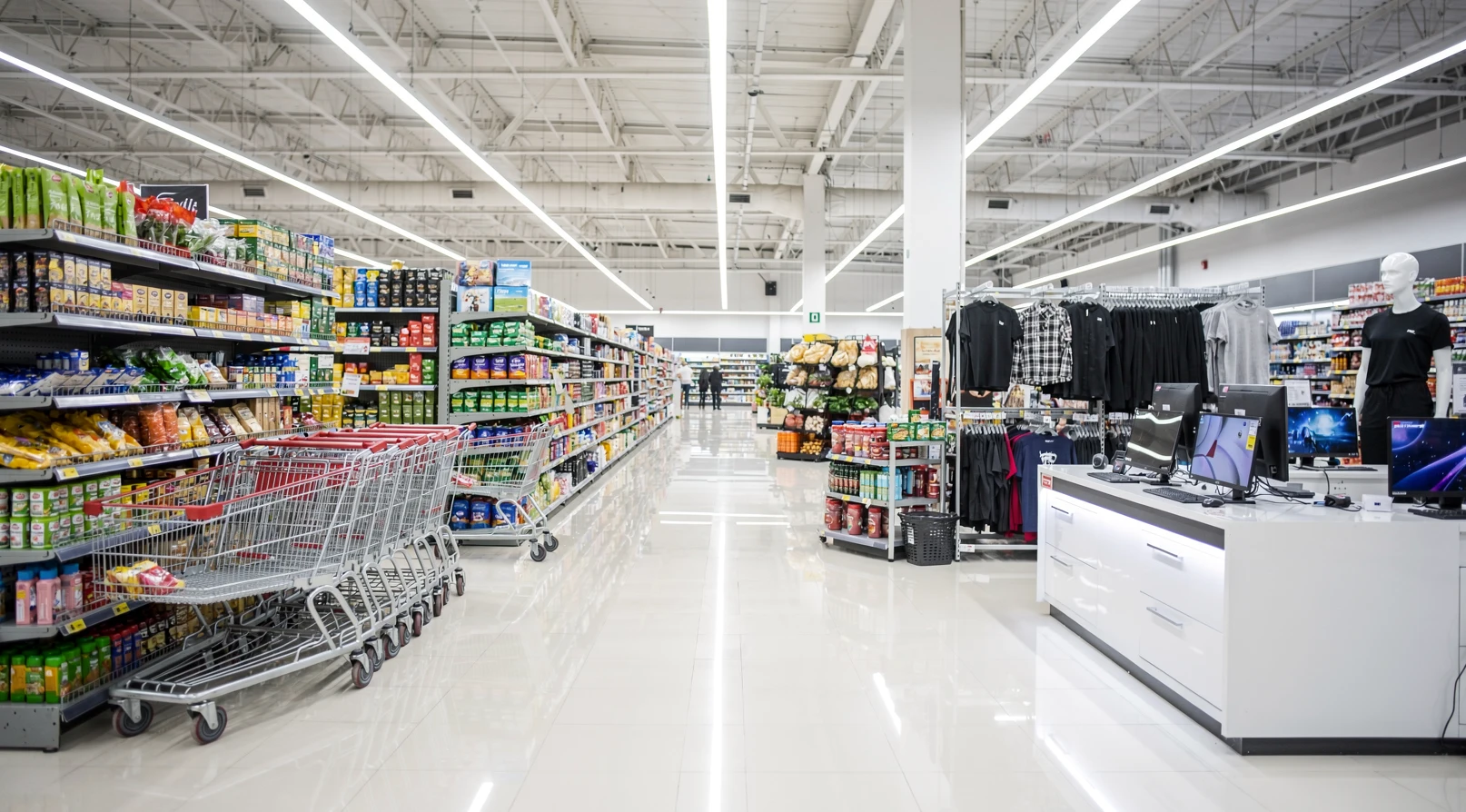
Reliance Retail, the retail arm of Mukesh Ambani’s Reliance Industries and the largest retailer in India by revenue and store count, reported a 14.1% drop in first-quarter net profit even as sales kept climbing, a split result that put the spotlight on thinning margins across the country’s fast-changing retail market. The figures, released on the evening of July 17, cover the three months to June 30, 2026, the opening quarter of the 2026-27 financial year.
Net profit came in at 2,805 crore rupees (about USD 326 million at roughly 86 rupees to the dollar), down from 3,267 crore rupees a year earlier. Revenue from operations rose 8.2% to 79,745 crore rupees (about USD 9.3 billion), while gross revenue, which includes other income and intercompany items, climbed 7.4% to 90,408 crore rupees (about USD 10.5 billion). Operating earnings barely moved, and the profit line fell, a combination that tells the real story of the quarter.
The message from the numbers is straightforward: Reliance Retail is still growing its top line and its store network, but it is paying more to defend that growth against quick commerce rivals, aggressive online marketplaces and a cautious consumer. This report breaks down what the company reported, why profit slipped while revenue rose, how the result compares with listed Indian peers, and what it signals for the wider retail and e-commerce contest in India.
In short
- Profit down, revenue up: Reliance Retail posted net profit of 2,805 crore rupees (about USD 326 million), a 14.1% year-on-year fall, while revenue from operations rose 8.2% to 79,745 crore rupees.
- Margins squeezed: Operating earnings (EBITDA) of about 6,308 crore rupees were roughly flat to slightly lower, showing that the cost of competing is rising faster than sales.
- Digital is the growth engine: Digital commerce and new commerce channels handled 568 million transactions in the quarter, up 46% year on year, with grocery daily online orders up 116%.
- Still expanding physically: The company opened 252 stores in the quarter to reach 20,169 outlets across 78.4 million square feet, even as it leans harder on delivery.
- Group strength masks retail strain: Parent Reliance Industries reported a record first-quarter recurring net profit of 23,196 crore rupees (about USD 2.7 billion), so the retail wobble did not dent the group result.
What Reliance Retail reported for the June quarter
Reliance Retail operates the widest store footprint in India, spanning grocery chains such as Reliance Fresh and Smart, the JioMart online platform, the Reliance Digital electronics format, the Ajio fashion marketplace, and a growing set of owned consumer brands. Its quarterly results are watched closely because they serve as a proxy for how India’s organized retail sector is faring against both e-commerce and the country’s youthful, price-sensitive shoppers.
For the quarter ended June 30, the headline was a rare profit decline. Net profit of 2,805 crore rupees was down 14.1% from a year earlier, the sharpest first-quarter fall in several years, according to figures the company disclosed and that were reported across Indian business media. Revenue from operations of 79,745 crore rupees was up 8.2%, and gross revenue of 90,408 crore rupees was up 7.4%, so the shortfall was concentrated below the sales line.
Operating earnings before interest, tax, depreciation and amortization came in near 6,308 crore rupees, broadly level with a year earlier and marginally lower on some measures. That flat EBITDA against rising sales is the clearest signal in the release: the business is running faster to stand roughly still on profitability.
The headline numbers at a glance
| Metric (Q1 FY27, to June 30, 2026) | Reported figure | Approx. USD | Year-on-year change |
|---|---|---|---|
| Revenue from operations | 79,745 crore rupees | USD 9.3 billion | +8.2% |
| Gross revenue | 90,408 crore rupees | USD 10.5 billion | +7.4% |
| EBITDA (operating) | about 6,308 crore rupees | USD 0.73 billion | roughly flat |
| Net profit | 2,805 crore rupees | USD 0.33 billion | -14.1% |
| Stores opened in quarter | 252 | n/a | n/a |
| Total stores / area | 20,169 / 78.4m sq ft | n/a | expanding |
Currency conversions use an approximate rate of 86 rupees to the US dollar, drawn from the same trading window as the results. One crore equals 10 million, so 79,745 crore rupees is 797.45 billion rupees.
The India retail backdrop behind the numbers
To read the quarter properly, it helps to understand the market Reliance Retail operates in. India is one of the largest and youngest consumer markets in the world, but the bulk of its retail spending still flows through millions of small, independent shops rather than organized chains. That structure is exactly what makes both the opportunity and the competition so intense.
Organized retail, the segment of chains, malls and formal e-commerce, has been taking share for a decade, yet it remains a minority of total retail spending. Every large operator, from Reliance to global marketplaces, is chasing the same prize: converting informal, cash-heavy shopping into formal, data-rich transactions. The company that captures that shift at scale stands to build one of the most valuable consumer businesses anywhere.
Two forces are accelerating the transition. The first is smartphone-led internet access, which Jio itself helped drive by collapsing the cost of mobile data across India. The second is a young, urbanizing population that has adopted online ordering for groceries and essentials far faster than many forecasters expected. Both forces feed directly into the digital growth Reliance Retail reported this quarter.
The catch is that the same forces attract heavy investment from rivals, which pushes up the cost of winning each customer. That is the tension at the heart of the June-quarter result: a structurally attractive market whose near-term economics are being reshaped by a spending war. The numbers show a company winning the volume battle while the profit battle gets harder.
New commerce: turning kirana stores into a network
One of the least understood parts of the Reliance Retail model is what the company calls new commerce. Rather than treating India’s millions of small kirana stores purely as competitors, Reliance supplies them, taking orders through a merchant app and delivering inventory from its own distribution network. In effect, the corner shop becomes a node in Reliance’s system.
This matters for two reasons. It widens Reliance’s reach into neighborhoods where building company-owned stores would be uneconomic, and it turns potential rivals into partners and customers. The 568 million transactions the company reported span this merchant channel as well as consumer-facing apps, which is why the growth rate stayed high even as the core store business faced margin pressure.
Why the kirana channel is strategic
The kirana network gives Reliance a distribution moat that pure online marketplaces struggle to replicate. Amazon and Flipkart can match catalog breadth and delivery speed in big cities, but reaching deep into smaller towns through existing local shops is a different capability. It is slower to build and harder to copy, which is precisely why Reliance keeps investing in it even when quarterly margins are tight.
The cost side of the model
The trade-off is that serving small merchants at thin margins, with frequent low-value deliveries, is expensive to run. Logistics, technology and working capital all scale with the network. That cost profile is another strand in the flat operating-earnings story, and it explains why volume growth and profit growth have decoupled for now.
Why profit fell even as revenue grew
The gap between rising sales and falling profit is not an accounting quirk. It reflects a set of pressures that have been building across Indian retail for more than a year, and that came together in this quarter.
Rising cost of competition
Reliance Retail has been investing to keep pace with quick commerce platforms that promise grocery delivery in 10 to 30 minutes. Building and running dark stores, subsidizing delivery, and matching prices all raise the cost of each sale. Those investments support revenue and market share, but they eat into the operating margin, which is precisely what the flat EBITDA shows.
Consumer caution and mix
Discretionary spending in India has been uneven, with shoppers trading down in some categories and delaying big-ticket purchases in others. When more of the sales mix comes from lower-margin staples and value formats rather than higher-margin fashion and electronics, reported profitability softens even if total revenue holds up.
The strain is not unique to Reliance. Listed rival Trent, the Tata group fashion retailer behind the Zudio value chain, recently saw its shares fall sharply after a first-quarter revenue miss, a reminder that even India’s fastest-growing retail names are running into tougher year-on-year comparisons. The read-across is that the whole sector is absorbing a more selective consumer at the same time.
Depreciation and the cost of the network
A larger store base and a bigger logistics network carry higher depreciation and finance costs, which sit between EBITDA and net profit. As Reliance Retail keeps opening stores and building fulfillment capacity, those non-operating charges rise, pulling the bottom line down faster than the operating line. That mechanical effect helps explain why net profit fell 14.1% while EBITDA was close to flat.
The digital commerce engine behind the quarter
If the profit line was the weak spot, the digital story was the bright spot. Reliance Retail said its digital commerce and new commerce channels processed 568 million transactions during the quarter, a 46% increase from a year earlier. New commerce refers to the company’s model of supplying small neighborhood kirana stores, which turns millions of independent shopkeepers into an extension of Reliance’s distribution.
Grocery was the standout. Average daily online grocery orders rose 116% year on year, a pace that reflects both the rollout of faster delivery and the pull of quick commerce habits into everyday shopping. Across India, quick commerce has been expanding at close to 40% a year as operators race to add dark stores, and Reliance is determined not to cede that ground to standalone players.
Fashion goes digital-first
In fashion, digital commerce accounted for 27.3% of apparel and footwear revenue, up about 490 basis points from a year earlier. The Ajio marketplace and the premium Ajio Luxe format, which has now passed 1,000 points of presence, are pushing more of the category online. That shift lowers some store costs but raises fulfillment and returns costs, another reason margins are under pressure.
Electronics holds up
Consumer electronics, sold through Reliance Digital and related formats, posted like-for-like store revenue growth of about 16%. That is a healthy number in a category where demand can swing with the launch calendar for phones and appliances, and it shows the physical network still pulls its weight for higher-ticket buys even as everyday spending moves online.
Store expansion and the physical footprint
For all the digital momentum, Reliance Retail is not retreating from physical retail. It opened 252 new stores in the quarter, lifting the total to 20,169 outlets covering 78.4 million square feet of retail space. That footprint is larger than any other retailer in India and gives the company a fulfillment advantage: stores double as local warehouses for fast delivery.
The strategy is deliberately hybrid. Rather than choosing between shops and screens, Reliance is using its store estate to feed online orders, shorten delivery distances, and localize inventory. The trade-off is capital intensity: every new store and every dark store adds to depreciation and working capital, which is part of why the profit line lagged sales this quarter.
| Footprint measure | Q1 FY27 position | Direction |
|---|---|---|
| New stores opened in quarter | 252 | Steady additions |
| Total store count | 20,169 | Rising |
| Total retail area | 78.4 million sq ft | Rising |
| Ajio Luxe points of presence | more than 1,000 | Expanding |
| Digital and new commerce transactions | 568 million (+46%) | Rising fast |
How Reliance Retail compares with Indian peers
The June quarter offered a natural side-by-side test of India’s largest retailers, because several reported in the same window and faced the same headwinds. Reliance Retail is by far the biggest, but its profit decline against still-solid revenue growth mirrors a pattern showing up across the sector.
Value grocery specialist DMart, run by Avenue Supermarts, saw its June-quarter profit rise even as revenue growth cooled under quick commerce pressure, a result this publication covered when it reported. Trent’s value fashion engine slowed after a long run of rapid expansion. Placed next to those outcomes, Reliance Retail looks like the scale leader absorbing the same margin squeeze, only across a far wider set of categories.
| Retailer | Core strength | June-quarter signal | Main pressure |
|---|---|---|---|
| Reliance Retail | Scale across grocery, fashion, electronics, digital | Revenue up 8.2%, profit down 14.1% | Margin squeeze, delivery cost |
| DMart (Avenue Supermarts) | Low-cost value grocery | Profit up, revenue growth cooling | Quick commerce competition |
| Trent (Tata group) | Value fashion, Zudio | Revenue miss, shares fell | Tougher comparisons, slower growth |
The common thread is that scale and revenue growth no longer guarantee profit growth. Every large Indian retailer is spending to keep customers who now expect fast delivery and sharp prices, and that spending is showing up as compressed margins rather than higher earnings.
Shein, Campa and the new consumer brands
Beyond the core formats, Reliance is using owned and licensed brands to widen its margins over time, and two names stood out this quarter. The company operates the India relaunch of fast-fashion label Shein under a licensing arrangement, and the Shein India app has now crossed 30 million installs, a marker of how quickly the brand has rebuilt an audience after its earlier suspension in the market.
Reliance has also been scaling Campa, the revived cola brand it is positioning as a low-priced challenger to global soft-drink giants. Owned brands like Campa carry higher margins than third-party goods and give Reliance leverage over shelf space and pricing, which is exactly the kind of mix improvement the company needs to lift profitability back above its revenue growth.
These bets are strategic rather than immediate. Building brands takes marketing spend up front, so in the near term they add cost, but over several years they are meant to be the answer to the margin problem visible in this quarter’s numbers. The Shein relaunch, in particular, gives Reliance a digital-native fashion asset to set against global players courting Indian shoppers.
Quick commerce pressure and the margin question
No factor looms larger over Indian retail right now than quick commerce. The promise of delivery in minutes, pioneered by standalone apps and now matched by every large player, has reset consumer expectations and rewired the cost of serving a grocery basket. Reliance is responding through JioMart and its store-backed delivery network rather than ceding the category.
The open question is whether the land-grab phase gives way to disciplined economics. Across the industry, operators are being pushed from a growth-at-any-cost posture toward the shift from land grab to margin, thinning promotions and focusing on order density rather than raw store counts. Reliance’s flat EBITDA this quarter suggests it is still in the investment phase, spending to hold share while the model matures.
Why this matters for the profit outlook
If quick commerce economics improve as delivery routes get denser and subsidies fade, Reliance Retail’s margin should recover, because it will be serving more orders from the same stores and dark stores. If price wars persist, the pressure visible in this quarter could extend into the second half. Management’s tone in coming quarters, and the pace of dark store additions, will be the tell.
What the result means for the Jio IPO and the group story
The retail wobble did not dent the parent. Reliance Industries reported a record first-quarter recurring consolidated net profit of 23,196 crore rupees (about USD 2.7 billion), up 6.1% year on year, on gross revenue of 3,40,257 crore rupees (about USD 39.6 billion), up 24.5%. The strength came largely from the telecom and digital arm.
Jio Platforms posted revenue of 45,961 crore rupees (about USD 5.3 billion), up 12%, and operating earnings of 20,865 crore rupees, up 15.1%, with its subscriber base above 533 million, including roughly 285 million on 5G. That momentum matters because Reliance is widely expected to pursue a public listing of Jio, and a strong digital result strengthens the case for a high valuation.
For investors, the takeaway is that the group can absorb a soft retail quarter without missing a beat, because telecom and energy are carrying the result. The risk is that a prolonged retail margin squeeze eventually weighs on the sum-of-the-parts story that underpins Reliance’s valuation, particularly if retail is meant to be a growth pillar alongside Jio.
How the retail arm fits the valuation case
Analysts have long valued Reliance Retail as a standalone growth engine worth tens of billions of dollars, on the assumption that revenue and profit would compound together. A quarter where revenue rose but profit fell tests that assumption, at least in the short run. If the pattern proves temporary, the valuation case holds; if margin pressure lingers, the multiple attached to the retail arm could come under scrutiny.
The counterargument is that Reliance is deliberately trading near-term margin for long-term position, much as it did when it built Jio. If the digital and new commerce volumes reported this quarter eventually convert to higher-margin revenue, today’s profit dip will read as an investment phase rather than a warning. That is the bet management is asking the market to underwrite.
The competitive backdrop: Amazon, Flipkart and the price war
Reliance Retail does not operate in a vacuum. Its online ambitions run straight into Amazon India and Walmart-owned Flipkart, which dominate horizontal e-commerce and have been escalating a seasonal discount contest. The two American-backed platforms have reopened India’s mega-sale price war, pouring marketing money into festival-season events that pull shoppers toward their apps.
That rivalry raises the cost of customer acquisition for everyone, Reliance included. To keep JioMart and Ajio competitive on price and delivery speed, Reliance has to spend against deep-pocketed rivals, which feeds back into the margin pressure the results revealed. The company’s edge is its store network and its ownership of the full stack from brands to logistics, but that edge has to be funded quarter after quarter.
The strategic contest is therefore less about who has the widest catalog and more about who can serve orders profitably at scale. Reliance is betting that its hybrid model, physical stores plus digital plus owned brands, will out-earn pure marketplaces over time. This quarter shows the cost of getting there.
Management view and what to watch next
Isha Ambani, executive director at Reliance Retail, framed the quarter as steady rather than spectacular, saying the business delivered a resilient performance with growth across key consumption baskets and pointing to the transformative role of its digital platforms. The language signaled continuity: keep investing in digital and stores, and treat the margin dip as the price of defending share.
For the next few quarters, three things will matter most. The first is whether digital and new commerce growth stays near current rates without ever-rising subsidies. The second is whether owned brands like Campa and the Shein relaunch begin to lift the sales mix toward higher margins. The third is the direction of quick commerce economics across the industry, which will set the ceiling on how quickly profitability can recover.
The bottom line for this quarter is a company growing its way through a costly transition. Reliance Retail is bigger than ever, its digital channels are compounding fast, and its store network keeps widening, but the profit decline is a clear signal that scale alone no longer pays for itself in Indian retail. The next test is turning all that volume back into rising earnings.
What it means for shoppers, suppliers and the sector
The immediate effect of a margin war is one that shoppers tend to like: sharper prices, faster delivery and more promotions. As Reliance, its quick commerce rivals and the big marketplaces spend to win baskets, consumers capture much of the benefit in the form of subsidized delivery and discounts. That is the flip side of the compressed retailer margins visible in this quarter.
For suppliers and consumer-goods makers, the picture is more mixed. Reliance’s scale and its push into owned brands like Campa give it leverage in negotiations, which can squeeze the terms available to third-party brands on its shelves and apps. At the same time, the growth of digital and new commerce opens fresh routes to reach shoppers across smaller towns, which many brands are keen to access.
For the sector as a whole, the June quarter reinforces a shift that has been underway for some time. The winners in Indian retail will be the operators that can fund a long contest, absorb thin margins through a transition, and eventually convert volume into durable profit. Smaller or weaker players without deep balance sheets face a harder road as the spending bar keeps rising.
The broader read for global retail watchers
India is not the only market where fast delivery and marketplace competition are compressing retailer margins, but it is one of the clearest live examples of the pattern at scale. The Reliance Retail result is a useful case study in how a dominant, well-capitalized incumbent responds: not by pulling back, but by leaning in and accepting lower near-term profitability to protect its position. Retail strategists elsewhere are watching how that bet plays out.
Frequently asked questions
How much did Reliance Retail’s profit fall in Q1 FY27?
Net profit fell 14.1% year on year to 2,805 crore rupees (about USD 326 million) for the quarter ended June 30, 2026, down from 3,267 crore rupees in the same quarter a year earlier.
Did Reliance Retail’s revenue also fall?
No. Revenue from operations rose 8.2% to 79,745 crore rupees (about USD 9.3 billion), and gross revenue rose 7.4% to 90,408 crore rupees. Sales grew while profit declined, which points to a margin squeeze rather than a demand collapse.
Why did profit fall while revenue rose?
Operating earnings were roughly flat because the cost of competing rose, with heavier spending on quick commerce, delivery and price matching. Higher depreciation and finance costs from a larger store and logistics network then pulled net profit down faster than the operating line.
How large is Reliance Retail’s store network?
The company opened 252 stores in the quarter to reach 20,169 outlets across 78.4 million square feet, the largest retail footprint in India. Those stores also serve as local fulfillment points for online orders.
How is Reliance Retail performing in digital commerce?
Digital commerce and new commerce channels handled 568 million transactions in the quarter, up 46% year on year, and average daily online grocery orders rose 116%. Fashion digital commerce reached 27.3% of apparel and footwear revenue.
What is happening with Shein and Campa at Reliance?
Reliance operates the India relaunch of Shein under license, and the Shein India app has passed 30 million installs. Reliance is also scaling its revived Campa cola brand as a low-priced challenger, part of a push into higher-margin owned brands.
Did the weak retail quarter hurt Reliance Industries overall?
No. Parent Reliance Industries reported a record first-quarter recurring consolidated net profit of 23,196 crore rupees (about USD 2.7 billion), up 6.1%, helped by strong telecom and digital earnings from Jio, which offset the softer retail result.
What should investors watch next?
Watch whether digital growth holds without rising subsidies, whether owned brands lift the sales mix toward higher margins, and how quick commerce economics evolve across the industry. Those three factors will determine how quickly Reliance Retail’s profitability recovers.