
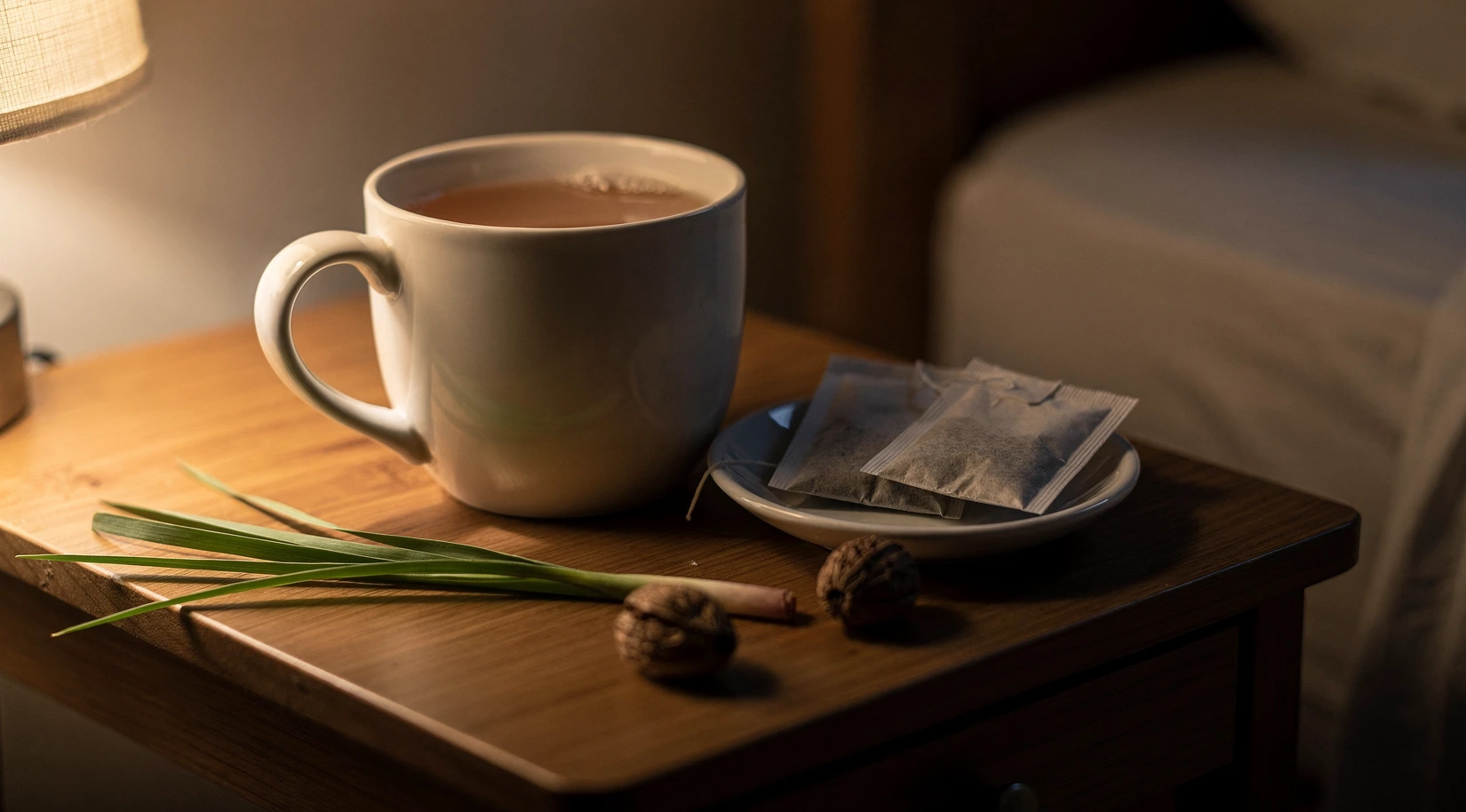
Yorkshire Tea has halved the box of its Decaf Bedtime Brew and raised the price on the shelf. The blend now comes in a 50g pack of 20 tea bags at about £3, replacing a 100g pack of 40 that usually sold for £2.50 at Sainsbury’s and Tesco. The Sun first reported the shopper backlash on Friday 6 November 2026, with some customers calling it “blatant robbery”, and The Independent followed that evening. Yorkshire Tea said the higher price “reflects the blend’s new place in the range”.
In short
- Half the bags, higher price: Bedtime Brew has gone from 40 bags (100g) to 20 bags (50g), and Sainsbury’s has moved from £2.50 to £3.
- Cost per cup up 140%: at Sainsbury’s a bag has risen from 6.25p to 15p, by our calculation, which adds about £32 a year for someone drinking one cup a night.
- Brand’s explanation: Yorkshire Tea says the blend has joined its new fruit and herbal range, launched this year at a recommended £3 for 20 bags. It did not cite tea costs.
- Tesco Clubcard softens it: Tesco lists the new box at £2.99, or £2.50 with Clubcard on Trolley’s price listing, which still works out at twice the old cost per bag.
- Old boxes still exist: Sainsbury’s still listed the 40-bag pack at £2.50 when we checked on 7 November, so regular drinkers may want to look before supplies run out.
What has changed with Yorkshire Tea Bedtime Brew?
The product is Yorkshire Tea’s Decaf Bedtime Brew with Vanilla and Nutmeg, a decaffeinated black tea blended with herbs and spices. Sainsbury’s lists its ingredients as decaffeinated black tea, lemon balm, lemongrass, nutmeg (3%) and natural vanilla flavouring (2%). It previously sat in the brand’s speciality brews line, sold in boxes of 40 like its other flavoured brews.
The new version has a smaller box and new packaging, and it now sits inside a separate range. The bag itself does not appear to have shrunk: 100g across 40 bags and 50g across 20 bags both work out at 2.5g each. We have not compared the two recipes line by line, but Sainsbury’s uses the same short description for both, “decaffeinated black tea with herbs, spices and natural flavourings”.
So this is not a story about a weaker cup. It is a story about buying half as many cups for more money, because the product has been moved from one price tier to another.
What Yorkshire Tea has said
A spokesperson told The Sun: “We’re always looking for ways to keep our tea offering in step with changing consumer needs, tastes and trends. We’ve recently introduced two new ranges, bringing fresh choice to our customers while making some changes to our existing products.”
The statement continued: “We know Bedtime Brew is much loved, and its move to our new fruit and herbal selection means we can keep offering this favourite. We appreciate that a price increase may not be welcome news, but it reflects the blend’s new place in the range.”
The wording matters for two reasons. It accepts plainly that this is a price increase, and it hints that the blend’s future in the old format was in question, although the company has not said so directly.
The Sun quoted customers on Facebook. One wrote: “I am a bit sad the Bedtime Brew is in this range now… it’s more expensive for a box half the size now!” Another, who described it as their tea of preference, said they would no longer buy it: “My favourite tea but more expensive for half the number of teabags wrapped in new packaging.”
Others used the words “shrinkflation” and “daylight robbery”, according to The Sun. These are a handful of social media comments, not a measure of how many customers object, and there is no public sales data yet that shows whether drinkers have stayed or left.
How much more does each cup cost?
Shelf prices understate the change, because the box has halved at the same time. The fairest comparison is the cost of one tea bag, since each bag holds the same 2.5g. The prices below come from The Independent’s report and the retailers’ own listings, and the per-bag figures are our calculation.
| Retailer | Old box (40 bags, 100g) | New box (20 bags, 50g) | Old cost per bag | New cost per bag | Change per bag |
|---|---|---|---|---|---|
| Sainsbury’s | £2.50 | £3.00 | 6.25p | 15p | +140% |
| Tesco, standard price | £2.50 | £2.99 | 6.25p | 14.95p | +139% |
| Tesco, Clubcard price on Trolley | £2.50 (standard price) | £2.50 | 6.25p | 12.5p | +100% |
| Ocado | £2.00 | £3.00 | 5p | 15p | +200% |
Two cautions apply to that table. We do not know whether the old Ocado price of £2 was a regular price or a promotion, so the 200% figure may overstate the usual change. We also do not know what Clubcard holders paid for the old box, so the Clubcard row compares a member price with a standard one.
What it means over a year
For someone drinking one cup every night, the old box at £2.50 cost about £22.81 a year in tea bags. At £3 for 20, the same habit costs £54.75, a rise of £31.94. They would also need about 18 boxes a year rather than nine, which means more trips or more items on the online order.
A Clubcard holder paying £2.50 for the new box would spend about £45.63 a year, roughly double the old standard-price bill. A household with two nightly drinkers would be looking at an extra £64 or so at Sainsbury’s prices. These are small sums set against a weekly food shop, which is partly why a change like this can pass unnoticed until a regular customer sees the box.
The Independent reports that tea prices were up 2.5% in August, compared with 0.5% in July. Had the £2.50 box simply risen by 2.5%, it would now cost about £2.56. That is our illustration rather than a statement of what Yorkshire Tea should charge, but it shows that general tea inflation does not account for a change of this size. Nor does the company claim that it does.
Is this shrinkflation or a straight price rise?
Strictly speaking, shrinkflation means a pack gets smaller while its price stays about the same. Bedtime Brew goes further, because the box has shrunk and the price has risen. Shoppers calling it shrinkflation are describing something real, but the pure version of the tactic is quieter than this one.
The Grocer’s analysis of Christmas chocolate tubs is the more typical case. It found that tubs of Cadbury Roses and Heroes fell 13.6% from 550g to 475g, while pre-promotional prices at Tesco and Morrisons stayed at £7, meaning shoppers pay up to 15.8% more per kilo. By comparison, the Bedtime Brew change is much larger per unit and far more visible, since a shopper can see both the smaller box and the higher ticket.
Our earlier look at how shoppers react when they notice a smaller pack found that the moment of discovery does the damage, because it turns a pricing decision into a question of trust. That is broadly what the Facebook comments in The Sun look like.
The brand’s argument is that this is a repositioning rather than a stealth rise. Fruit and herbal teas are commonly sold in boxes of 20 at higher prices per bag than everyday black tea, and Bedtime Brew now sits in that section. Sainsbury’s has also recategorised it: the old box appears under everyday tea, while the new one appears under fruit and herbal tea.
The counter-argument is just as simple. The ingredients still begin with decaffeinated black tea, and Taylors’ product page describes it being served with milk, like a normal cup of tea. Drinkers bought it as a flavoured decaf, not as a herbal infusion, and for them the drink has not changed but the price has.
Why it counts as a new product on the shelf
The move also has a practical effect on how prices look online. The two boxes have separate product pages at Sainsbury’s, and Ocado labels the 20-bag version “New” with no reviews carried over from the old listing. A new listing has no price history of its own, so there is no “was” price and no direct prompt that the shopper is paying more.
That is not an accusation of wrongdoing, as launching a new pack size is a normal way to change a range. It does mean that anyone reordering from a favourites list needs to check what has been added to the basket, since a familiar name may now be attached to a smaller box.
How does Bedtime Brew compare with rival night-time teas?
The answer depends on what you think you are buying. Compared with branded evening blends sold in boxes of 20, the new price is broadly in line per bag. Compared with Yorkshire Tea’s own 40-bag flavoured brews and ordinary decaf, it is two to four times as much.
The table uses online listings on the price comparison site Trolley on 7 November, and prices vary by retailer and promotion. The per-bag and per-100g figures are our own calculations from the pack sizes shown, because Trolley’s displayed unit prices were inconsistent for several of these products.
| Product | Pack | Listed price | Per bag | Per 100g |
|---|---|---|---|---|
| Yorkshire Tea Bedtime, new box | 20 bags, 50g | £3.00 | 15p | £6.00 |
| Pukka Night Time Chamomile, Apple and Cinnamon | 20 bags, 36g | £3.00 | 15p | £8.33 |
| Twinings Superblends Sleep | 20 bags, 30g | £2.75 | 13.75p | £9.17 |
| Sainsbury’s Bedtime Infusion | 20 bags, 36g | £1.90 | 9.5p | £5.28 |
| Yorkshire Tea Bedtime, old box | 40 bags, 100g | £2.50 | 6.25p | £2.50 |
| Yorkshire Tea Caramelised Biscuit Brew | 40 bags, 112g | £2.50 | 6.25p | £2.23 |
| Yorkshire Tea Decaf | 40 bags, 125g | £2.45 | 6.1p | £1.96 |
| PG Tips Decaf | 40 bags, 116g | £2.20 | 5.5p | £1.90 |
| Tetley Decaf | 40 bags, 125g | £1.75 | 4.4p | £1.40 |
| Yorkshire Tea Decaf, large box | 160 bags, 500g | £6.00 | 3.75p | £1.20 |
| Sainsbury’s Red Label Fairtrade Decaf | 80 bags, 250g | £1.90 | 2.4p | 76p |
These are not like-for-like drinks. The Pukka and Twinings products are herbal blends with different ingredients, while the plain decaf products at the bottom contain no vanilla, nutmeg or lemon balm. A shopper who likes the flavour of Bedtime Brew will not necessarily accept a plain substitute.
The weight column does give Yorkshire Tea something to point to. Its new box costs less per 100g than the Pukka and Twinings blends, partly because each Yorkshire bag holds more: 2.5g against 1.8g and 1.5g respectively. Herbal ingredients are lighter than black tea, though, so weight alone is not a clean measure of value either.
Why is Yorkshire Tea moving into fruit and herbal now?
The trade press set out the strategy months before shoppers noticed the price. The Grocer reported this summer that Yorkshire Tea would launch 10 products, including five fruit and herbal blends and three green teas. It named the Bedtime Decaf Brew with Vanilla and Nutmeg among the fruit and herbal blends, with a recommended retail price of £3 for 20 bags and £3.50 for 20-bag selection packs.
Consumer coverage largely described the launch as eight new flavours. On The Grocer’s list, however, one of those eight is the Bedtime blend that drinkers already knew, which helps explain why the change came as a surprise to them. The Mirror reported that the ranges would reach Sainsbury’s from 27 September and Morrisons from 5 October.
Black tea is losing volume
The commercial reasoning is straightforward. The Grocer, citing Worldpanel by Numerator for the 52 weeks to 12 July 2026, reported that take-home value sales of everyday black tea were stagnant, with volumes down 3.2%. Fruit and herbal teas grew 2.9% by value, with volumes down a more modest 2.4%, and green and white teas were in double-digit value growth.
In other words, fewer cups of black tea are being bought in shops, and the money is moving towards categories that sell for more per bag. Lucy Hoyle, senior brand manager at Yorkshire Tea, told The Grocer that the brand had focused on becoming “the UK’s number one brew” and that “black tea remains our first love, but we’re only just getting started”.
There are real cost pressures in tea. A Press Association report carried by The Independent in September said Kenya supplies half of the black tea consumed in Britain, and that growers there face erratic weather, lower yields and higher costs. Nelson Ngeno, manager of the Fintea group of cooperatives, said production across its five cooperatives fell by 30% in May and June compared with what farmers usually harvest in those months.
It would be easy to link those pressures to the price of a box of Bedtime Brew, but Yorkshire Tea’s statement does not. It ties the higher price to the blend’s position in the range. The same report said growers themselves see little benefit from higher market prices, so a higher price on a UK shelf does not necessarily reach the farm.
The change comes as grocery prices start to climb again. The British Retail Consortium’s October shop price figures showed food inflation of 2.9%, with ambient groceries such as tins, jars and packets at 3.2%. The Office for National Statistics measure is lower, putting food and non-alcoholic drinks inflation at 1.3% in September, the same as August and the lowest since September 2021.
The two surveys measure different baskets, so the figures do not match, but neither of them comes anywhere near the per-bag change here. That is why a single product can feel like a much larger price rise than the headline numbers suggest.
What do UK pricing rules require shops to show?
Changing a pack size and raising a price are both generally legal, provided the product is accurately described and the price is shown properly. The main protection for shoppers is the unit price, which lets them compare packs of different sizes. The rules sit in the Price Marking Order 2004, and amendments to it took effect on 6 April 2026.
The government’s guidance on the order, which applies in England, Scotland and Wales, says the rules cover online sales as well as physical shops. Unit prices must be unambiguous, easily identifiable and clearly legible, in a clear font of reasonable size. Breaching the order can be a criminal offence with an unlimited fine, enforced by trading standards, and the CMA and others can also bring civil cases under the Digital Markets, Competition and Consumers Act.
Why the same box can show different unit prices
Under the guidance, a product sold by number is priced per item, while a product marked only by weight is priced per kilo. Tea bag boxes usually show both a count and a weight, and that creates a practical problem. On 7 November, Sainsbury’s showed the new box at £60 per kg, and Ocado showed it at 15p per item, so a shopper comparing the two has to do some arithmetic.
The issue is not new. The Competition and Markets Authority’s 2023 review of unit pricing in groceries named tea bags as an example of the problem, noting that some were priced per 100 grams and others per bag. The CMA said its review had not identified retailers wilfully breaching the order, and we are not suggesting any breach here.
The April 2026 changes also address loyalty pricing. Where a product has a member price and a standard price, both selling prices and both unit prices must be shown, with the conditions attached. That is useful in a case such as Tesco’s, where the unit cost depends on having a Clubcard. As with the rules on fake countdown deals before Black Friday, the law focuses on how a price is presented, not on what a business may charge.
No pack-shrink notice is required
The government’s Price Marking Order guidance contains no requirement to tell shoppers that a pack has got smaller. The content creator Gavin Wren, who has worked in food policy for a decade, told Metro last month that countries including South Korea, France, Germany and Romania have rules requiring supermarkets to flag such changes, and he has been placing his own unofficial labels on shelves in Tesco and Sainsbury’s stores in east London. One example said a pack of Fox’s biscuits was “11 per cent smaller”.
“People are a bit more pragmatic about price rises,” Mr Wren told Metro. “With shrinkflation, it’s going under the radar, so it feels a bit more naughty.” The Bedtime Brew case tests that argument from the other side, as the price rise here was visible and shoppers have objected anyway.
Independent retailers who stock the brand should note that the guidance defines a small shop as one with a relevant floor area of up to 280 square metres. According to pricing specialist PriceFlow’s summary of the guidance, certain pre-packaged products in constant quantities are exempt from unit pricing in those shops. They must still display the selling price, so a corner shop can legitimately show only a higher ticket on a smaller box, and customers may well ask why.
How can shoppers avoid paying more?
There is no refund or legal remedy simply because a product now costs more or comes in a smaller box. The practical options are to shop around, change format or change the tea. These are the steps most likely to save money for regular drinkers.
- Look for the old box first. Sainsbury’s still listed the 40-bag pack at £2.50 on 7 November, and Trolley showed it from £2.24 at one seller. Stock is likely to run down, and there is no guarantee it will be replenished, so check the bag count before you pay.
- Compare per bag, not per box. Divide the price by the number of bags, because unit prices online can appear per kilo at one retailer and per item at another. Anything near 15p is a premium price for a daily cup.
- Use loyalty prices where they are genuine. Tesco’s Clubcard price on Trolley’s listing takes the new box to 12.5p a bag. That is cheaper, though still twice the old standard cost.
- Try an own-label evening blend. Sainsbury’s Bedtime Infusion is listed at £1.90 for 20 bags, or 9.5p each. It is a different recipe, so treat it as a taste test.
- Consider plain decaf for some nights. Yorkshire Tea’s own decaf in a 160-bag box works out at 3.75p a bag, and Tetley’s 40-bag box at about 4.4p. Keeping the flavoured blend for fewer nights would reduce the annual bill considerably.
Which? also found own-label black tea can beat the big names on taste. The Sun reported that a Which? panel of 67 tea drinkers rated Sainsbury’s Red Label joint top alongside Waitrose Essential Original Blend, with Yorkshire Tea fifth on 72%. That test covered regular tea rather than decaf or flavoured blends, so it is only an indication, and it is a similar pattern to the own-brand comparison prompted by the Rice Krispies recipe change.
What happens next?
The first thing to watch is whether the 40-bag box disappears for good. Yorkshire Tea’s statement about being able to “keep offering this favourite” implies the new format is the way forward, but the company has not publicly said when the old box will end. Current listings are probably remaining stock, although we cannot confirm that from retailers’ pages alone.
The second is whether supermarkets use the new box in promotions. Tesco’s Clubcard price already sits below the recommended £3, and if that level becomes the normal price then the effective rise is smaller than the headlines suggest, though it remains substantial per bag. Black Friday and Christmas promotions may offer an early sign.
Official figures come next. The ONS publishes October inflation on 18 November at 7am, which will update the picture for food and drink. Forecasters at the Food and Drink Federation have already warned that food inflation will peak later than first expected, so more price and pack changes across grocery aisles would be no surprise.
The bigger question for the brand is whether the move works commercially. If drinkers accept a 20-bag box in the herbal aisle, other flavoured brews could be candidates for similar treatment, although Yorkshire Tea has announced nothing of the kind. If they switch to rivals, the backlash will have cost it more than a few awkward comments on Facebook.
Frequently asked questions
Has Yorkshire Tea reduced the number of tea bags in Bedtime Brew?
Yes. The Decaf Bedtime Brew with Vanilla and Nutmeg has moved from a 40-bag, 100g box to a 20-bag, 50g box. Each bag still works out at 2.5g based on the pack weights.
How much does Yorkshire Tea Bedtime Brew cost now?
The Independent reports £3 at Sainsbury’s and Ocado and £2.99 at Tesco. Trolley’s listing shows £2.50 with a Tesco Clubcard. Prices can change and may differ in store.
How much has the price per tea bag gone up?
At Sainsbury’s it has risen from 6.25p to 15p, an increase of 140% by our calculation. At Ocado, using the £2 old price reported by The Independent, the rise is from 5p to 15p.
Why did Yorkshire Tea raise the price of Bedtime Brew?
The company told The Sun that the increase “reflects the blend’s new place in the range”, after Bedtime Brew moved into its new fruit and herbal selection. It did not attribute the change to tea costs in that statement.
Is Yorkshire Tea Bedtime Brew still decaf black tea?
Yes. Sainsbury’s lists the new box as decaffeinated black tea with lemon balm, lemongrass, nutmeg and natural vanilla flavouring, even though it is now sold within a fruit and herbal range.
Can I still buy the 40-bag box?
Sainsbury’s still listed it at £2.50 on 7 November 2026, and Trolley showed online sellers from £2.24. Availability may be limited, and Yorkshire Tea has not publicly set an end date for the old box.
Is it legal to shrink a pack and raise the price?
Generally yes, provided the product is correctly described and priced. Retailers must show selling prices and, in most cases, unit prices under the Price Marking Order 2004, but that order does not require a notice saying a pack has got smaller.
Can I get a refund because the box is smaller?
Not for that reason alone, because a smaller pack that is accurately labelled is not faulty. If an online order brings you something that does not match its description, contact the retailer, as your rights under the Consumer Rights Act 2015 may apply.
What is a cheaper alternative to Bedtime Brew?
Sainsbury’s Bedtime Infusion is listed at £1.90 for 20 bags, about 9.5p each, though it is a different recipe. Plain decaf is much cheaper, with Yorkshire Tea Decaf at about 3.75p a bag in the 160-bag box.