
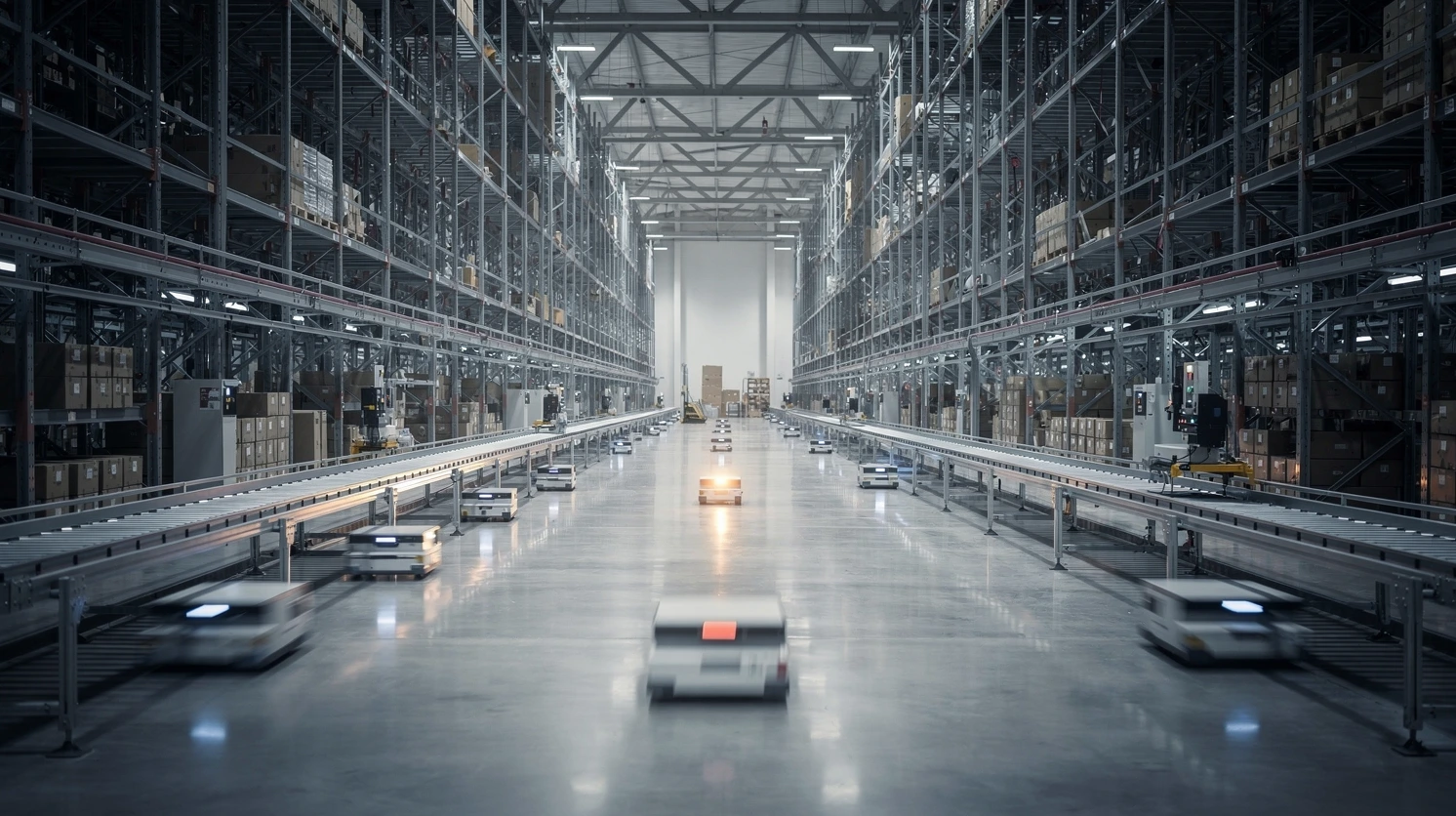
The clearest prediction to take from the most recent US retail earnings cycle is narrow and checkable: warehouse and fulfillment automation, not store remodels or front-end AI, is likely to be the defining capital-expenditure line of US retail’s 2026 holiday build-out. The pattern across the last four weeks of disclosures points toward two outcomes that a future observer can verify by year-end. First, the major US general-merchandise retailers reporting fiscal second-quarter results in August 2026 are likely to hold or raise automation and supply-chain capital guidance rather than trim it. Second, at least one large US retailer beyond Walmart and Amazon is likely to disclose a step-change automation or robotics commitment, a new automated distribution-center program, a named fulfillment capex increase, or a major robotics partnership, before the fourth-quarter holiday peak.
This is a prediction grounded in three independent signals observed between roughly mid-May and mid-June 2026, not a rewrite of any single announcement. Each signal comes from a different company and a different document type, and together they describe a sector moving capital toward physical throughput at exactly the moment most commentary expected belt-tightening. The piece below lays out the signals, what the pattern suggests, the precedents that make the call reasonable, and the counter-signals that could prove it wrong.
In short
- The prediction: warehouse and fulfillment automation is likely to be US retail’s headline capex theme through holiday 2026, with the major chains holding or raising supply-chain capital guidance at August earnings and at least one large retailer beyond Walmart and Amazon announcing a step-change automation commitment before the fourth quarter.
- Signal 1: Walmart’s Q1 FY27 materials (reported 21 May 2026) describe automation capex “peaking this year and next,” roughly half of US e-commerce fulfillment volume already automated, and quarterly capex of about $6.68bn, up around 34% year on year.
- Signal 2: Target’s Q1 report (reported 20 May 2026) lifted full-year capex to roughly $5bn, an increase of more than $1bn, with supply chain named as a primary destination for the money.
- Signal 3: Amazon’s early-June robotics announcement put its installed base above one million robots and reframed automation as employment-supporting rather than headcount-cutting, even as corporate AI layoffs continued elsewhere.
- The timeframe: the first leg is testable at August 2026 earnings; the second leg is testable before the holiday peak and fully checkable by 31 December 2026. The main counter-signal is a sharp consumer slowdown that could push capital toward price investment instead.
Why this matters now
For most of 2025 the consensus story about retail capital was caution. Tariff uncertainty, soft discretionary demand, and a nervous consumer pointed toward conservative spending and a focus on price rather than infrastructure. The mid-2026 earnings cycle complicates that narrative, because the largest operators are not pulling back on the part of the budget that builds physical capacity.
Automation capex is a leading indicator in a way that few other line items are. A robotics retrofit or an automated distribution center is a multi-year commitment that is hard to reverse, so when a retailer raises it during a soft demand backdrop, the signal is that management expects throughput and labor pressure to matter more than near-term margin optics. That makes the current moment worth reading closely, because the spending decisions visible now will shape delivery speed and unit economics into 2027.
The timing also tracks the calendar. Capacity decisions for the 2026 holiday peak are effectively locked by late summer, which is why the August earnings season is the natural checkpoint for the first half of this prediction. Retailers that intend to run a more automated peak will signal it in their fiscal second-quarter commentary, and those that fall behind will reveal it through softer guidance on delivery speed or fulfillment cost.
There is also a measurement reason to care now rather than later. By the time automation shows up in delivery-speed metrics or fulfillment cost per unit, the capital decision is years old and the competitive gap is already set. Reading the spending while it is still a guidance line, rather than waiting for the operational result, is the only way to anticipate the gap instead of merely observing it after the fact.
For context on how delivery economics are shifting at the edge of the network, our analysis of why autonomous delivery is likely to reach everyday retail by year-end sits alongside this warehouse story: the upstream automation described here and the downstream delivery automation described there are two ends of the same capacity race.
Signal 1: Walmart’s automation is peaking and visible in the capex line
The strongest single data point comes from Walmart’s first-quarter fiscal 2027 results, reported on 21 May 2026. According to the company’s earnings materials, capital expenditure is guided at roughly 3%–3.5% of sales, with management describing the automation and store-remodel cycle as “peaking this year and next.” First-quarter capex landed at about $6.68bn, an increase of roughly 34% year on year, which is a notable acceleration to disclose in a cautious demand environment.
The operational detail is what makes the signal credible rather than rhetorical. Walmart says roughly half of its US e-commerce fulfillment center volume is now automated, that more than 60% of stores receive freight from automated distribution centers, and that over half of its regional distribution centers are undergoing some form of retrofit. Those are throughput numbers, not aspirations, and they describe a network that has already crossed the midpoint of a physical transformation.
Two readings follow from “peaking this year and next.” The optimistic interpretation for investors is that the heaviest spending is near its top and free cash flow improves afterward. The more important interpretation for the sector is that Walmart is setting a capability benchmark that competitors must answer, because a network running half its e-commerce volume through automation can offer delivery speed and cost structures that manual peers struggle to match.
The primary disclosure is worth reading directly for anyone modeling the numbers; Walmart’s investor relations page hosts the Q1 FY27 results release. The relevant point for this prediction is that the leader is spending through the soft patch, which raises the competitive cost of standing still.
Signal 2: Target just raised capex with supply chain at the center
The second signal is independent of the first and points the same direction. Target’s first-quarter results, reported on 20 May 2026, lifted full-year capital expenditure to roughly $5bn, an increase of more than $1bn over the prior fiscal year, with supply chain and stores named as the primary destinations for the spending. The company paired that with a modest improvement in its sales outlook, guiding net sales growth of about 4%, up two percentage points from a prior view.
What matters is the direction of travel and the stated priority. A retailer under margin scrutiny choosing to add more than $1bn of capital and to name supply chain as a destination is allocating toward throughput at a time when the easier political choice would be to defer. That is precisely the behavior the prediction relies on: capital flowing toward fulfillment capacity rather than away from it.
Target also sits in the most instructive position for the second leg of the prediction. It is large enough that a meaningful automation announcement would move the sector narrative, yet it is widely seen as trailing Walmart on fulfillment automation, which creates a clear catch-up incentive. A company that has just raised capex and flagged supply chain is the natural candidate to convert that budget into a visible automation program before the holiday peak.
The contrast with Walmart sharpens the point. Where Walmart is describing the top of a multi-year curve, Target is describing the start of an acceleration, and the two positions on the same curve are exactly what tends to produce a follow-on wave. Laggards rarely announce in a vacuum; they announce when a credible benchmark makes inaction visibly expensive, which is the situation the leader has now created.
The grocery-adjacent players reinforce the same capital logic from a different angle. Our look at why Instacart is being re-rated as grocery-tech infrastructure describes a market increasingly willing to value fulfillment software and automation as durable assets rather than cost centers, which is the financial precondition for the spending wave described here.
Signal 3: Amazon’s robot fleet crossed a milestone as the labor story flipped
The third signal comes from Amazon’s early-June 2026 robotics announcement, which unveiled the company’s latest warehouse robot and confirmed an installed base above one million robots across its global network. As reported in coverage of the event, an Amazon executive framed automation as having increased fulfillment-center employment rather than reduced it, a notable message to send while corporate AI-driven layoffs continued in other parts of the business.
The number itself is a capability signal: a fleet past one million units implies that automation has moved from pilot to default inside the largest e-commerce operation in the world. The framing is a political signal, and arguably the more strategic one. By positioning robotics as job-supporting at the warehouse level, Amazon is pre-empting the labor backlash that often slows automation rollouts, which lowers the friction for the whole sector to follow.
Amazon’s spending is also not confined to the United States, which is why this signal generalizes. The company’s broader European robotics push, covered in our report on Amazon’s EUR10bn European robotics pledge and 25,000 jobs, shows the same pattern of large, multi-year automation commitments paired with a jobs narrative. Taken with the US milestone, it suggests the leader intends to keep widening the automation gap rather than let it stabilize.
| Signal | Source and date | What it shows | Why it is independent |
|---|---|---|---|
| Walmart automation “peaking,” capex +34% YoY | Q1 FY27 earnings materials, 21 May 2026 | Leader spending through a soft demand patch; ~50% of US e-commerce volume automated | General merchandise; throughput metrics in an earnings filing |
| Target capex raised to ~$5bn, supply chain named | Q1 results, 20 May 2026 | A trailing peer adding >$1bn and prioritizing fulfillment | Different company; capital-allocation disclosure |
| Amazon fleet past one million robots | Robotics announcement, early June 2026 | Automation as default plus a jobs-supporting narrative | Pure-play e-commerce; product and labor framing, not a filing |
What the pattern suggests
Read together, the three signals describe a sector reallocating capital toward physical throughput while public attention is fixed on software AI. Two of the three data points are formal capital disclosures from general-merchandise retailers, and the third is a capability-and-messaging move from the category’s pure-play leader. The convergence across document types is what gives the pattern weight, because it is unlikely that two earnings filings and a product launch would point the same way by coincidence.
The synthesis is straightforward. When the leader is spending through a downturn and explicitly benchmarking automation penetration, trailing peers face a widening capability gap that is expensive to ignore. Target’s fresh capex headroom and supply-chain emphasis make it the most probable next mover, and the broader field of grocers and department chains has the same incentive even if the timing varies.
The pattern also tells us something about sequencing. Automation capex tends to lead delivery-speed improvements by several quarters, so the spending visible in mid-2026 is really a forecast of the 2026 holiday and 2027 service levels. That lag is why the prediction is framed around announcements and guidance rather than measured outcomes: the decisions are observable now, even though their effects land later.
There is a labor dimension that strengthens rather than weakens the call. With wage pressure persistent and peak-season staffing harder to secure, automation is increasingly the only lever that improves both cost and capacity at once. That dual benefit is why the spending is likely to prove durable even if a given quarter’s demand disappoints.
It is worth being precise about what the signals do and do not prove. They establish that the largest operators are spending and that a trailing peer has the budget and the incentive to follow; they do not guarantee the timing of any single announcement. That distinction is why the prediction is hedged around a window rather than a date, and why the August earnings season carries most of the evidentiary weight.
Wider context: the holiday-peak capacity race
The automation wave does not sit in isolation; it is the upstream half of a broader capacity race that runs all the way to the doorstep. Last-mile automation, micro-fulfillment, and route-density economics are all converging on the same goal of moving more units faster at lower marginal cost. The warehouse is simply where the capital is most concentrated and the disclosures are most explicit.
Demand timing adds urgency. As the US promotional calendar fragments and peak spending spreads earlier into the year, retailers need fulfillment networks that can flex across more frequent demand spikes rather than one concentrated December crush. Our analysis of why the US summer sales peak is moving to June for good describes exactly that flattening of the calendar, which raises the value of always-on automated capacity over seasonal manual labor.
The competitive logic is not unique to the United States. Platform operators expanding their own logistics stacks abroad face the same build-or-buy choice, as our piece on why TikTok Shop is likely to push in-house fulfillment across Europe illustrates. The common thread is that controlling automated fulfillment is becoming a strategic asset rather than an outsourced commodity, which is what pulls capital toward it.
Finally, the financing backdrop is more permissive than it was a year ago. With interest-rate pressure easing and balance sheets in reasonable shape, the cost of funding a multi-year automation program has come down at the margin. That does not guarantee spending, but it removes one of the constraints that held capex back in 2024 and early 2025.
| Prior precedent | Period | What happened | Read-across to 2026 |
|---|---|---|---|
| Amazon fulfillment doubling | 2020–2021 | Capacity expansion through a demand shock, later digested | Leaders expand into stress; peers follow with a lag |
| Walmart supply-chain reinvestment | 2022–2024 | Multi-year automation and DC retrofit program | The 2026 “peaking” language is the maturity phase of this |
| Grocery micro-fulfillment push | 2021–2023 | Automated micro-fulfillment trialed widely, results mixed | Tempers the call; not all automation pays off on schedule |
Scenarios: how the next two quarters could play out
It helps to bracket the prediction with explicit scenarios rather than a single point estimate. The base case assumes demand stays soft but stable, the leaders keep spending, and the August earnings season confirms sustained or rising automation capex across the major chains. In that world the second leg follows naturally, with a trailing retailer converting fresh budget into a public automation program before the peak.
The bullish case is faster and broader. If a second large retailer joins Target in raising fulfillment capital and one of them announces a named robotics partnership over the summer, the wave arrives ahead of schedule and the sector narrative shifts decisively toward physical throughput. That outcome would likely pull vendor order books forward and compress the timeline for the whole field to respond.
The bearish case is a demand crack. A sharp summer deterioration in discretionary spending would push capital toward price and promotion, delay automation announcements into 2027, and leave the capex story intact but the timing wrong. The table below frames the three paths and what would confirm each, so the prediction can be scored rather than argued.
| Scenario | Rough likelihood | What confirms it | What it means for the prediction |
|---|---|---|---|
| Base: steady spend through softness | Most likely | August capex guidance held or raised; one trailing retailer announces a program by Q4 | Both legs land; prediction confirmed |
| Bull: accelerated wave | Plausible | Two or more retailers raise fulfillment capex; a named robotics deal over the summer | Prediction confirmed early and more broadly |
| Bear: demand crack redirects capital | Lower but real | Major chains cut supply-chain capex guidance; no new program before the peak | Prediction falsified on timing, not direction |
The honest position is that the base and bull cases together look more probable than the bear case on current evidence, but the bear path is far from negligible. The reason for confidence in the direction, if not the exact timing, is that two of the three signals are hard capital commitments already on the books rather than forecasts. Spending that is already disclosed is difficult to unwind quietly, which anchors the call even if the macro turns.
Implications for retailers, investors and logistics partners
For trailing retailers, the practical implication is that the window to respond is narrowing. A competitor running half its e-commerce volume through automation can compress delivery promises and fulfillment cost in ways that are difficult to match with manual labor, so the strategic question is less whether to invest than how fast and through which partners. Boards that defer the decision risk locking in a structural service-level gap heading into 2027.
For investors, the signal to track is the quality of the capex, not just its size. Capital tied to named automation programs with throughput metrics is more defensible than vague “supply-chain investment,” and the August earnings season should make the distinction clearer. The companies that pair raised capex with specific automation penetration figures are the ones most likely to convert spending into durable advantage.
For logistics and robotics vendors, the demand environment is improving even if individual deals remain lumpy. A sector that is reallocating toward physical throughput during a soft patch is unusually motivated to buy, and the political cover that the jobs-supporting narrative provides reduces deployment friction. The risk for vendors is concentration, since a small number of very large retailers account for an outsized share of orders.
For brands and marketplace sellers, faster and cheaper retailer fulfillment changes the competitive baseline for service. As the leaders compress delivery windows, the expectations consumers carry into every store rise with them, which pressures smaller operators to lean on third-party fulfillment to keep pace. The automation wave therefore ripples well beyond the companies actually buying the robots.
Caveats: what could go wrong
The most important counter-signal is consumer demand. If discretionary spending deteriorates sharply through the summer, capital that is currently flowing toward automation could be redirected to price investment, promotions, and margin defense instead. Walmart’s own commentary acknowledged a cautious consumer backdrop, and a genuine demand shock would be the cleanest way for this prediction to fail.
A second risk is that “peaking this year and next” is read as a deceleration rather than a sustained commitment. If the leader’s message that spending is near its top causes peers to wait for a cheaper entry point, the wave of new announcements could slip past the holiday window and into 2027. In that case the capital story stays intact, but the specific timing in this prediction would miss.
Third, automation does not always pay off on schedule, as the mixed record of grocery micro-fulfillment shows. A high-profile disappointment or a delayed rollout could cool enthusiasm and make boards more hesitant to announce step-change programs in public, even if private spending continues. The history here is genuinely two-sided and worth weighing.
Finally, there is execution and supply risk on the vendor side. Robotics hardware, integration talent, and construction timelines can all slip, and a constrained supply of automation capacity could push announcements later than the demand would otherwise justify. None of these caveats reverses the direction of travel, but each could move the timing enough to falsify the narrow August-to-year-end framing.
Frequently asked questions
What exactly is being predicted, and how can it be checked?
The prediction has two testable parts. First, that major US general-merchandise retailers will hold or raise automation and supply-chain capex guidance at August 2026 earnings rather than cut it; second, that at least one large US retailer beyond Walmart and Amazon will announce a step-change automation or robotics commitment before the fourth-quarter holiday peak. Both are checkable from public disclosures by 31 December 2026.
Why focus on automation rather than AI software?
Software AI dominates the headlines, but warehouse automation is where the largest, hardest-to-reverse capital is currently moving, and where the disclosures are most explicit. The prediction follows the capex, and the capex in the last four weeks of earnings pointed at physical fulfillment capacity rather than front-end tooling.
Isn’t Walmart saying its spending is peaking? Doesn’t that argue against a wave?
“Peaking this year and next” describes the leader reaching the top of a multi-year curve, not the sector stopping. The competitive read is that a benchmark has been set that trailing peers must answer, which is what tends to generate the follow-on announcements the prediction anticipates. The leader maturing and the followers accelerating are consistent, not contradictory.
Which retailer is most likely to be the next big mover?
Target is the most probable candidate on the current evidence, because it has just raised full-year capex by more than $1bn, named supply chain as a destination, and is widely seen as trailing Walmart on fulfillment automation. That combination of fresh budget and a clear catch-up incentive is exactly what precedes a visible program. Grocers and department chains are plausible secondary candidates.
Does automation cost jobs, and does that threaten the rollout?
The labor picture is more nuanced than the headline fear suggests. Amazon framed its robotics expansion as having increased fulfillment-center employment, and the messaging is deliberately designed to reduce political friction around deployment. Whether that framing holds under scrutiny is debatable, but for now it lowers, rather than raises, the barrier to further automation.
Could a weak consumer kill this prediction?
Yes, and that is the single biggest risk. A sharp summer deterioration in discretionary demand could redirect capital from automation toward price and promotion, which would be the cleanest way for the call to fail. The prediction assumes demand stays soft but stable rather than cracking outright.
How does this connect to last-mile and delivery automation?
The two are ends of the same capacity race. Warehouse automation increases upstream throughput, while last-mile automation compresses the final delivery cost, and retailers investing in one are usually investing in the other. Reading the warehouse signals alongside delivery-side developments gives a fuller picture of where service levels are heading into 2027.
What should a smaller retailer or brand do about this?
The practical move is to assume the service baseline is rising and to plan fulfillment accordingly, most often by leaning on capable third-party logistics partners rather than trying to match hyperscale automation directly. The goal is to avoid a structural delivery-speed gap as the leaders compress their promises. Waiting for perfect certainty is the main way to fall behind.
What would make this prediction clearly wrong by year-end?
A clean miss would look like major US retailers cutting supply-chain capex guidance at August earnings, paired with no large retailer beyond Walmart and Amazon announcing a meaningful automation program before the holiday peak. A demand shock that flips the capital story toward price defense is the most likely path to that outcome. Absent those, the direction of travel favors the call.