
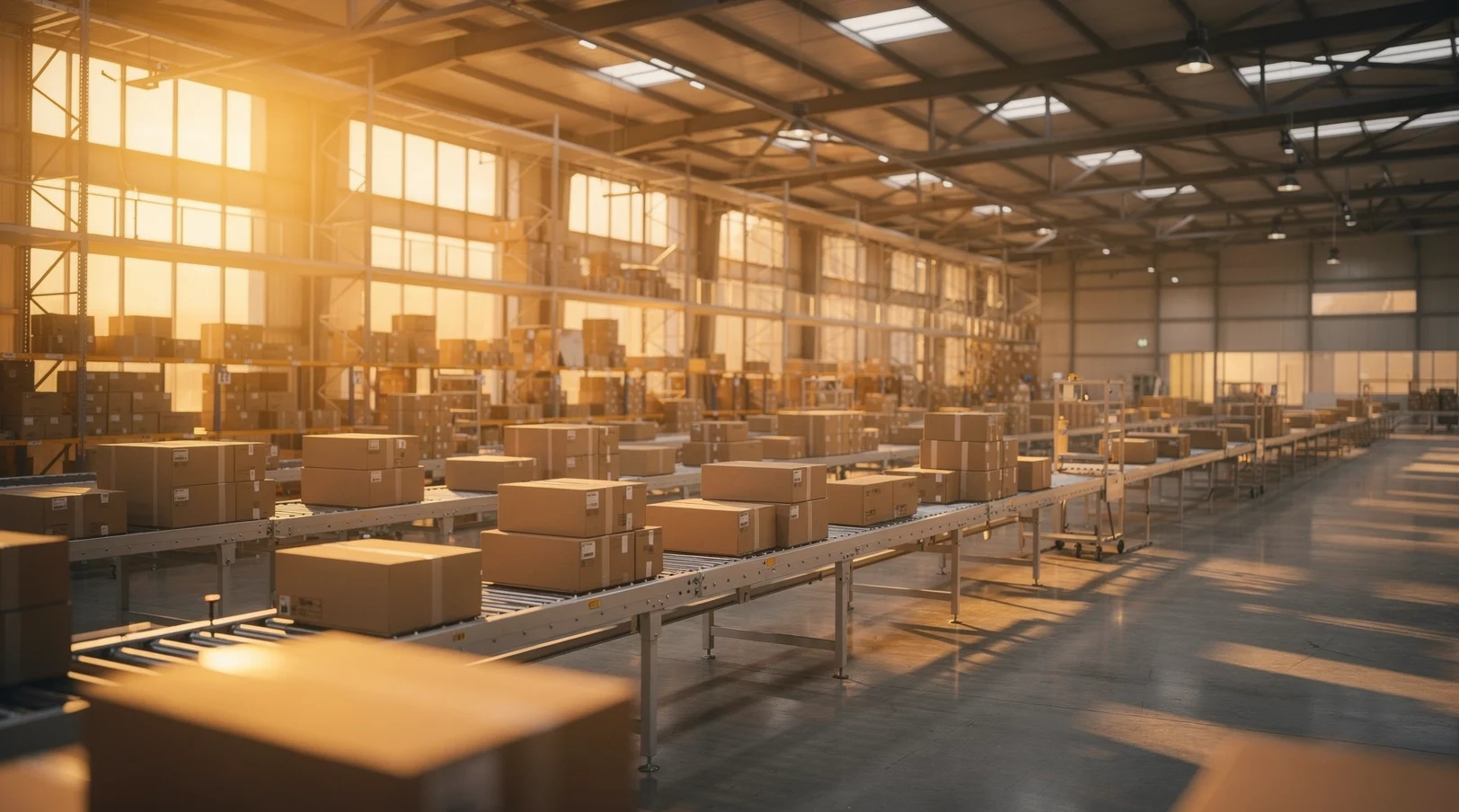
India’s two largest online retailers opened competing multi-day sale events on Saturday, July 4, 2026, firing the starting gun on the country’s mid-year shopping season. Amazon began its Prime Day event, scheduled to run from July 4 to July 6 for paying Prime members, while Walmart-owned Flipkart launched its GOAT Sale, branded “Greatest Of All Time,” across a longer window that runs from July 4 to July 9. Both platforms opened early access on July 3 for their respective loyalty tiers.
The overlapping calendars are not a coincidence. Flipkart has repeatedly timed its GOAT Sale to shadow Amazon’s Prime Day, and this year the two events again land on the same opening date, turning the first week of July into a head-to-head test of discounting firepower, financing offers and delivery speed. According to coverage from Indian trade and technology outlets including BusinessToday, SamMobile and About Amazon India, the events lead with smartphones, laptops, wearables, large appliances and fashion, the categories that historically drive the heaviest sale-period volumes in the market.
In short
- Two mega-sales opened together: Amazon Prime Day (July 4 to July 6) and Flipkart’s GOAT Sale (July 4 to July 9) both launched on July 4, with early access on July 3.
- Smartphones lead the discounts: flagships such as the Samsung Galaxy S25 Ultra and budget models under 30,000 rupees (about 350 US dollars) anchor the headline offers on both platforms.
- Financing is the real lever: no-cost EMI over six and nine months, instant bank-card discounts and exchange bonuses do much of the price-cutting that India’s marketplace rules restrict at the platform level.
- Quick commerce raises the stakes: Blinkit, Swiggy Instamart and Zepto have reshaped fast-delivery retail, and both Amazon and Flipkart are pushing into minutes-scale delivery as Zepto prepares a public listing.
- It is a Walmart versus Amazon proxy war: Flipkart’s owner Walmart and Amazon are contesting a market where Amazon has pledged a total of 48 billion US dollars in cloud and AI investment through 2030.
What Amazon and Flipkart launched on July 4
Amazon’s Prime Day in India is a members-only event, open to subscribers of the Prime loyalty programme, with the main sale window running from July 4 to July 6, 2026. About Amazon India, the company’s official news channel, framed the launch as a peak retail moment spanning electronics, fashion, home and daily essentials. Prime members received a 24-hour early-access window beginning July 3.
Flipkart’s GOAT Sale runs longer, from July 4 to July 9, with early access on July 3 for members of the Flipkart Plus loyalty tier. The platform is leading with discounts, exchange bonuses, no-cost EMI plans and time-limited flash deals concentrated on smartphones, according to Indian technology outlets covering the launch. The GOAT branding positions the event as Flipkart’s flagship mid-year sale, the counterweight to Amazon’s Prime Day in a market where the two companies have traded the top position for a decade.
The mechanics on both sides are similar. Shoppers see a headline “effective price” that stacks a listed discount on top of instant bank-card offers, exchange value for an old device and interest-free installment plans. That layered pricing is central to how Indian sale events work, and it is also central to how the platforms stay within the country’s marketplace regulations, a point examined later in this article.
How the two events compare
| Feature | Amazon Prime Day 2026 (India) | Flipkart GOAT Sale 2026 |
|---|---|---|
| Main sale window | July 4 to July 6 | July 4 to July 9 |
| Early access | July 3, Prime members | July 3, Flipkart Plus members |
| Eligibility | Prime subscribers | Open, with member perks |
| Owner | Amazon | Walmart |
| Lead categories | Smartphones, laptops, wearables, home, fashion | Smartphones, electronics, large appliances, fashion |
| Financing tools | No-cost EMI, instant card discounts | No-cost EMI, exchange bonuses, card discounts |
The differences are subtle but strategic. Amazon gates its event behind the Prime membership, using the sale as both a revenue driver and a subscriber-acquisition tool. Flipkart keeps its doors wider open, reserving the best early slots for Plus members while chasing reach across a broader shopper base. Both approaches reflect the same underlying goal: converting sale-period attention into durable customer relationships that outlast the discount window.
Why the timing matters for the wider retail year
The July events function as a rehearsal. India’s true retail peak arrives in the autumn festive season, when Amazon’s Great Indian Festival and Flipkart’s Big Billion Days run through the Navratri and Diwali period and generate the bulk of annual online sales. The mid-year sales let both platforms test inventory depth, delivery capacity and payment-partner promotions before the higher-stakes autumn window.
That calendar logic mirrors a pattern visible across global retail, where major players increasingly pull promotional events earlier to capture demand ahead of rivals. The tendency of large retailers to converge on the same promotional dates has become a defining feature of the 2026 calendar, a dynamic explored in our analysis of how Amazon, Walmart and Target are set to converge on early October 2026. In India, the July head-to-head is the local expression of the same competitive clock.
There is a macro tailwind as well. Indian consumer demand has held up through the first half of 2026, and both platforms are betting that a strong July sets a confident tone for the festive quarter. A weak mid-year showing, by contrast, would signal caution to brands and sellers planning their autumn budgets.
The membership economics behind Prime Day
For Amazon, Prime Day is inseparable from the subscription that gates it. The event is engineered to convert deal-seekers into Prime members and to remind existing members why they renew, bundling shipping, streaming and exclusive sale access into a single annual fee. That subscription-led model is under sharper scrutiny in several markets, a trend that connects to our coverage of why US subscription-commerce enforcement is likely to sharpen before year-end.
In India, Prime bundles video, music and faster delivery into a proposition tuned for a price-sensitive market. The sale-period spike in sign-ups is a recurring feature of the event, and it is one reason Amazon guards Prime Day access rather than opening the discounts to all shoppers. The membership is the moat; the sale is the drawbridge.
The mechanics of an Indian mega-sale
Understanding these events requires understanding how price cuts are actually delivered in India. The headline discount visible on a product page is only one layer. Bank partnerships, installment financing and trade-in schemes combine to produce the “effective price” that shoppers ultimately compare across platforms.
No-cost EMI and bank partners
Both Amazon and Flipkart are offering no-cost EMI plans over six and nine months, alongside instant discounts tied to specific bank cards, according to outlets covering the July launch. No-cost EMI lets a shopper spread payment across months without a stated interest charge, with the financing cost typically absorbed through the discount structure. Instant card discounts, often in the range of 10 percent for partner banks, are applied at checkout.
These tools matter because they widen the addressable market. A flagship phone priced beyond the reach of many buyers becomes accessible when split into interest-free monthly payments, which is why financing offers frequently move more units than the raw discount alone. For the platforms, card partnerships also subsidize part of the promotion, sharing the cost of the sale with banks eager for transaction volume.
The marketplace discount question
India’s foreign direct investment rules for e-commerce shape how these sales are structured. Under the marketplace model that Amazon and Flipkart operate, platforms with foreign investment are barred from owning inventory directly or from influencing the sale price of goods. The rules, tightened through policy notes issued by the government in recent years, are intended to protect smaller offline traders from deep platform-funded discounting.
In practice, discounts flow through sellers, brands and bank partners rather than the platform’s own balance sheet, at least on paper. That structure is why exchange bonuses, card offers and brand-funded price drops feature so prominently in sale messaging. It is also a recurring source of tension with India’s trader lobbies, which have long argued that the largest platforms find ways to steer pricing despite the restrictions.
Exchange bonuses and trade-ins
Device exchange is a distinctly large part of Indian sale events. Shoppers trade an old phone for credit against a new one, and platforms sweeten the base trade-in value with a limited-time exchange bonus during the sale window. For a market where a large share of buyers are upgrading rather than buying their first smartphone, exchange value can swing the effective price by several thousand rupees, materially changing which model looks cheapest.
Smartphones remain the main battlefield
As in previous years, smartphones anchor the marketing for both events. Indian technology outlets covering the July launch highlighted deals spanning the premium and budget tiers, with the effective prices assembled from listed discounts, card offers and exchange value.
The premium tier
At the top of the range, the Samsung Galaxy S25 Ultra, which carried a launch price of 129,999 rupees (about 1,520 US dollars at an exchange rate of roughly 85.5 rupees to the dollar in early July 2026), was reported at an effective price near 84,999 rupees (about 995 US dollars) once sale offers were stacked. Flipkart’s GOAT Sale messaging also featured the iPhone 17, the Samsung Galaxy S25 line and Apple laptops among its premium draws, according to Indian coverage.
The budget tier
The heavier volumes sit below 30,000 rupees. Reported deals in this band included the OnePlus Nord CE5 at 22,999 rupees (about 269 US dollars) and models from Poco, Motorola and other value brands positioned at some of the lowest listed prices of the year. This tier is where the platforms fight hardest for first-time and upgrade buyers, and where financing offers do the most to convert browsing into purchases.
| Model (as reported) | Listed price (INR) | Approx. USD | Segment |
|---|---|---|---|
| Samsung Galaxy S25 Ultra (launch MRP) | 129,999 | 1,520 | Premium |
| Samsung Galaxy S25 Ultra (effective) | 84,999 | 995 | Premium |
| OnePlus Nord CE5 | 22,999 | 269 | Budget |
| Sample sub-30,000 band | up to 29,999 | up to 351 | Budget |
Figures reflect prices reported by Indian technology outlets during the launch and are indicative rather than guaranteed, since effective prices depend on bank offers, exchange value and stock availability. Dollar conversions use an approximate rate of 85.5 rupees to the US dollar.
The concentration on phones is not accidental. Smartphones combine high average selling prices with predictable demand, making them ideal loss-leaders that pull shoppers into a platform where they then buy accessories, appliances and household goods. The category also travels well across the region: the same value-electronics dynamic underpins consumer-tech retail across South and Southeast Asia, where events such as the Vietnamese electronics retailer that recently raised 505 million US dollars in a landmark IPO show how central device sales are to the region’s retail economics.
Quick commerce has changed what a sale means
The most important shift since the last mid-year sales is not in the sale mechanics but in delivery speed. India’s quick-commerce sector, which promises grocery and everyday-goods delivery in 10 to 20 minutes, has grown into a structural force that both Amazon and Flipkart now have to answer.
The three-way share fight
Quick commerce in India is dominated by three players. Blinkit, owned by Eternal, has led the category, with market-share estimates cited by Reuters earlier in 2026 placing it near 46 percent, ahead of Swiggy’s Instamart at roughly 24 percent and Zepto at around 22 percent. The sector reached an estimated 11.3 billion US dollars in gross value in 2025 and is projected by industry analysts to expand several times over by 2030.
| Platform | Owner | Approx. market share (2026) | Note |
|---|---|---|---|
| Blinkit | Eternal | ~46% | Category leader, large dark-store network |
| Swiggy Instamart | Swiggy | ~24% | Second by share, scaling stores |
| Zepto | Zepto (private) | ~22% | Preparing a public listing |
Share estimates are drawn from Datum Intelligence data cited by Reuters and are approximate. The category’s rapid growth has pulled fast-delivery expectations into general merchandise, changing what shoppers expect even during a multi-day electronics sale.
Zepto’s approaching listing
Zepto has moved toward a public listing expected around July 2026, having filed an updated draft prospectus with India’s market regulator SEBI. Its reported fiscal-2026 revenue of about 22,623 crore rupees, roughly 2.65 billion US dollars, illustrates how quickly the category has scaled, even as the leading players continue to absorb heavy losses to fund expansion. A successful listing would give the sector its first large public benchmark and intensify the competitive pressure on the incumbents.
Amazon and Flipkart push into minutes
Both marketplaces are building their own fast-delivery answers. Reporting in early July indicated that Amazon and Walmart-owned Flipkart are preparing to expand aggressively into India’s delivery-in-minutes segment, a move that would fold quick commerce into their sale-period propositions. Faster fulfillment also raises the operational bar, since peak sale volumes strain warehousing and last-mile networks. The pressure to automate that backbone connects to our reporting on how warehouse humanoids are reaching commercial scale as fulfillment operators chase throughput without proportional labor growth.
The Walmart versus Amazon subplot
Beneath the consumer-facing discounts sits a contest between two of the world’s largest retailers. Flipkart is majority-owned by Walmart, which acquired control of the platform in 2018, making the GOAT Sale a Walmart event in all but name. Amazon, meanwhile, has treated India as one of its most important long-term markets outside the United States.
Amazon reinforced that commitment in late June 2026, when it announced an additional 13 billion US dollars of investment in cloud and artificial-intelligence infrastructure in India, lifting its total planned spend to 48 billion US dollars through 2030. The pledge, unveiled after chief executive Andy Jassy met Prime Minister Narendra Modi, is aimed at expanding AWS data-center capacity in Mumbai and Hyderabad. While the investment targets cloud rather than retail directly, it signals the scale of Amazon’s positioning in a market it cannot afford to cede.
The sale events are the visible edge of that rivalry. Every extra point of sale-period market share strengthens a platform’s pull with sellers, brands and advertisers, which in turn funds deeper discounts and faster delivery in a reinforcing loop. Both companies are spending to win a market whose online retail base is still expanding faster than most mature economies.
Retail media rides the sale wave
Sale events are also advertising events. The surge of shopper attention during Prime Day and the GOAT Sale is monetized through sponsored listings and on-platform ads, a fast-growing profit stream for both companies. That advertising engine increasingly extends beyond the platforms themselves, a shift covered in our analysis of how retail media’s next land grab moves off-site before the 2026 holidays. For Amazon and Flipkart, high-traffic sale days are prime inventory for brands willing to pay for visibility.
The payments backbone that makes it work
None of this scale would be possible without India’s digital payments infrastructure. The Unified Payments Interface, the country’s real-time account-to-account rails, has become the default way millions of shoppers pay, processing billions of transactions a month and lowering the friction of online checkout to a few taps. Sale events lean heavily on this rail, since instant, low-cost transfers make impulse and financed purchases faster to complete.
Layered on top of UPI are the card partnerships and installment products that platforms use to construct their effective prices. Bank-card instant discounts require a shopper to pay with a specific partner card, while no-cost EMI can run through cards or through dedicated lending products. The result is a payments stack where a single purchase may combine a UPI-linked account, a partner-bank offer and a multi-month installment plan.
Why financing matters more than the sticker
For a large share of Indian shoppers, monthly affordability, not the headline price, governs the buying decision. A phone that costs 30,000 rupees outright feels very different at 5,000 rupees a month for six months with no stated interest. That psychology is why both Amazon and Flipkart foreground financing in their sale messaging, and why banks compete to be the featured partner during high-traffic events.
The financing emphasis also shifts risk and cost around the ecosystem. Banks fund part of the discount in exchange for transaction volume and new card customers, brands fund part in exchange for clearance and visibility, and the platform captures advertising and commission revenue on top. The shopper sees a single low number; behind it sits a web of shared subsidies.
India’s online retail market in numbers
The stakes of the July contest reflect the size of the prize. India is one of the fastest-growing large e-commerce markets in the world, with a rapidly expanding base of online shoppers drawn from smaller cities and towns rather than only the major metros. That geographic broadening is central to why sale events lean on affordable financing and value smartphones, since new shoppers often enter online retail through a first or second device purchase.
The quick-commerce numbers underline the momentum. A category worth an estimated 11.3 billion US dollars in gross value in 2025 is projected by industry analysts to grow several times over by 2030, with some estimates placing the 2030 range between 60 and 83 billion US dollars. Even allowing for the wide spread in such forecasts, the direction is clear: fast delivery is moving from a convenience niche to a core retail channel, and the marketplaces cannot treat it as a sideshow during their flagship sales.
These structural tailwinds explain the intensity of the July head-to-head. A platform that wins share during the mid-year sale carries momentum, seller loyalty and advertiser interest into the far larger festive quarter, compounding its advantage. In a market still adding tens of millions of online shoppers a year, small differences in sale-period performance can translate into durable competitive gaps.
The regulatory and structural backdrop
India’s e-commerce market operates under rules that make it unlike the United States or Europe. Foreign-owned marketplaces cannot hold inventory or set prices directly, and periodic policy proposals have sought to further tighten controls on discounting and exclusive launches. Domestic trader groups continue to lobby for stricter enforcement, arguing that the largest platforms disadvantage small offline retailers.
A third force looms over the Amazon-Flipkart duopoly. Reliance Retail, part of Mukesh Ambani’s conglomerate, operates the JioMart and Ajio platforms and brings deep local infrastructure and a vast physical store footprint. Reports have suggested Reliance is exploring partnerships to strengthen its online position, though the companies involved have not confirmed specific terms. Any deeper alignment between a global platform and Reliance would reshape the competitive map that the July sales are contesting.
The structural picture, then, is a three-cornered fight complicated by regulation: Amazon and Walmart-backed Flipkart trading blows on discounts and delivery, Reliance building an integrated online-offline alternative, and the government maintaining rules designed to keep any single player from dominating.
What to watch over the sale window
Several signals will indicate how the July events land. The first is sale-period gross merchandise value, which the platforms typically trumpet in selective disclosures once the window closes, though independent verification is limited. Strong headline numbers would set a confident tone for the festive quarter.
The second is category mix. A heavy skew toward financed smartphone purchases would confirm that affordability tools, rather than raw discounts, are driving conversion. The third is delivery performance, since any strain on fulfillment during peak volumes would expose the operational gap that quick-commerce rivals are exploiting.
Finally, watch the competitive response. Reliance’s JioMart and Ajio, along with the quick-commerce trio, will run their own promotions to avoid ceding attention during the sale window. The degree to which they blunt the Amazon-Flipkart surge will hint at how contested India’s autumn festive season is likely to be.
What it means for sellers and shoppers
For sellers, the July events are a volume opportunity and a margin test. Participating brands gain exposure and clearance velocity, but the layered discount, financing and exchange structure compresses margins, and the platforms’ advertising fees add to the cost of visibility. Sellers that plan inventory and ad spend around the event tend to fare better than those chasing last-minute deals.
For shoppers, the advice mirrors every major sale: the “effective price” is the number that matters, and it depends on bank offers, exchange value and stock. Comparing the same model across Amazon and Flipkart, and factoring in no-cost EMI and card discounts, is the only reliable way to judge whether a headline deal is genuinely the lowest price of the year. With two multi-day events overlapping, the window to compare is wider than usual.
Frequently asked questions
When do Amazon Prime Day and the Flipkart GOAT Sale 2026 run in India?
Amazon’s Prime Day runs from July 4 to July 6, 2026, for Prime members, with early access on July 3. Flipkart’s GOAT Sale runs from July 4 to July 9, 2026, with early access on July 3 for Flipkart Plus members.
Is Amazon Prime Day in India the same as the US event?
No. Amazon runs Prime Day on different dates in different markets. The US event took place in late June 2026, while the India event runs July 4 to July 6. The dates and deals are set regionally.
Who owns Flipkart?
Flipkart is majority-owned by Walmart, which acquired a controlling stake in 2018. That makes the GOAT Sale effectively a Walmart-backed event competing against Amazon in India.
What does GOAT stand for in Flipkart’s sale?
GOAT stands for “Greatest Of All Time.” It is the branding Flipkart uses for its mid-year flagship sale, timed to run alongside Amazon’s Prime Day.
Why do the discounts come through banks and exchange offers rather than the platform?
India’s foreign direct investment rules bar foreign-owned marketplaces from setting prices or owning inventory directly. As a result, discounts flow through sellers, brands, bank-card partnerships and device-exchange bonuses rather than the platform’s own pricing.
How does quick commerce affect these sale events?
Quick-commerce players such as Blinkit, Swiggy Instamart and Zepto have made minutes-scale delivery a mainstream expectation. Both Amazon and Flipkart are building fast-delivery services, and the competition raises the operational bar for handling peak sale volumes.
What is the significance of Zepto’s planned listing?
Zepto has moved toward a public listing expected around July 2026 after filing an updated prospectus with SEBI. A large listing would give India’s quick-commerce sector its first major public benchmark and increase competitive pressure on incumbents.
How much is Amazon investing in India?
Amazon said in late June 2026 that it would add 13 billion US dollars to its India cloud and AI investment, taking the total to 48 billion US dollars through 2030. The spending targets AWS data-center capacity in Mumbai and Hyderabad rather than retail directly.
Are the smartphone prices guaranteed?
No. Reported prices are indicative and depend on bank offers, exchange value and stock availability during the sale window. The effective price a shopper pays can vary from the headline figures highlighted in sale coverage.