
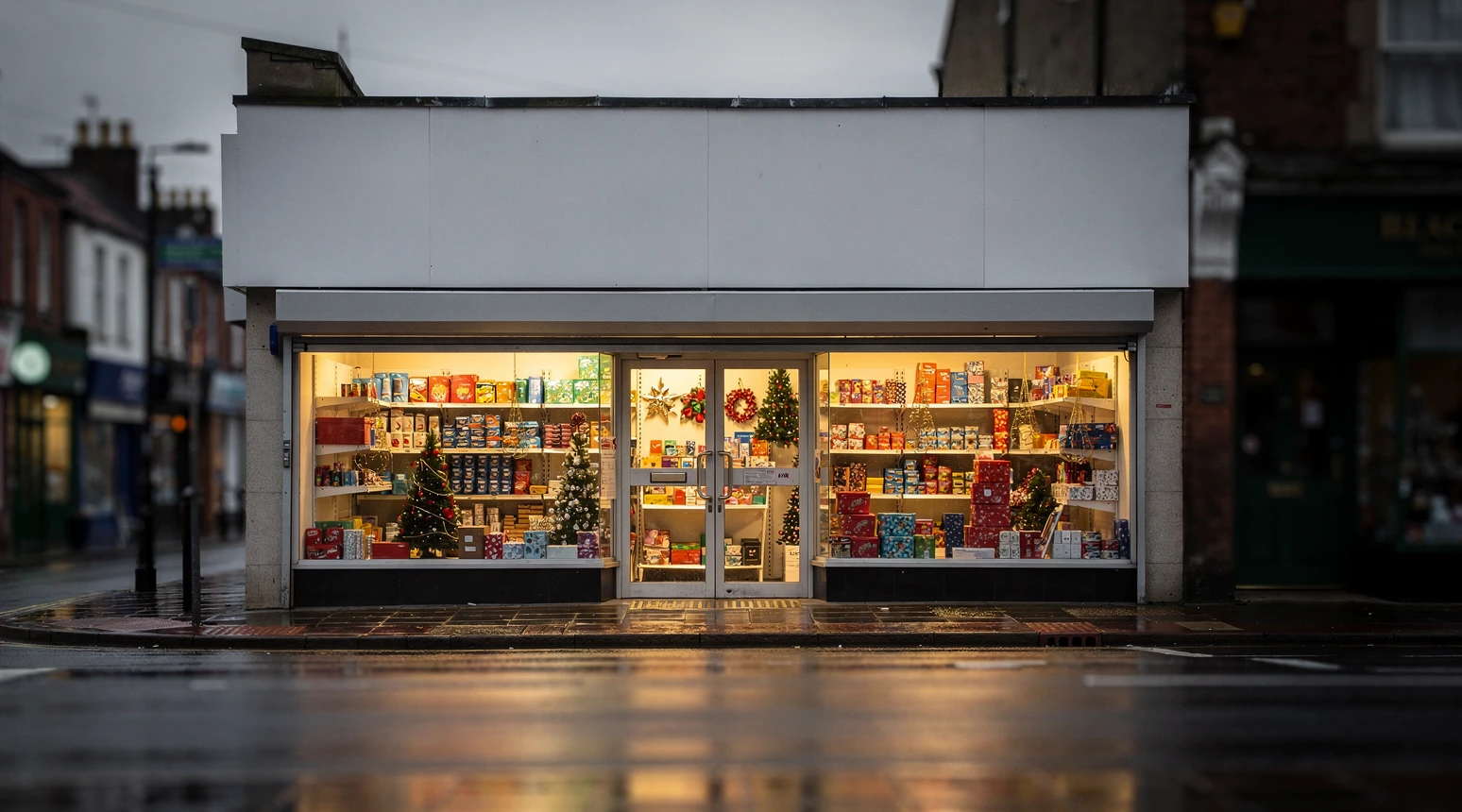
A company most shoppers have never heard of has put a new price on Poundland. Xyra Group Holdings, a London investment group incorporated less than two years ago, has offered £12.5m upfront for the whole discount chain and has given its owner, the US restructuring firm Gordon Brothers, until the close of business on Wednesday 4 November to respond, ITV News reported on Wednesday morning.
The offer is more than double the upfront cash ITV says rival bidder Martin Property Group has proposed, and it comes with a promise to keep the existing management and protect jobs. But Xyra has yet to identify a single completed acquisition, its latest filed accounts show net liabilities of just £296, and it has declined to say where the money would come from.
The bid lands as pressure on Gordon Brothers reaches a new level. MPs have called the firm to appear before a Commons committee next week, ministers are holding meetings with both sides this week, and suppliers are warning that some of them will not survive a collapse. This report sets out what Xyra is offering, what is known about the company, how the bids compare, and what shoppers, staff and suppliers should expect in the days before legal protection runs out on 12 November.
In short
- New bid: Xyra Group Holdings has offered £12.5m upfront towards a £30m shareholder loan, plus taking on existing credit facilities, with a response requested by the end of Wednesday 4 November, ITV News reports.
- Big questions: Xyra was incorporated in November 2024, reported net liabilities of £296 in its last accounts and has not named a completed acquisition; its source says funding comes “from within our group”.
- Owner in the spotlight: Liam Byrne’s business committee has asked Gordon Brothers to answer questions on Wednesday 11 November, the day before creditor protection is due to end.
- Supplier warning: Bradford’s Highcrest Retail Brands told the BBC it would lose “a few million” in sales and expects “pennies in the pound” back if Poundland collapses.
- Shoppers: Poundland has not entered administration and its shops are trading, but anyone with a gift card or an outstanding refund should use it or chase it now.
What has Xyra offered for Poundland?
According to ITV News, Xyra submitted its bid on the morning of Monday 2 November. The proposal would give Gordon Brothers £12.5m upfront towards the repayment of a £30m shareholder loan, and it includes arrangements to take on Poundland’s existing credit facilities. Xyra also says it intends to put additional money into the chain, although it would not tell ITV how much.
The offer is for the entire business. Xyra wants to keep the current management team in place, run Poundland as a going concern and, in the words of a company source quoted by ITV, grow it “nationally and internationally”. The same source said: “This is a long-term play, an international play, where the people are put first.”
That matters because whole-business bids are what the current political row is about. When Poundland’s directors filed a notice of intention to appoint administrators on 29 October, the board said it had not been able to identify an acceptable offer for the whole business, although established retailers had made formal offers that collectively covered a significant part of it.
The deadline Xyra has set is its own, not a legal one. Gordon Brothers can let it pass, and at the time of writing, on Wednesday afternoon, no response had been publicly reported. ITV said Gordon Brothers, Poundland and Xyra had all been approached for comment on its report.
Who is Xyra Group Holdings?
This is the question that will decide how seriously the bid is taken. Xyra describes itself on its website as a London holding company that buys profitable, founder-owned and corporate businesses, keeps their people and brands, and does not sell them. It is not a retailer, and ITV reports that it has never previously acquired one.
What the public record shows
Companies House lists Xyra Group Holdings Limited as an active company, incorporated on 27 November 2024, with a registered office at 42-44 Bishopsgate in the City of London. It previously traded under the names Xyra Group Limited and Barter Group Limited, and its stated business activity is that of an open-ended investment company.
The filing record also confirms a detail in ITV’s report: Andrew Brode was appointed a director on 31 October 2026, two days before the Poundland bid went in. ITV reports that the accounts filed in August show net liabilities of £296 at the end of November 2025, which it describes as a tiny balance sheet. Those accounts are almost a year old, so they cannot show what Xyra can raise today, but they offer no evidence of existing resources on the scale of this deal.
ITV also reports that in a YouTube video posted a year ago and since removed, Xyra’s 23-year-old founder, Manvedeep Singh, claimed the group had 50 potential acquisitions in its pipeline, including 30 signed letters of intent and five sets of heads of terms. According to ITV, Xyra has yet to identify one completed acquisition.
What the company says about itself
Xyra’s pitch rests on its people. Its website lists 16 directors, ten of them non-executive, and is chaired by Lutfi Talib, a financial services entrepreneur. The names ITV singles out are Andrew Brode, the veteran businessman who floated the translation group RWS on the stock market; Graham Martin, a former senior AlixPartners executive; and Dave Elston, who held senior e-commerce roles at Clarks.
A company source told ITV the board has experience “in abundance”, adding: “There are a lot of reputations here on the line. We cannot afford to say anything that isn’t factual.” Asked how the deal would be funded, the source said the money would come “from within our group” but declined to go further.
The honest position is that the bid is unproven rather than disproven. Experienced directors can attract backers quickly, and a whole-business deal often depends on lenders as much as the buyer’s own cash. Until Xyra shows proof of funds, however, Gordon Brothers and its advisers have an obvious reason to ask for more, and the source’s assurances cannot be independently checked from what is public.
How does Xyra’s bid compare with the other offers?
There are now three named groups chasing the whole business, and the reports do not agree on every number. ITV puts Martin Property Group’s upfront payment at £5m. The Guardian and Retail Gazette have reported about £7.5m upfront, with another £7.5m deferred over two years, making about £15m in total. The table below sets out both versions rather than choosing between them.
| Bidder | What is reported | Backing | Latest status |
|---|---|---|---|
| Xyra Group Holdings | £12.5m upfront towards the £30m loan; takes on existing credit facilities; further investment of an undisclosed size | Funding “from within our group”; no details given | Submitted 2 November; response requested by close of play on 4 November (ITV) |
| Martin Property Group | £5m upfront (ITV), or about £7.5m upfront plus £7.5m over two years (Guardian); would also take on an asset-backed loan of about £90m (Guardian) | Described as fully funded by the Guardian; backed by Poundland’s managing director Barry Williams and finance chief Shaun Wills (ITV) | Rejected by Gordon Brothers, although discussions continue (ITV) |
| Innovest Holdings | Terms not disclosed | Believed to have partial funding (Guardian); has failed to satisfy Gordon Brothers’ advisers on funding (ITV); publicly backed by Reform UK’s Robert Jenrick | Not treated as fully funded; advised by Charles Bunker, a former Reform candidate |
Why the £30m loan is the sticking point
The argument keeps returning to one debt. Gordon Brothers bought Poundland from Pepco for £1 in June 2025 and took on most of a £30m shareholder loan, with Pepco holding the other £7.5m, according to the Guardian. It has rejected Martin Property Group’s offer even though Pepco has been prepared to wait for its share, as Sky News first reported.
On the Guardian’s figures, the Martin offer of about £15m would cover only half of the loan, and only half of that would arrive straight away. Xyra’s £12.5m would put considerably more cash on the table on day one, although it still falls well short of £30m. ITV does not report whether Xyra’s bid includes any deferred element, and that is one of the terms to watch if details emerge.
Why might Gordon Brothers still say no?
Price is only one test. An owner comparing a bid with a break-up will also ask whether the buyer can actually complete, and on that measure a company with no completed deals starts at a disadvantage. The Guardian reported on 30 October that sources close to the process saw value in “trusted established retail operators” that had made firm offers for parcels of shops amounting to about half the estate.
Gordon Brothers is also understood to believe it can raise more from a break-up than from the Martin offer, the Guardian reports. Poundland insiders have gone further, telling ITV they believe the firm is deliberately pushing the chain towards administration because it could make more by closing shops and liquidating stock before Christmas. Those are allegations from one side of a bitter dispute, and Gordon Brothers defends its record.
Its defence came in a letter from Mark Newton-Jones, who leads its European operations and previously ran Mothercare, to the government adviser David Bickerton. First reported by Sky News, the letter says the firm has provided £85m of additional financing since June 2025 and that the chain has returned to underlying profit. But it adds that the business “is still not cash-generative at a sustainable level despite the turnaround efforts” because of inflation, staffing costs and “severe levels of shoplifting”.
The filed accounts give that argument some support for the past, if not the present. Poundland’s pre-tax loss widened to £85.3m in the year to September 2025, from £45.4m a year earlier, while sales fell almost 12% to £1.55bn, the Guardian reports. Founder Steve Smith counters with current trading: he told the BBC that sales were up 11.2% on last year “even last week”, and said the chain was “going to make a good profit this year”.
What are MPs and ministers doing about it?
The political temperature has risen sharply since the Business Secretary, Jonathan Reynolds, warned Gordon Brothers over potential intervention at the weekend. On Tuesday, Poundland was the subject of an urgent question in the Commons, where dozens of MPs raised concerns about jobs in their constituencies.
The Commons hearing on 11 November
Liam Byrne, who chairs the Business, Innovation, Science and Trade Committee, has asked Gordon Brothers to answer questions on Wednesday next week, the Guardian reports, which is 11 November. ITV and the Financial Times describe the firm as having been summoned. Byrne told ITV: “Every report suggests Poundland is a viable, profitable business with a future ahead of it without good reason to let it crash and burn, and then break it up and sell it off piece by piece.”
The timing could hardly be tighter, as the hearing would fall a day before creditor protection is due to lapse. The same committee has been pressing retailers over consumer protection, and Amazon, TikTok and John Lewis declined to give oral evidence at its Black Friday session this week, so whether Gordon Brothers turns up will be watched closely.
What ministers say they can and cannot do
Kate Dearden, the minister for the future of work, told MPs that officials held talks with Gordon Brothers on Monday evening and that she would meet Poundland’s management and the shopworkers’ union Usdaw on Wednesday. Reynolds is due to meet Gordon Brothers later this week. Dearden said the government could not get involved in commercial negotiations or comment on individual bids, but that the firm had “responsibilities as well as rights”.
Downing Street has been blunter. “Gordon Brothers need to explain why they haven’t accepted any offer to keep the company going,” the prime minister’s spokesperson said, according to the Guardian. “It appears they’re not acting in the best interests of their loyal UK staff and stores.”
Backbench language has been sharper still. Labour’s Gareth Snell spoke of “predatory capitalism”, and his colleague Antonia Bance asked for an urgent review of whether governance and insolvency rules protect against “asset stripping and short term financial engineering”. The Green MP Hannah Spencer attacked “private equity vultures”, while the Conservative business spokesperson Bradley Thomas blamed the government, saying: “The current economic landscape is hostile to British business.”
The limits are real, however. Nothing reported so far suggests ministers can compel a private owner to accept a particular offer, and earlier reports said no financial support was expected. A collapse would also cut across the government’s Hope on the High Street strategy, published only last week, which is partly why the pressure is so public.
Why are Poundland’s suppliers so worried?
The BBC’s most striking evidence on Wednesday came from a supplier rather than a politician. Adam Turner, sales director at Highcrest Retail Brands in Bradford, said Poundland was one of its biggest customers and that its collapse would cost “a few million” in lost sales. Highcrest, a family-owned business that mainly sells confectionery to the chain, turns over about £50m.
Turner said Highcrest was a “longstanding business that can stomach this”, but that other medium and small suppliers had told him that “if Poundland goes under, so do they”. Sky News reported on Wednesday that a major supplier had urged the government to “thoroughly investigate” the conduct of Poundland’s majority owner.
Where suppliers rank if the chain fails
Turner told the BBC that suppliers would get “pennies in the pound” back from an administration. Gordon Brothers, as a secured creditor, would be first in line for its money, while suppliers “who have done nothing wrong” would take the hit. That is the usual shape of a UK retail insolvency: secured lenders and certain preferential claims rank ahead of ordinary trade creditors, who are often left with very little.
The size of the supply chain is disputed but plainly large. Smith told the Guardian that Poundland has more than 2,000 suppliers, some of which deal only with the chain, and has estimated as many as 30,000 jobs could be at risk across stores, suppliers and neighbouring businesses. Xyra uses a similar figure, estimating 10,400 direct staff across the UK and Ireland plus as many as 30,000 jobs dependent on the business.
Suppliers are already changing how they behave, which creates a problem of its own. The Guardian reports that some have held back on deliveries, hurting the chain’s ability to trade, and Retail Gazette reported in September that credit insurers had pulled cover. A bidder who wins the business next week could inherit emptier shelves and more nervous suppliers in the most important trading weeks of the year.
What happens next, and when?
Three deadlines now sit within eight days of each other. The notice filed on 29 October protects Poundland from creditor action until 12 November, the Guardian and Retail Gazette report, which is a Thursday. If an administrator has not been appointed by then, the notice lapses, although a further one can sometimes be filed.
| Date (2026) | What is due | Why it matters |
|---|---|---|
| Wednesday 4 November | Dearden meets Poundland management and Usdaw; Xyra’s deadline at close of play | First test of whether Gordon Brothers engages with the new bid |
| Later this week | Reynolds due to meet Gordon Brothers | Ministers want an explanation of why no offer has been accepted |
| Wednesday 11 November | Date Byrne’s committee has asked Gordon Brothers to answer questions | Public scrutiny of the owner, a day before protection ends |
| Thursday 12 November | Protection under the notice of intention expires | Administrators appointed, a new notice filed, or a deal done |
| Friday 27 November | Black Friday | The trading period any owner or liquidator would want to capture |
AlixPartners remains lined up as administrator. It is worth noting that a sale can still happen after an appointment: a pre-pack, in which a buyer is agreed beforehand and the deal completes immediately after the administrator takes office, would keep at least part of the chain trading. So an appointment next week would not by itself settle which shops survive.
What would each outcome mean for shops and staff?
The choice is not simply between rescue and closure. On current reporting there are three broad routes, and they have very different consequences for a typical high street.
| Outcome | Shops | Staff | Suppliers |
|---|---|---|---|
| Whole-business sale to Xyra | Chain kept together, on Xyra’s stated plan | Xyra promises to protect jobs and keep management | Best case for trade creditors, if funding is proven and suppliers keep delivering |
| Revised deal with Martin Property Group | Chain kept together, backed by current management | Solvent route that the union and managers favour | Trading continues; deferred payments and the £90m asset-backed loan stay on the books |
| Administration and break-up | About half of shops attract buyers, on BBC reporting; many rebranded; others close | Roughly 6,000 not re-employed, the BBC understands | “Pennies in the pound”, according to Highcrest |
The names interested in parts of the estate are familiar. ITV lists Tesco, Iceland, B&M, The Range and Lidl, none of which is understood to want the business as a going concern. The Sun adds CDS Superstores (owner of The Range and Wilko), Poundstretcher’s owner Fortress and TG Jones’s owner Modella. Newton-Jones’s letter argues that transferring shops to such retailers could guarantee “continued employment for many thousands of staff”, according to The Sun.
The staff numbers vary by source, largely because the estate has been shrinking. The Guardian and BBC use 12,000 jobs, Xyra estimates 10,400, and The Sun has used 10,500. Smith, who told the Guardian that displaced workers could be out of work for “a couple of years”, also warns of the effect on neighbouring shops, saying Poundland brings four to five million customers a week to town and shopping centres.
Staff who are made redundant by an insolvent employer can usually claim certain statutory payments from the government’s Redundancy Payments Service, and transfer rules known as TUPE can apply when a shop passes to a new owner, although they work differently in insolvency. Dearden said the government stood ready to help staff “move into new employment” if it came to that. Usdaw and Acas are the best first contacts for individual advice.
What should Poundland shoppers do now?
Poundland’s shops are open and, as Dearden told the Commons, the business “is not currently in administration and the business continues to trade”. There is no need to panic, but it costs nothing to act early, because an administrator’s first duty is to creditors as a whole rather than to individual customers.
- Spend gift cards soon. An administrator decides whether they continue to be honoured, and in past collapses that has changed at short notice.
- Take returns back now. A refund owed by an insolvent retailer can become an unsecured claim that pays little or nothing.
- Keep your receipts and bank statements. They are the evidence you will need for any card claim.
- Expect gaps on shelves. Delivery problems reported by the Guardian mean a specific item may not be in stock.
| Your situation | What usually happens in administration | What to do |
|---|---|---|
| Gift card or voucher | Administrator decides whether to accept it; this can change quickly | Spend it while shops are accepting it |
| Refund owed on a return | May turn into an unsecured creditor claim | Return the item now; if refused, ask about a card claim |
| Faulty item on a credit card, over £100 and up to £30,000 | Card provider is jointly liable under Section 75 of the Consumer Credit Act | Claim from the card provider |
| Faulty item on a debit card, or under £100 on a credit card | Chargeback may be available under card scheme rules | Ask your bank promptly, as time limits apply |
| Bought with cash | Consumer Rights Act rights remain, but are hard to enforce against an insolvent seller | Return or exchange as soon as you can |
Most Poundland purchases fall well below the £100 Section 75 threshold, so for everyday customers the simple advice holds: use any credit you have. There is less to worry about online than there would be at most chains, because Poundland stopped selling through its website in 2025, and its Perks vouchers ran out in January this year, according to The Grocer.
Frequently asked questions
Who is trying to buy Poundland?
Xyra Group Holdings, Martin Property Group and Innovest Holdings have all been reported as bidders for the whole business. Tesco, Iceland, B&M, The Range, Lidl, Poundstretcher’s owner Fortress and TG Jones’s owner Modella have been named as interested in parts of it. The position was moving quickly as of 4 November 2026.
How much has Xyra offered for Poundland?
ITV News reports £12.5m upfront towards a £30m shareholder loan held largely by Gordon Brothers, plus taking on existing credit facilities. Xyra says it would also invest further money, but has not said how much.
Who owns Xyra Group Holdings?
Its founder is Manvedeep Singh, who ITV reports is 23. Companies House shows the company was incorporated on 27 November 2024 and is based at 42-44 Bishopsgate in London. Its directors include Andrew Brode, who joined on 31 October 2026, and Dave Elston, and its last filed accounts showed net liabilities of £296 at the end of November 2025.
Has Poundland gone into administration?
Not as of the afternoon of 4 November 2026. Its directors filed a notice of intention to appoint administrators on 29 October, which provides protection from creditors until 12 November. AlixPartners has been lined up to run any administration.
When will we know Poundland’s fate?
Possibly within days. Xyra asked for a response by the end of 4 November, Gordon Brothers has been asked to answer MPs’ questions on 11 November, and the creditor protection is due to expire on 12 November. A new notice could be filed, so 12 November is not necessarily the final date.
Will my local Poundland close?
Nobody can say yet. A whole-business sale would keep the chain together, at least at first. In a break-up, the BBC understands buyers are interested in only about half of the shops at present, and those that transfer may be rebranded. No list of closures has been published.
Can I still use a Poundland gift card?
Poundland is still trading, so you should use it now rather than wait. If an administrator is appointed, they will decide whether gift cards are still accepted, and that decision can come with little notice.
Why did Gordon Brothers buy Poundland for £1?
It bought a majority stake from Pepco for a nominal £1 in June 2025, when the chain was losing money and about to go through a restructuring with store closures. Gordon Brothers says it has since provided £85m of additional financing, and it wants a £30m shareholder loan repaid as part of any sale.