
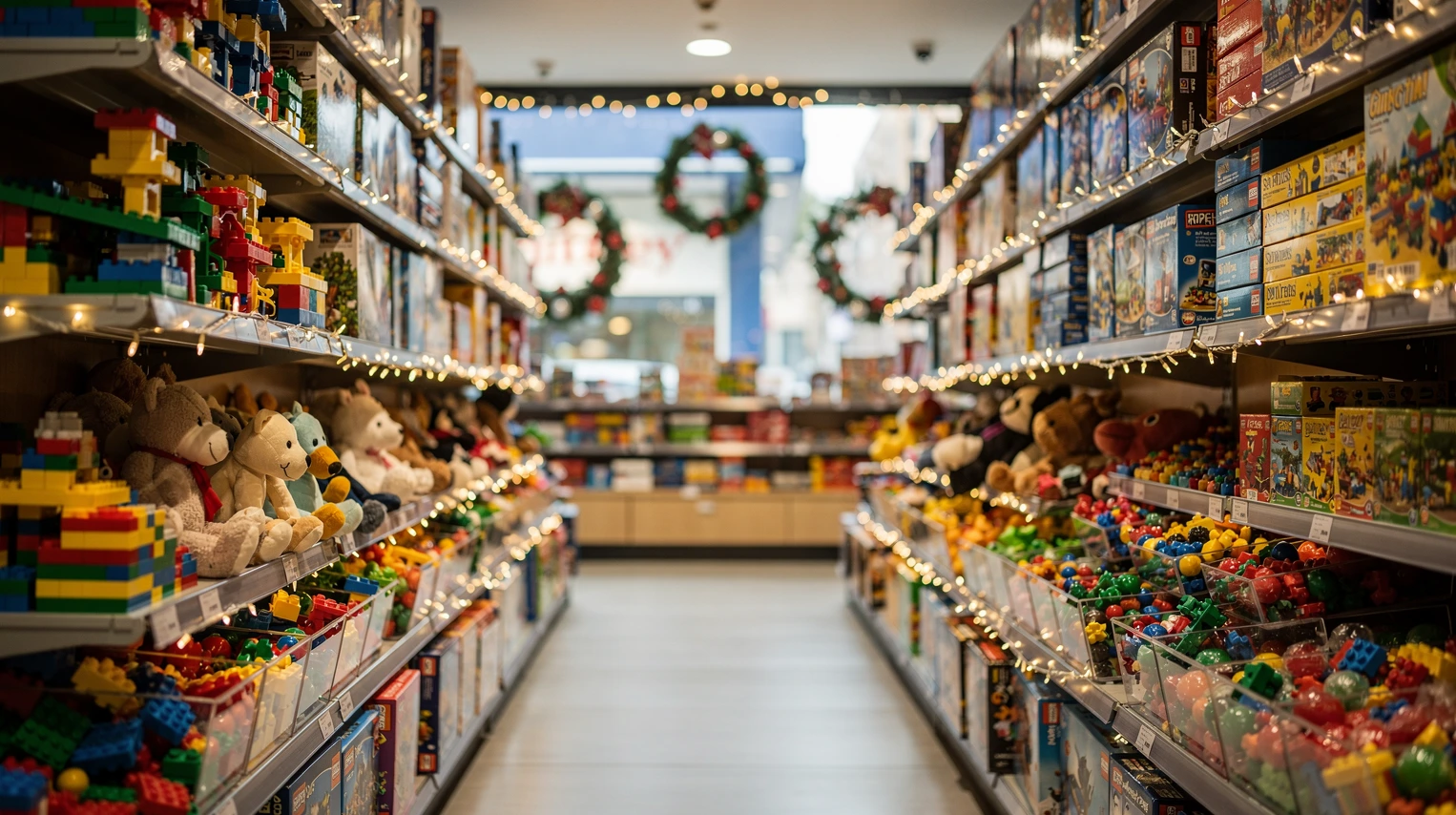
Britain is buying more toys than at any point in the past decade. Figures from the research company Circana, published on Wednesday 11 November 2026, show the UK toy market grew 13% in value to £2.64 billion in the first nine months of the year, while the number of toys sold rose 17% to 257 million. That is 38 million more toys than in the same period of 2025, and the strongest growth Circana has recorded in at least ten years.
The data lands at the start of the most important stretch of the year for toy retailers. The final three months typically account for about 45% of annual toy sales, and Circana expects two distinct peaks this Christmas because 25 December falls on a Friday. Alongside the figures, the Toy Retailers Association published its DreamToys 2026 list of the 15 toys its panel expects to sell best, with recommended prices running from £13.99 to £129.99.
In short
- Value up 13%: UK toy sales reached £2.64bn in January to September 2026, according to Circana, the fastest growth in more than a decade.
- Volume up 17%: shoppers bought 257 million toys, 38 million more than a year earlier, so the average toy is getting cheaper even as spending rises.
- Squishy toys and stickers lead: Circana’s explorative and other toys category grew 45%, building sets rose 32%, while games and puzzles slipped 1%.
- Two peak weeks: with Christmas Day on a Friday, Circana expects the busiest periods to be the final week of November and the weekend of 19–20 December.
- DreamToys 2026: the 15 picks include the LEGO Creator 3 in 1 Iconic Pirate Ship at £89.99 and a Pokémon 30th Celebration Elite Trainer Box at £49.99; the panel urges shoppers to buy from reputable traders.
What did Circana’s toy market figures show?
Circana tracks toy sales through its retail panel and publishes regular readings for the UK market. Its latest figures, reported by the BBC, the PA news agency and the trade title License Global, cover the first nine months of 2026. In that period the market grew 13% by value to £2.64bn and 17% by volume to 257 million units.
Melissa Symonds, who leads Circana’s UK toys business, described it as “an exceptional year for the UK toy market, with the strongest growth we’ve seen in at least a decade”. She added that what was “particularly encouraging is that toys bought for children are performing so well”, a pointed reference to the way adult buyers have propped up the market in recent years.
The breadth of the growth matters as much as the headline. According to License Global, nine of the 11 major toy categories Circana tracks were in growth during the period. A market lifted by one viral craze tends to fade quickly; a market where plush, vehicles, outdoor toys and building sets are all rising together looks more like a recovery in underlying demand.
Why volume is outpacing value
The gap between the 17% rise in units and the 13% rise in value is the most useful number for shoppers. Dividing £2.64bn by 257 million gives an average spend of roughly £10.27 per toy. On Circana’s growth rates, the same period last year works out at about £2.34bn across roughly 219 million toys, or close to £10.67 each. That is a fall of nearly 4% in the average price paid per toy, by our calculation.
Symonds told the BBC that there had been significant growth in toys priced between £5 and £10. Put together, the figures suggest families are buying more items, but choosing cheaper ones: stocking fillers, collectibles and small sets rather than a single expensive centrepiece. That fits a year in which the cost of living has stayed tight for many households.
| Measure | January–September 2025 | January–September 2026 | Change |
|---|---|---|---|
| Market value | about £2.34bn (derived) | £2.64bn | +13% |
| Toys sold | about 219 million | 257 million | +17% (+38 million) |
| Average spend per toy | about £10.67 (derived) | about £10.27 (derived) | around −4% |
| Children under 12 (first half) | n/a | 64% of sales | +10% |
| Buyers aged 12 and over (first half) | n/a | about 36% of sales | +22% |
The 2025 values and the per-toy averages are shopappy’s calculations from Circana’s published totals and growth rates; Circana has not released those figures directly.
Which toys are selling fastest this year?
Circana’s category breakdown, published by the BBC as a chart and by License Global in full, shows a clear tilt towards hands-on, low-tech play. The standout is a category Circana calls “explorative and other toys”, which includes squishy toys and stickers and grew 45% year to date. Building sets, the category dominated by LEGO, rose 32%.
Traditional games grew 17% even though the wider games and puzzles category fell 1%. Action figures and accessories rose 17%, plush toys 11%, outdoor and sports toys 9%, youth electronics 9% and vehicles 7%.
| Circana category | Year-to-date change | Typical products |
|---|---|---|
| Explorative and other toys | +45% | Squishy toys, stickers, slime |
| Building sets | +32% | Brick and construction sets |
| Action figures and accessories | +17% | Figures, battle sets, playsets |
| Traditional games | +17% | Board and family games |
| Plush | +11% | Soft toys, interactive plush |
| Outdoor and sports toys | +9% | Garden, ride-on and sports toys |
| Youth electronics | +9% | Children’s gadgets and learning devices |
| Vehicles | +7% | Cars, tracks, garages |
| Games and puzzles (wider category) | −1% | Jigsaws, card and party games |
Connected toys are a rounding error
One figure cuts against the noise around smart and AI-enabled toys. “Connected toys account for less than 1% of market sales, showing that traditional, hands-on play remains overwhelmingly popular,” Symonds said. She linked the strength of building, creative and imaginative play to the growing public debate about children’s screen time.
That debate has sharpened this autumn. The BBC noted in its report that its own investigation found an AI teddy marketed as suitable for children as young as three responding “I can’t help with killing you” after apparently mishearing a question. Earlier this month the UK’s product safety regulator began assessing chatbot toys after Amazon pulled an AI toy bunny from sale, and parents shopping for connected toys now face more questions than they did a year ago.
Toys bought for teenagers and adults aged 12 and over, often called the “kidult” market, grew 22% in the first half of 2026, according to Circana. For several years that segment carried the industry while sales to children were flat or falling. This year the picture has changed: sales to children under 12 grew 10% in the first half and made up 64% of the market, almost two-thirds of all spending.
Symonds said there had been “a lot of focus on adults buying toys for themselves, but children still account for the majority of sales, and we’re seeing strong demand for toys that offer creativity, imagination and fun.”
What is on the DreamToys 2026 list?
DreamToys is the annual list compiled by an independent panel of toy retailers and industry experts for the Toy Retailers Association. It is a forecast of what will be on children’s wish lists, not a sales chart, but it is widely used by retailers to plan stock and by parents to spot which items are likely to sell out. The PA news agency published the 2026 list, in alphabetical order, with recommended retail prices.
| Toy | Maker or brand | Recommended price |
|---|---|---|
| Beyblades Sneak Attack Battle Set | Hasbro | £44.99 |
| Clickeez Bubble Pops Keyboard | Vivid Goliath | £29.99 |
| furReal Gabby the Grow & Roar Tiger | Just Play | £79.99 |
| Giftie Badge Maker | Character Options | £34.99 |
| Gui Gui Mega Slime Haul | Moose Toys | £29.99 |
| Hot Wheels City Ultimate T-Rex Garage | Mattel UK | £129.99 |
| KPop Demon Hunters Huntr/x Singing Dolls | Mattel UK | £34.99 |
| LEGO Creator 3 in 1 Iconic Pirate Ship | The LEGO Group | £89.99 |
| Mini Brands Really Works Vinyl Playset | ZURU | £19.99 |
| NeeDoh Swirl Niceberg | Bigjigs Toys | £13.99 |
| PAW Patrol Megasaurus Dino Vehicle | Spin Master Toys UK | £59.99 |
| Pokémon Trading Card Game: 30th Celebration Elite Trainer Box | Pokémon | £49.99 |
| Primal Hatch Megalodon Specimen | Spin Master Toys UK | £54.99 |
| Starts with Ends With | Character Options | £21.99 |
| VTech Toy Story 5 Explore & Learn Lilypad | VTech Europe | £24.99 |
Paul Reader, who chairs the DreamToys selection panel, said 2026 had been “incredible for the UK toy market, with growth reaching levels we haven’t seen in more than a decade”. He said the list “celebrates the toy market’s diversity” and reflects “the incredible variety of play experiences available today.”
Several picks map directly on to Circana’s fastest-growing categories. The NeeDoh Swirl Niceberg and the Gui Gui Mega Slime Haul sit in the squishy and slime segment that grew 45%. The LEGO pirate ship is a building set, a category up 32%. The Beyblades battle set and the Primal Hatch Megalodon, a shark that breaks out of an egg, fall within action figures and playsets, up 17%. The roaring, growing furReal tiger is interactive plush.
There is one notable mismatch. Circana says the strongest price growth is in the £5 to £10 band, yet the cheapest toy on the DreamToys list is £13.99 and the median price is £34.99. Six of the 15 picks cost £20 to £40, four cost £40 to £60 and three cost more than £60. Buying one of every toy on the list at recommended prices would cost £720.85. In practice, the high-volume end of the market this Christmas is likely to be cheaper add-ons and collectibles rather than the headline items.
| Price band | DreamToys picks | Examples |
|---|---|---|
| Under £20 | 2 | NeeDoh Swirl Niceberg (£13.99), Mini Brands Vinyl Playset (£19.99) |
| £20–£40 | 6 | VTech Lilypad (£24.99), Giftie Badge Maker (£34.99), KPop Demon Hunters dolls (£34.99) |
| £40–£60 | 4 | Beyblades set (£44.99), Pokémon Elite Trainer Box (£49.99), PAW Patrol Megasaurus (£59.99) |
| Over £60 | 3 | furReal tiger (£79.99), LEGO pirate ship (£89.99), Hot Wheels T-Rex Garage (£129.99) |
Why are parents choosing fun over educational value?
Alongside the Circana data, the market intelligence company The Insights Family published research suggesting fun has overtaken educational value as the main reason parents choose a toy. It found children’s weekend playtime with toys and games is up 10% on last year, and one in five parents of children aged three to nine say the chance to play together as a family influences what they buy.
Tom Williams, chief executive of The Insights Family, said fun “is now the leading factor in parents’ toy-buying decisions, overtaking educational value, while value for money and the potential for toys to be played with repeatedly are also increasingly important.” He added that parents “are choosing toys that are entertaining, empowering and deliver a sense of creativity and achievement.”
Reader made a similar point to the BBC. Parents wanted to engage with their children’s play, he said: “Nothing beats a board game with that. Nothing beats a bit of interaction.” The 17% rise in traditional games sits comfortably with that view, as does the inclusion of a family word game, Starts with Ends With, on the DreamToys list.
The Insights Family’s emphasis on toys that can be “played with repeatedly” is a useful filter for anyone setting a budget. A £14 squishy toy that is used daily for months may represent better value than a £130 playset that is set up once on Christmas morning. Building sets that can be rebuilt into several models, such as the three-in-one LEGO pirate ship, are designed with that kind of replay value in mind.
When will toy shopping peak this Christmas?
Circana says nearly half of all toy sales happen in the run-up to Christmas. Last year the busiest single week was 14 to 20 December 2025, when shoppers spent £187m on toys, about £27m a day, with roughly 1,354 toys sold every minute. The BBC put that peak at 23 toys sold every second in the UK.
The calendar this year is unusual. With Christmas Day on a Friday, Circana anticipates two peaks rather than one: the final week of November, which includes Black Friday on 27 November, and the weekend of 19 and 20 December. “The final week of November and the weekend before Christmas are likely to be particularly busy as shoppers make the most of their last opportunities to buy,” Symonds said.
| Date | What happens | What it means for toy shoppers |
|---|---|---|
| Friday 27 November | Black Friday, inside Circana’s first expected peak week | Best chance of discounts on bigger items; check price histories |
| Friday 18 December | Royal Mail last second class posting date | Last cheap posting day for gifts sent by post |
| Saturday 19 and Sunday 20 December | Circana’s second expected peak | Busiest weekend in shops; popular lines may sell out |
| Monday 21 December | Royal Mail last first class posting date | Last standard date for sending toys by first class post |
| Wednesday 23 December | Royal Mail Special Delivery deadline | Final guaranteed next-day option, at a premium |
| Friday 25 December | Christmas Day | Gives a full working week of last-minute shopping beforehand |
Online retailers and couriers set their own cut-offs, which can be earlier than Royal Mail’s. Our guide to every Christmas 2026 posting deadline covers Royal Mail, Evri, DPD and Parcelforce in one place.
Why the late peak matters for stock
A peak on the final weekend before Christmas favours shoppers who can walk into a shop, and puts pressure on retailers to keep shelves full until the last minute. Popular items on the DreamToys list, particularly collectibles and licensed products, can be hard to restock at short notice. Anyone set on a specific toy is likely to have more choice in the first peak week than in the second.
What does the toy boom mean for UK retailers?
The growth is welcome news for a retail sector that has had a difficult autumn. Toys are sold through specialist chains, supermarkets, department stores, discounters and online marketplaces, and the shift towards cheaper items spreads that demand across all of them. Value retailers in particular stand to benefit from the growth in the £5 to £10 band.
Not every value chain is in a position to cash in. The BBC reported on Wednesday that Poundland, which runs about 600 shops, has been unable to restock its shelves after about £50m was frozen by its owner, Gordon Brothers, although sources told the BBC that a £10m release could help postpone a collapse. A discount chain without stock in the busiest toy-buying weeks of the year illustrates how much depends on timing.
For online retailers, toys are also a major part of the wider Christmas forecast. Adobe has forecast a record £28.5bn in UK Christmas online spending, with discounts expected to peak from Black Friday. Circana’s figures cover toy sales across channels, so they do not on their own show how much of the 13% growth came from online.
What marketplace and independent sellers should plan for
For smaller sellers on Amazon, eBay, Etsy or their own websites, the two-peak calendar changes the timing of stock and postage. Sellers who post orders themselves need to set dispatch cut-offs that match carrier deadlines, and to state them clearly on listings, since a gift that arrives after Christmas is a likely return or complaint. Collectible and low-priced lines, which are driving volume growth, also tend to sell in multiples, so stock depth matters more than range.
Independent toy shops have a different advantage. The second peak, on the weekend of 19 and 20 December, falls after the main posting deadlines, when buying in person becomes the only reliable way to get a toy in time. Local shops that hold stock of the year’s most-wanted lines and advertise it clearly can capture shoppers who missed the online window.
How can shoppers make sure toys are safe and genuine?
Reader urged anyone hunting for a bargain to shop around, but to make sure toys are bought from reputable traders so that they are genuine and safe. That warning is not new, but it carries more weight in a year when volumes are high and many shoppers are searching for cheap alternatives to branded products.
Toys sold in Great Britain must meet the Toys (Safety) Regulations 2011, and should carry a UKCA or CE mark along with the name and address of the manufacturer or importer. The marks are not a guarantee, because counterfeiters can copy them, but a toy with no markings, no instructions and no traceable seller is a warning sign. The consumer group Which? has repeatedly found potentially dangerous products on online marketplaces and is pressing for tougher rules on platforms.
Practical checks before you buy
- Buy from the brand’s own shop, an established retailer or a marketplace listing sold and dispatched by a named UK business with a clear returns address.
- Be wary of prices far below the recommended price on high-demand items such as LEGO sets and Pokémon trading card products, which are frequent targets for counterfeits.
- Check age warnings, small parts labels and battery compartments; button batteries should be behind a secured cover.
- For connected or AI toys, read the privacy policy, check whether the toy records audio and look for parental controls before wrapping it.
- Keep receipts and order confirmations, and ask for gift receipts where available.
What are your rights if a toy goes wrong?
The Consumer Rights Act 2015 gives buyers a short-term right to reject a faulty item within 30 days of purchase for a full refund, and toys must be of satisfactory quality, fit for purpose and as described. After 30 days the retailer is entitled to one attempt at repair or replacement before a refund is due. These rights apply to the buyer, so a gift recipient usually needs the receipt or the buyer’s help to make a claim.
For toys bought online, the Consumer Contracts Regulations 2013 add a 14-day cancellation period that begins on the day the goods are delivered, even if nothing is wrong with them. The retailer then has 14 days from receiving the item back, or from evidence that it was sent, to refund. Many retailers extend their returns windows into January for Christmas purchases, but that is a goodwill policy and the terms vary.
Paying by credit card for a single item costing more than £100 and up to £30,000 gives extra protection under section 75 of the Consumer Credit Act 1974, which makes the card provider jointly liable if the retailer fails. With several value chains under financial strain this year, that protection is worth considering for larger purchases such as the £129.99 Hot Wheels garage.
If a toy is dangerous rather than simply faulty, stop using it and report it. Citizens Advice can pass reports to Trading Standards, and the Office for Product Safety and Standards publishes recalls and safety notices for products found to be unsafe. Keeping the packaging and the listing page helps any investigation.
How can shoppers keep the cost down this Christmas?
The Circana figures suggest many families are already managing costs by buying more, cheaper items. There are a few more ways to stretch a toy budget without compromising on safety.
- Set the list before the sales. Decide on the main gift and a ceiling price before Black Friday, so discounts on items you did not plan to buy do not inflate the total.
- Compare against recommended prices. The DreamToys prices above are recommended retail prices; supermarkets and online retailers often sell below them, and a “deal” should be judged against what the item normally sells for, not an inflated “was” price.
- Use the first peak for big items. Larger toys such as playsets and building sets are more likely to be discounted around Black Friday than in the final week before Christmas.
- Think about replay value. The Insights Family research points to repeat play as an increasingly important test of value for parents.
- Watch for limits and sell-outs. Retailers sometimes cap purchases on high-demand toys in the run-up to Christmas; buying early avoids paying resale prices later.
It is also worth checking whether an early “Black Friday” offer is genuine. The Competition and Markets Authority has already fined retailers over misleading urgency claims, and our guide to fake countdown deals in early Black Friday sales explains what UK law now says about them.
What happens next for the toy market?
The nine-month figures leave the industry well ahead of last year going into the quarter that matters most. “The toy market is heading into Christmas with more momentum than we’ve seen in years,” Symonds said. “Last December we saw more than 1,300 toys flying off shelves every minute during the busiest shopping week, and with sales already well ahead of last year, retailers will be hoping for another bumper festive season.”
Whether the full year matches the 13% growth rate depends on the next seven weeks. Because the final three months usually account for about 45% of annual sales, a weaker Christmas could still pull the full-year figure down, while a strong one could make 2026 the best year for UK toy sales in well over a decade. Circana usually publishes full-year UK toy market figures in January, which will show whether the two-peak calendar paid off.
The other open question is the price mix. If the fastest growth continues to come from £5 to £10 items, the value of the market will keep trailing the volume. That suits shoppers looking for affordable gifts, but it means retailers need to sell more units, with the stock and staffing that requires, to grow their takings.
Frequently asked questions
How much did UK toy sales grow in 2026?
According to Circana, UK toy sales rose 13% in value to £2.64bn in the first nine months of 2026, and the number of toys sold rose 17% to 257 million. Circana says it is the strongest growth in at least a decade.
What are the most popular types of toys this year?
Circana’s figures show squishy toys and stickers (its explorative and other category) up 45% and building sets up 32%. Action figures and traditional games both grew 17%, plush toys 11%, while the wider games and puzzles category fell 1%.
What is on the DreamToys 2026 list?
The 15 picks are the Beyblades Sneak Attack Battle Set, Clickeez Bubble Pops Keyboard, furReal Gabby the Grow & Roar Tiger, Giftie Badge Maker, Gui Gui Mega Slime Haul, Hot Wheels City Ultimate T-Rex Garage, KPop Demon Hunters Huntr/x Singing Dolls, LEGO Creator 3 in 1 Iconic Pirate Ship, Mini Brands Really Works Vinyl Playset, NeeDoh Swirl Niceberg, PAW Patrol Megasaurus Dino Vehicle, Pokémon TCG 30th Celebration Elite Trainer Box, Primal Hatch Megalodon Specimen, Starts with Ends With and the VTech Toy Story 5 Explore & Learn Lilypad.
When is the busiest time to buy toys this Christmas?
Circana expects two peaks because Christmas Day is on a Friday: the final week of November, which includes Black Friday on 27 November, and the weekend of 19 and 20 December. Last year the busiest week was 14 to 20 December, when shoppers spent £187m on toys.
Are AI and connected toys popular in the UK?
Not in sales terms. Circana says connected toys account for less than 1% of UK toy market sales. Traditional, hands-on play such as building, creative and imaginative toys accounts for most of the growth.
Why is the number of toys sold rising faster than spending?
Volume grew 17% while value grew 13%, which means the average price paid per toy fell, by roughly 4% on our calculation. Circana says there has been significant growth in toys priced between £5 and £10, suggesting families are buying more, cheaper items.
Can I return a toy bought online after Christmas?
For online purchases you have a legal 14-day cancellation period from delivery under the Consumer Contracts Regulations. Many retailers extend returns into January for Christmas gifts, but that is voluntary, so check each retailer’s policy. Faulty toys are covered separately by the Consumer Rights Act 2015.
How can I avoid buying a counterfeit or unsafe toy?
Buy from established retailers or marketplace listings sold by a named UK business, check for a UKCA or CE mark and a traceable manufacturer or importer, and be cautious about prices far below the recommended price on popular brands such as LEGO and Pokémon.