
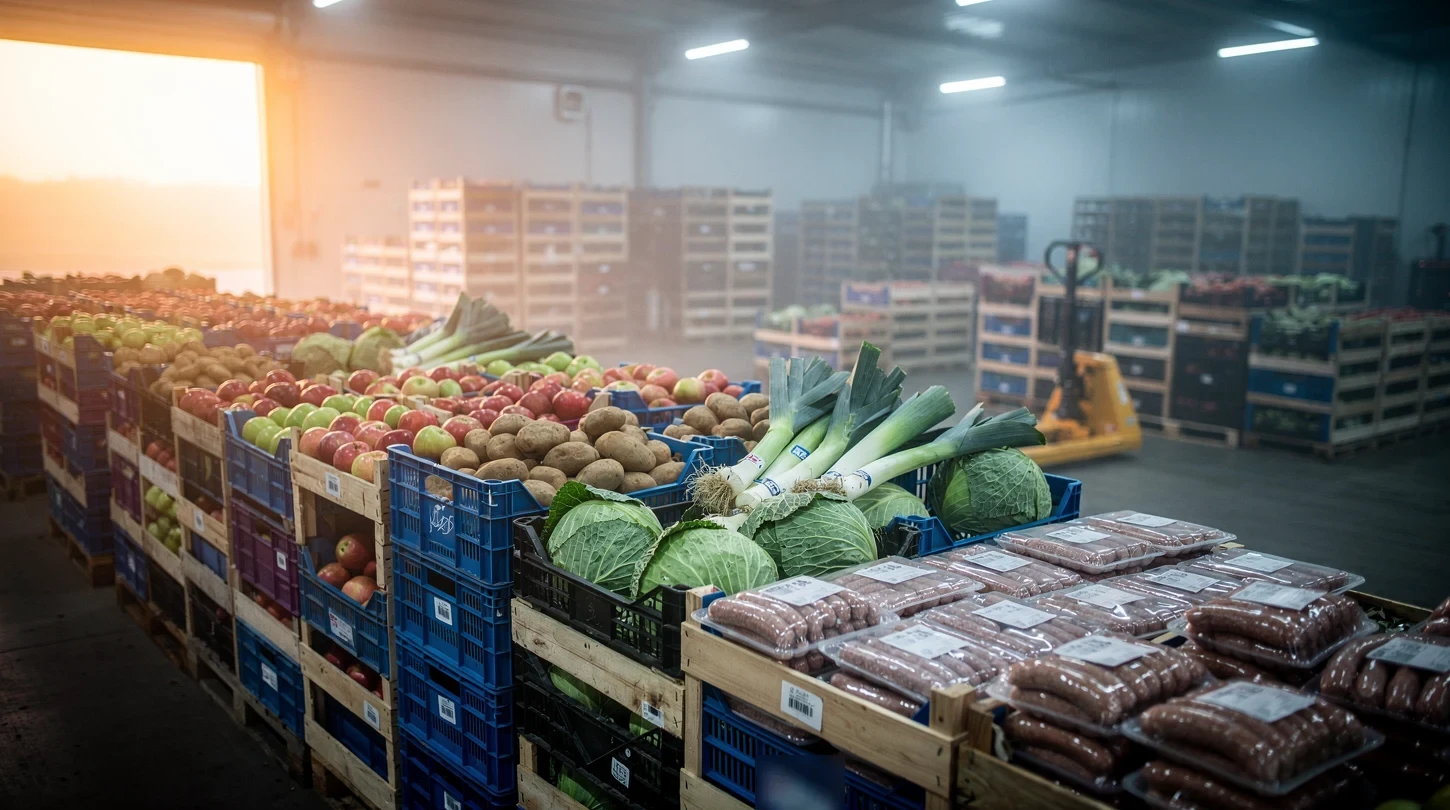
The UK and the European Union agreed a food and farming deal at their summit in Brussels on Friday 20 November that ministers say will “ease pressure on supermarket prices”. The deal removes most of the certificates, vet signatures and border checks that have applied to food moving between Great Britain and the EU since Brexit, in exchange for Britain following EU food rules. Every major supermarket welcomed it. None of them promised to cut a single price, and the rules do not change until 1 March 2028.
This piece sets out what was actually agreed, using the government’s own explainer and the joint statement signed in Brussels, what retailers and the British Retail Consortium said about prices, and what a shopper in Great Britain or Northern Ireland can expect to notice, and when.
In short
- What was agreed: a UK-EU sanitary and phytosanitary (SPS) agreement creating a “Common SPS Area”, so food, plants and animals move between Great Britain and the EU without most of today’s certificates and checks.
- Start date: the government’s explainer says the agreement will apply from 1 March 2028, subject to UK and EU procedures. Nothing changes in shops before then.
- Prices: the BRC told the Press Association it does not expect shelf prices to fall as a result, and Business Secretary Jonathan Reynolds told the BBC he could not guarantee food would be cheaper.
- The savings: export health certificates costing up to £200 each and phytosanitary certificates of around £25 go, along with at least £127.60 per load in inspection fees.
- The trade-off: Britain will follow EU food, labelling and pesticide rules through dynamic alignment, and importers of fruit and vegetables from outside the EU warn of higher costs.
What did the UK and the EU agree on 20 November?
The summit produced a package of agreements: food and farming trade, linked carbon markets, a youth experience scheme for 18 to 31-year-olds, and closer cooperation on migration and security. For shoppers and the food industry, the part that matters is the SPS agreement, short for sanitary and phytosanitary, the technical term for rules on food safety, animal health and plant health.
According to the government’s explainer published on gov.uk, the agreement “creates a Common Sanitary and Phytosanitary (SPS) Area, under which the whole of the UK and EU will have the same rules in areas covered by the Agreement”. The joint statement signed by both sides says it would allow “the vast majority of movements of animals, animal products, plants and plant products” between Great Britain, the Crown Dependencies and the EU to take place “without the certificates or controls that are currently required”.
The scope is wide. The explainer lists animal health and breeding, plant health, antimicrobial resistance in animals, food and feed safety, animal welfare, fishery products, food supplements, fortified foods, nutrition and health claims, nutrition labelling, wider food labelling rules, organics, marketing and compositional standards, and pesticides and biocides. Wine and spirits are not covered, and neither is the EU’s Common Fisheries Policy.
In its press release, Downing Street described the package as one that “cuts costs, eases pressure on supermarket prices and creates new opportunities for young Brits”. Prime Minister Andy Burnham said it “cuts costs for business, helps with the cost of the weekly shop, and creates opportunities for young people”.
How much is it supposed to be worth?
The government’s own estimate is that the food and farming deal is worth up to £5.1 billion a year by 2040 compared with projected levels, an increase in GDP of up to 0.14%. The whole package, including carbon market linking and the youth scheme, is put at up to 0.5% of GDP, or around £17 billion a year, by 2040.
Those are long-run economy-wide numbers, not a household saving. The BBC’s economics editor Faisal Islam noted on Friday that critics say the £5.1 billion figure does not include the cost of having to align with EU law, and The Grocer reported that a House of Lords European Affairs Committee report had warned the week before that the estimates exclude implementation costs.
When does the UK-EU food deal start, and what happens before then?
The single most important date for shoppers is 1 March 2028. Both the SPS explainer and the joint statement use it: the explainer says the agreement “will apply from 1 March 2028 subject to UK and EU procedures, with targeted transition arrangements in limited areas”, while the joint statement says the two sides “aim to apply this agreement from 1 March 2028”.
That is more than 15 months away. Until then, the existing system of export health certificates, border checks and Northern Ireland labelling stays in place. The Grocer quoted Dr Jason Aldiss of the Association of Independent Meat Suppliers warning that businesses “could face another 16 months of these costs” before the deal takes effect.
According to the explainer, the agreement and the domestic changes it needs will be implemented “through the European Partnership Bill and a programme of secondary legislation”. The Grocer reported that Mr Burnham said legislation would be introduced to Parliament next week.
The government also says it will legislate for some early steps: early access to EU food and feed market authorisations, EU health and identification marks, and “some early alignment measures on pesticides and biocides”. The detail of those measures remains subject to Parliament.
The tuition fees question
There is one live political risk to the timetable. The joint statement commits both sides to conclude separate negotiations on tuition fees for EU students in the UK, and UK students in the EU, “within six months from the date of the summit”. The Press Association reported, via Business Live, that Brussels officials have indicated that implementation of Friday’s package could be jeopardised if the fees dispute is not resolved.
The UK government’s position, also reported by the Press Association, is that the deal is finalised and that its start dates are not contingent on the fees issue. Shoppers should treat 1 March 2028 as the planned date, not a guaranteed one, until both sides complete their legal procedures.
Will supermarket prices fall because of the deal?
This is the question most people searching for the deal will be asking, and the honest answer from the people who set prices is: not because of this, and not soon. The government’s language is careful. Its press release says the deal “will ease the pressure on supermarket prices” and could “help put downward pressure on food price inflation”. It does not say prices will fall.
The British Retail Consortium, which represents the big grocers, called the agreement a “big win”. But it also told the Press Association that it does not expect supermarket shelf prices to drop as a result, adding that upward pressures on costs remain significant and will not be eased by the agreement.
Ministers have been similarly cautious when pressed. The Grocer reported that Business Secretary Jonathan Reynolds told the BBC on Friday morning that he could not guarantee food would “definitely be cheaper because there’ll be other factors”, pointing to energy prices, global trade and developments in Iran.
What the supermarket bosses actually said
The government published supportive quotes from Morrisons, Tesco, Marks & Spencer, Co-op and Lidl GB. Read closely, none of them commits to a price cut. Morrisons chief executive Rami Baitieh said cutting red tape on imports “promises to ease a source of pressure on food prices”. Co-op’s interim chief executive Kate Allum said the retailer would work with the government “to ensure that we can realise the benefits of what has been agreed over the years to come”.
Tesco chief executive Ken Murphy framed the deal as “good news for British farmers and food producers”, which is an export story rather than a checkout story. Faisal Islam wrote that grocers “have notably not committed to price cuts as a direct result of this move”, and that industry insiders privately say there are too many moving parts in the world economy, particularly the energy price shock.
| Who | What they said about prices | Price commitment? |
|---|---|---|
| UK government (press release) | Deal “will ease the pressure on supermarket prices” | No |
| Jonathan Reynolds, Business Secretary (to the BBC, per The Grocer) | Could not guarantee food would “definitely be cheaper” | No |
| British Retail Consortium (to PA) | Does not expect shelf prices to drop as a result; upward pressures remain | No |
| Morrisons, Rami Baitieh | “Promises to ease a source of pressure on food prices” | No |
| M&S Food, Alex Freudmann | Fresher food, “up to two extra days of shelf life”, less waste | No |
| Tesco, Ken Murphy | “Good news for British farmers and food producers” | No |
| Fresh Produce Consortium, Nigel Jenney (per The Grocer) | Called the deal a “lose-lose” for UK consumers | Warns of higher costs |
Most of the cost the deal removes falls on goods leaving Great Britain for the EU, and on goods moving from Great Britain to Northern Ireland. Checks on EU food coming into Great Britain also go, but Faisal Islam pointed out that these “were already lightly enforced”, so the saving on the import side is smaller than the headline suggests.
Food prices in British shops are set by a long list of inputs: energy, wages, packaging, global commodity prices, the exchange rate and retailer margins. Paperwork on cross-border loads is one of them, and for many lines a small one. That is why retailers are describing the deal as relief on one source of pressure, not as a reason to reprice.
Which costs disappear for food businesses?
The explainer is specific about the paperwork being removed. These are the line items that have built up since Brexit, and the ones the industry has lobbied hardest to scrap.
| Requirement today | Cost or burden (government figures) | After 1 March 2028 |
|---|---|---|
| Export health certificate (EHC), GB to EU | Up to £200 per certificate, signed by a vet | Removed |
| Phytosanitary certificate for plants and plant products | Around £25 per certificate | Removed |
| Inspection fees on plant loads | At least £127.60 per load | Removed |
| SPS border checks on dairy, fish and meat | Time at the border, risk to perishable goods | Eliminated for goods in scope |
| Certificates of inspection for organic products | Extra certification step | Removed |
| GB to NI certificates and routine checks | EHCs, phytosanitary and animal health certificates | Not needed for the vast majority of goods |
| Ban on some British products in the EU | Fresh sausages, burgers, seed potatoes, molluscs blocked | EU market reopens |
Marks & Spencer has been the most vocal retailer on the issue, because it ships its own-label food to stores in the Republic of Ireland and Northern Ireland. Alex Freudmann, managing director of M&S Food, said that getting “our Spaghetti Bolognese from Lincolnshire onto a shelf in Dublin takes hundreds of extra miles, mountains of paperwork, a vet’s signature and even the Latin name of a cow”. In a blog post quoted by the Press Association he supplied the name: Bos taurus.
Wholesalers welcomed the same changes. James Bielby, chief executive of Food and Drink Wholesale UK, said in the government’s release that removing the barriers would make it “easier and more affordable to get food to the schools, hospitals, shops, pubs and restaurants that rely on us every day”.
The economic case rests largely on exports. The government’s explainer says UK agrifood exports to the EU have fallen by 32.5% since 2019, while the supermarket press release puts the fall in food and drink exports at around a quarter in real terms since 2018. The EU took 58% of UK agrifood exports and supplied 69% of imports in 2025, according to the release, which also says the agreement could lift major agricultural exports to the EU by around 16%.
NFU president Tom Bradshaw cautioned, as reported by London Loves Business, that some British products had already been replaced by competitors during the years of trade barriers, so the lost export market will not simply snap back. He said success would depend on how the deal is implemented and on the UK’s ability to influence future EU rules.
What will shoppers actually notice on the shelf?
Before March 2028, nothing. After that date, the changes most likely to reach a shopper in Great Britain are indirect: fresher stock, slightly fewer gaps and, over time, some products and labels changing as British rules converge on EU ones.
M&S said that when the deal comes into force, food “will reach shelves fresher, with up to two extra days of shelf life, less waste and a fuller range”. The government’s release makes a similar claim that fresh produce will reach shelves faster, with less waste and lower costs. Shorter waits at the border matter most for chilled and fresh lines, where every hour in a lorry park comes off the “use by” window in the shop.
Because the Common SPS Area includes food labelling, nutrition labelling, marketing standards and compositional standards, products sold in Great Britain will over time have to meet EU rules in those areas. Karen Betts, chief executive of the Food and Drink Federation, warned, according to The Grocer, that bringing EU food law into force across the UK would require manufacturers to make potentially significant changes to “supply chains, products, labelling and ingredients”.
That is the background to the row over whether EU naming rules could affect meat-flavoured snacks, which we covered in our explainer on the EU name rule and smoky bacon crisps. Friday’s documents do not mention crisps or meat names. What they do confirm is that labelling and marketing standards are in scope, and that the start date is 1 March 2028, later than some earlier reporting had assumed.
One reassurance for shoppers and small shops alike: the explainer says goods “already on the Great Britain market when the deal is applied can continue to be sold and used in GB, even if non-compliant with EU rules”. The government says this is designed to minimise disruption, cut food waste and keep supply flowing, so there should be no overnight clear-out of stock in March 2028.
What does dynamic alignment mean for British food rules?
The price of the deal is regulatory. The explainer says the agreement “will function on the basis of dynamic alignment, with the UK and EU applying the same rules, at the same time, on an ongoing basis”. The UK gets what the government calls “an early decision-shaping role” on EU rules in development, but not a vote.
Critics in the farming and crop protection industries have focused on that point. Dave Bench, chief executive of CropLife UK, told The Grocer that “the UK will be applying decisions it has no vote on”, and warned that British growers would have less access to innovation than non-European competitors. Supporters, including Rod Addy of the Provision Trade Federation, called closer ties “a no-brainer” and said “the pros will vastly outweigh the cons”.
The transition periods negotiated
The UK secured a set of transition arrangements and exceptions, according to the explainer. Several of them have a direct bearing on what ends up in British shops.
| Area | Arrangement | Runs until |
|---|---|---|
| Pesticides | Final use-up of products depending on status; GB-treated food can still be harvested and sold in GB | 9–21 months after the deal applies |
| Three GB-approved active substances (cinmethylin, pydiflumetofen, isoflucypram) | Continued use pending an EU approval decision | Until the EU decides |
| Assam tea | Imports under current GB maximum residue levels can continue | 12 months after the deal applies |
| Biocides | Continuity of supply on the GB market | Up to 42 months after the deal applies |
| Organic poultry housing and eggs | Time to adapt to EU organic rules | 12 months after the deal applies |
| Novel foods (cultivated meat, precision fermentation, CBD foods) | Continued production if authorised before the deal applies | October 2029 |
| Precision bred plants (England) | English framework stays; marketing under it continues | Framework to July 2028, marketing to October 2029 |
The Assam tea clause is a reminder of how granular these rules are. It exists, the explainer says, “to ensure continuity of supply to consumers”, because maximum residue limits for pesticides differ between the two regimes. Britain’s tea habit is large enough that a mismatch on residue limits could have affected what reaches supermarket shelves.
The UK will keep its ban on exporting livestock and horses for fattening or slaughter outside the British Islands. It will also bring in its own measures against pet smuggling, including stricter rules banning dogs and cats under six months old or heavily pregnant from being brought into Great Britain, with exemptions for genuine EU pet owners and a review after five years.
On precision breeding, the producer of the vitamin D-enhanced tomato has backed the deal after the government negotiated an “exception period”, the BBC reported. Professor Cristobal Uauy of the John Innes Centre said that “aligning with the EU market will bring our science to a greater number of people”.
The clearest warning about costs came from importers who buy fruit and vegetables from outside the EU. The Fresh Produce Consortium has argued that dynamic alignment could add around £300 million a year to the cost of importing from non-EU countries, according to The Grocer. Its chief executive, Nigel Jenney, described the deal as a “lose-lose” for “UK consumers and our global trading partners”, and said the industry’s warnings had been “ignored”.
Faisal Islam made a similar point for the BBC, writing that “there could be extra checks and costs required instead on non-EU food imports”. That matters to shoppers because a large share of winter fruit and vegetables, along with products such as bananas, avocados and citrus, comes from outside the EU. If border rules on those imports tighten to match EU standards, the cost falls on lines that families buy every week.
Growers have warned for months about a “cliff edge” on plant protection products. The Grocer reported that CropLife UK warned in January that a sudden switch could cost the sector more than £800 million a year. The 9–21 month use-up periods and the safeguard for three active substances are the government’s answer, but CropLife said “short transition times will not be enough” without urgent clarity on how the new system will work.
The Food and Drink Federation praised the “pragmatic timeframes” agreed with Brussels but cautioned that “overall the timing remains tight”, according to The Grocer. The BRC’s chief executive Helen Dickinson said the priority now must be to “get the detail right and give businesses at least 18 months, alongside clear and early guidance, to transition to the new arrangements without unnecessary cost or disruption”. Asda also stressed that clear and timely guidance would be “critical”.
What does the deal mean for shoppers in Northern Ireland?
Shoppers in Northern Ireland are likely to see the most direct change. Since the Windsor Framework, food moving from Great Britain to Northern Ireland has needed certificates, checks or the Northern Ireland Retail Movement Scheme, and some products have carried “Not for EU” labels. Retailers have said the paperwork limits range and availability in Northern Irish stores.
Under the deal, the explainer says, traders moving “the vast majority” of agrifood goods, plants and agricultural machinery from Great Britain to Northern Ireland “will no longer need regulatory certificates, such as phytosanitary, export health or animal health certificates, nor routine checks or additional paperwork”. The NI Plant Health Label Scheme will no longer be required, and the NI Retail Movement Scheme will no longer be needed for most goods.
The Grocer reported that the days of “Not for EU” labelling are numbered, which should allow more choice in Northern Ireland and simpler trade with Great Britain. Where Great Britain stays unaligned, notably on wine marketing standards and illegal fishing rules, the explainer says existing Windsor Framework flexibilities will be extended so traders can keep supplying the Northern Ireland market.
The Retail Movement Scheme will stay in place during the transition periods, so that goods not yet aligned with EU rules can still move to Northern Ireland. In practice, the label change on the shelf will depend on how quickly suppliers move their whole range onto one set of rules.
How does the deal fit the current picture on food inflation?
The deal lands at a moment when food inflation in the UK is unusually low but other household costs are rising. Official figures for October showed food and non-alcoholic drink inflation at 0.9%, against headline CPI of 3.6%, as we reported in our breakdown of the October CPI figures and food prices. Retailers were already expecting food inflation to pick up again in early 2027.
Grocery price inflation measured at the till by Worldpanel was 2.6% in its most recent four-week reading, as covered in our report on grocery inflation and supermarket market share. A deal that takes effect in March 2028 will not move either figure in the year ahead.
Mr Reynolds named energy prices and events in Iran as factors that could outweigh any saving. The BBC’s Faisal Islam pointed to “the energy price shock resulting from war in the Middle East” as a reason industry insiders will not promise cuts. Mr Burnham said he hoped a separate planned electricity deal with the EU would cut bills, but the joint statement only commits both sides to conclude those negotiations in 2027, and any agreement would be linked to a UK contribution to EU regional funds.
Shoppers have been buying with the energy outlook in mind already. Food volumes rose in October partly on long-life buying linked to the Be Ready campaign, according to the ONS, which we covered in our report on UK retail sales rising on stockpiling.
What does the food deal not change, and what should you do now?
It is worth being clear about the limits of Friday’s agreement, because “Brexit reset” headlines invite assumptions that go beyond what was signed.
- It is not a customs union. Neither the SPS explainer nor the joint statement mentions customs duties or VAT. The agreement deals with food safety, animal and plant health rules.
- It does not cover wine and spirits. The explainer excludes them explicitly.
- It does not change fishing rights beyond the existing reciprocal access to waters until 30 June 2038 noted in the joint statement.
- It does not set any price rule. There is no obligation on retailers to pass savings to customers.
Online orders from EU retailers
For anyone who buys from EU websites, the deal does not, on the published documents, change customs declarations or import VAT on parcels. Those are governed by separate rules, and the EU is also adding its own charges to low-value parcels coming in from outside the bloc, which we explained in our piece on the EU parcel handling fee. Food businesses selling online into the EU should benefit from fewer certificates after March 2028, but the parcel tax picture is unchanged.
The SPS agreement also brings one change that many households will notice sooner than any food price: a multi-use pet passport for travel to the EU, replacing a new animal health certificate for each trip, according to the explainer. Separately, the Youth Experience Scheme will be open to 100,000 young people from each side a year, with the first travelling under it no later than January 2030, the summary explainer says.
For shoppers, there is nothing to do and nothing to expect before 2028. Watch for retailer claims that the deal has cut a price: the industry’s own trade body has said it does not expect that to happen as a direct result. If labels on familiar products change in 2028 and 2029, that is likely to be the alignment of labelling and compositional rules, not a product being withdrawn.
For small producers who stopped exporting to the EU because of certificate costs, the explainer encourages businesses to begin preparing by using guidance on gov.uk and signing up for updates. The government has already published a set of sector guidance pages under “SPS agreement: preparing your business”, covering food manufacturing, fish and shellfish, pesticides, veterinary medicines and other areas.
The dates to watch
- Next week: legislation due to be introduced to Parliament, according to Mr Burnham.
- By May 2027: the six-month deadline for the separate tuition fees agreement set in the joint statement.
- 2027: target to conclude the electricity market negotiations.
- 1 March 2028: planned date the SPS agreement applies.
- July 2028 and October 2029: precision breeding and novel food transition dates.
The deal is a genuine change to how food moves between Britain and its largest trading partner, and the supermarkets that lobbied for it are pleased. What it is not, on the evidence of what retailers and ministers said on Friday, is a near-term cut to the weekly shop.
Frequently asked questions
What is the UK-EU SPS agreement?
It is a sanitary and phytosanitary agreement that creates a Common SPS Area covering food safety, animal health, plant health, food labelling, organics and pesticides. It removes most certificates and border checks on food moving between Great Britain and the EU, in return for the UK following EU rules in those areas.
When does the UK-EU food deal come into force?
The government’s explainer says it will apply from 1 March 2028, subject to UK and EU procedures. Some transition arrangements run beyond that date, up to October 2029 for certain novel foods and up to 42 months for some biocides.
Will food prices go down because of the deal?
Not directly, according to retailers. The British Retail Consortium told the Press Association it does not expect shelf prices to drop as a result, and Business Secretary Jonathan Reynolds said he could not guarantee food would be cheaper. The government says the deal will ease pressure on prices.
Which supermarkets back the deal?
Morrisons, Tesco, Marks & Spencer, Co-op, Lidl GB and Asda all welcomed it in statements, according to the government and the Press Association. None committed to cutting prices as a result.
What paperwork does the deal remove?
Export health certificates costing up to £200 each, phytosanitary certificates of around £25, at least £127.60 per load in inspection fees, routine SPS border checks on products such as meat, dairy and fish, and certificates of inspection for organic goods, according to the government’s explainer.
What changes for shoppers in Northern Ireland?
Most food moving from Great Britain to Northern Ireland will no longer need certificates or routine checks, and “Not for EU” labelling is expected to end. Retailers say that should mean a fuller range in Northern Irish stores once the deal applies.
Will smoky bacon crisps be banned?
Friday’s documents do not mention crisps or meat names. They confirm that food labelling and marketing standards are within the scope of alignment, and that the deal applies from 1 March 2028. Goods already on sale in Great Britain at that point can continue to be sold.
Does the deal change customs or VAT on parcels from the EU?
No. The published explainer and joint statement do not mention customs duties or VAT. The agreement covers food safety, animal health and plant health rules, not customs.